
 by
by The mattress affects every metric discussed here
Pressure relief, spinal alignment, and temperature regulation all influence deep-sleep architecture — the phase where most metabolic and hormonal recovery happens. The Saatva Classic is built around this science.
Cortisol and the Circadian Clock
Cortisol is often described simply as a "stress hormone," but this framing obscures its fundamental role in circadian rhythm regulation. Cortisol is not a response to external stress — it has an internally programmed daily pattern that evolved to synchronize physiology with the light-dark cycle. Understanding this pattern is essential to understanding why sleep deprivation is so physiologically disruptive.
Under normal conditions, cortisol follows a precise 24-hour curve. It reaches its nadir (lowest point) around midnight, rises gradually through the early morning hours, and peaks at approximately 8am in what physiologists call the cortisol awakening response (CAR). This morning peak mobilizes glucose, increases alertness, and prepares the body for activity. The controlled decline through the afternoon and evening is equally important — falling cortisol is part of the signal that allows sleep onset to occur.
How Sleep Deprivation Disrupts the Cortisol Curve
Sleep deprivation elevates cortisol during the periods when it should be at its lowest — particularly in the afternoon and evening. Leproult et al. (1997) documented elevated afternoon and evening cortisol after a single night of total sleep deprivation. Subsequent studies using partial sleep restriction (5-6 hours per night for 1-2 weeks) replicate the finding: nighttime cortisol levels rise, the midnight nadir is attenuated, and the trough-to-peak amplitude of the daily curve is compressed.
This elevation of evening and nighttime cortisol creates a physiological feedback loop that actively prevents recovery sleep. Cortisol promotes wakefulness through at least three mechanisms: activation of the locus coeruleus (the brain's noradrenaline system), elevation of core body temperature, and direct inhibition of the sleep-promoting ventrolateral preoptic nucleus (VLPO). High nighttime cortisol means the brain is receiving a "stay awake" signal at precisely the time when it should be transitioning to deep sleep.
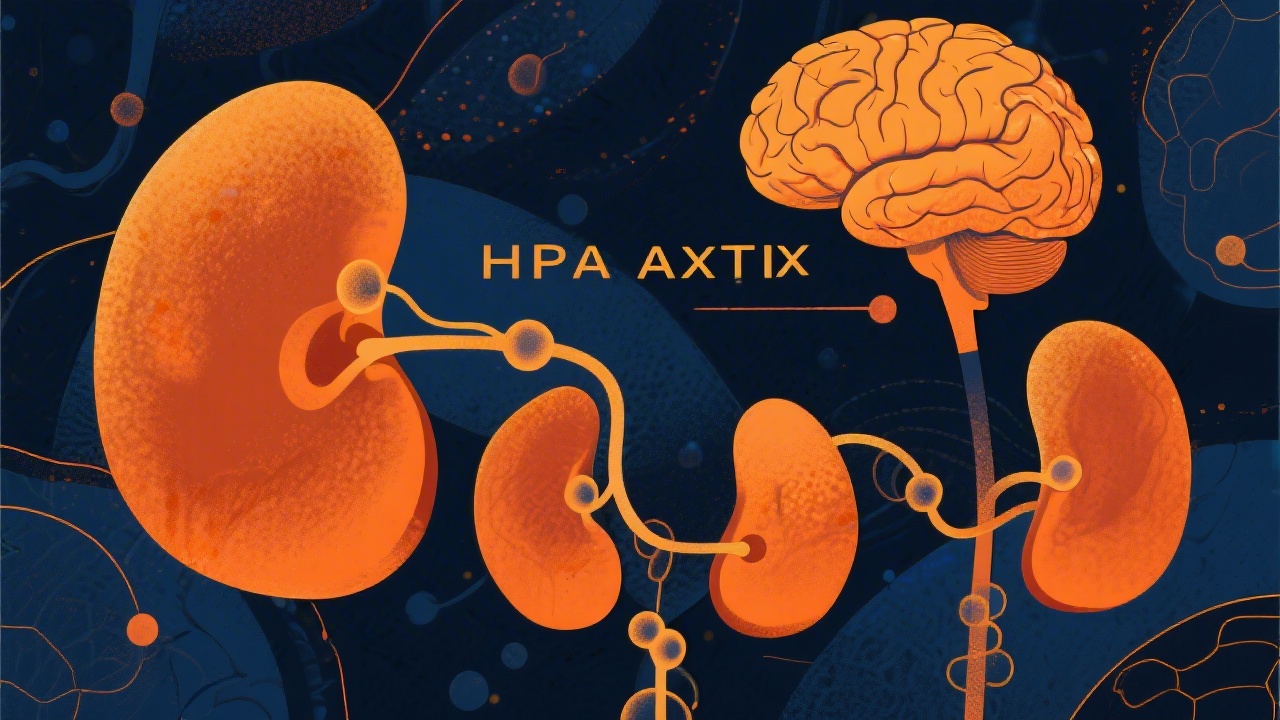
The HPA Axis Feedback Loop
The hypothalamic-pituitary-adrenal (HPA) axis — the hormonal cascade that regulates cortisol secretion — is normally kept in check by negative feedback. High cortisol suppresses its own production by acting on glucocorticoid receptors in the hippocampus and hypothalamus. Sleep deprivation impairs this feedback: glucocorticoid receptor sensitivity is reduced, the HPA axis becomes less effectively suppressed, and the system trends toward chronically elevated output.
The hippocampus is particularly vulnerable to this disruption. Chronic cortisol elevation is neurotoxic to hippocampal neurons, reducing the density of glucocorticoid receptors and further impairing HPA feedback — creating a deteriorating spiral that becomes increasingly difficult to reverse without addressing the underlying sleep deficit.
Cortisol, Deep Sleep, and the Architecture of Rest
The relationship between cortisol and sleep stages is not uniform. Slow-wave sleep (N3) is associated with the lowest cortisol levels of the 24-hour period. REM sleep is associated with a modest rise in cortisol. When elevated nighttime cortisol suppresses slow-wave sleep, the night shifts toward lighter sleep stages and REM, producing a pattern that feels like sleep but delivers far less metabolic and hormonal restoration.
This is why people experiencing high stress often report sleeping many hours but waking unrefreshed: the sleep they are obtaining is architecturally abnormal, deficient in the slow-wave phase that produces genuine physiological recovery.
The Cortisol-Visceral Fat Connection
Chronically elevated cortisol promotes visceral fat deposition through several pathways. Cortisol stimulates lipoprotein lipase activity in abdominal fat cells while reducing it in peripheral fat depots, redirecting triglyceride storage to the visceral compartment. It also elevates insulin (through gluconeogenesis) and promotes appetite through ghrelin-independent mechanisms. The resulting abdominal fat distribution is itself metabolically active, secreting pro-inflammatory cytokines that further impair insulin sensitivity and contribute to cardiovascular risk.
This page is the science companion to our existing cortisol and sleep management guide. For the metabolic consequences, see sleep and metabolism and sleep and insulin resistance. For the cardiovascular effects, see sleep and blood pressure.
Frequently Asked Questions
What is the normal cortisol pattern during sleep?
Cortisol follows a circadian rhythm: it reaches its lowest point around midnight (nadir), then begins rising through the second half of the night, peaking around 8am to facilitate morning arousal. This pattern is disrupted by sleep deprivation, which elevates evening and nighttime cortisol.
How does cortisol disrupt sleep?
Cortisol promotes wakefulness by activating the sympathetic nervous system and raising core body temperature. Elevated cortisol in the evening or at night prevents the transition to deep sleep, increases sleep fragmentation, and can cause early morning awakening.
Does sleep deprivation permanently raise cortisol?
Chronic sleep restriction leads to blunted cortisol reactivity in some studies and chronically elevated basal cortisol in others. The pattern depends on duration and severity. Acute sleep deprivation reliably elevates evening cortisol; the adaptation with chronic sleep restriction is more complex.
What is the sleep-cortisol-fat storage link?
Elevated cortisol promotes visceral fat deposition (abdominal fat), stimulates appetite (particularly for calorie-dense foods), and impairs insulin sensitivity. This is why chronic stress and chronic poor sleep both tend to produce similar patterns of weight gain and metabolic dysfunction.
This article mentions cortisol-sleep already exists on the site. How does this page differ?
The existing cortisol-sleep page covers cortisol management and sleep hygiene strategies. This page focuses on the underlying physiological science: the circadian rhythm of cortisol secretion, the cellular mechanisms by which cortisol disrupts sleep architecture, and the HPA axis feedback loop.
The mattress affects every metric discussed here
Pressure relief, spinal alignment, and temperature regulation all influence deep-sleep architecture — the phase where most metabolic and hormonal recovery happens. The Saatva Classic is built around this science.