
 by
by Recommended: Saatva Classic
Award-winning luxury innerspring with lumbar support. Tested by our team for quality, durability, and health-relevant sleep support.
The Circadian Architecture of Gut Function
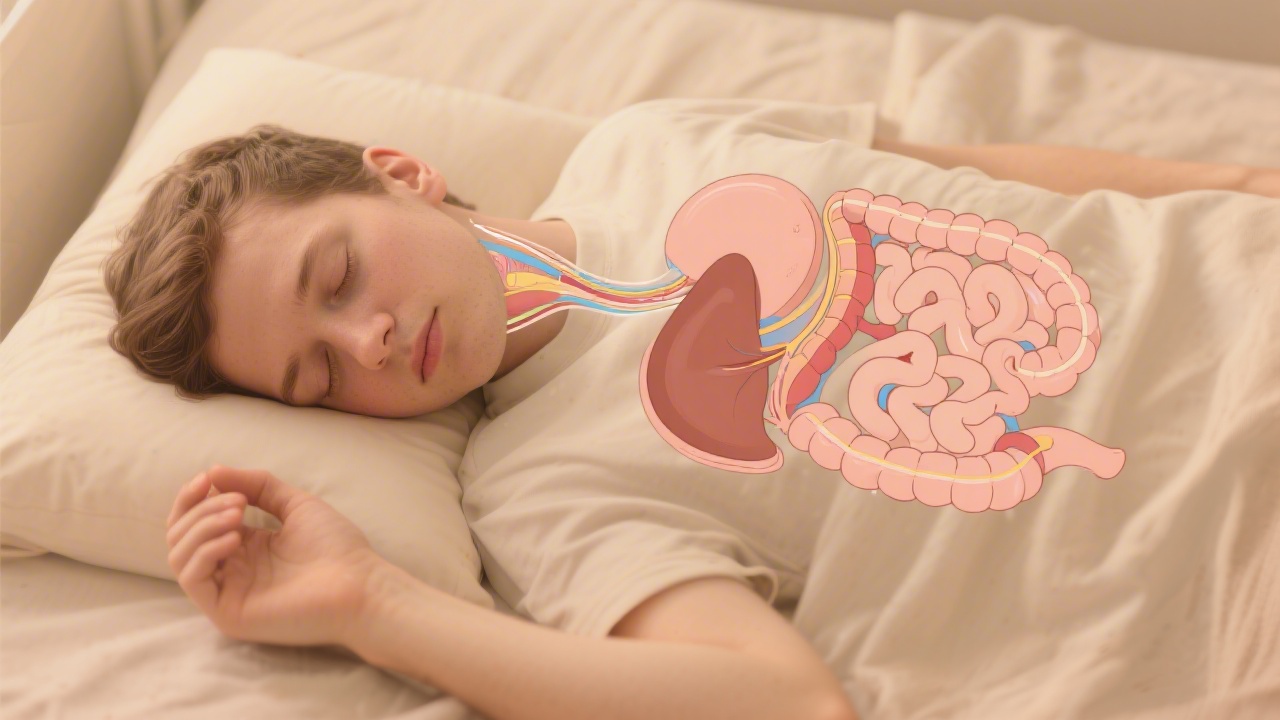
The gut has its own circadian clock. Intestinal cell gene expression follows a 24-hour cycle that coordinates gut motility, enzyme secretion, barrier function, and immune activity with the light-dark cycle. During wakefulness and feeding, the gut prioritizes digestion and nutrient absorption. During sleep — particularly NREM sleep — it shifts to repair, maintenance, and microbiome regulation.
This is not passive rest. Sleep is an active period of gut biology with specific functions that cannot be fully performed during waking hours.
Mucosal Repair: The Overnight Rebuild
The intestinal epithelium faces extraordinary daily stress — mechanical abrasion from food, chemical exposure from digestive enzymes, and constant immune surveillance. The single-cell-thick epithelial lining renews itself approximately every 4-5 days, but ongoing maintenance occurs nightly.
During NREM sleep, goblet cell activity increases, replenishing the mucus layer that protects epithelial cells from luminal bacteria. Tight junction proteins — the molecular seals between intestinal cells — are upregulated. Growth hormone released during deep sleep stimulates intestinal cell proliferation and accelerates repair of any epithelial micro-injuries from the day's digestive activity.
Sleep deprivation measurably impairs this process. Studies show that even 2-3 nights of sleep restriction reduces intestinal barrier integrity, with downstream increases in circulating lipopolysaccharide (LPS) — a pro-inflammatory bacterial product that should remain in the gut lumen. This mechanism connects poor sleep to systemic inflammation. For more on how gut bacteria specifically influence sleep, see our guide on gut bacteria and sleep.
Gut Motility During Sleep
Gastrointestinal motility patterns change substantially during sleep. The migrating motor complex (MMC) — the "housekeeping" wave that sweeps residual food through the small intestine — switches to a more regular pattern during NREM sleep. This helps prevent bacterial overgrowth in the small intestine (SIBO) by clearing undigested material.
Colonic motility slows during NREM sleep, which is why bowel urgency is unusual during the night despite hours of continued fermentation. This motility suppression is coordinated by melatonin, which acts directly on intestinal smooth muscle receptors — creating a direct link between the sleep hormone and gut motility.
Sleeping Position and Digestive Health
Sleep position has measurable effects on gastrointestinal function, particularly for acid reflux and colonic transit.
Left lateral position is the most digestively favorable position for most people. The stomach is anatomically positioned such that left-side sleeping keeps the gastroesophageal junction above the gastric pool, reducing acid reflux. Gastric emptying is also faster in left lateral position due to gravity assistance toward the pylorus.
Right lateral position places the gastroesophageal junction below the acid pool, increasing reflux frequency and duration. A 2006 study in The American Journal of Gastroenterology found right-side sleeping produced longer acid clearance times and more reflux episodes than left-side sleeping, even in the same individuals.
Back sleeping is intermediate for reflux but allows optimal spinal alignment. Elevating the head of the bed 6-8 inches reduces nighttime reflux significantly for chronic GERD sufferers regardless of lateral preference.
What Disrupts Gut Healing During Sleep
Several factors undermine the gut's nighttime repair cycle:
- Late meals — eating within 2 hours of sleep elevates gastric acid secretion, raises core body temperature, and delays sleep onset, reducing total NREM time available for gut repair
- Alcohol — disrupts gut barrier function directly and fragments sleep architecture, reducing NREM duration
- NSAIDs taken at night — directly damage intestinal mucosa and suppress prostaglandins needed for mucosal protection during sleep
- Sleep apnea — intermittent hypoxia during apnea events disrupts gut motility and has been independently linked to SIBO and increased intestinal permeability
- Fragmented sleep from an unsupportive mattress — pressure-point pain causes microarousals that reduce cumulative NREM time, shortening the gut repair window
The last point is often overlooked in gut health discussions. Physical sleep quality and gastrointestinal health are mechanistically connected. See also our guide on sleep and overall gut health.
Recommended: Saatva Classic
Award-winning luxury innerspring with lumbar support. Tested by our team for quality, durability, and health-relevant sleep support.
Frequently Asked Questions
Why does eating late at night disrupt sleep?
Late meals elevate core body temperature and divert blood flow to the gut when these should be declining for sleep onset. They also stimulate gastric acid secretion, increasing GERD risk. Most sleep specialists recommend finishing meals 2-3 hours before bed.
What is the best sleeping position for digestion?
Left lateral position is consistently supported by research as optimal for digestion. Gravity assists gastric emptying toward the small intestine, reduces acid reflux episodes, and supports the natural anatomical position of the stomach. Right-side sleeping is associated with more GERD events.
Does sleep position affect IBS symptoms?
Yes. IBS patients frequently report positional sensitivity during sleep. Left-side positioning reduces colonic transit time and may ease constipation-predominant IBS. For a deeper exploration of the IBS-sleep relationship, see our guide on IBS and sleep.
How does the gut microbiome repair itself during sleep?
During NREM sleep, gut motility slows, allowing the mucosal layer to be replenished. Mucus-producing goblet cells increase secretion, tight junction proteins are upregulated, and anti-inflammatory cytokines suppress the low-level immune activation that occurs from food exposure throughout the day.
Can poor sleep cause leaky gut?
Evidence suggests yes. Sleep deprivation reduces expression of tight junction proteins (claudin, occludin, ZO-1) in the intestinal epithelium within days, increasing intestinal permeability — a condition colloquially called leaky gut. This allows bacterial products like LPS to enter circulation, driving systemic inflammation.
Key Takeaways
Sleep and Digestion is a topic that depends heavily on individual needs and preferences. The most important thing is to consider your specific situation — your body type, sleep position, and personal comfort preferences — before making any decisions. When in doubt, take advantage of trial periods to test before committing.