
 by
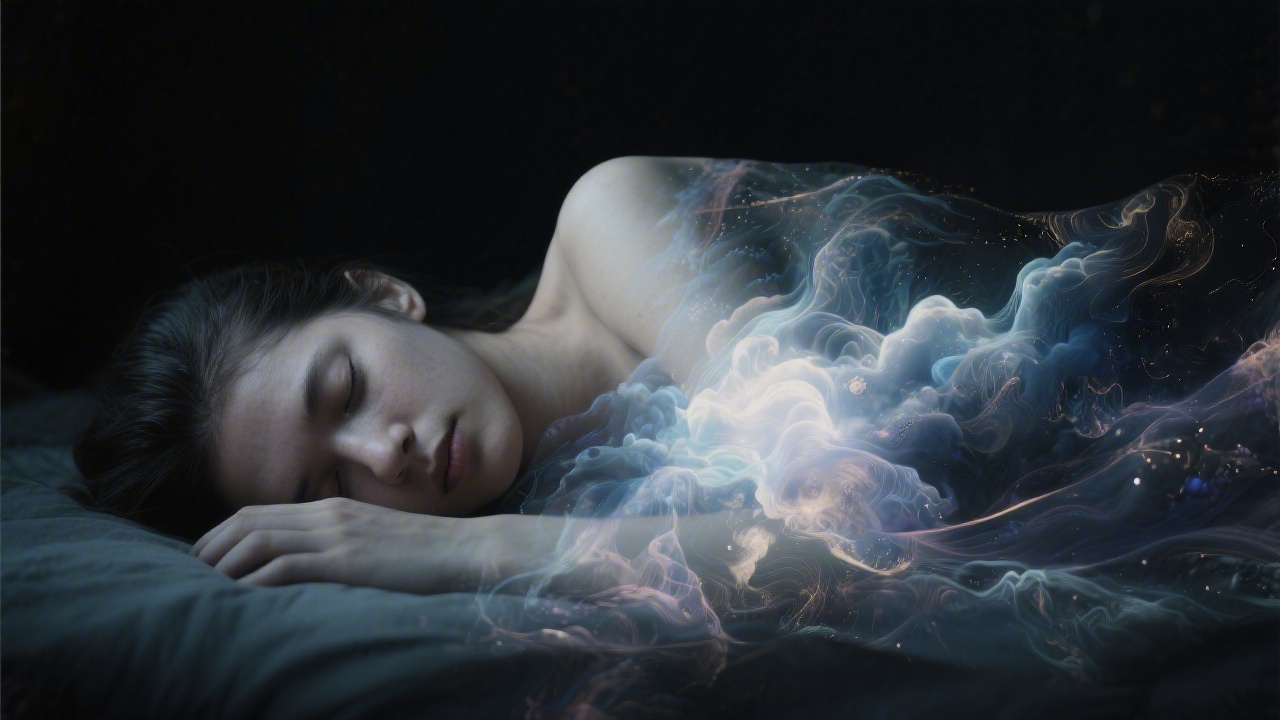
by Each night, you lose consciousness. Your body lies still, your awareness of the external world disappears, and for several hours you exist in a state that, from the outside, is indistinguishable from death except for breathing and occasional movement. When you wake, you believe you are the same person who lay down the night before. But are you?
This question is not merely philosophical provocation. It sits at the intersection of the philosophy of mind, the neuroscience of identity, and the phenomenology of consciousness — and the answers have implications for how we understand selfhood, moral responsibility, and the nature of awareness itself. This page is a philosophy-of-mind companion to our our overview of sleep and identity overview, exploring the deeper conceptual terrain.
The Classical Problem: Locke and the Memory Chain
John Locke, in An Essay Concerning Human Understanding (1689), argued that personal identity consists not in the continuity of substance (soul or body) but in the continuity of consciousness — specifically, memory. What makes you the same person as the child in your earliest memories is that you can remember, however distantly, the chain of experiences connecting you to that child.
The problem of sleep under Lockean theory is immediate: dreamless sleep appears to sever the conscious chain. If you are unconscious for 8 hours with no experiential content, on what basis is the morning-you identical to the evening-you?
Locke's own resolution was practical: he considered the gap of sleep analogous to fainting or other lapses of consciousness, arguing that the re-establishment of memory upon waking restored the identity chain. But this resolution has been criticized as question-begging — it assumes what it needs to prove about what constitutes "the same" chain.
Derek Parfit and Psychological Connectedness
Derek Parfit's Reasons and Persons (1984) is the most influential modern treatment of personal identity. Parfit replaced Lockean continuity with the concept of psychological connectedness — overlapping chains of direct psychological connections (memories, intentions, beliefs, character) rather than requiring an unbroken chain of consciousness.
Under Parfit's framework, sleep poses less of a problem: the psychological connections across a night of sleep are strong (you wake with your memories, personality, and intentions intact), even if the consciousness chain was interrupted. Identity is preserved not by continuous awareness but by the density of psychological connections across time.
Parfit himself, however, drew the provocative conclusion that personal identity is not what matters — what matters is psychological continuity, and a world in which that continuity obtained without strict identity would be equivalent for all practical purposes. Sleep, in his framework, is a mild case of the kind of identity-threatening discontinuity that defines all human existence across time.
What Sleep Neuroscience Adds
The strict dichotomy between conscious waking and unconscious sleep has been substantially complicated by neuroscience. The work described in our analysis of the evolutionary biology of sleep shows that the sleeping brain is not simply off. Hippocampal replay actively processes the day's experiences into long-term memory during slow-wave sleep. The default mode network — implicated in self-referential processing — shows complex activity patterns during REM. Lucid dreamers demonstrate that metacognitive self-awareness can be maintained during sleep.
This neuroscience evidence partially vindicates the folk intuition that you are the same person across sleep: the brain spends much of the sleep period actively consolidating and reinforcing exactly the psychological structures — memories, emotional associations, skills — that constitute identity in Parfit's sense. Sleep may be less a break in identity than a particularly intensive phase of its maintenance.
The Hard Problem and Sleep Consciousness
David Chalmers' hard problem of consciousness — explaining why there is subjective experience at all, why there is "something it is like" to be a conscious being — bears directly on the sleep and identity question. The hard problem makes it impossible to determine from the outside whether a sleeping person has any form of experience.
Research on global workspace theory (Baars, Dehaene) and integrated information theory (Tononi) both predict that dreamless slow-wave sleep involves minimal or zero phenomenal consciousness — there is nothing it is like to be the sleeping brain during N3 sleep, in the same way there is nothing it is like to be under general anesthesia. This is different from REM sleep, where dream phenomenology clearly involves some form of experience.
If there is genuinely zero phenomenal consciousness during dreamless deep sleep, the identity question sharpens: the sleeping self in N3 is, in the most philosophically precise sense, not experiencing anything. The entity that wakes is connected to the pre-sleep entity by memory and physical continuity but not by experiential continuity. Whether that constitutes "the same person" is a question about what we mean by personal identity, not a question with an empirically discoverable answer.
Moral and Legal Dimensions
These philosophical questions have practical corollaries. Criminal law requires that the person being prosecuted is the same person who committed the offense — a requirement that normally survives sleep with no controversy. But edge cases exist: sleepwalking-related incidents (homicidal somnambulism cases have been litigated in multiple jurisdictions) raise the question of whether the sleeping agent is the same moral subject as the waking agent. Courts have generally treated severe sleepwalking as producing a legally relevant break in responsible agency, even if not a metaphysical break in personal identity.
The controversies that surround these questions in academic philosophy are part of the broader landscape covered in controversial sleep science questions — where empirical and conceptual disagreements intersect in ways that matter for how we understand the science.
The Practical Upshot
The most defensible answer to whether you are the same person who went to sleep is: yes, in all the ways that matter practically — you retain your memories, personality, relationships, and projects across the sleep gap. The philosophical complexity arises when we ask what "same" means at the most precise level of analysis, and the honest answer is that the question reveals the limits of our ordinary concept of identity rather than a fact about sleep specifically.
What sleep science adds to the philosophical debate is evidence that the sleeping brain is not passively dormant but actively engaged in the consolidation of exactly the psychological structures that constitute identity on any plausible account. The sleep surface that enables deep, uninterrupted slow-wave sleep is, in this sense, not merely a comfort product but an infrastructure for the psychological continuity that makes you yourself. Our guide to best mattresses for deep sleep addresses the physical dimension of that infrastructure.
Frequently Asked Questions
Does philosophy consider sleep a break in personal identity?
The Lockean psychological continuity theory holds that personal identity requires continuity of consciousness and memory chains. Under strict Lockean criteria, dreamless sleep — involving a complete break in consciousness — would constitute a temporary interruption of personal identity. Most contemporary philosophers softer this to psychological connectedness rather than strict continuity, which survives sleep.
What is the psychological continuity theory of personal identity?
The psychological continuity theory, developed by John Locke and elaborated by Derek Parfit, holds that what makes you the same person over time is not physical continuity but psychological continuity — overlapping chains of memories, intentions, beliefs, and personality. Since you wake with memories of your pre-sleep self, the continuity is preserved despite the gap in consciousness.
Does the brain's activity during sleep support or challenge identity continuity?
Sleep neuroscience partly supports identity continuity: the brain during sleep is far from inactive, with memory consolidation actively reinforcing the psychological structures that constitute identity. REM sleep processes emotional memories; slow-wave sleep transfers episodic memories to long-term storage. Rather than a break in identity, sleep may be the phase where identity is actively maintained and reinforced.
What is the zombie thought experiment's relevance to sleep?
Philosophical zombies (p-zombies) — beings physically identical to humans but without conscious experience — are usually discussed in the context of waking consciousness. But they highlight the hard problem of consciousness that makes sleep philosophically interesting: we cannot verify from the outside whether a sleeping person retains any experiential continuity, only infer it from their reports upon waking.
How does dream research inform the identity debate?
Dream research complicates the simple view that sleep equals unconsciousness. Lucid dreamers maintain metacognitive awareness and can act on intentions formed before sleep. Dream content is shaped by pre-sleep emotional state and waking concerns. The self-model — the brain's representation of the individual as an agent in the world — appears to persist in modified form through dreaming, challenging the strict discontinuity view.
Key Takeaways
Sleep and Personal Identity is a topic that depends heavily on individual needs and preferences. The most important thing is to consider your specific situation — your body type, sleep position, and personal comfort preferences — before making any decisions. When in doubt, take advantage of trial periods to test before committing.