
 by
by Recommended: Saatva Classic
Award-winning luxury innerspring with lumbar support. Tested by our team for quality, durability, and health-relevant sleep support.
The Skin Barrier: Structure and Why Sleep Matters
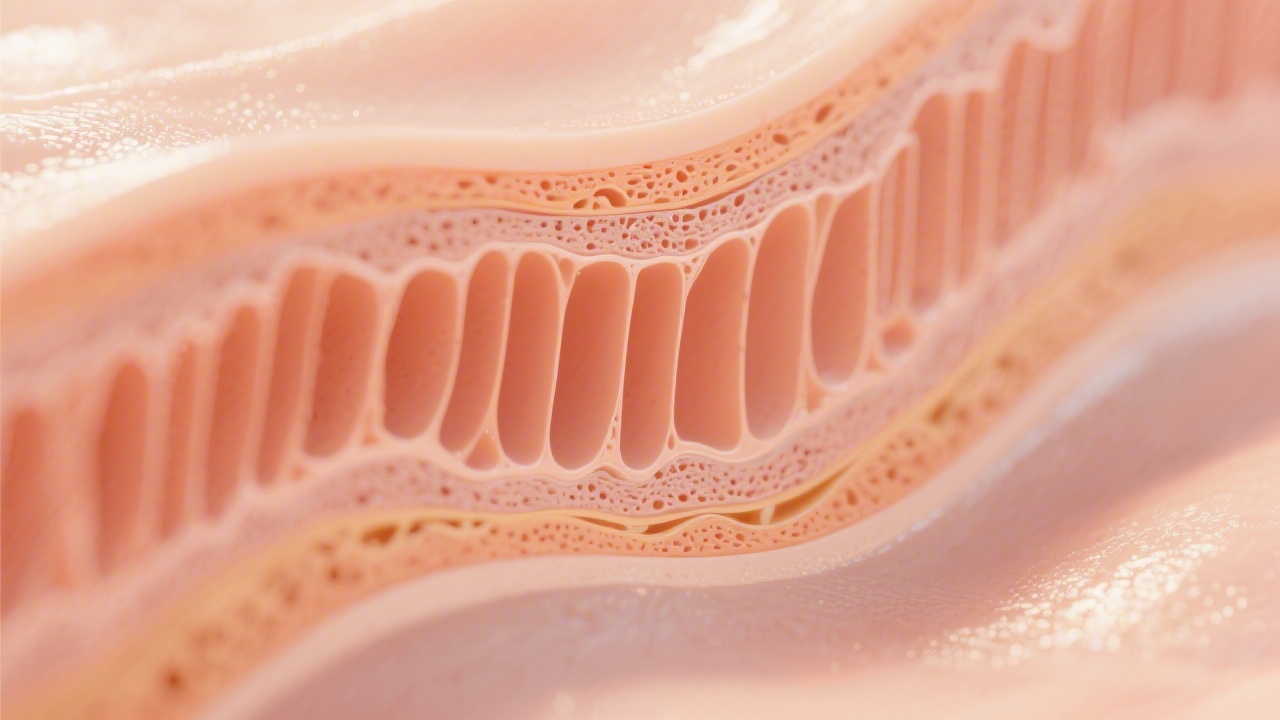
The skin barrier — specifically the stratum corneum and tight junctions of the living epidermal layers — is the body's primary defense against dehydration, pathogens, UV radiation, and environmental toxins. It is not static: it undergoes continuous renewal, repair, and maintenance that is heavily synchronized with the sleep-wake cycle.
Dermatological research over the past decade has established that sleep is the primary maintenance window for skin barrier function. Disrupting sleep disrupts this maintenance with measurable consequences for skin health.
Transepidermal Water Loss: The Barrier Integrity Marker
Transepidermal water loss (TEWL) measures how much water passively diffuses through the stratum corneum — a direct indicator of barrier integrity. Lower TEWL means a stronger, better-sealed barrier.
TEWL follows a circadian rhythm with a nadir (lowest value — strongest barrier) in the early morning hours and peak in the late afternoon/evening. This pattern is sleep-dependent: sleep deprivation disrupts the TEWL nadir, with even one night of partial sleep loss measurably increasing TEWL the following day.
A healthy stratum corneum requires adequate ceramide and natural moisturizing factor (NMF) levels. Ceramide synthesis enzymes are upregulated during sleep, making this the active production window for barrier lipids. For more on how sleep affects broader systemic health, see our guide on sleep and immune function.
Cell Turnover: The Midnight Renewal Peak
Skin cell division (epidermal keratinocyte mitosis) follows a robust circadian rhythm, peaking between midnight and 2 AM in individuals maintaining normal sleep schedules. This peak is driven by growth hormone release during slow-wave sleep and coordinated by core clock genes (BMAL1, CLOCK) expressed in keratinocytes.
During this mitotic peak:
- New keratinocytes are produced in the basal layer and begin their 14-28 day migration to the surface
- Damaged cells in the outer layers undergo accelerated desquamation
- DNA repair mechanisms in skin cells are maximally active, addressing UV-induced damage from the day
Chronic sleep deprivation delays this mitotic peak and reduces peak amplitude — effectively aging the skin renewal cycle. For a broader look at this skin-sleep relationship, see our overview at sleep and skin.
Collagen Synthesis and Overnight Skin Architecture
Collagen is the structural protein that gives skin tensile strength and elasticity. Its synthesis is stimulated by growth hormone (GH), which is released in pulses during slow-wave sleep. In young adults, 80%+ of daily GH secretion occurs during sleep. GH decline with age and with chronic sleep deprivation directly reduces collagen production rates.
Cortisol — elevated by sleep deprivation — is directly catabolic to collagen. It activates matrix metalloproteinases (MMPs) that break down existing collagen fibers. Chronically elevated cortisol from inadequate sleep thus impairs collagen both by reducing synthesis and accelerating degradation.
The clinical result: chronic poor sleepers show increased skin laxity, deeper nasolabial folds, and reduced skin elasticity on objective measurement. A 2015 Case Western Reserve University study using standardized photography and elasticity measurement found poor sleepers had significantly higher scores on all objective aging markers.
Inflammation, Cortisol, and Skin Conditions
Sleep deprivation elevates IL-6, TNF-alpha, and cortisol — all of which drive inflammatory skin conditions. For individuals with eczema, psoriasis, or rosacea, poor sleep reliably worsens flares through two mechanisms:
- Elevated pro-inflammatory cytokines directly activate skin mast cells and keratinocyte inflammatory signaling
- Elevated cortisol impairs tight junction protein expression, increasing skin permeability to irritants and allergens
Optimizing Nighttime Skin Repair
Practical steps to support the skin's overnight repair cycle:
- Protect slow-wave sleep duration — this is when GH peaks and cell turnover is highest
- Maintain consistent sleep timing to keep the circadian skin clock synchronized
- Use occlusive moisturizers at bedtime to reduce baseline TEWL and support barrier repair while it is most active
- Consider sleeping on smooth (silk/satin) pillowcases if side sleeping to reduce mechanical friction
- A mattress that prevents pressure-point wakefulness preserves SWS integrity and therefore the GH pulse that drives collagen synthesis
Recommended: Saatva Classic
Award-winning luxury innerspring with lumbar support. Tested by our team for quality, durability, and health-relevant sleep support.
Frequently Asked Questions
What time of night does skin repair peak?
Cell mitosis (skin cell division) peaks around midnight to 2 AM, which is why total sleep duration matters — cutting sleep short truncates the peak repair window. Transepidermal water loss nadir (lowest loss, strongest barrier) occurs in the early morning hours.
Can sleep deprivation cause acne?
Indirectly, yes. Sleep deprivation elevates cortisol, which increases sebum production and promotes inflammatory signaling in sebaceous glands. Chronic short sleep is associated with more severe acne flares in observational studies.
Does sleeping position affect skin health?
Side and stomach sleeping creates repeated mechanical pressure on facial skin, contributing to sleep wrinkles over time. Back sleeping is dermatologically preferred as it avoids this compression. Silk or satin pillowcases reduce friction for side sleepers.
How does the skin microbiome change during sleep?
The skin microbiome follows circadian rhythms. Beneficial bacteria (Cutibacterium acnes in low abundance, Staphylococcus epidermidis) maintain optimal pH and antimicrobial peptide production during sleep when sebum production and skin temperature are stable.
Do skincare products applied before sleep work better than daytime application?
For many actives, yes. Retinoids work best at night because UV degradation is avoided. Peptides and growth factors benefit from the elevated cell turnover during night sleep. Occlusive moisturizers applied at night capitalize on reduced TEWL during early sleep for better absorption.
Key Takeaways
Sleep and Skin Barrier is a topic that depends heavily on individual needs and preferences. The most important thing is to consider your specific situation — your body type, sleep position, and personal comfort preferences — before making any decisions. When in doubt, take advantage of trial periods to test before committing.