
 by
by Our Top Pick
Saatva Classic — Editor's Choice for Sleep Quality
Individually wrapped coils, lumbar zone support, and a plush Euro pillow top. Independently tested for pressure relief and spinal alignment.
See Current Price & Trial Offer
Affiliate disclosure: We earn a commission at no extra cost to you.
What Sleep Anxiety Actually Is
Sleep anxiety is anxiety about sleeping itself, not about external events. The worry is not about tomorrow's presentation — it is about whether you will sleep well enough to handle tomorrow's presentation. This subtle distinction matters because it means the stimulus driving your anxiety is the bed itself, not the external world.
Researchers call this orthosomnia — an unhealthy preoccupation with achieving perfect sleep. It is self-defeating: the more you monitor and evaluate your sleep, the more your brain treats the bedroom as a place of performance and assessment, which is incompatible with sleep onset.
The Cognitive Model of Insomnia
Dr. Arthur Spielman's three-factor model explains sleep anxiety clearly. Three elements combine to produce and sustain insomnia:
- Predisposing factors: Biological tendency toward hyperarousal, genetic vulnerability to anxiety
- Precipitating factors: Acute stress event (job loss, illness, major transition) that first disrupts sleep
- Perpetuating factors: The behaviors and thoughts that maintain insomnia after the original stressor resolves — clock-watching, extended time in bed, catastrophizing about sleep loss
Sleep anxiety is primarily a perpetuating factor. The original stressor may be long gone, but the learned anxiety about sleep keeps the cycle running.
Why Clock-Watching Is the Enemy
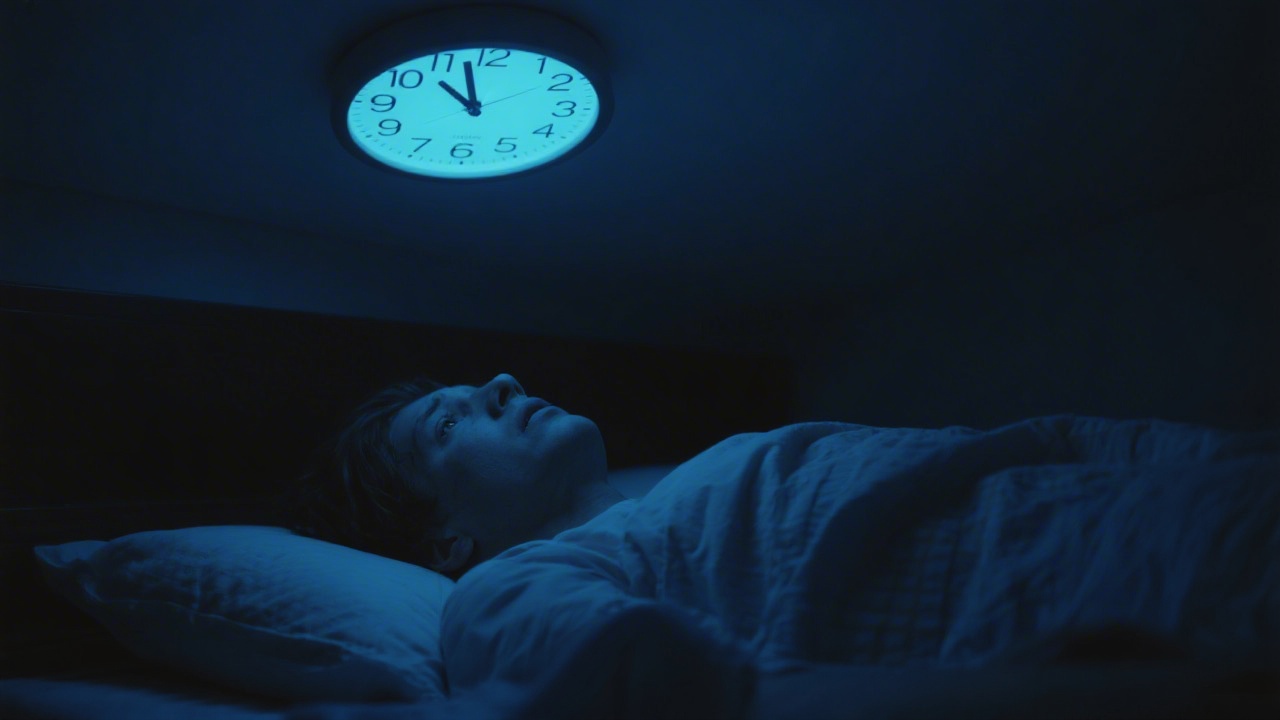
Every time you check the clock at night, you perform a calculation: "It's 2:30 AM. I have 4.5 hours. That's not enough." This calculation involves:
- Activating the prefrontal cortex (evaluative reasoning)
- Triggering a threat assessment (is 4.5 hours adequate?)
- Releasing cortisol in response to the perceived threat
- Increasing heart rate and arousal
The solution is complete clock removal from the bedroom. Face the clock away from the bed. Remove your phone from the room. Sleep anxiety feeds on information about time — starve it.
The Fastest Technique to Break the Cycle
Paradoxical intention is the fastest-acting evidence-based intervention for sleep anxiety. Rather than trying to sleep, you try to stay awake. Lie in bed with your eyes open and make a passive effort to remain alert. Do not try to sleep.
This technique works because it removes the performance demand that is driving the anxiety. When there is no goal of sleeping, there is no failure at sleeping, and therefore no anxiety about failure. The brain relaxes its vigilance, and sleep onset follows typically within 10-20 minutes.
The Role of Safety Behaviors
People with sleep anxiety often develop safety behaviors — actions intended to guarantee sleep that paradoxically maintain the anxiety. Common examples:
- Going to bed very early to "give sleep more time" (extends wakefulness in bed)
- Napping to compensate for lost nighttime sleep (reduces sleep drive)
- Tracking sleep with a wearable device obsessively (increases performance anxiety)
- Avoiding social plans in case they affect sleep (confirms that sleep controls your life)
Eliminating safety behaviors is uncomfortable but necessary for long-term recovery.
Our Top Pick
Saatva Classic — Editor's Choice for Sleep Quality
Individually wrapped coils, lumbar zone support, and a plush Euro pillow top. Independently tested for pressure relief and spinal alignment.
See Current Price & Trial Offer
Affiliate disclosure: We earn a commission at no extra cost to you.
The Role of Your Sleep Environment
Sleep anxiety has a cognitive core, but the physical environment either helps or hinders recovery. A mattress that causes discomfort gives the hypervigilant brain something to focus on. Heat, pressure points, and partner motion transfer provide sensory input that prevents the deactivation required for sleep onset. Removing these physical triggers does not cure sleep anxiety, but it reduces the cognitive load the therapeutic techniques need to overcome.
Internal Resources
- Can't Sleep Due to Anxiety? 10 Techniques
- Sleep Anxiety Tips: 9 Strategies for Worriers
- How to Stop Overthinking at Night
- Insomnia Remedies That Actually Work
Frequently Asked Questions
What is sleep anxiety exactly?
Sleep anxiety (also called somniphobia or orthosomnia) is anxiety specifically about the act of sleeping — fear of not sleeping enough, fear of the consequences of poor sleep, or hypervigilance about sleep quality metrics. It is distinct from general anxiety, though the two often co-occur. Sleep anxiety is what keeps you awake watching the clock calculate how many hours remain.
Why does watching the clock make sleep anxiety worse?
Clock-watching activates the prefrontal cortex — the evaluative part of the brain — at the exact moment you need it to disengage. Each time calculation ('It's 2 AM, I have 5 hours') triggers a threat assessment ('Is 5 hours enough?'), which releases cortisol and maintains physiological arousal. Turn the clock to face away from the bed.
Is sleep anxiety a disorder?
Sleep anxiety is a transdiagnostic symptom that can occur as part of generalized anxiety disorder, as a standalone phobia, or as a self-reinforcing behavioral pattern. It does not require a formal diagnosis to be treated — CBT-I addresses sleep anxiety regardless of its origin through stimulus control, sleep restriction, and cognitive restructuring.
What makes sleep anxiety different from general anxiety?
General anxiety involves worry about external events (work, relationships, finances). Sleep anxiety involves worry about sleep itself — the act, the quality, the consequences. The key marker is that sleep anxiety intensifies as bedtime approaches and often resolves when the pressure of sleeping is removed (e.g., on vacation, after an all-nighter where expectations are zero).
Can sleep anxiety cause physical symptoms?
Yes. Sleep anxiety triggers the sympathetic nervous system, producing elevated heart rate, muscle tension, sweating, and gastrointestinal upset. These physical symptoms then become additional evidence that something is wrong, further escalating anxiety. This is why physical relaxation techniques (PMR, warm bath, breathing) are useful — they interrupt the physiological component of the cycle.