
 by
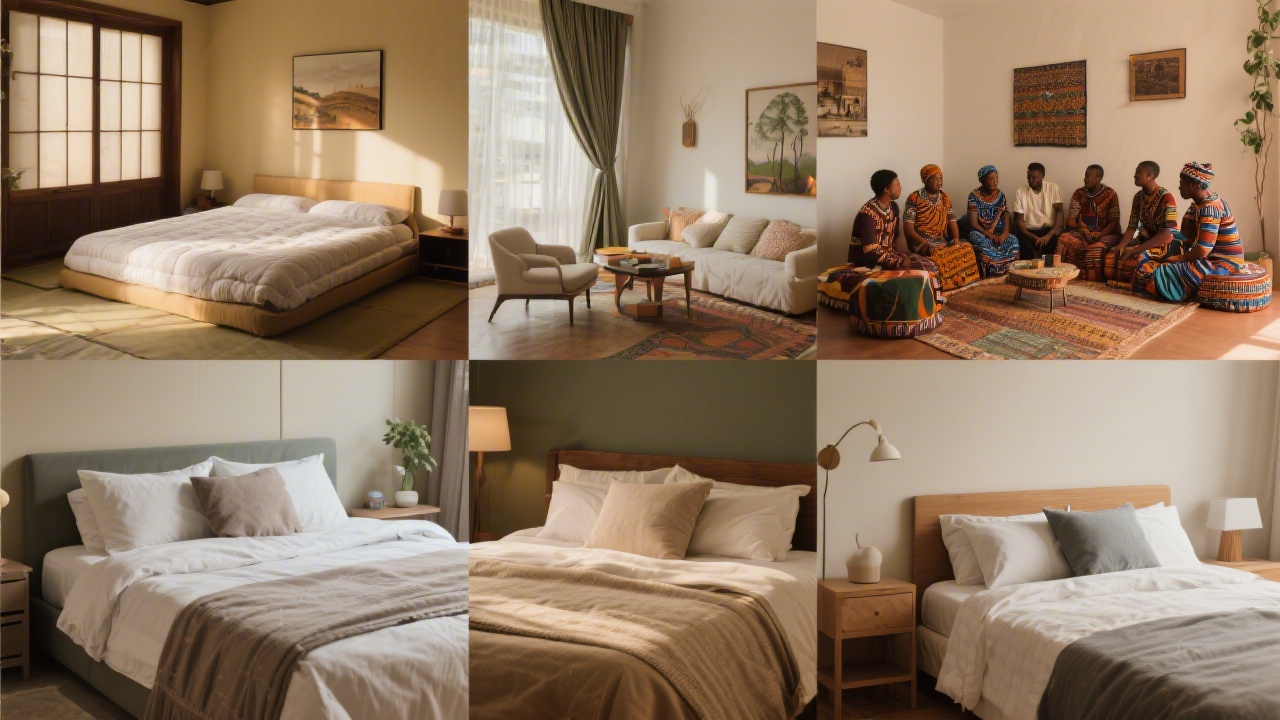
by Imagine explaining the Western concept of sleep to a Balinese villager — one person, alone, in a dark room, for eight uninterrupted hours, every night. The villager might find it isolating and strange. Sleep is not universal. How, when, where, and with whom we sleep are deeply cultural acts, shaped by climate, religion, economics, and tradition.
Japan: Inemuri — Sleeping in Public
In Japan, sleeping in public — on trains, at desks, in meetings — carries no social stigma. The practice is called inemuri, literally "sleeping while present." In Japanese workplace culture, inemuri can signal dedication: you are so committed to your work that you have exhausted yourself. It is a mark of industriousness, not laziness.
Japanese sleep architecture also differs from Western norms. Traditionally, Japanese families sleep on futons on the floor rather than elevated beds. Futons are stored during the day, freeing floor space — a reflection of multi-use living environments. Research has found that Japanese adults average some of the lowest sleep durations in the developed world, around 6.5 hours per night.
Spain and Mediterranean Europe: The Siesta
The siesta — a post-lunch rest of 20–40 minutes — is physiologically sound. Research from Harvard Medical School found that habitual siesta-takers have a 37% lower risk of dying from heart disease compared to non-nappers. The midday dip in alertness (roughly 1–3 p.m.) corresponds to a genuine circadian trough independent of food intake.
True siestas in rural Spain can extend 1–2 hours, involving a full sleep cycle. Urban Spain has progressively shifted away from the practice due to globalized work schedules, though midday rest remains more culturally accepted than in northern Europe or North America.
Indigenous Cultures: Co-Sleeping as the Norm
Solo infant sleep — placing a baby in its own room from birth — is a Western anomaly in global terms. In the vast majority of human cultures, infants and young children sleep alongside parents or extended family. Anthropologist James McKenna at Notre Dame has documented co-sleeping among the Mayan communities of Mexico, Aboriginal Australians, Japanese families, and dozens of other cultures.
The anthropological consensus is that solitary infant sleep is a recent, culturally specific practice. McKenna's research shows that mother-infant co-sleeping pairs synchronize breathing rhythms and sleep cycles, potentially providing protective arousal signals. Safe co-sleeping guidelines now acknowledge cultural variation while addressing specific risk factors.
West Africa: Communal and Polyphasic Sleep
In many West African communities, sleep is a communal activity. Extended family households sleep in shared spaces, with children distributed among adults. The concept of a private bedroom as the standard sleeping environment is largely absent.
Polyphasic sleep — sleeping in multiple short bouts across the 24-hour cycle — is common in equatorial regions where midday heat makes afternoon activity impractical. Researchers studying traditional Senegalese and Ghanaian communities have found that polyphasic patterns are physiologically well-tolerated and not associated with the health costs of sleep deprivation.
Norway and Scandinavia: Outdoor Infant Napping
In Scandinavian countries, it is common practice — and in some areas officially recommended — to put infants outside for naps in cold weather. Danish and Norwegian parents place bundled babies in prams outside cafes, homes, and daycare centers, even in temperatures well below freezing. The logic: cold air promotes deeper, longer sleep and reduces exposure to indoor pathogens. Studies from Finnish and Swedish pediatric researchers have supported the safety and sleep quality benefits of the practice.
The Amondawa of Brazil: No Sleep Words
Researchers studying the Amondawa people of Brazil found that their language lacks abstract time concepts — including, notably, words for distinct sleep periods. Time is structured around activity cycles rather than clock hours, and sleep integrates fluidly with rest and waking. Their sleeping patterns align closely with natural light-dark cycles, with no concept equivalent to "going to bed."
What Global Sleep Variation Tells Us
The diversity of global sleep practices reveals several things Western sleep science often overlooks:
- Eight consecutive hours of solitary sleep is not a biological universal — it is a cultural norm.
- Co-sleeping, polyphasic sleep, and public napping are all physiologically viable alternatives with distinct benefits.
- The anxiety and medicalization surrounding sleep in Western countries may be partly a product of cultural expectations rather than biological needs.
- Whatever your sleep environment looks like, the fundamentals — adequate duration, comfortable surface, darkness, consistent schedule — appear cross-culturally important.
Ready to improve your sleep surface?
The right mattress makes a measurable difference in sleep quality, temperature regulation, and morning recovery. The Saatva Classic is our top-rated pick for most sleepers.
Frequently Asked Questions
Key Takeaways
- Japan: Inemuri — Sleeping in Public: a key factor in making the right sleeping decision.
- Spain and Mediterranean Europe: The Siesta: a key factor in making the right sleeping decision.
- The villager might find it isolating and strange.
- How, when, where, and with whom we sleep are deeply cultural acts, shaped by climate, religion, economics, and tradition.
- Japan: Inemuri — Sleeping in Public In Japan, sleeping in public — on trains, at desks, in meetings — carries no social stigma.
Our Top Pick: Saatva Classic
Voted best luxury innerspring mattress with exceptional lumbar support and white-glove delivery.
Check Price & AvailabilityWhat is inemuri in Japanese culture?
Inemuri (居眠り) means "sleeping while present" in Japanese. It refers to the culturally accepted practice of falling asleep in public — on trains, at work, in meetings — without social stigma. In Japan, inemuri can signal hard work and dedication rather than laziness.
Is the siesta scientifically supported?
Yes. Research from Harvard Medical School found that habitual napping reduced cardiovascular mortality risk by 37%. The midday alertness dip around 1–3 p.m. is a genuine circadian phenomenon, not just a cultural habit. A 20–30 minute nap during this window improves cognitive performance without causing sleep inertia.
Is co-sleeping with infants normal globally?
Yes. Solitary infant sleep is a Western minority practice globally. Most human cultures practice some form of co-sleeping — infants and young children sleeping alongside parents or family members. Anthropological and pediatric research treats co-sleeping as the historical and global norm, with specific safety guidelines to address modern risk factors.
Which country has the least sleep?
Studies consistently find Japan among the lowest-sleeping developed nations, averaging around 6.5 hours per night. South Korea and Singapore also rank near the bottom in sleep duration surveys. The United States averages approximately 6.8 hours, below the recommended 7 hours.
Why do Scandinavians put babies outside to sleep?
Scandinavian parents place bundled infants in prams outdoors for naps, even in cold weather, based on the belief that cold air promotes deeper, longer sleep and reduces indoor pathogen exposure. Pediatric research from Finland and Sweden has supported the safety of this practice for appropriately dressed infants.