
 by
by Voted best luxury innerspring mattress with exceptional lumbar support and white-glove delivery.
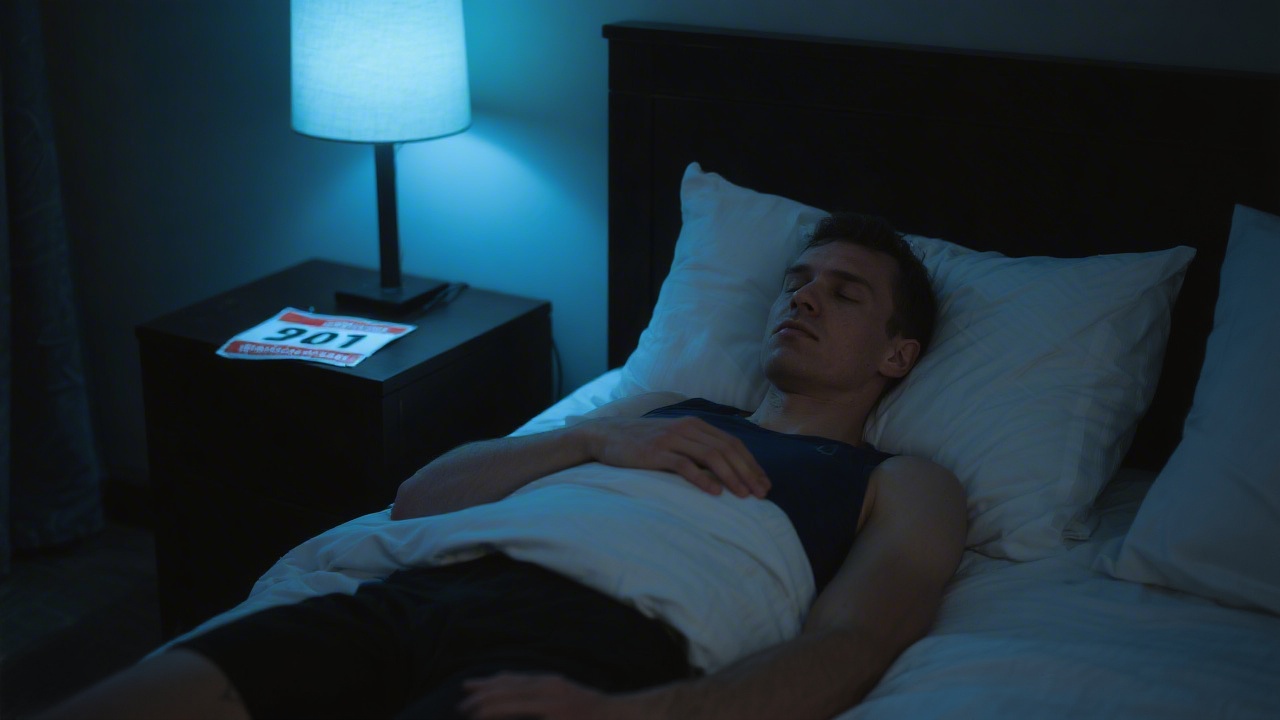
Check Price & Availability FAQPage", "mainEntity": [ { "@type": "Question", "name": "How much does pre-race sleep actually matter?", "acceptedAnswer": { "@type": "Answer", "text": "The night immediately before a race has minimal independent effect on performance. What matters far more is cumulative sleep over the preceding 5-7 days. Athletes who sleep well throughout race week consistently outperform those who only try to sleep well the night before." } }, { "@type": "Question", "name": "What should I do if I cannot sleep the night before a race?", "acceptedAnswer": { "@type": "Answer", "text": "Do not try to force sleep \u2014 the anxiety of not sleeping becomes self-fulfilling. Keep your sleep environment dark and cool, avoid looking at the clock, do slow breathing exercises, and remind yourself that one poor night has minimal race-day impact if the preceding week was well-slept." } }, { "@type": "Question", "name": "Should I take melatonin before a race?", "acceptedAnswer": { "@type": "Answer", "text": "Low-dose melatonin (0.5-1mg) 90 minutes before bed can help with sleep onset anxiety without causing next-day grogginess. Avoid higher doses \u2014 5-10mg supplements are pharmacological, not physiological, and can cause overshooting that leaves you groggy." } }, { "@type": "Question", "name": "How does sleep affect reaction time in competition?", "acceptedAnswer": { "@type": "Answer", "text": "Sleep deprivation impairs reaction time more than almost any other cognitive function. After 17 hours without sleep, reaction time degrades to the equivalent of 0.05% blood alcohol content. For sports requiring rapid decision-making, this is a meaningful competitive disadvantage." } }, { "@type": "Question", "name": "What is sleep loading and does it work?", "acceptedAnswer": { "@type": "Answer", "text": "Sleep loading (deliberately extending sleep in the days before competition) is supported by research. Stanford studies on basketball players showed performance improvements after 5-7 weeks of sleep extension. For competition prep, adding 30-60 minutes per night in the 5 days before a target event is the practical protocol." } } ] }The night before a big race, most athletes do one of two things: either they sleep surprisingly well and feel great at the start line, or they spend four hours staring at the ceiling — and then run a personal best anyway.
Both outcomes point to the same truth: the night before competition is the least important sleep of the week. The research on this is consistent enough to be called settled.
The Sleep Loading Protocol: Why Race Week Matters More Than Race Night
Cheri Mah's landmark research at Stanford's Sleep and Performance Research Center found that elite athletes who extended their sleep by 30-60 minutes per night for 5-7 weeks showed significant improvements in sprint time, reaction time, and self-reported vigor — without any change in training load.
The mechanism: sleep debt is cumulative, and performance deficits from chronic mild sleep restriction accumulate in ways that feel normal because they are gradual. Athletes do not experience them as fatigue — they experience them as baseline.
The practical implication for competition prep: start extending your sleep 5-7 days before a target event. Add 30-60 minutes per night. Go to bed slightly earlier. Eliminate alcohol entirely. Protect your sleep environment with particular attention to temperature and noise.
This is sleep loading, and it works.
What Actually Determines Race-Day Performance
Research on sleep and athletic performance shows a clear hierarchy:
- Cumulative sleep quality over the training block — weeks and months of consistent 8+ hours determine aerobic capacity, muscle development, and injury resilience
- Sleep in the 5-7 days immediately before competition — the race-week loading window that directly determines cognitive sharpness, glycogen stores, and reaction time at the start line
- The night immediately before competition — minimal independent effect if the preceding week was well-slept
Most athletes invert this hierarchy — they sleep inconsistently throughout training, do nothing special during race week, and then obsess about the one night that matters least.
Pre-Competition Anxiety and Sleep: What Is Happening Physiologically
The specific barrier to pre-race sleep is not insomnia in the clinical sense — it is cortisol and adrenaline. Competition stress activates the hypothalamic-pituitary-adrenal (HPA) axis, elevating cortisol and suppressing melatonin. This is adaptive — your body is preparing you for a physical challenge — but it is counterproductive when you are trying to sleep.
What does not work: forcing sleep, clock-watching, taking large doses of melatonin, drinking alcohol to take the edge off (suppresses deep sleep and growth hormone), or sleeping in a new environment without your regular sleep cues.
What works: a consistent pre-sleep routine practiced throughout training, low-dose melatonin (0.5-1mg), cognitive acceptance of pre-race arousal as normal and performance-neutral, and a cool dark environment.
Race-Week Sleep Protocol: Day by Day
7 days before: Begin extending sleep by 30-45 minutes. Eliminate alcohol entirely. Maintain your regular sleep schedule — do not try to sleep earlier than usual, just extend it on the back end.
5-4 days before: Continue extended sleep. Reduce evening training intensity — lower cortisol allows easier sleep onset. Optimize your sleep environment: room temperature 65-68 degrees F, complete darkness, white noise if needed. Our guide on optimal sleep temperature covers the temperature research.
3-2 days before: Maintain extended sleep. This is the most critical window. Reduce caffeine after 2 PM.
Night before: Accept that you may sleep less well than usual. This is normal and physiologically inconsequential given the prior week. Keep your routine identical to every other night. Do not try anything new.
Race morning: Add an extra 15-20 minutes of relaxed rest even if not sleeping. Physiological rest without active sleep still benefits cognitive readiness.
FAQs
How much does pre-race sleep actually matter?
The night immediately before a race has minimal independent effect on performance. What matters is cumulative sleep over the preceding 5-7 days. Athletes who sleep well throughout race week consistently outperform those who only try to sleep well the night before.
What should I do if I cannot sleep the night before a race?
Do not try to force sleep. Keep your environment dark and cool, avoid looking at the clock, do slow breathing exercises, and remind yourself that one poor night has minimal race-day impact if the preceding week was well-slept.
Should I take melatonin before a race?
Low-dose melatonin (0.5-1mg) 90 minutes before bed can help with sleep onset anxiety without causing next-day grogginess. Avoid higher doses — they are pharmacological, not physiological, and can cause overshooting.
How does sleep affect reaction time in competition?
After 17 hours without sleep, reaction time degrades to the equivalent of 0.05% blood alcohol content — a meaningful competitive disadvantage in any sport requiring rapid decisions.
What is sleep loading and does it work?
Sleep loading involves deliberately extending sleep in the days before competition. Stanford studies showed performance improvements after 5-7 weeks of sleep extension. Adding 30-60 minutes per night in the 5 days before a target event is the practical protocol.