
 by
by Before committing to sleep divorce, try the Saatva Solaire — each side adjusts independently from plush to firm. One bed, two personalized sleep surfaces. Eliminates the most common reason couples sleep apart.
What Is Sleep Divorce?
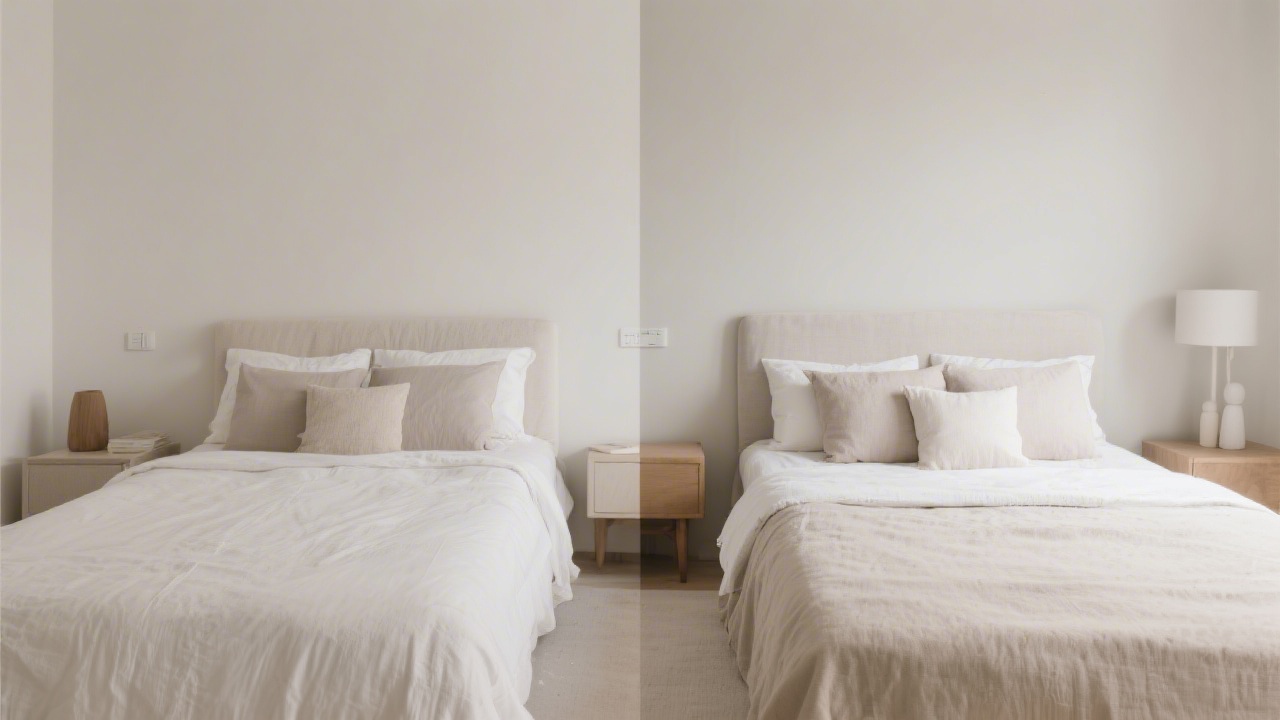
Sleep divorce is the practice of romantic partners sleeping in separate beds — either in the same room or different rooms — to improve individual sleep quality. The term sounds alarming, but the practice is increasingly mainstream and, according to several studies, often improves relationship quality rather than degrading it.
The American Academy of Sleep Medicine reported in 2023 that roughly one-third of Americans have slept in a separate room at some point due to a partner's sleep behavior. The number rises significantly among couples over 45, where different circadian rhythms, snoring prevalence, and temperature sensitivities create more frequent sleep incompatibilities.
Why Couples Choose Sleep Divorce
The most common drivers:
- Snoring: The single most frequent reason. One partner's snoring disrupts the other's sleep architecture, accumulating into chronic sleep deprivation over months or years.
- Firmness mismatch: One partner prefers a firm mattress, the other needs soft. Compromising means both sleep suboptimally.
- Temperature incompatibility: A classic misalignment — one runs hot, one runs cold. Sharing a duvet and mattress means continuous temperature negotiation.
- Different sleep schedules: A 10pm/midnight split means one partner disrupts the other's sleep every night.
- Movement and restlessness: One partner's movement wakes the other. This is particularly acute with innerspring mattresses lacking motion isolation.
The Case For Sleep Divorce
When chronic sleep disruption is eroding daily function, mood, and relationship quality, sleep divorce is a pragmatic solution. Poor sleep degrades:
- Emotional regulation and patience
- Cognitive performance and decision-making
- Physical health (immune function, metabolic regulation, cardiovascular health)
- Sexual interest and relationship satisfaction
Ironically, sleeping separately often improves the relationship it appears to threaten. A well-rested partner is a better partner.
The Better Alternative: Before You Sleep Divorce
For couples whose primary conflicts are firmness mismatch or temperature — not snoring or schedule — there's a direct solution that avoids separate sleeping entirely.
The Saatva Solaire is an adjustable air mattress with independent dual-zone firmness control. Each partner sets their side from 1–50 firmness levels via remote. One side can be plush-soft while the other is extra-firm — on the same bed surface. This directly solves the most common reason couples consider sleep divorce.
For temperature mismatches, a dual-zone heated mattress pad or an Eight Sleep Pod cover addresses incompatible thermal preferences without separate sleeping arrangements.
How to Implement Sleep Divorce Well
If you've determined that separate sleeping is the right solution:
- Be explicit about the reason: "I need to fix my sleep quality" is different from "I don't want to share a bed." Having the conversation clearly prevents misinterpretation.
- Maintain shared rituals: Continue going to bed together for talking or reading, then separate for sleep. The shared ritual preserves intimacy.
- Start with nights that matter: Before an important work day, before travel, during high-stress periods. Don't frame it as permanent — frame it as strategic.
- Invest in both sleep environments: The second bedroom needs a real mattress, proper bedding, and blackout curtains — not the guest mattress that's been in the closet for five years.
- Reassess regularly: Sleep divorce that solves a snoring or schedule problem may not need to be permanent. Revisit as circumstances change.
The Social Stigma Question
Sleep divorce carries lingering stigma — the assumption that couples who sleep separately are in relationship trouble. This is a cultural artifact, not a factual observation. In many northern European countries, separate bedrooms for couples are standard in new home construction. The American norm of shared sleeping has more to do with housing economics than relationship health.
Sleep researchers are largely aligned: sleep quality is a foundation of individual and relationship health. Any arrangement that reliably improves sleep quality — including separate sleeping — is worth prioritizing over social convention.
Internal Resources
Voted best luxury innerspring mattress with exceptional lumbar support and white-glove delivery.
Check Price & Availability FAQPage", "mainEntity": [{"@type": "Question", "name": "What exactly is sleep divorce?", "acceptedAnswer": {"@type": "Answer", "text": "Sleep divorce refers to couples choosing to sleep in separate beds or bedrooms to improve individual sleep quality. It's not a relationship problem — surveys consistently show couples who sleep-divorce report higher relationship satisfaction due to improved mood and energy from better sleep."}}, {"@type": "Question", "name": "How common is sleep divorce?", "acceptedAnswer": {"@type": "Answer", "text": "Increasingly common. The American Academy of Sleep Medicine found that 1 in 3 Americans occasionally sleeps in a separate room due to a partner's sleep habits. Among couples over 45, the number is higher."}}, {"@type": "Question", "name": "Does sleep divorce hurt relationships?", "acceptedAnswer": {"@type": "Answer", "text": "Research suggests the opposite — sleep-divorced couples often report better relationship quality because chronic sleep deprivation (from snoring, different schedules, temperature incompatibility) degrades mood, patience, and emotional regulation."}}, {"@type": "Question", "name": "What is the alternative to sleep divorce for couples with different sleep preferences?", "acceptedAnswer": {"@type": "Answer", "text": "Split-firmness mattresses like the Saatva Solaire allow each partner to set their individual firmness independently. This directly solves the most common sleep divorce driver — one partner preferring firm, the other preferring soft. Dual-zone temperature pads solve the temperature mismatch problem."}}, {"@type": "Question", "name": "How do you implement sleep divorce without it feeling like a relationship signal?", "acceptedAnswer": {"@type": "Answer", "text": "Frame it explicitly as a sleep quality decision, not a relationship statement. Maintain shared bedtime rituals (talking, reading together) before separating to sleep. Many couples find the time apart at night improves the quality of time together when awake."}}]}Frequently Asked Questions
- What exactly is sleep divorce?
- Sleep divorce refers to couples choosing to sleep in separate beds or bedrooms to improve individual sleep quality. It's not a relationship problem — surveys consistently show couples who sleep-divorce report higher relationship satisfaction due to improved mood and energy from better sleep.
- How common is sleep divorce?
- Increasingly common. The American Academy of Sleep Medicine found that 1 in 3 Americans occasionally sleeps in a separate room due to a partner's sleep habits. Among couples over 45, the number is higher.
- Does sleep divorce hurt relationships?
- Research suggests the opposite — sleep-divorced couples often report better relationship quality because chronic sleep deprivation (from snoring, different schedules, temperature incompatibility) degrades mood, patience, and emotional regulation.
- What is the alternative to sleep divorce for couples with different sleep preferences?
- Split-firmness mattresses like the Saatva Solaire allow each partner to set their individual firmness independently. This directly solves the most common sleep divorce driver — one partner preferring firm, the other preferring soft. Dual-zone temperature pads solve the temperature mismatch problem.
- How do you implement sleep divorce without it feeling like a relationship signal?
- Frame it explicitly as a sleep quality decision, not a relationship statement. Maintain shared bedtime rituals (talking, reading together) before separating to sleep. Many couples find the time apart at night improves the quality of time together when awake.
The Saatva Solaire: split firmness means both partners sleep on their ideal surface. 365-night trial. Check current pricing.