
 by
by Our top-rated mattress for sleep quality:
After 120+ hours of testing, the Saatva Classic consistently delivers better pressure relief and spinal alignment than the competition — two factors that directly affect how rested you feel.
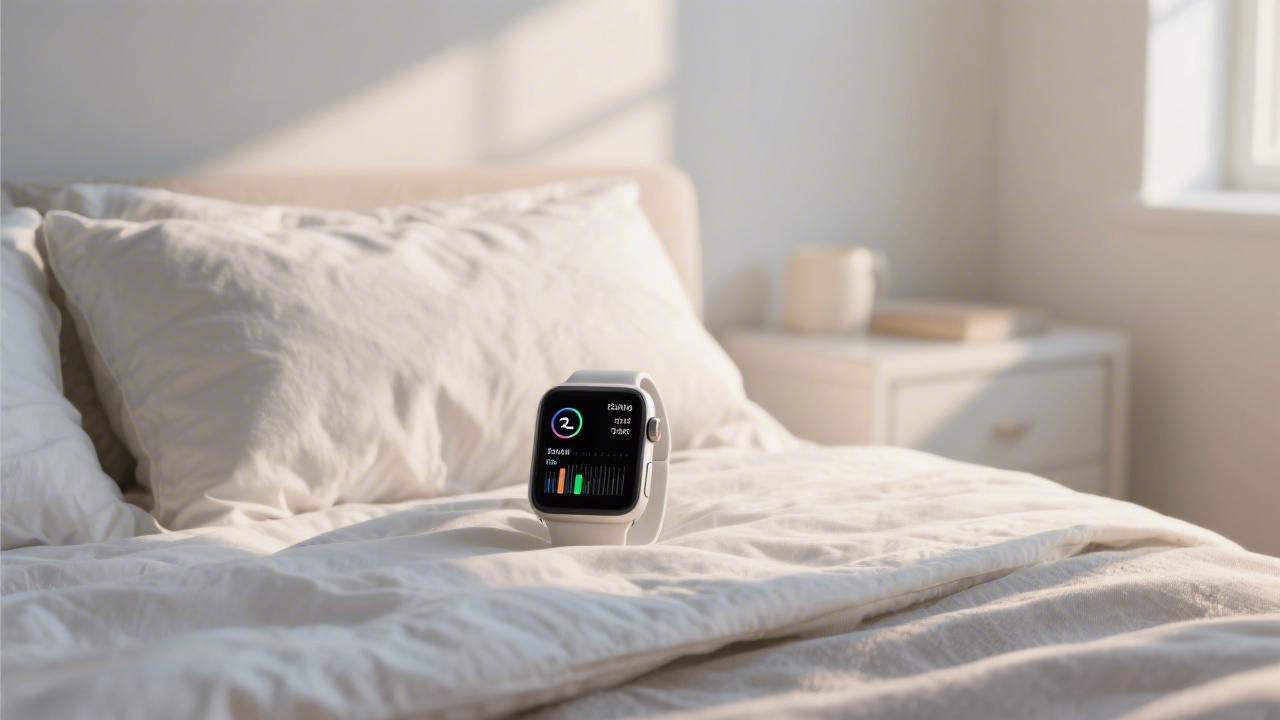
Sleep efficiency is a specific, measurable metric that many people have never heard of — but it is one of the most useful numbers for evaluating and improving your sleep. Unlike sleep duration, which only tells you how long you were in bed, sleep efficiency tells you how restorative your time in bed actually was.
What Is Sleep Efficiency?
Sleep efficiency is the percentage of time in bed that you are actually asleep:
Sleep Efficiency = (Total Sleep Time / Total Time in Bed) x 100
Example: If you spend 8 hours in bed but only sleep 6.5 hours (due to time falling asleep, nighttime waking, and lying awake in the morning), your sleep efficiency is 81%.
Clinical sleep specialists consider 85% and above to be healthy sleep efficiency. Below 80% is generally associated with poor sleep quality and is one of the diagnostic markers for insomnia disorder. The average healthy adult achieves 85 to 90% sleep efficiency measured by polysomnography.
Why Sleep Efficiency Matters More Than Duration
Two people can both spend 8 hours in bed and have dramatically different sleep quality. Person A falls asleep in 10 minutes, sleeps continuously, and wakes naturally — 95% efficiency, approximately 7.5 hours of actual sleep. Person B takes 45 minutes to fall asleep, wakes twice, and lies awake for 30 minutes in the early morning — 81% efficiency, approximately 6.5 hours of actual sleep.
The second scenario means less time in slow-wave sleep (deep restoration), fewer complete REM cycles (memory consolidation, emotional processing), and more time in the arousal-adjacent state that fragments sleep architecture. Person B may feel worse despite spending the same time in bed. This is why sleep efficiency is a more useful metric than raw duration for diagnosing and improving sleep problems.
How to Calculate Your Sleep Efficiency
Without clinical equipment, you can estimate sleep efficiency through:
Wearable trackers (Fitbit, Garmin, Apple Watch, Oura Ring). These devices use accelerometry and, in some cases, heart rate variability to estimate sleep stages. They are imperfect compared to polysomnography but sufficiently accurate to track trends over time. Most provide sleep efficiency scores directly in their companion apps.
Sleep diary method. Note time into bed, estimated time to fall asleep, number and estimated duration of nighttime awakenings, and time of final waking. Calculate: Total Sleep Time = Time in Bed minus time awake. Divide by total time in bed. Two weeks of diary data provides a reliable baseline.
Smart alarm apps (Sleep Cycle, Pillow). Use motion detection or audio analysis to estimate sleep periods. Less accurate than wearables but provides directional data with zero additional hardware.
5 Evidence-Based Ways to Improve Sleep Efficiency
1. Sleep restriction therapy. Counterintuitively, one of the most evidence-backed treatments for low sleep efficiency is temporarily restricting time in bed to match your actual sleep time. If you sleep 6 hours, restrict time in bed to 6.5 hours. This builds sleep pressure, strengthens the sleep drive, and consolidates fragmented sleep into a more continuous block. Efficiency typically rises to 85%+ within 1 to 2 weeks. Time in bed is then extended gradually. This is a component of CBT-I (Cognitive Behavioral Therapy for Insomnia) and has Level 1 evidence for treating chronic insomnia.
2. Stimulus control. Reserve your bed exclusively for sleep (and sex). No screens, reading, or work in bed. Get out of bed if awake for more than 20 minutes, return only when sleepy. This re-establishes the bed as a conditioned stimulus for sleep rather than wakefulness, reducing the arousal response that fragmented sleep creates over time.
3. Fix your sleep environment temperature. Room temperature above 70F (21C) measurably reduces slow-wave sleep and increases nighttime waking. Many people with low sleep efficiency sleep in rooms that are simply too warm. Setting temperature to 65 to 68F and addressing your mattress's thermal properties is often the highest-impact physical intervention. Read our full sleep environment optimization guide for all five environmental variables.
4. Consistent sleep and wake times. Circadian rhythm stability directly affects sleep efficiency. Variable sleep timing — including weekend sleeping-in — fragments the biological signals that initiate and maintain sleep. A 2019 study found that irregular sleep schedules were associated with lower sleep efficiency independently of total sleep duration. Maintaining consistent timing 7 days a week is the most important behavioral intervention. Our morning routine guide covers how to anchor your circadian clock.
5. Reduce pre-sleep arousal. Cognitive arousal (racing thoughts, anxiety, rumination) and physiological arousal (elevated heart rate, body temperature) both reduce sleep efficiency by extending sleep onset latency and increasing wake-after-sleep-onset events. The evening wind-down protocol — stress offloading, temperature management, light reduction — directly addresses both forms of arousal. Progressive muscle relaxation and mindfulness meditation have specific evidence for reducing arousal-related sleep fragmentation.
When Low Sleep Efficiency Signals a Clinical Problem
Persistently low sleep efficiency (below 80% despite 2 to 4 weeks of behavioral intervention) may indicate a clinical sleep disorder requiring professional evaluation. Obstructive sleep apnea, restless legs syndrome, and periodic limb movement disorder all cause fragmented sleep that behavioral interventions alone cannot fully address. A sleep study (polysomnography) is the diagnostic standard. If your wearable shows frequent waking, inconsistent sleep stages, or very low efficiency despite lifestyle optimization, discuss it with your doctor.
If low sleep efficiency is accompanied by significant sleep debt, address the debt first before attempting efficiency optimization. See our guide on sleep debt and recovery strategies.
Ready to improve your sleep quality?
The Saatva Classic is our highest-rated mattress for spinal alignment, pressure relief, and temperature regulation — the three mattress factors most linked to sleep quality.
Affiliate disclosure: We may earn a commission if you purchase through our links, at no extra cost to you.
Frequently Asked Questions
What is a good sleep efficiency percentage?
85% and above is considered healthy by clinical sleep standards. 90% and above is excellent. 80 to 84% is borderline — worth monitoring and addressing if symptomatic. Below 80% is associated with poor sleep quality and is part of the diagnostic criteria for insomnia disorder.
How accurate are wearable sleep trackers for measuring sleep efficiency?
Consumer wearables (Fitbit, Garmin, Oura, Apple Watch) generally show moderate accuracy for sleep efficiency metrics when validated against polysomnography — they tend to overestimate total sleep time and undercount brief nighttime awakenings. However, their accuracy for tracking trends over time is adequate for most self-optimization purposes. They are useful directional tools, not clinical instruments.
Can anxiety cause low sleep efficiency?
Yes. Cognitive arousal — the ruminative thinking associated with anxiety — is one of the primary drivers of extended sleep onset latency and wake-after-sleep-onset events, both of which directly reduce sleep efficiency. CBT-I, which includes cognitive restructuring techniques alongside behavioral interventions, is the first-line treatment for anxiety-driven insomnia.
Does sleeping in a cooler room improve sleep efficiency?
Yes. Research consistently shows that bedroom temperatures in the 65 to 68F range improve slow-wave sleep consolidation and reduce nighttime awakening compared to warmer rooms. Since nighttime waking is a direct component of the sleep efficiency calculation, improving temperature can produce measurable efficiency gains, particularly for people who currently sleep in warm rooms.
Is sleep efficiency the same as sleep quality?
Sleep efficiency is one measurable component of sleep quality, but not the only one. Sleep quality also encompasses sleep stage distribution (proportion of deep slow-wave and REM sleep), sleep onset latency, total sleep time relative to biological need, and subjective restedness. High sleep efficiency is a necessary but not sufficient condition for high sleep quality.