
 by
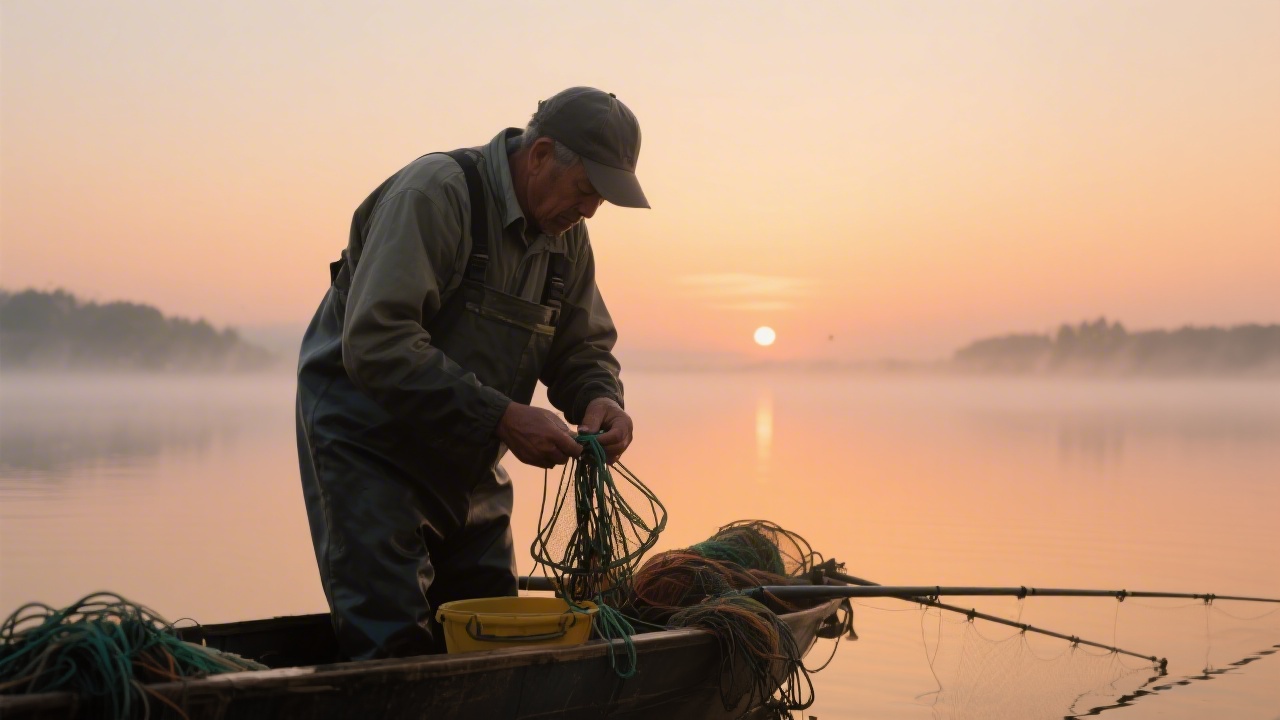
by Serious fishing — whether tournament bass, fly fishing prime morning hatches, or offshore saltwater starts — requires being on the water at hours that your circadian system finds genuinely hostile. The 4am alarm is not a minor inconvenience. It's a physiological challenge that requires strategy, not just willpower.
Our Top Mattress Pick for Sleep Quality
The Saatva Classic is our editors' top pick for sleep quality and spinal support — available in three firmness levels with white-glove delivery.
Check Saatva Pricing & Availability →The Circadian Reality of Pre-Dawn Starts
At 4am, your core body temperature is at its daily minimum, cortisol is at its lowest point before the morning surge, and melatonin is still elevated. This is the biological low point of the 24-hour cycle — you are physiologically in the middle of sleep, not preparing to perform.
This matters on the water. Balance and proprioception — relevant on boats, wading streams, and rocky shorelines — are significantly impaired in the first 2–3 hours after a pre-dawn wake. Anglers who have waded in cold streams in the dark at 4:30am and taken falls often blame carelessness; the more accurate explanation is that they were physiologically asleep in a moving body.
Sleep Timing for Fishing Trips: The Math
The arithmetic of fishing sleep is simple but often ignored:
- Target wake time: 4:00am
- Required sleep duration: 7.5 hours (5 full sleep cycles)
- Required sleep onset: 8:30pm at latest
- Pre-sleep routine start: 7:30–8pm
Most fishing trip evenings don't look like this. Dinner, tackle prep, trip conversation, and evening excitement push bedtime to 10pm or later. The resulting 6-hour night is functional for one day, damaging over multiple days.
Strategies to close the gap:
- Advance preparation: Prepare all tackle, gear, and food the afternoon before departure. Nothing kills early bedtime faster than last-minute prep at 9pm.
- Anchor the bedtime: If the group is staying up, announce your early exit without apology. Sleep is a performance choice, not a social failure.
- Front-load social time: Plan the main social interaction of fishing trips in the afternoon or early evening, not after dinner. Post-dinner wind-down should be quiet and individual.
Strategic Napping for Multi-Day Fishing
On multi-day fishing trips, the afternoon nap is not optional — it's the mechanism by which pre-dawn starts become sustainable without cumulative impairment.
Nap guidelines for fishing trips:
- Timing: 1–3pm, after returning from morning fishing and eating lunch
- Duration: 20–25 minutes (Stage 2, no sleep inertia) or 90 minutes (full cycle, including REM — more restorative but requires waking naturally or with precise alarm)
- Environment: Cool, dark, quiet — pack an eye mask and earplugs specifically for camp naps
- Post-nap: 10 minutes outside in light and light movement to clear sleep inertia before afternoon fishing
Tournament Fishing and Sleep Strategy
Tournament anglers face a specific challenge: pre-competition anxiety disrupts sleep on the nights it matters most. The pattern mirrors athletic pre-competition insomnia — you need good sleep, you're anxious about getting it, the anxiety prevents it, and you start day 1 compromised.
The research on pre-competition sleep is counterintuitive: the night before the night before a tournament matters more than the pre-competition night itself. Ensuring excellent sleep 2 nights out provides physiological reserves that buffer one poor night. Focusing all sleep optimization effort on the night before a tournament increases performance anxiety, which further disrupts sleep. Redirect the focus to building a consistent pre-sleep routine that runs automatically regardless of what's happening tomorrow.
Chronotype and Fishing Schedule Alignment
Not all anglers are natural morning people. If you're a chronotype evening type (natural bedtime 12am, natural wake time 8am), 4am fishing starts require you to operate against your biological preference — a genuine performance limitation that willpower cannot fully overcome. Options:
- Gradual advance: 3–4 weeks before a major trip, shift bedtime and wake time 15 minutes earlier every 2–3 days. Morning light exposure immediately upon waking accelerates the process.
- Select target species and timing: Some excellent fishing doesn't require pre-dawn starts. Late morning topwater fishing, afternoon salt marsh wading, evening hatch fishing — all compatible with later chronotypes.
- Accept performance reality: Pre-dawn performance for evening types is genuinely limited and improves across the morning as circadian phase advances. Expect and accept that the first hour on the water is warm-up, not peak performance.
Your sleep quality the other 360 days of the year matters for fishing performance too. A mattress that provides good spinal support and enables genuine deep sleep is the foundation — wading rivers, handling boats, and casting all day create significant physical demands that require quality restorative sleep between sessions. Your bedroom environment is the infrastructure on which all other sleep strategies depend.
Our Top Mattress Pick for Sleep Quality
The Saatva Classic is our editors' top pick for sleep quality and spinal support — available in three firmness levels with white-glove delivery.
Check Saatva Pricing & Availability →Frequently Asked Questions
How do I get enough sleep when I need to be up at 4am for fishing?
The answer is earlier bedtime, not shortened sleep. If you need to wake at 4am and require 7.5 hours of sleep, bedtime must be 8–8:30pm the night before. This seems early, but 4–5am fishing starts are incompatible with 11pm bedtimes without accumulating sleep debt. Go to bed with the intention of sleeping when darkness and schedule permit — not when you feel tired by habit.
Is one night of short sleep before fishing trips okay?
A single night of 5–6 hours is manageable for a healthy adult — performance degradation is real but tolerable. The problem is that most fishing trips involve multiple pre-dawn starts. By day 3 of 5am starts with 6-hour nights, cumulative sleep debt is equivalent to full sleep deprivation and significantly impairs reaction time, balance on boats, and decision-making — all safety-relevant on the water.
Do fishing naps in the afternoon help recovery?
Yes — a 20–45 minute nap between noon and 3pm on fishing trip days addresses the accumulated sleep debt without interfering with night sleep. Longer naps (60–90 minutes, full sleep cycles) are even more restorative but risk producing grogginess (sleep inertia) and can delay nighttime sleep onset if taken too late. On multi-day fishing trips, treat the afternoon nap as mandatory recovery protocol.
What about fly fishermen who fish evenings for hatches?
Evening hatch fishing (7–9pm) combined with early morning fishing creates a genuine sleep compression problem — you may have a 9-hour window between returning from evening fishing and leaving for morning fishing. Prioritize 7.5 hours of core sleep by going directly to sleep after returning, keeping the post-fishing routine minimal, and eating dinner before the evening session rather than after.
Can chronotype help me become a better morning fisherman?
Chronotype (your natural sleep timing preference) has a genetic component that is relatively fixed in adults, but circadian rhythms can shift by 1–2 hours through consistent schedule modification over 2–3 weeks. Gradual advance of bedtime and wake time by 15 minutes every 3 days is more effective than sudden schedule shifts. Morning light exposure immediately upon waking accelerates circadian advance.
Our Top Mattress Pick
The Saatva Classic consistently ranks #1 for comfort, support, and long-term durability.
View Saatva Classic Pricing & Details