
 by
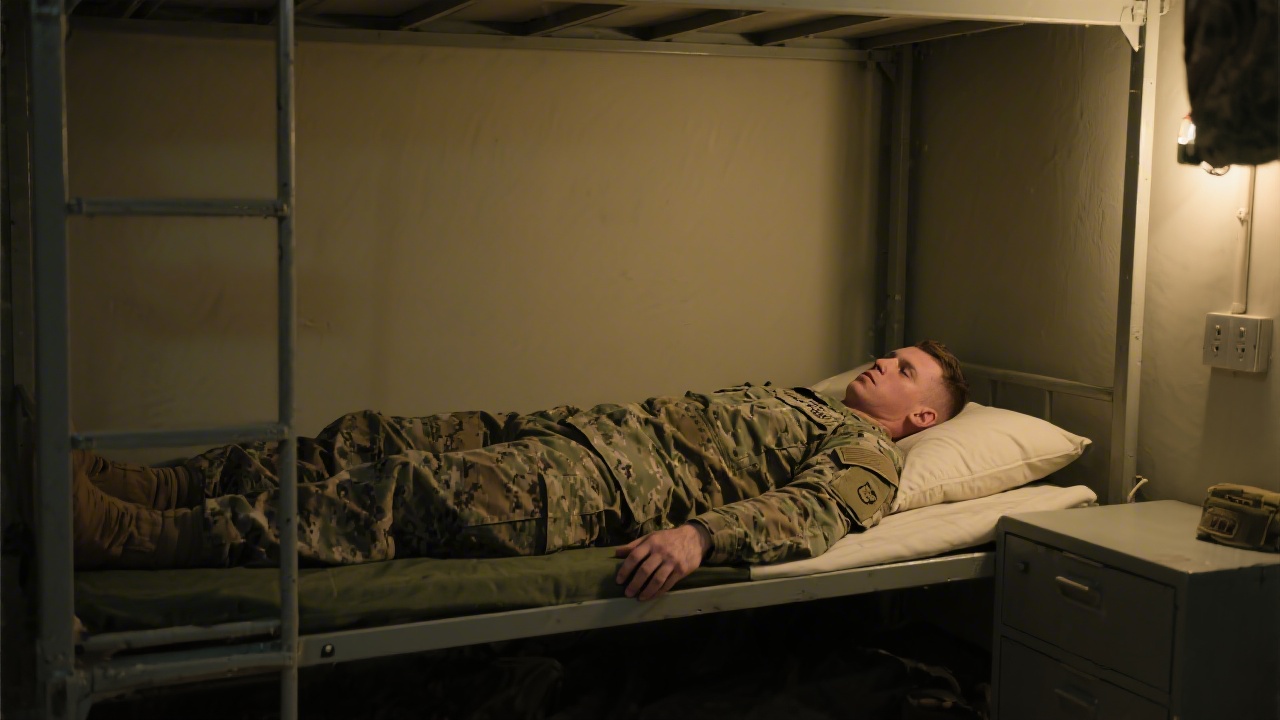
by Sleep deprivation has been called the U.S. military's "hidden enemy." A 2020 RAND Corporation analysis found that 72% of active-duty service members reported sleep duration below the recommended 7–9 hours, and 36% screened positive for a clinical sleep disorder. The consequences are operational — impaired judgment, reduced reaction time, degraded situational awareness — and extend into long-term health outcomes including cardiovascular disease, metabolic disorders, and mental health comorbidities.
Our Mattress Recommendation
After testing dozens of mattresses for sleep quality and support, the Saatva Classic consistently ranks at the top for recovery sleep — particularly important for shift workers and high-demand professionals.
The Operational Sleep Challenge
Military sleep problems begin with the environment of service itself. Training cycles, watch rotations, and deployment schedules create sleep fragmentation patterns that no amount of individual sleep hygiene can fully overcome. A soldier on a 4-hour watch rotation sleeps in 2–4 hour blocks — never completing the full 90-minute ultradian cycle structure required for complete cognitive restoration. Over weeks and months, the cognitive debt accumulates while adaptation to the disruption masks the subjective awareness of impairment.
Combat deployments add environmental stressors: hypervigilance triggered by threat environments suppresses the parasympathetic activity required to initiate sleep, even when the tactical situation permits rest. Service members describe lying in their rack unable to disengage the threat-monitoring state — a physiological reality rooted in elevated cortisol and norepinephrine levels that persist for hours after stand-down.
The Army Sleep Management Program
The U.S. Army's Performance Triad (P3) program, launched in 2014, formally recognized sleep as a performance pillar alongside activity and nutrition. The program promotes 7–8 hours of sleep per night, cognitive behavioral sleep strategies for insomnia, and unit-level sleep education. Implementation has been uneven — field commanders retain significant discretion over training schedules, and mission requirements routinely override sleep protocols — but the program represents the first formal institutional acknowledgment that sleep is a military readiness issue, not a personal preference.
The Army's Sleep for Performance guide, available through the Human Performance Optimization initiative, covers tactical napping protocols (the "combat nap"), caffeine timing tables keyed to operational tempo, and light management strategies for shift workers in garrison. These are evidence-based tools adapted for the specific demands of military service.
PTSD and Sleep: A Complex Relationship
Post-traumatic stress disorder disrupts sleep through multiple mechanisms: hyperarousal (elevated baseline threat vigilance), nightmares (trauma-related REM disruption), and insomnia (difficulty initiating and maintaining sleep driven by fear of nightmares and heightened startle response). Approximately 70–90% of veterans with PTSD report significant sleep disturbance — making sleep dysfunction the most prevalent symptom cluster, ahead of intrusive thoughts and avoidance behaviors in most clinical surveys.
The treatment picture has improved substantially. Image Rehearsal Therapy (IRT) — a cognitive technique involving the conscious re-scripting of recurrent nightmares during waking hours — reduces nightmare frequency and severity in 60–70% of PTSD cases. Prazosin, an alpha-1 blocker originally used for blood pressure management, has demonstrated efficacy for PTSD-related nightmares in multiple randomized controlled trials. Cognitive Behavioral Therapy for Insomnia (CBT-I) has strong evidence specifically in veteran populations and is now the VA's first-line treatment for chronic insomnia.
Recovery Protocols for Veterans Transitioning to Civilian Life
The transition from military to civilian life often involves a paradoxical worsening of sleep before improvement. The removal of forced schedule structure — reveille, lights out, mandatory PT — disrupts the external zeitgebers that had regulated circadian timing. Without imposed structure, sleep timing drifts, often delayed, with veterans keeping 2–4am bedtimes within months of separation.
Effective transition protocols emphasize replacing military structure with self-imposed schedule anchors: fixed wake times (regardless of sleep quality the night before), morning light exposure, and physical activity timed to the afternoon. These three interventions create the circadian anchoring that external military schedules previously provided. The VA's Whole Health program integrates sleep coaching into the standard veteran health assessment.
Mattress selection matters more in veteran sleep recovery than most recognize. Body pain from service injuries — back injuries, shoulder damage, knee problems — interacts with sleep surface to either support or disrupt recovery sleep. See our guide to mattresses for back pain for options that address the postural needs common in veterans with service-related injuries.
Our Mattress Recommendation
After testing dozens of mattresses for sleep quality and support, the Saatva Classic consistently ranks at the top for recovery sleep — particularly important for shift workers and high-demand professionals.
Frequently Asked Questions
Does the military have any official sleep requirements?
The Army's Performance Triad program recommends 7–8 hours of sleep per night and includes formal sleep education in its health promotion curriculum. The DoD Health Affairs policy recognizes sleep as a readiness component. However, operational requirements override these recommendations in practice, and no universal regulatory floor exists comparable to civilian occupational safety sleep standards.
What is a combat nap and how long should it last?
A combat nap is a 20–30 minute tactical rest period designed to restore alertness without creating sleep inertia. The Army's sleep guidance recommends limiting naps to 20 minutes to avoid entering slow-wave sleep, which causes the groggy, impaired state that follows deeper napping. For longer rest opportunities (45–90 minutes), the recommendation is to allow a full sleep cycle to complete before standing to avoid the worst inertia.
Is CBT-I effective for veterans with PTSD?
Yes. Multiple VA-funded studies have shown CBT-I significantly reduces insomnia severity in veterans with PTSD, even when the PTSD itself is not fully resolved. In several trials, treating the insomnia component with CBT-I also produced secondary improvements in PTSD symptom severity scores — suggesting the relationship is bidirectional. The VA now delivers CBT-I through both in-person clinics and a validated digital app (CBT-I Coach).
How long does it take to recover normal sleep after deployment?
Post-deployment sleep normalization varies significantly by individual, deployment length, and combat exposure. Studies following returning service members show that sleep quality metrics improve over 6–18 months post-return, but a meaningful subset — particularly those with unaddressed PTSD or TBI — show persistent disruption. Early intervention (VA screening, CBT-I referral) significantly improves outcomes compared to waiting for self-resolution.
Can sleep deprivation be "banked" before a deployment?
Pre-deployment sleep banking — extending sleep duration above baseline in the days before a period of expected restriction — does provide some buffer. Research shows that banking 2 hours above habitual sleep nightly for one week prior to a restriction period improves performance and alertness during the restriction window compared to going in at baseline. The buffer is real but limited — it does not prevent the full effects of sustained deprivation beyond 4–5 days.