
 by
by The mattress that supports your creative recovery
The Saatva Classic combines innerspring support with Euro pillow top comfort — built for people who take their rest seriously.
Why Visual Work Demands More From Sleep
Photography is not passive observation. It is active visual cognition — pattern recognition, tonal judgment, compositional decision-making, and the emotional reading of a scene that separates technically correct images from meaningful ones. All of these cognitive functions sit downstream of sleep quality.
The visual cortex consolidates sensory memories during sleep. When you study light at golden hour, analyze how a shadow falls across a subject's face, or train your eye on the tonal range of a landscape, those observations are encoded during the night's sleep cycle that follows. Skip the sleep, and much of what you absorbed during the shoot is partially lost before it can become intuitive skill.
The Research: Sleep and Visual Perception
A 2000 study by Walker and colleagues in Nature Neuroscience showed that sleep — specifically a sleep cycle including REM — was required for improvement on a visual texture discrimination task. Subjects who practiced the task but were kept awake showed no improvement. Those who slept showed significant gains measured the next day. The improvement was not just from rest, but from the memory consolidation that happens only during sleep.
Visual contrast sensitivity — the ability to distinguish fine gradations between light and dark areas — measurably degrades after 24 hours of sleep deprivation. For photographers, this means blown highlights that look acceptable at 2am during an edit look obviously crushed when reviewed the next morning after sleep.
Color perception is similarly affected. The opponent color channels in the visual cortex require restored neural resources to operate at full discrimination capacity. Sleep-deprived post-processing produces color grading decisions that sober, rested eyes will often find incoherent the following day.
Compositional Decision-Making and Prefrontal Cortex Load
Deciding whether to include a distracting element in frame, whether the negative space in a portrait serves the image, or whether a crop ratio changes the emotional weight of a shot — these are prefrontal cortex decisions. The prefrontal cortex is one of the brain regions most sensitive to sleep deprivation.
A study from the University of Pennsylvania's sleep research group found that subjects showed impaired judgment and decision-making after as few as six hours of sleep per night for two weeks — without ever feeling severely impaired subjectively. Photographers who believe they are "used to" shooting on five hours of sleep may simply have adjusted to a chronically degraded baseline of visual judgment.
REM Sleep and Creative Post-Processing
REM sleep is associated with a cognitive mode characterized by loose, associative thinking — the same mode that generates unconventional creative connections. Researchers at Harvard found that subjects in a REM-enriched sleep condition outperformed non-REM-sleeping counterparts on tasks requiring novel associations between disparate elements.
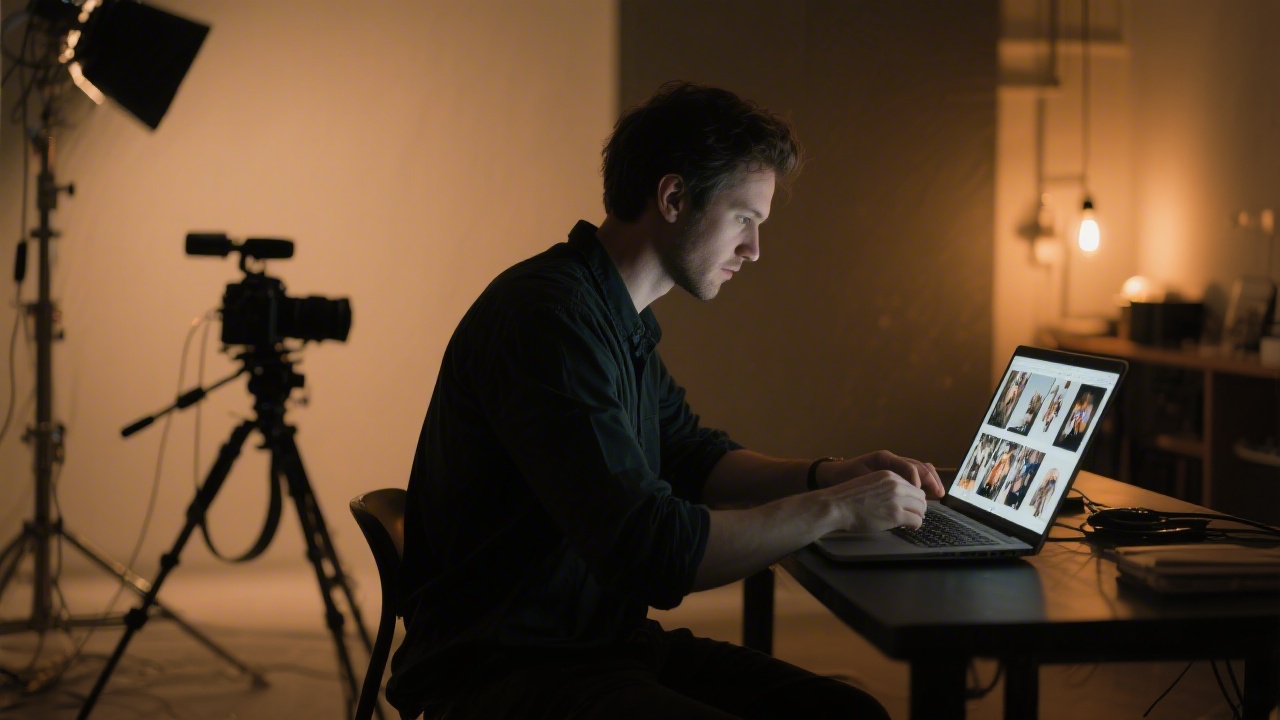
For photographers, this translates practically: the edit that felt stuck at 10pm — the color grade that felt too conventional, the crop that felt wrong but you couldn't articulate why — often resolves after a full night of sleep. Many working photographers describe returning to sessions after sleep and immediately seeing solutions they couldn't access the night before. This is not metaphor. It is REM-dependent associative processing at work.
Sleep Architecture for Photographers: What to Prioritize
A complete sleep architecture cycles through NREM stages 1-3 and REM approximately every 90 minutes. For photographers, the most valuable cycles are the later ones — the 5th and 6th sleep cycles contain the most REM sleep. This means that cutting sleep from 8 hours to 6 hours does not simply remove two hours of rest proportionally; it disproportionately removes the REM-rich final cycles where visual memory consolidation and creative processing peak.
Practical implications:
- Protect the last 90 minutes of your sleep window as aggressively as the first.
- Avoid alcohol before bed — even 1-2 drinks suppress REM in the second half of the night.
- If scheduling a shoot requires early waking, shift your entire sleep window earlier rather than simply cutting hours.
- On travel assignments with time zone changes, use melatonin (0.5mg) timed to your destination's target sleep window to re-anchor circadian rhythm within 2-3 days.
Golden Hour Shoots and Circadian Disruption
Photographers who regularly shoot at golden hour face a circadian tension: morning golden hour requires pre-dawn waking, while evening golden hour can push editing sessions well past midnight. Neither is inherently problematic as long as sleep timing is consistent. The problem is inconsistency — alternating between early and late schedules disrupts the circadian clock and degrades sleep quality regardless of total hours logged.
A practical approach: designate yourself primarily as a morning or evening shooter and plan your sleep schedule accordingly. If your work requires both, treat them as separate phases with a recovery night between them.
The Gear You Forget About
Photographers invest significantly in cameras, lenses, and lighting. The sensor capturing the image costs thousands. The visual system interpreting that image — your eyes, visual cortex, and creative judgment — costs nothing but sleep. A degraded visual system operating behind a $5,000 lens produces worse images than a rested visual system behind a $500 lens. The investment in quality sleep deserves the same intentionality as equipment investment.
Internal links: flexible work schedule and sleep, sleep and entrepreneurship, optimal sleep protocol, best mattress 2026.
Frequently Asked Questions
How does sleep deprivation affect photography?
Sleep deprivation impairs visual contrast sensitivity, color discrimination, and working memory — all critical for photography. Studies show sleep-deprived subjects show up to 12% reduction in contrast sensitivity threshold, making it harder to judge exposure, shadow detail, and color casts during shooting and post-processing.
Does REM sleep help with creative photo editing?
Yes. REM sleep is associated with broader associative thinking — the mental process that helps you see unexpected compositional possibilities or unconventional color grading choices. Photographers who log adequate REM sleep tend to report more creative confidence during editing sessions.
What's the best sleep schedule for photographers with irregular shoots?
Anchor your sleep window even when shoot times vary. Try to keep your wake time consistent within 30 minutes regardless of when you went to bed. This anchors your circadian rhythm while accommodating late-night events or early-morning golden hour sessions.
Can napping improve photographic creativity?
Short naps (10-20 minutes) improve alertness and motor coordination useful for steady handheld shooting. Longer naps (60-90 minutes) that include a full sleep cycle may provide the associative processing boost linked to creative breakthroughs in editing and composition.
Does mattress quality affect a photographer's sleep?
Frequent position changes due to discomfort fragment sleep architecture, reducing the deep sleep and REM your visual cortex needs for recovery. A mattress that minimizes pressure points and motion transfer allows uninterrupted sleep cycles — particularly important for photographers who spend long periods on their feet.
The mattress that supports your creative recovery
The Saatva Classic combines innerspring support with Euro pillow top comfort — built for people who take their rest seriously.
Our Top Mattress Pick
The Saatva Classic consistently ranks #1 for comfort, support, and long-term durability.
Key Takeaways
Sleep for Photographers is a topic that depends heavily on individual needs and preferences. The most important thing is to consider your specific situation — your body type, sleep position, and personal comfort preferences — before making any decisions. When in doubt, take advantage of trial periods to test before committing.