
 by
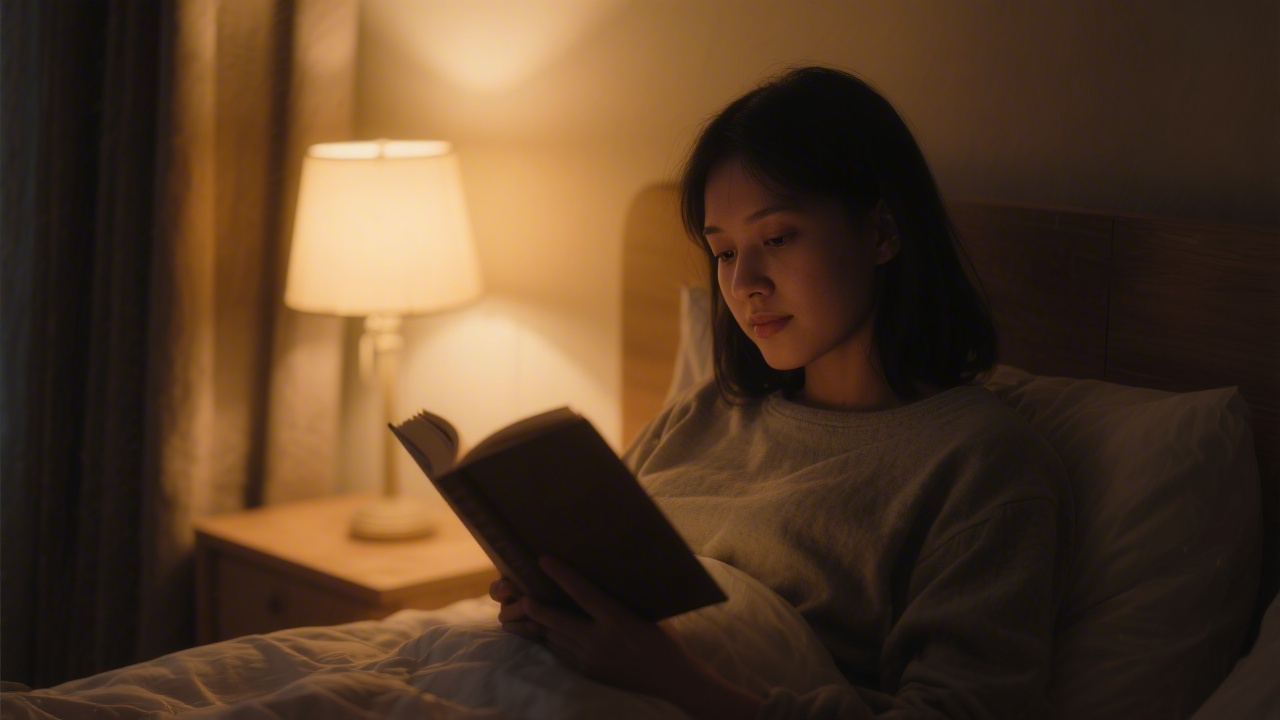
by Reading before bed is one of the oldest sleep rituals in literate culture — and one of the few pre-sleep habits that's been rigorously studied. The news is mostly good for physical book readers, and more complicated for those who read on screens.
Our Top Mattress Pick for Sleep Quality
The Saatva Classic is our editors' top pick for sleep quality and spinal support — available in three firmness levels with white-glove delivery.
Check Saatva Pricing & Availability →The Science: Why Book Reading Helps Sleep
A 2009 University of Sussex study tested multiple relaxation methods and found that reading for just six minutes reduced physiological stress markers by 68% — outperforming music, walking, and hot beverages. The researchers concluded that "getting lost in a book is the ultimate relaxation" because it occupies the mind fully enough to distract from personal worries while not generating new alertness.
From a neuroscience perspective, narrative fiction reading engages the default mode network (imagination, empathy, mental simulation) while suppressing the analytical prefrontal activity associated with planning, rumination, and problem-solving. This is exactly the cognitive shift needed for sleep onset — from analytical to associative thinking, from directed attention to diffuse relaxation.
Physical Book vs. Screen: The Light Problem
This distinction matters more than most readers realize. A Harvard Medical School study compared reading on a light-emitting device (iPad) to reading a physical book for four hours before bed. The screen readers:
- Took an average of 10 minutes longer to fall asleep
- Showed measurably suppressed melatonin levels (up to 55% lower at bedtime)
- Had less REM sleep
- Reported feeling less rested the following morning
- Had more difficulty waking at their target time
The mechanism is clear: blue light in the 450–490nm wavelength range — emitted by virtually all backlit screens — directly suppresses melanopsin-containing retinal ganglion cells that control circadian rhythm signaling. Physical books emit no light; you receive only reflected ambient light, which at warm-spectrum bedroom levels has minimal melatonin impact.
E-Readers: The Middle Ground
E-ink displays (Kindle, Kobo, Boox) are significantly better than tablets for pre-sleep reading. E-ink does not emit continuous backlighting — it reflects ambient light like paper. However, front-lit e-readers do use LED lighting, which introduces some blue-light exposure.
Best practices for e-readers at night:
- Use the warmest available light color setting (most Kindles: "warm light" slider to maximum)
- Reduce brightness to the minimum comfortable reading level
- Enable night mode / inverted text (white text on black) to further reduce light emission
- Avoid Kindle Fire and other tablet-style readers — stick to pure e-ink devices
What to Read (and What to Avoid)
Genre matters for sleep quality:
- Best for sleep: Literary fiction, gentle mysteries (classic rather than thriller), re-reads of beloved books, nature writing, travel narrative, short story collections
- Acceptable: History, biography, moderate-paced thrillers if you can put them down
- Avoid before bed: Fast-paced thrillers and horror (increase arousal and anxiety), work-related non-fiction (activates professional problem-solving), self-help books about productivity (creates goal-activation thoughts), news
Re-reading familiar books is an underrated strategy. Because the narrative is known, there's no anxiety about plot resolution, no need for focused comprehension — just pleasurable drift through familiar story. Many committed re-readers report they use certain beloved books specifically as sleep aids because their familiar comfort is reliably soporific.
Lighting for Bedroom Reading
The right reading light makes a significant difference to both comfort and sleep onset. Key principles from the sleep environment research:
- Color temperature: 2700K or lower ("warm white" or "soft white" on packaging). Avoid "cool white" (4000K+) or "daylight" (5000–6500K) bulbs in bedroom reading lamps.
- Position: Light should fall on the page, not directly into your eyes. Over-the-shoulder positioning is ideal. Clip-on book lights should shine at the page angle, not upward.
- Intensity: Bright enough to read without squinting, but not so bright that it prevents melatonin production. A dimmer switch or a dedicated low-wattage (5–8W) warm reading bulb is ideal.
Building a Reading-to-Sleep Routine
The most powerful aspect of bedtime reading is its role as a behavioral anchor in a sleep routine. When reading consistently precedes sleep, the brain begins to associate the act of opening a book with sleep onset — a conditioned response that makes falling asleep progressively easier over time.
Protect reading time from phone interruptions. Reading a book while periodically checking social media is not reading for sleep — it's fragmented attention that delivers neither the cognitive offloading of genuine reading nor the relaxation of genuine disengagement. Phone in another room or face-down on silent is non-negotiable for reading as sleep aid. Your pre-sleep habits matter more cumulatively than any single technique.
Our Top Mattress Pick for Sleep Quality
The Saatva Classic is our editors' top pick for sleep quality and spinal support — available in three firmness levels with white-glove delivery.
Check Saatva Pricing & Availability →Frequently Asked Questions
Does reading before bed help or hurt sleep?
Physical book reading helps sleep significantly — a University of Sussex study found reading for just 6 minutes reduced stress levels by 68%, more than listening to music (61%), taking a walk (42%), or drinking tea (54%). The cognitive engagement of fiction reading occupies the verbal mind, reducing the ruminative thought loops that delay sleep onset.
Why is reading on a tablet worse than a physical book before bed?
Tablet and e-reader screens emit blue light in the 450–490nm range that suppresses melatonin production. A Harvard Medical School study found that people who read on light-emitting devices before bed took 10 minutes longer to fall asleep, had less REM sleep, and felt less rested the following morning compared to those reading physical books. E-ink readers (Kindle Paperwhite in dark mode, warm light) are a middle ground.
What types of books are best for pre-sleep reading?
Fiction — especially narrative-driven novels — is consistently better than non-fiction for pre-sleep reading. Fiction activates imagination and empathy networks rather than the analytical prefrontal circuits that generate planning and problem-solving thoughts. Avoid suspense thrillers and horror, which elevate arousal. Literary fiction, gentle mysteries, and re-reads of familiar favorites work best.
How long should I read before bed?
20–45 minutes is the optimal pre-sleep reading window for most people. Under 10 minutes is too brief to fully engage cognitive offloading. Over 60 minutes risks becoming alert from interesting content or losing track of time. Set a gentle timer if you tend to read past intended sleep time.
What's the best reading light to avoid disrupting sleep?
Warm-spectrum (2700K or lower) incandescent-equivalent bulbs or LED bulbs with 'warm white' or 'candlelight' settings. Position the light to illuminate the page without hitting your eyes directly. Dimmer switches that reduce both intensity and color temperature as the evening progresses are ideal. Avoid reading under cool-white LEDs (5000K+) which are among the highest melatonin-suppressing light sources in home environments.
Our Top Mattress Pick
The Saatva Classic consistently ranks #1 for comfort, support, and long-term durability.
View Saatva Classic Pricing & Details