
 by
by The Saatva Classic mattress is independently tested for pressure relief and spinal alignment — two factors that directly affect deep sleep and REM cycles. See current pricing →
Sleep hallucinations are vivid sensory experiences — visual, auditory, tactile, or kinesthetic — that occur in the transitional state between waking and sleep. They are not dreams, not psychosis, and not symptoms of mental illness in the vast majority of cases. They are a consequence of the brain partially occupying two states simultaneously.
Hypnagogic vs. Hypnopompic: The Distinction
Hypnagogic hallucinations occur while falling asleep — in the transition from wakefulness to sleep. The word comes from the Greek for "guiding into sleep" (hypnos: sleep, agogos: leading). They occur as the brain begins to enter REM-like activity while the conscious mind is still partially alert.
Hypnopompic hallucinations occur while waking up — as the brain transitions from sleep to full waking consciousness (hypnos: sleep, pompe: to send away). These tend to be more vivid and disorienting because the individual is moving toward clarity and yet perceiving experiences that don't exist.
Population prevalence: approximately 37% of people experience hypnagogic hallucinations with some frequency; hypnopompic hallucinations are slightly less common at roughly 12-13%. Both are more common during periods of sleep deprivation and stress.
What Do Sleep Hallucinations Look Like?
Visual
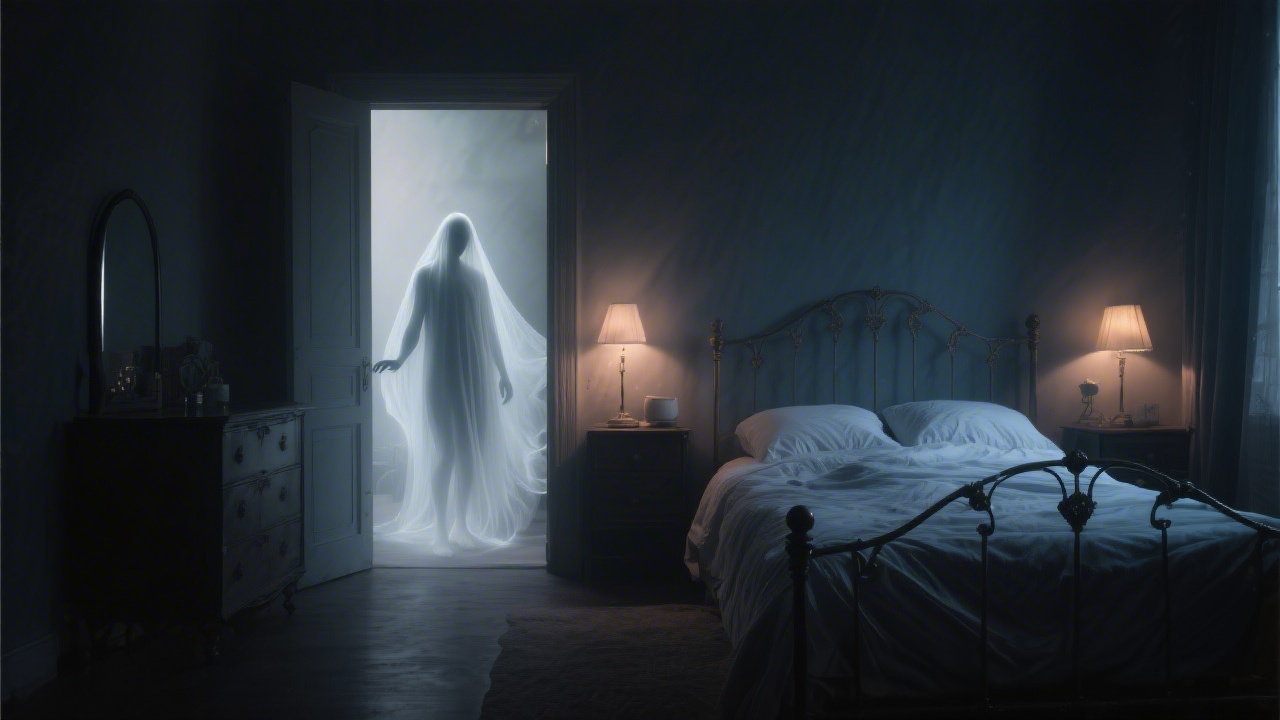
The most common form. Geometric patterns, phosphenes (light flashes), faces, figures, or fully formed scenes. Many people report seeing a person, shadow, or presence in the room — often perceived as standing near the bed. This is sometimes described culturally as a "presence," "visitor," or intruder, and has spawned folklore across cultures. The experience is neurological, not paranormal.
Auditory
Hearing voices, music, one's name being called, or isolated sounds without a source. Auditory hypnagogic experiences are sometimes dramatic — hearing a loud bang or one's name shouted just before sleep (exploding head syndrome is an extreme variant).
Tactile and Kinesthetic
Feeling of falling, floating, being touched, or pressure on the chest. The sensation of "falling" that produces the hypnic jerk — the sudden muscle contraction that wakes many people as they drift off — is a related transitional experience. The chest pressure sensation has been interpreted cross-culturally as supernatural attack; it is associated with sleep paralysis and physiologically benign.
The Neuroscience: Why They Happen
As the brain transitions into sleep, it progresses through a gradient of states rather than a clean switch. During this gradient, REM-like brain activity — including visual cortex activation, emotional processing, and motor suppression — can briefly activate while the self-monitoring prefrontal cortex still has some function. The result is that the brain generates imagery and sensation that is partly perceived consciously.
Factors that widen this transitional window include: sleep deprivation, irregular sleep schedules, high stress, and narcolepsy (where the REM/wake boundary is structurally more porous).
Sleep Paralysis and Its Relationship
Sleep paralysis — the temporary inability to move upon waking or falling asleep — frequently co-occurs with hypnagogic/hypnopompic hallucinations. The motor paralysis of REM (which prevents physical dream enactment) persists briefly into waking consciousness. Combined with visual hallucinations of a presence, this produces the classic sleep paralysis experience: unable to move, perceiving a threatening figure in the room.
Sleep paralysis occurs in roughly 8% of the population with some regularity. It resolves spontaneously within seconds to a few minutes and is physically harmless, though subjectively terrifying.
When Sleep Hallucinations Are Not Benign
Most sleep hallucinations require no intervention. Evaluation is appropriate when:
- They occur with excessive daytime sleepiness and sudden sleep attacks — this pattern suggests narcolepsy, which requires sleep study evaluation
- They occur alongside acting out during sleep (REM Sleep Behavior Disorder)
- They are accompanied by waking hallucinations (seeing or hearing things while fully alert) — this is a different clinical presentation requiring psychiatric evaluation
- They cause significant distress or avoidance of sleep
- Onset is new and unexplained in older adults — new hypnopompic hallucinations in those over 60 can be an early marker of neurodegenerative conditions
Reducing Frequency
Consistent sleep-wake schedules, adequate total sleep duration, and reduced sleep deprivation all decrease the frequency and intensity of sleep hallucinations. They are most common when the transition between sleep and waking is abrupt or irregular — which is why they cluster around shift work, travel, and periods of high stress.
The Saatva Classic mattress is independently tested for pressure relief and spinal alignment — two factors that directly affect deep sleep and REM cycles. See current pricing →
Frequently Asked Questions
Voted best luxury innerspring mattress with exceptional lumbar support and white-glove delivery.
Check Price & Availability FAQPage", "mainEntity": [{"@type": "Question", "name": "Are sleep hallucinations a sign of mental illness?", "acceptedAnswer": {"@type": "Answer", "text": "No, in the vast majority of cases. Hypnagogic and hypnopompic hallucinations in the context of sleep transitions are neurologically normal. Hallucinations that occur while fully awake and alert are a distinct clinical phenomenon."}}, {"@type": "Question", "name": "Can you control or stop a hypnagogic hallucination?", "acceptedAnswer": {"@type": "Answer", "text": "Becoming more alert (moving, opening your eyes fully, reaching for a light) typically ends the experience. However, if you want to observe them, relaxing and maintaining a passive observational stance can extend them — some meditators and lucid dream practitioners use this state deliberately as an entry point."}}, {"@type": "Question", "name": "Why do hypnagogic hallucinations feel so real?", "acceptedAnswer": {"@type": "Answer", "text": "Because they engage the same sensory processing systems as real perception. The visual cortex activates as it does during actual vision; the auditory cortex activates as it does during actual hearing. The brain isn't generating a 'fake' experience — it is genuinely experiencing it."}}, {"@type": "Question", "name": "Is exploding head syndrome related to sleep hallucinations?", "acceptedAnswer": {"@type": "Answer", "text": "Yes — exploding head syndrome (hearing a sudden loud bang or explosion while falling asleep or waking) is classified as a parasomnia in the same family as hypnagogic hallucinations. It is benign, more common in women, and typically stress-correlated."}}, {"@type": "Question", "name": "Can sleep hallucinations be triggered by substances?", "acceptedAnswer": {"@type": "Answer", "text": "Yes. Cannabis, psychedelics, and stimulants all alter the sleep/wake boundary and increase hypnagogic activity. Withdrawal from alcohol and benzodiazepines, which strongly suppress REM, can produce intense hypnopompic hallucinations as REM rebounds."}}]}- Are they a sign of mental illness? No — sleep-transition hallucinations are neurologically normal. Fully-awake hallucinations are clinically distinct.
- Can you stop them? Yes — becoming more alert ends them. Staying relaxed and passive extends them.
- Why do they feel real? Because they engage the same sensory cortex regions as actual perception.
- Is exploding head syndrome related? Yes — a parasomnia in the same family, benign and stress-correlated.
- Can substances trigger them? Yes — cannabis, psychedelics, and REM-rebound from alcohol/benzo withdrawal all increase frequency.