
 by
by Sleep hygiene is the term sleep researchers use for the set of behaviors and environmental conditions that consistently produce good sleep. It is not one thing — it is a system. Most people who "can't sleep" have several overlapping habits that work against each other, and fixing two or three of the most impactful ones produces a noticeable improvement within a week.
Here are 15 evidence-based habits ranked roughly by impact. The first five are the highest-leverage changes most people aren't making.
Saatva Classic → A supportive, breathable mattress is the physical substrate every good habit rests on. From $1,595.
Habit 1: Fixed Wake Time (More Important Than Bedtime)
Your wake time anchors your entire circadian rhythm. When you sleep in on weekends, you create what's called social jet lag — the equivalent of flying two time zones east every Monday morning. Fix your wake time 7 days a week, even on days you slept poorly. Bedtime will naturally adjust within a few days.
Habit 2: Morning Light Exposure (Within 30 Minutes of Waking)
Bright light in the morning (natural sunlight or a 10,000 lux light therapy box) suppresses residual melatonin and sets your circadian clock. This has a corresponding effect on evening melatonin onset — morning light exposure is associated with falling asleep more easily 14-16 hours later. Five minutes outside, looking toward (not at) the sky is sufficient on most days.
Habit 3: No Screens 60 Minutes Before Bed
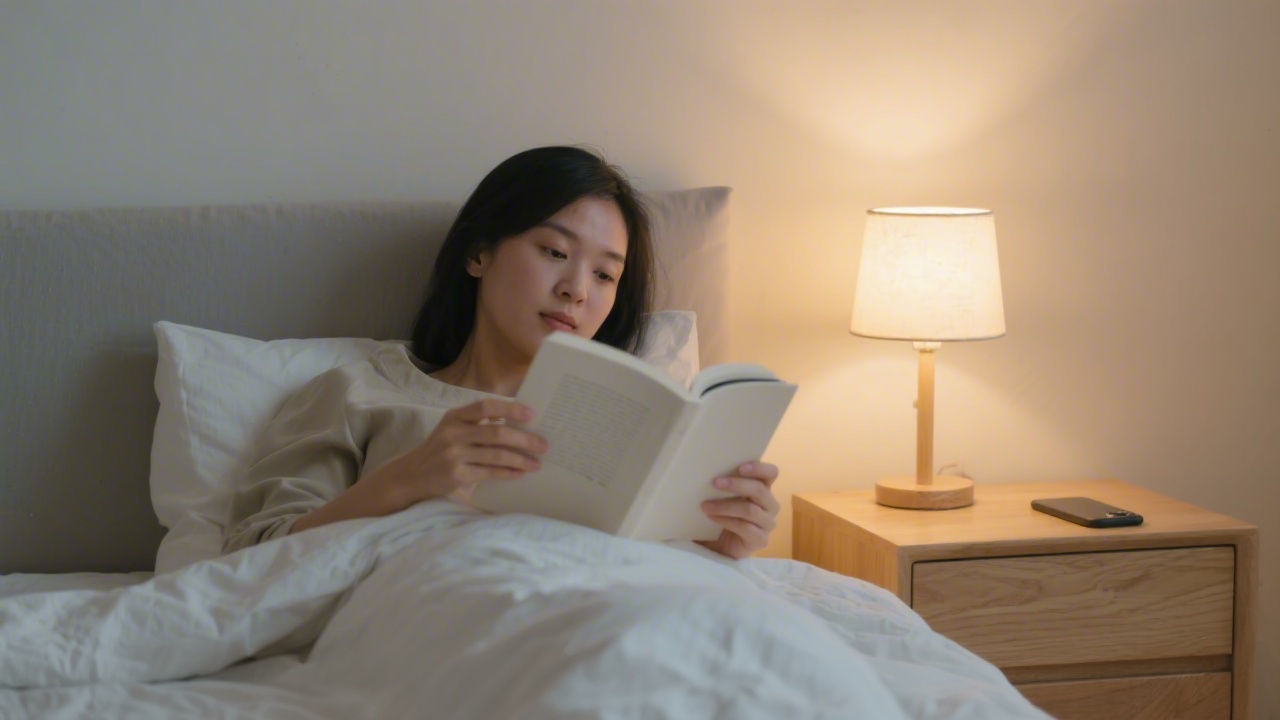
Blue light from screens delays melatonin onset by 1-3 hours. Night mode on your phone helps but does not fully eliminate the effect. The stimulating nature of social media and news content — regardless of light wavelength — keeps the prefrontal cortex active when it needs to be quieting down. Replace the last 60 minutes with reading (physical book), light stretching, or conversation.
Habit 4: Keep the Bedroom Cool, Dark, and Quiet
These three are bundled because they're all environmental manipulations with clear physiological bases. Cool (65-68°F) supports the body's natural core temperature drop. Dark (blackout curtains or sleep mask) prevents light from suppressing melatonin. Quiet or consistent white noise prevents the auditory cortex from staying alert to variable sounds.
Habit 5: Avoid Caffeine After 2 PM
Caffeine's half-life is 5-7 hours. A 3 PM coffee at 200mg contains 100mg of caffeine at 8-9 PM — still enough to reduce total sleep time and suppress deep sleep. People who believe they're "immune to caffeine" typically still show measurable reductions in slow-wave sleep in polysomnography studies.
Habit 6: Consistent Bedtime Routine (20-30 Minutes)
A wind-down routine signals to your brain that sleep is coming. The content matters less than consistency. Common components: dimming lights, light stretching or yoga, journaling, reading, herbal tea. The same sequence every night becomes a Pavlovian cue for sleep onset over 2-4 weeks.
Habit 7: No Alcohol Within 3 Hours of Bed
Alcohol is a sedative, not a sleep aid. It reduces sleep onset time but severely fragments the second half of the night — REM sleep is disproportionately suppressed. Net effect on sleep quality is negative even at one drink. If you drink, earlier in the evening is better.
Habit 8: Reserve the Bed for Sleep and Sex Only
The brain learns associations. If you work in bed, watch TV in bed, or scroll your phone in bed, the bed becomes associated with wakefulness. This is stimulus control — a core component of Cognitive Behavioral Therapy for Insomnia (CBT-I). Strict stimulus control means getting out of bed if you've been awake for more than 20 minutes.
Habit 9: Exercise — But Not Within 2 Hours of Bed
Regular aerobic exercise improves sleep quality, reduces sleep onset time, and increases slow-wave sleep. The timing caveat: vigorous exercise raises core body temperature for 1-2 hours afterward. Since sleep requires a body temperature drop, exercising close to bedtime can delay sleep onset. Morning or early afternoon exercise is ideal.
Habit 10: Manage Sleep Anxiety Separately
Performance anxiety about sleep ("I need to fall asleep") activates the arousal system, making it harder to sleep — a self-fulfilling cycle. The CBT-I technique of paradoxical intention (trying to stay awake with eyes open, lying still) breaks this cycle. If sleep anxiety is a chronic problem, CBT-I with a trained therapist is more effective than any sleep supplement.
Habit 11: Limit Naps to 20 Minutes Before 3 PM
A 20-minute nap (Stage 1-2 NREM only) improves afternoon cognitive performance without affecting nighttime sleep drive. Naps longer than 30 minutes enter slow-wave sleep — waking from this causes sleep inertia (grogginess) and reduces sleep pressure for the night. Naps after 3 PM delay nighttime sleep onset.
Habit 12: Optimize Your Mattress and Pillow
Discomfort and pain are direct causes of nighttime awakenings and light sleep. If you wake with back pain, hip discomfort, or arm numbness, your sleep surface is contributing to the problem. A mattress that properly supports your sleep position removes a physical obstacle that behavioral habits cannot overcome.
Habit 13: Eat Your Last Meal 2-3 Hours Before Bed
Digestion raises core body temperature and keeps the digestive system active — both interfere with the body's transition to sleep. Heavy, spicy, or high-fat meals close to bedtime are particularly disruptive. A small, easily digested snack (banana, small bowl of oatmeal) is acceptable if you're genuinely hungry.
Habit 14: Manage Light Throughout the Day
Light exposure is dose-dependent and bidirectional. Morning bright light advances your circadian phase (earlier sleep onset). Evening bright light delays it. After sunset, use dim, warm-toned lighting (<50 lux, <3000K). Candles, salt lamps, and incandescent dimmers approximate the lighting conditions your biology expects at this time.
Habit 15: Track Sleep Consistently
Wearable sleep trackers (Oura Ring, WHOOP, Garmin) are not perfectly accurate for sleep staging but are useful for identifying patterns — which nights you sleep poorly correlating with which daytime behaviors. Tracking also introduces a form of accountability. Avoid orthosomnia — anxiety about tracker data — which is a growing phenomenon with wearable users.
Saatva Classic → The mattress that supports every sleep hygiene habit you build. From $1,595.
Related Guides
- Best Temperature for Sleep
- Best Blackout Curtains for Darker Sleep
- Best Bedroom Colors for Sleep
- Best Mattresses 2026 — Our Full Rankings
Frequently Asked Questions
What is sleep hygiene?
Sleep hygiene is the collective term for behavioral and environmental practices that promote consistent, high-quality sleep. It includes habits like consistent sleep timing, light exposure management, and bedroom environment optimization. The term comes from sleep medicine — it does not refer to cleanliness.
How long does it take to improve sleep with better habits?
Most people notice improvement within 3-7 days of implementing the highest-leverage habits (fixed wake time, morning light, no late caffeine). Full circadian rhythm adjustment after major changes takes 2-4 weeks of consistent behavior. If sleep does not improve after 4 weeks of consistent sleep hygiene practice, consider CBT-I with a sleep therapist.
Does melatonin help with sleep hygiene?
Melatonin supplements (0.5-1mg taken 30-60 minutes before target bedtime) can help with circadian phase adjustment — particularly for jet lag or shift work. For ordinary sleep difficulty, melatonin is less effective than behavioral changes because the underlying issue is usually circadian misalignment or arousal, not a melatonin deficiency.
Is it bad to look at your phone in bed?
Yes, for two reasons: the blue light suppresses melatonin, and the content (social media, news, email) keeps the brain in a stimulated, alert state. Even "relaxing" videos keep the prefrontal cortex active. The hour before bed benefits most from activities that don't require cognitive engagement.
What is the single most impactful sleep hygiene change?
Fixing your wake time — getting up at the same time every day including weekends. This anchors your circadian rhythm more reliably than any other single change. Consistent wake time improves sleep onset, sleep quality, and daytime alertness within one to two weeks.