
 by
by Fix the root cause: your mattress
Poor sleep quality often starts with the wrong sleep surface. The Saatva Classic — our top-rated innerspring hybrid — is built to support proper sleep architecture with zoned lumbar support and pressure-relieving Euro pillow top.
See the Saatva Classic →What Is Sleep Inertia?
Sleep inertia is the transitional state between sleep and full wakefulness — characterized by cognitive impairment, disorientation, reduced motor dexterity, and strong desire to return to sleep. It's caused by the abrupt transition from sleep to wakefulness while adenosine is still present in the brain, combined with the slow dissipation of delta brain wave activity (associated with deep N3 sleep) after waking.
For most people, sleep inertia lasts 15–30 minutes. For people with high sleep debt, incorrect wake timing, or poor overall sleep quality, it can persist for 1–4 hours. In extreme cases — such as emergency responders who must perform immediately upon waking — impairment during peak sleep inertia is comparable to being legally drunk.
What Causes Severe Sleep Inertia?
1. Waking From Deep N3 Sleep
The severity of sleep inertia is directly related to the sleep stage you're in when your alarm fires. Waking from N3 (slow-wave deep sleep) causes significantly worse inertia than waking from N1 (light sleep) or during natural REM-to-wake transitions. N3 occurs primarily in the first two 90-minute cycles of the night — meaning a 6-hour sleeper who's woken mid-cycle will have worse inertia than a 7.5-hour sleeper (five complete cycles) woken at cycle completion.
2. Chronic Sleep Debt
The more sleep debt you carry, the more deep sleep your brain schedules — and the harder it is to transition out of it. People running chronic deficits have proportionally more N3 early in the night and a stronger homeostatic drive that resists the transition to wakefulness. This is why waking up tired despite 8 hours often involves a prolonged groggy period — the body wants more sleep.
3. Sleep Inertia Compounded by Sleep Disorders
Sleep apnea disrupts sleep architecture severely, preventing consolidated deep sleep and causing repeated microarousals. The result is that the brain is perpetually "starting" sleep cycles without completing them. Waking from this fragmented state with an alarm produces worse inertia than a single deep N3 interruption would.
4. Abrupt vs. Gradual Alarm
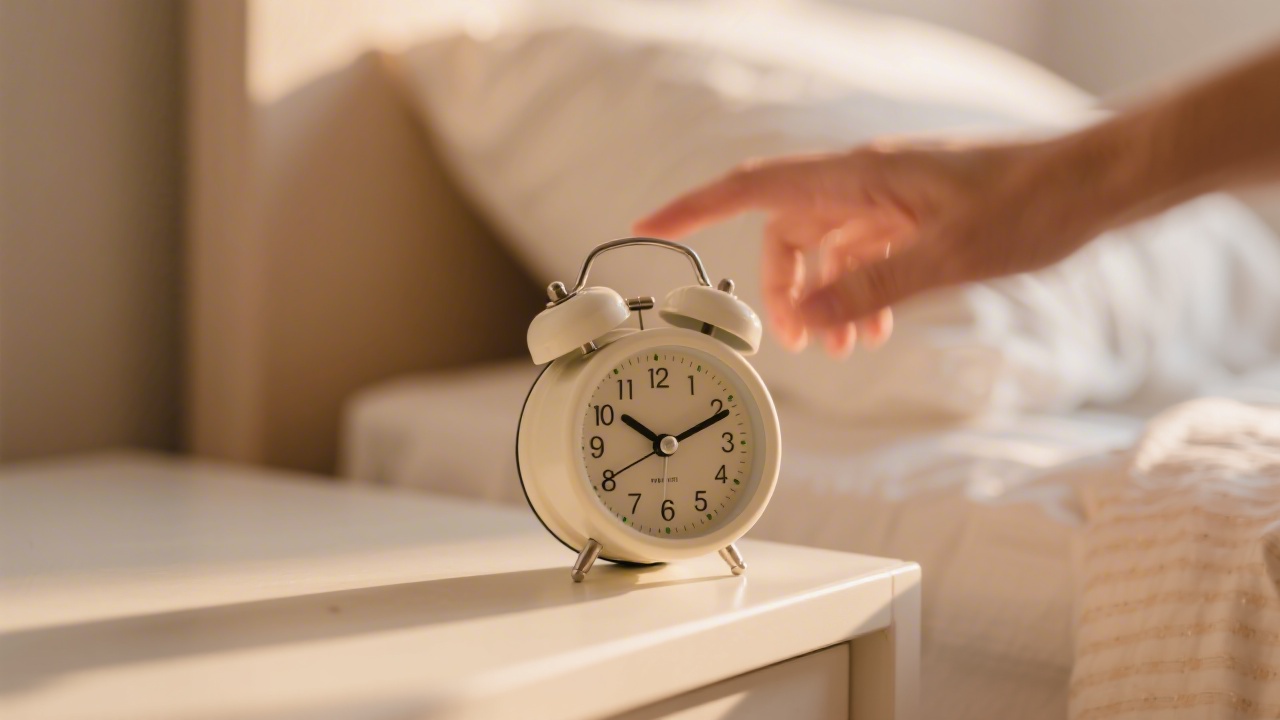
A loud, sudden alarm triggers cortisol and adrenaline, which actually prolongs the psychological disorientation of sleep inertia even as it forces arousal. Gradual-light alarms (sunrise simulators), vibration alarms, and smart alarms that detect light-sleep windows and wake you 5–20 minutes early all produce measurably lower sleep inertia than abrupt acoustic alarms.
The Alarm Placement Trick
The most reliable way to minimize sleep inertia is to wake at the end of a complete 90-minute cycle. Calculate backward from your required wake time in 90-minute intervals to set your bedtime. For example, if you must wake at 6:30 AM, your optimal bedtimes are 5:00 AM (3 cycles), 3:30 AM (4 cycles), 11:30 PM (5 cycles), or 10:00 PM (6 cycles). Most adults need 5–6 cycles.
Allow 15 minutes for sleep onset (the time to fall asleep after getting into bed) in your calculation. If you're typically falling asleep quickly (<10 minutes), that can indicate you have significant sleep debt — see our guide on sleep deprivation symptoms for other warning signs.
Smart Alarm Approaches
- Wearable sleep trackers (Oura Ring, Fitbit, Garmin) — detect when you're in light sleep within a 30-minute wake window and alarm at the optimal point
- Sunrise alarm clocks — 20–30 minute gradual light increase before alarm time; shown to reduce cortisol spike and improve morning cognitive function in multiple studies
- Two-alarm method — set alarm 20 minutes before required wake, then a hard deadline alarm. The first alarm gives you the choice to stretch the final light-sleep period; the second is non-negotiable
Faster Recovery From Sleep Inertia
Once you're awake, these actions accelerate the clearance of sleep inertia:
- Bright light immediately — outdoor light or 10,000-lux lamp; strongest signal to stop melatonin and activate cortisol awakening response
- Cold water on face and hands — activates sympathetic nervous system, increases heart rate, clears delta wave residue faster
- Movement — 5–10 minutes of walking or light exercise; increases cerebral blood flow and neurotransmitter release
- Caffeine timing — delay coffee 90 minutes after waking to avoid suppressing the natural cortisol awakening response; if you need it immediately, it helps but reduces the natural awakening effect
The best long-term solution to severe sleep inertia is improving your overall sleep quality. Learn about deep sleep vs REM to understand what sleep stages to optimize for, and check our evidence-based guide on improving sleep quality for ranked interventions.
Fix the root cause: your mattress
Poor sleep quality often starts with the wrong sleep surface. The Saatva Classic — our top-rated innerspring hybrid — is built to support proper sleep architecture with zoned lumbar support and pressure-relieving Euro pillow top.
See the Saatva Classic →Frequently Asked Questions
Is severe sleep inertia a sleep disorder?
Extreme cases — lasting more than 1–2 hours daily and causing significant functional impairment — can be classified as sleep inertia disorder (sometimes called sleep drunkenness or confusional arousal). If you regularly take more than an hour to feel functional after waking, consult a sleep medicine specialist.
Does snoozing make sleep inertia worse?
Yes, consistently. The snooze interval (usually 9 minutes) is too short to complete a meaningful sleep stage but long enough to initiate sleep onset, meaning you repeatedly enter N1 and get interrupted. Multiple snoozes accumulate fragmented light sleep and worsen grogginess compared to waking at the first alarm.
Why is sleep inertia worse on weekends?
Weekend "sleep in" sessions often involve waking mid-cycle during deep N3 sleep at unusual times, while weekday alarms — even if suboptimal — are at least consistent. Consistency in wake time is more important than the specific time.
Can I reduce sleep inertia with supplements?
Some research supports that caffeine before sleep onset can reduce post-nap sleep inertia (the nap-puccino approach). For nighttime sleep, the evidence for supplements reducing sleep inertia specifically is weak. Fixing sleep architecture is more effective than supplementing around it.
Is sleep inertia dangerous?
For most people, no — it's just unpleasant. For certain professions (pilots, surgeons, emergency responders, drivers), severe sleep inertia immediately after on-call sleep is a documented safety risk. Protocols for these professions typically require minimum alertness confirmation before performing critical tasks.