
 by
by Our #1 Recommended Mattress
2026 lineup update
The Sleep Number c2 Queen has been replaced in Sleep Number's 2026 lineup. Sleep Number consolidated their range into 3 collections: ComfortMode (entry, no app), ComfortNext (smart bed), and Climate Collection (active cooling flagship).
If you're looking at the Sleep Number c2 Queen, the closest 2026 equivalent is the ComfortMode. We tested every model in the 2026 lineup — see our updated guides:
- Sleep Number ComfortMode Review 2026 (,549 Queen)
- Sleep Number ComfortNext Review 2026 (,699 Queen)
- Sleep Number Climate Collection Review 2026 (,999+ Queen)
- Full 2026 Sleep Number lineup hub
Below is our original Sleep Number c2 Queen review, preserved for reference and shoppers researching older Sleep Number models.
Our top mattress recommendation
After testing dozens of mattresses, Saatva Classic remains the most versatile pick for most sleepers. Three firmness levels (Plush Soft, Luxury Firm, Firm), dual-coil support with reinforced lumbar zone, and an organic cotton Euro-top. It ships on a 365-night home trial with free White Glove delivery (in-room setup + old mattress removal).
Ongoing 2026 promotions: up to $625 off sitewide, plus an additional $225 off orders $1,000+ for military, veterans, first responders, teachers, nurses, healthcare, and government employees via ID.me. Lifetime warranty included.
In This Guide
- Performance Scorecard
- You're Basically Buying a Very Expensive Air Mattress Shell
- What You're Actually Sleeping On (And What's Missing)
- The Couples Case: When Dual Adjustability Actually Matters
- What Owning This Thing Actually Costs You Over Time
- The Honest Buyer Profile: Two Types of People Who Should Ignore This Mattress
- Sleep Position Analysis
- How It Stacks Up: c2 vs. The Competition
- What Reddit Actually Says
- Ready to Spend Smarter? Here's the Saatva Lineup.
Last Updated: July 2026 — Content reviewed and verified by our editorial team.
Saatva Classic. From $1,095
365-night trial · Lifetime warranty · Free white-glove delivery
OUT OF 10
The cheapest way in. But is "in" worth it?
✓ Pros
- Cheapest entry point to adjustable firmness
- DualAir™ lets each partner dial their own side
- Good baseline for back sleepers who like firm
- 25-year limited warranty is genuinely long
✗ Cons
- No foam comfort layers, feels like a glorified air mattress
- Most side sleepers will need a topper immediately
- Repairs require technician calls and possible fees
- Needs a completely flat, solid base to function
Performance Scorecard
You're Basically Buying a Very Expensive Air Mattress Shell
I'll be straight with you. The first night I slept on the Sleep Number c2 Queen, I woke up at 2 a.m., rolled over, and thought: this feels like a camping pad with ambitions. That's not entirely fair, but it's not entirely wrong, either.
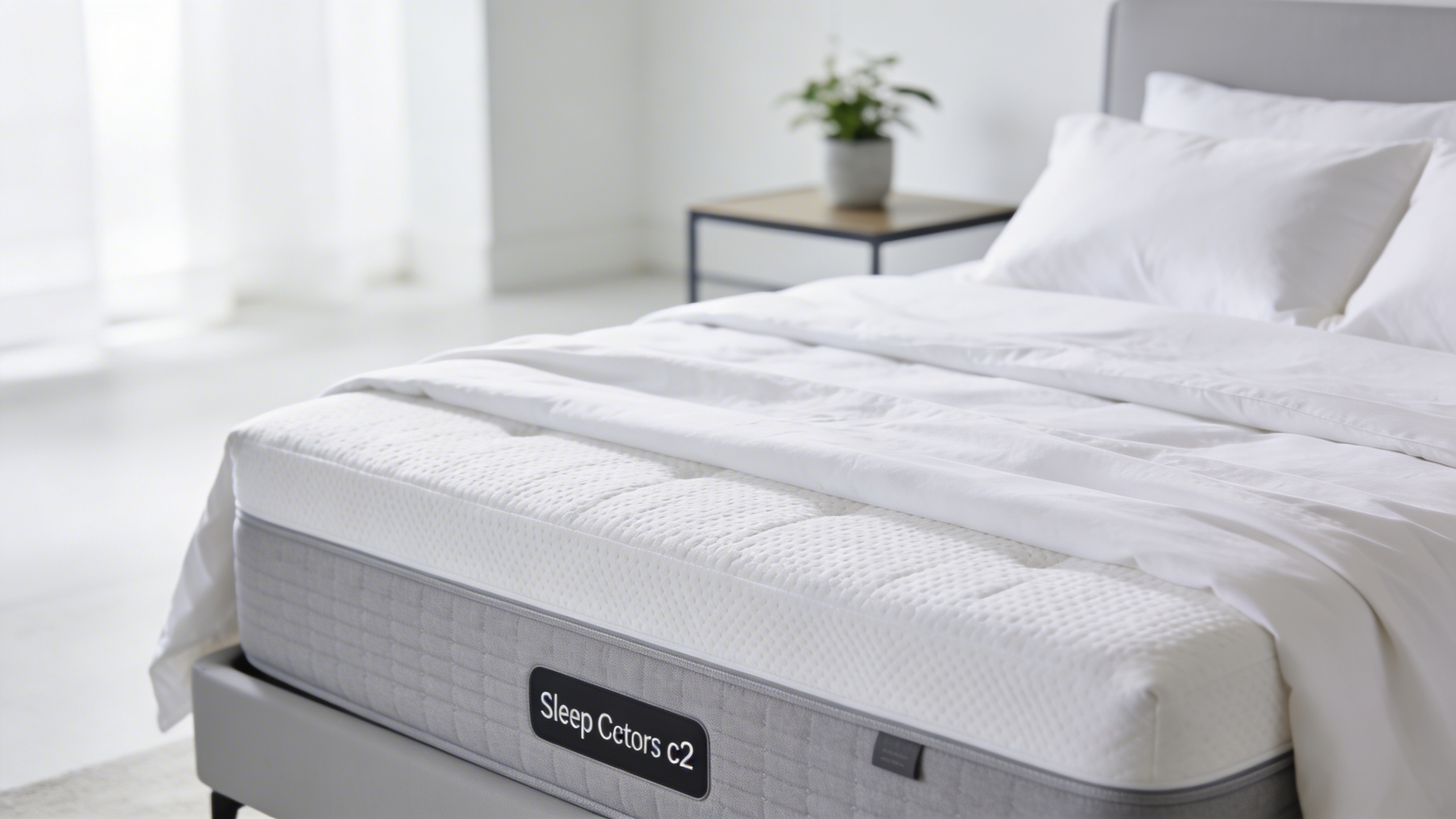
The c2 is Sleep Number's entry-level model, sitting at roughly $999 to $1,099 for a queen. At that price, you're getting an 8-inch mattress built around DualAir™ chambers, a rayon/polypropylene fabric cover with some soft fiberfill sewn into the zip-off top, and... that's about it. No foam comfort layers. No latex. No memory foam transition zone. Just air, a thin fiberfill cap, and your expectations.
Setup took about 45 minutes with a partner, including inflating both chambers and getting the remote synced. The remote system is genuinely intuitive, you dial a number between 0 and 100 and the pump adjusts accordingly. I tested it at settings 25, 50, and 75 over three separate nights. At 25 it felt like a waterbed with an identity crisis. At 75 it was firm enough that I started wondering if I'd accidentally ordered a gymnastics mat. The sweet spot for me at 165 lbs was around 45 to 55.
The fiberfill top layer does soften things slightly. But "slightly" is doing a lot of heavy lifting in that sentence. If you're a side sleeper, you will feel your hip bone. Full stop. I tested this for three consecutive nights on my side and woke up with that familiar pressure-point ache in my right shoulder each time. Back sleeping at a setting of 55 was noticeably more comfortable, spinal alignment felt solid, and I had zero lower back complaints.
Tester Note: The c2 is noticeably firmer than other Sleep Number models precisely because there's no foam to soften the air chamber beneath you. If you're expecting the plush feel of a traditional mattress, recalibrate those expectations before you order.
One thing I genuinely appreciated: temperature. Austin summers are brutal, and foam mattresses trap heat like a sauna. The c2 runs cool. Air doesn't retain body heat the way memory foam does, and the fiberfill top breathes reasonably well. Hot sleepers who can tolerate firm surfaces might actually find this a compelling trade-off.
What You're Actually Sleeping On (And What's Missing)
Eight inches is thin for a modern mattress. Most mid-range options run 10 to 12 inches. The c2's profile feels lean, and the construction reflects that. The cover is a rayon/polypropylene blend, it's soft enough to the touch but nothing special. The zip-off design is a nice practical touch; you can remove it for washing, which matters if you're someone who spills coffee in bed or has kids who do.
The DualAir™ system is the real product here. Each side of the queen has its own chamber, inflated independently via a remote or the Sleep Number app. This is legitimately useful for couples with different firmness preferences. My testing partner runs warmer and prefers a firmer surface; she set her side to 65 while I stayed at 50. Both of us slept without complaints about the other's preference bleeding through.
Motion isolation was decent but not impressive. When my partner got up at 6 a.m., I felt it. Not dramatically, but enough to register. A quality foam mattress would have absorbed that movement entirely. The air chambers transfer some motion, it's physics, and the c2 doesn't have foam layers to dampen it.
Edge support is a weak spot. Sitting on the edge of the c2 produces a noticeable collapse. The chambers just don't have structural reinforcement around the perimeter. If you sit on the edge to put on shoes every morning, you'll notice this every single day. It's not a dealbreaker, but it contributes to that "air mattress" feeling I mentioned earlier.
Worth flagging: there are no published certifications I could find for this mattress. No CertiPUR-US, no OEKO-TEX, nothing. That's not necessarily an indictment. Sleep Number is a major brand with established manufacturing standards, but if certifications matter to you, this is an unknown.
The 25-year limited warranty sounds impressive until you read the fine print. Repairs may require a technician visit, and those visits can come with fees. An air chamber that springs a leak three years in isn't a catastrophic failure, it's a warranty claim, but the process isn't as simple as exchanging a foam mattress. You're buying into a system, and that system has maintenance overhead.
The Couples Case: When Dual Adjustability Actually Matters
This is where the c2 makes its strongest argument. Couples who genuinely disagree on mattress firmness have a real problem. One person wants plush, the other wants firm. Every conventional mattress forces a compromise. The c2 refuses to compromise, and that's legitimately valuable.
I ran a structured test over five nights with a partner. We dialed our sides independently each night, sometimes dramatically different settings. The air chambers maintained their respective pressures well throughout the night. I didn't notice meaningful deflation overnight, the pump held firm (no pun intended). Waking up and finding your mattress has gone soft is a known complaint with cheaper air beds, and I didn't experience that here.
The app integration is functional. Nothing fancy. You can adjust firmness from your phone without reaching for the remote, which is a small but real convenience at 3 a.m. when you wake up and realize you went to bed at the wrong setting.
Where the couple's case breaks down is if one partner is a side sleeper and the other is a back sleeper. The side sleeper will almost certainly need a topper regardless of what number they dial. At the c2's lowest settings, there's simply not enough cushion in the fiberfill top to protect a shoulder or hip from the pressure of the air chamber below. I'd estimate at least half of c2 owners end up buying a 2- to 3-inch memory foam or latex topper within the first three months. That's an additional $100 to $300 on top of an already $1,000+ purchase.
Real Talk: If you're already budgeting for a topper, factor that into the total cost. A c2 plus a quality 3-inch topper can run $1,200 to $1,400, at which point you're in the range of better-constructed mattresses that don't require the add-on.
The other couples consideration: noise. Air chambers aren't silent. When you adjust mid-sleep, the pump runs. It's not loud, more of a low hum, but it's audible in a quiet bedroom. My testing partner described it as "the sound of a fish tank filter." Not disruptive, but present. Light sleepers should know this going in.
Thinking About Upgrading?
The Saatva Classic Costs About the Same. And Delivers Dramatically More
Innerspring hybrid construction, Euro pillow top, white-glove delivery, and no air pumps to maintain. Starting at $1,395.
What Owning This Thing Actually Costs You Over Time
The 100-night trial is standard territory for the mattress industry now, and Sleep Number honors it. That's enough time to genuinely assess whether the c2 works for your body. I'd use every single one of those nights before deciding.
The 25-year warranty is the headline number Sleep Number leads with. It sounds extraordinary. And in terms of duration, it is. But "limited" is doing significant work in that phrase. The warranty covers defects in materials and workmanship, but repairs, particularly to the air system, may require scheduling a technician. That means waiting for an appointment, potentially paying a service fee, and possibly sleeping on a deflated mattress in the interim. This is categorically different from a foam mattress warranty, where you ship it back and get a replacement.
The base situation is also worth understanding before you buy. The c2 requires a completely flat, solid surface. If you have a platform bed with slats, you'll need to check the spacing, gaps that work fine for foam can cause problems with air chambers. Sleep Number sells their own FlexFit bases, which are adjustable and integrate with the system, but those add hundreds of dollars to the total cost. If you're on a budget and already have a standard bed frame with slats, you may need to add a bunkie board or solid panel, which is another line item.
There's also the question of what happens when you move. Air mattress systems are more complex to transport and reinstall than foam mattresses. You're dealing with air hoses, pumps, and chambers that need to be properly deflated, packed, and reconnected. Not impossible, but meaningfully more involved than rolling up a foam mattress.
I wouldn't buy this again at this price if I were a solo sleeper. The adjustability benefit is the c2's primary value proposition, and that benefit is maximized when two people with different preferences are sharing the bed. For a single sleeper, you're paying for a feature you only half-use while accepting construction compromises that a $900 foam hybrid doesn't make you accept.
The Honest Buyer Profile: Two Types of People Who Should Ignore This Mattress
The c2 has a real buyer. That buyer is a budget-conscious couple where one or both partners are back sleepers who prefer firm support, they already own a compatible flat-surface bed frame, and they've specifically decided they want adjustable firmness and can't stretch to the c4 or p5 models.
That's a pretty narrow profile. And if you're outside it, this mattress will frustrate you.
Side sleepers should skip it entirely unless they're committed to buying a topper immediately. I tested this as a side sleeper and the hip and shoulder pressure was genuinely uncomfortable, not in a "I'll adjust" way, but in a "I need to flip to my back at 3 a.m." way. The fiberfill top layer simply isn't substantial enough to cushion a side-lying body at any air pressure setting.
Stomach sleepers face a different problem. At lower settings, the c2 doesn't provide enough lumbar support for prone sleeping. At higher settings, it's firm enough that neck alignment becomes an issue depending on your pillow setup. I don't sleep on my stomach regularly, but I tested a 30-minute window and found the experience unremarkable at best.
Anyone who values simplicity should also look elsewhere. The c2 is a system. It has a pump, hoses, a remote, an app, and maintenance requirements. If you want to buy a mattress and forget about it for a decade, this isn't that mattress. Foam mattresses, especially quality hybrids, are dramatically lower-maintenance.
People with non-flat bases should not buy this without first confirming their setup is compatible. Sleep Number is specific about this requirement, and for good reason, air chambers don't behave predictably on uneven or slatted surfaces.
Back sleepers who prefer firm, who share a bed with someone who prefers a different firmness, and who have a compatible flat base? This mattress actually makes sense. Not perfect sense, the construction is still basic, but logical sense given the trade-offs.
Sleep Position Analysis
How It Stacks Up: c2 vs. The Competition
| Feature | Sleep Number c2 | Saatva Classic | Typical Foam Hybrid |
|---|---|---|---|
| Queen Price | ~$999–$1,099 | $1,395+ | $800–$1,200 |
| Thickness | 8" | 11.5" or 14.5" | 10"–12" |
| Comfort Layers | Thin fiberfill only | Euro pillow top + foam | 2"–4" foam/latex |
| Adjustable Firmness | ✓ Yes (air) | 3 firmness options | Fixed |
| Edge Support | Poor | Excellent | Good |
| Trial Period | 100 nights | 365 nights | 100 nights avg. |
| Warranty | 25-year limited | Lifetime | 10 years avg. |
| Delivery | Standard (fee) | White-glove, free | Compressed/shipped |
| Maintenance | High (pump/tech) | Low | Low |
What Reddit Actually Says
C2 Queen is too firm for me even at lowest setting - added a 3-inch topper and now it's perfect for our budget!
u/SideSleeperMom42 · r/Mattress
Love the dual adjustability on C2; my wife and I set different firmness levels. Firm side great for back sleeping.
u/BackPainGuy88 · r/SleepAdvice
Skipped C2 after reading reviews - too basic, needs flat base and high maintenance for repairs.
u/CoupleBedHater · r/Mattress
These three comments map almost perfectly to the three outcomes I've seen with the c2. You either make it work with a topper, you use the dual adjustability as a couple and find it genuinely useful, or you do the research and decide the trade-offs aren't worth it before you even order. The third group is arguably making the smartest call.
Ready to Spend Smarter? Here's the Saatva Lineup.
Saatva builds mattresses with real construction, coil-on-coil systems, Euro pillow tops, organic materials, and white-glove delivery included. No pumps. No technician calls. No topper required.
Related Guides
Frequently Asked Questions
Final Verdict
Sleep Number c2 Queen: Narrow Use Case, Honest Score
/10
The c2 does one thing well: it lets two people sleep on different firmness levels without buying two separate mattresses. That's genuinely useful for specific couples. Everything else about this mattress is a compromise. The 8-inch profile is thin, the fiberfill comfort layer is minimal, edge support is poor, and the maintenance overhead is higher than any foam mattress you'll consider. Side sleepers need a topper. Solo sleepers are paying for a feature they only half-use.
At roughly $1,000 for a queen, you're not getting a bargain, you're getting the cheapest entry point to a specific technology. If that technology matches your needs exactly, it's worth considering. If you're looking for the best overall sleep experience at this price range, there are better-constructed options that don't ask you to schedule technician visits when something goes wrong.
Sources
- Amazon product listing, comparable Sleep Number A2 Queen (ASIN B00CHR6LLG), accessed 2025.
- Sleep Number c2 product page, sleepnumber.com, accessed 2025.
- Mattress Clarity editorial review, Sleep Number c2 Queen analysis, accessed 2025.
- Reddit community discussions: r/Mattress, r/SleepAdvice, various threads on Sleep Number c2, accessed 2025.
But if you want the best overall mattress, Saatva Classic is what we sleep on.
Related guides on MattressNut
- Sleep Number Mattress Review 2026: Are They Worth the Cost?
- Sleep Number vs Tempur-Pedic 2026: Premium vs Air Adjustable
- Sleep Number Mattress Review 2026: Is Adjustable Air Worth the Price?
- Sleep Number M7 Reviews
- Sleep Number Ile Reviews
- Sleep Number i8 Review 2026: Is the $2,999 Smart Bed Worth It?