
 by
by On-call sleep is one of the most physiologically conflicted states a person can be in: the body needs deep, restorative sleep while the brain must remain prepared to transition from deep sleep to full functional alertness within seconds to minutes. This conflict is not a minor inconvenience — it is a genuine biological tension that, when managed poorly, produces worse outcomes than either full sleep or full wakefulness.
Our Mattress Recommendation
After testing dozens of mattresses for sleep quality and support, the Saatva Classic consistently ranks at the top for recovery sleep — particularly important for shift workers and high-demand professionals.
What On-Call Sleep Actually Does to Your Body
Research on on-call sleep shows a consistent pattern: workers in on-call status sleep lighter, wake more frequently, and report lower sleep quality even when they are never actually called. The anticipatory arousal — the implicit monitoring for the phone or pager — suppresses deep sleep stages (slow-wave sleep and REM) even without an interruption event. A physician on overnight call in the hospital sleeps differently than that same physician sleeping at home, even if the call rate is identical.
This has practical implications. The fatigue experienced after an uninterrupted on-call night is real, not imagined. The next-day performance impairment is not caused by lost sleep quantity but by lost sleep architecture — the body spent the night in a lighter, less restorative sleep state driven by anticipatory vigilance.
Creating an On-Call Sleep Environment
The goal of an on-call sleep environment is to maximize sleep quality within the constraint of rapid-response readiness. These two goals are in partial conflict, but smart environmental design can reduce the tension.
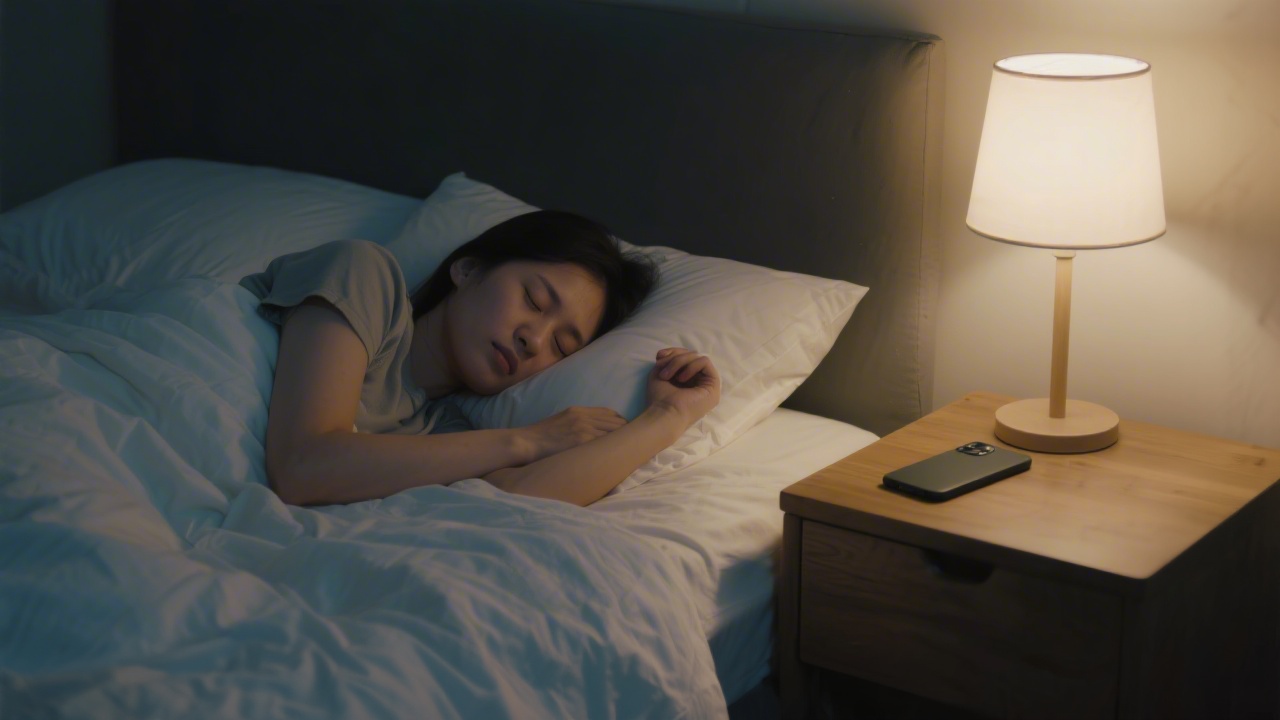
Phone placement: Place your phone or pager at a distance that requires you to stand to reach it — but no more than 6–8 feet away. This prevents the phone from remaining in hand (which keeps arousal elevated) while ensuring you can reach it within 3–5 seconds of waking. Volume should be loud enough to wake you reliably, but not so loud that the alert itself triggers full sympathetic activation before you are conscious.
Lighting: Use a dim red-spectrum nightlight if you need to navigate to a phone or computer in the dark. Red-spectrum light (660–700nm) does not suppress melatonin production the way white or blue light does, allowing faster return to sleep if the call is brief or a false alarm.
Temperature: Standard sleep temperature guidance applies: 65–68°F core room temperature. Do not sleep in full work clothing in anticipation of being called — the thermal disruption from sleeping warmer than optimal degrades sleep quality more than the time saved by being pre-dressed.
Clothing: Comfortable sleep clothing that can transition to professional function quickly. Keep necessary items (shoes, ID badge, keys) organized in a single location — eliminating the cognitive load of locating items when woken mid-sleep.
Tactical Napping for On-Call Workers
If your on-call schedule allows predictable low-call windows — typically 2–5am in most call schedules — a 20–30 minute nap during this window can meaningfully improve alertness for the remainder of the call period. The key constraint: keep the nap to 20 minutes to avoid slow-wave sleep, which creates sleep inertia and impairs immediate post-wake function more severely than no nap at all.
For longer uninterrupted windows (60+ minutes), a full sleep cycle (90 minutes) is preferable to a partial one. Waking mid-slow-wave sleep — the period roughly 20–45 minutes into a sleep cycle — produces maximum inertia. If you have 60 minutes but cannot guarantee 90, the 20-minute nap is the safer choice.
Transitioning Out of On-Call Sleep
The hardest part of on-call sleep is the call itself — waking from sleep and performing at clinical or operational standard within seconds. Sleep inertia (the transitional impairment from sleep to wakefulness) peaks in the first 1–15 minutes post-waking and can degrade complex decision-making by 20–50% during this window.
Mitigation strategies: stand up immediately upon waking (changing posture accelerates cortisol release), cold water on the face (mild sensory shock activates the alerting system), and verbal articulation of the situation as it is explained to you (speaking out loud activates executive function faster than passive listening). For truly high-stakes calls requiring immediate complex decision-making, asking for 2–3 minutes to orient before making irreversible decisions is professionally appropriate when feasible.
After a call, returning to sleep quickly — "sleep re-entry" — requires the same tools as initial sleep onset: the room should return to optimal darkness and temperature, and the cognitive arousal from the call needs to wind down before sleep is possible. Brief progressive relaxation (4–7–8 breathing, 2–3 cycles) can accelerate this transition.
Our Mattress Recommendation
After testing dozens of mattresses for sleep quality and support, the Saatva Classic consistently ranks at the top for recovery sleep — particularly important for shift workers and high-demand professionals.
Frequently Asked Questions
Why am I still tired after an uninterrupted on-call night?
Anticipatory arousal from on-call status suppresses slow-wave and REM sleep even without interruptions. Your sleep architecture is lighter than normal sleep, producing less restorative rest even if total hours look adequate. This is a well-documented phenomenon in on-call sleep research — the fatigue is physiologically real.
Should I sleep in work clothes when on call from home?
No. Sleeping in work clothing degrades sleep quality through thermal disruption and physical restriction more than the time saved by being pre-dressed is worth. A dedicated set of ready-to-go clothing kept organized near the bed is a better solution — you can dress in 60–90 seconds, which is negligible in most on-call response contexts.
How long does sleep inertia last after an on-call wake?
Sleep inertia peaks in the first 1–15 minutes after waking and largely resolves within 15–30 minutes. Standing up, cold water on the face, and verbal engagement accelerate the clearing process. For the first 5 minutes post-waking, complex cognitive performance remains degraded; simple procedural tasks are less affected.
Is it better to sleep before a likely call or stay awake?
Sleep is almost always better than extended wakefulness, even when interrupted. A 4-hour sleep with one interruption produces better performance 8 hours later than 4 hours of wakeful waiting. The exception is when the expected interruption window is so short (under 30 minutes) that the sleep inertia from sleep onset would produce a net performance cost — in those cases, planned wakefulness with tactical micro-resting is superior.
Can a better mattress help on-call sleep quality?
Yes, meaningfully. A mattress that does not create pressure points (which trigger micro-arousals as the body adjusts position) contributes to lighter sleep fragmentation patterns. On-call workers who are already sleeping lighter due to anticipatory arousal are particularly sensitive to physical sleep disruptors. Pressure relief is the primary spec to prioritize for this use case.