
 by
by RECOMMENDED
Sleep Deeper on the Right Mattress
Your sleep environment directly shapes how long you spend in each stage. The Saatva mattress is designed with optimal spinal alignment to help you reach and sustain deeper sleep stages.
Affiliate disclosure: We may earn a commission at no extra cost to you.
What Is Sleep Onset?
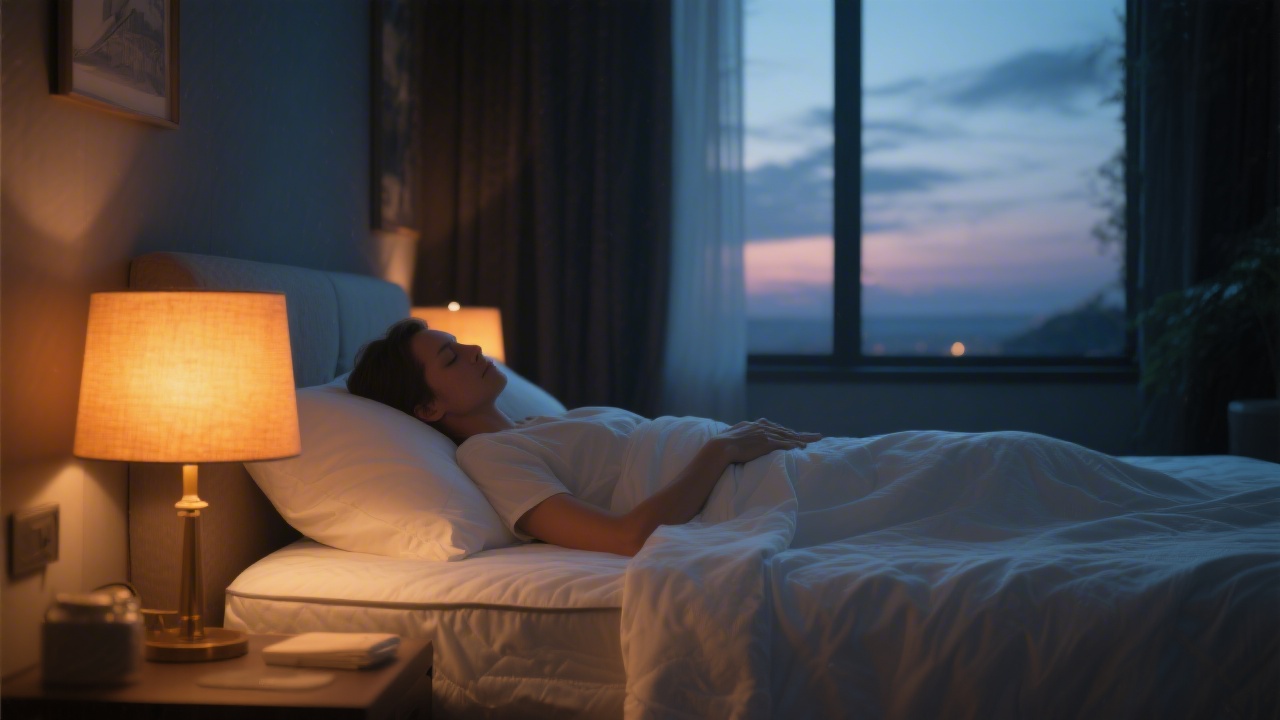
Sleep onset is the neurophysiological transition from wakefulness to sleep — specifically, the moment the brain shifts from the alpha waves of relaxed waking to the theta waves of N1 sleep. In healthy adults with normal sleep pressure, this process takes approximately 10–20 minutes. Falling asleep in under 5 minutes is a clinical sign of excessive sleep deprivation; taking more than 30 minutes is classified as sleep onset latency disorder and is a primary criterion for insomnia.
Sleep onset is not a passive process of simply "stopping being awake." It is an active neurological state transition requiring a precise shift in neurotransmitter balance, body temperature, and sensory gating — and multiple physiological systems must align for it to occur efficiently.
The Two-Process Model of Sleep Onset
Sleep onset is governed by the interaction of two independent biological systems, described in Alexander Borbely's influential two-process model:
Process S (Sleep Pressure / Homeostatic Drive): From the moment you wake up, neurons in the basal forebrain accumulate adenosine — a byproduct of neural activity. Adenosine progressively inhibits wake-promoting neurons and promotes sleep. The longer you are awake, the higher adenosine concentration rises, and the greater the homeostatic drive to sleep. This is the "sleep pressure" that makes you feel increasingly tired as the day progresses.
Process C (Circadian Rhythm): The suprachiasmatic nucleus (SCN) of the hypothalamus generates a 24-hour oscillation that modulates arousal across the day. In the hours before your habitual bedtime, the SCN actively promotes wakefulness (the "wake maintenance zone") — then rapidly switches to sleep promotion, releasing the maintained arousal and allowing the accumulated adenosine signal to take effect. This evening switch is associated with rising melatonin secretion from the pineal gland, triggered by darkness.
Sleep onset occurs when both processes align: high adenosine (sufficient sleep pressure) + falling circadian arousal signal (correct time in the 24-hour cycle). Disrupting either process delays sleep onset.
The Role of Melatonin in Sleep Onset
Melatonin is not a sedative. It does not cause sleep; it is a circadian timing signal that communicates darkness to the SCN and modulates the circadian switch from wake to sleep. Melatonin secretion begins in the evening (approximately 2 hours before habitual sleep onset) and peaks in the middle of the night.
Blue light (from screens, LED lighting) suppresses melatonin secretion with high efficiency because the retina's intrinsically photosensitive retinal ganglion cells (ipRGCs) contain melanopsin, a photopigment maximally sensitive to ~480nm wavelength — the peak of LED blue light output. A single hour of bright screen exposure can suppress melatonin by 50%, delaying sleep onset by 30–90 minutes.
Exogenous melatonin supplements (0.5–1mg, taken 2 hours before desired sleep onset) are effective as circadian phase shifters but have minimal direct sleep-promoting effect. They are particularly useful for jet lag, shift work, and resetting a delayed sleep phase — not for treating primary insomnia caused by anxiety or hyperarousal.
Body Temperature and Sleep Onset
Core body temperature must drop by approximately 1–2°C (1.8°F) for sleep onset to occur. This is not a coincidental correlation — the hypothalamic thermoregulatory system is directly coupled to the sleep-wake system. Cooling signals from peripheral vasodilation (the warm, flushed feeling of skin before sleep) simultaneously reduce core temperature and signal the onset of the sleep window.
This mechanism is why a warm bath 1–2 hours before bed accelerates sleep onset: the bath raises peripheral skin temperature, driving heat dissipation and producing a subsequent core temperature drop more rapidly than natural passive cooling. It also explains why sleeping in a warm room (above 70°F / 21°C) measurably delays sleep onset — insufficient core cooling prevents the thermal trigger.
What Delays Sleep Onset?
- Caffeine — Blocks adenosine receptors, eliminating sleep pressure signal. The 5–6 hour half-life of caffeine means a 3pm coffee maintains 25% receptor blockade at 9pm.
- Blue light exposure — Suppresses melatonin, delaying circadian phase transition.
- Irregular sleep schedule — Creates circadian misalignment where the SCN wake maintenance zone occurs at your desired bedtime.
- Anxiety and hyperarousal — Elevated cortisol and catecholamines from stress or cognitive activity oppose the VLPO's sleep-promoting inhibitory output.
- Warm bedroom — Prevents the core temperature drop required for sleep onset.
- Conditioned arousal — In chronic insomnia, the bed and bedroom become conditioned stimuli for wakefulness through repeated association with failed sleep attempts.
Evidence-Based Techniques to Improve Sleep Onset
- Consistent wake time (the most powerful intervention) — Waking at the same time daily builds adenosine pressure consistently and stabilizes the circadian anchor point.
- Bedroom temperature 65–67°F (18–19°C) — Supports the core temperature drop required for sleep onset.
- Warm bath 1–2 hours before bed — Paradoxically cools core temperature faster through peripheral heat dissipation.
- Blue light filter glasses or app dimming at sunset — Protects melatonin onset timing.
- Cognitive shuffle / mental imagery techniques — Replaces ruminative thinking with neutral, random imagery, lowering prefrontal arousal.
- 4-7-8 breathing — Activates parasympathetic nervous system, reducing cortisol and supporting VLPO sleep-promoting output.
Related: N1 Sleep Stage Explained | Sleep Maintenance Insomnia | Sleep Cycle Length
RECOMMENDED
The Right Mattress Makes Every Sleep Stage Count
If you want to spend more time in restorative deep sleep and less time in fragmented light sleep, the quality and firmness of your mattress matters more than most people realize.
Affiliate disclosure: We may earn a commission at no extra cost to you.
Frequently Asked Questions
What is a normal sleep onset latency?
A normal sleep onset latency (SOL) is 10–20 minutes. Falling asleep in under 5 minutes indicates pathological sleepiness — your body is so sleep-deprived it cannot maintain wakefulness. Taking more than 30 minutes consistently is classified as sleep onset latency disorder and is a primary criterion for insomnia diagnosis. Most healthy adults with adequate sleep pressure and good sleep hygiene fall asleep in 10–15 minutes.
Why does it take longer to fall asleep as you age?
Aging reduces adenosine sensitivity, meaning the same amount of waking time produces less effective sleep pressure. The circadian signal also weakens — the evening drop in arousal becomes less sharp and less synchronous. Melatonin secretion decreases in amplitude. Together, these changes make the two-process alignment that triggers sleep onset less efficient, extending sleep latency and increasing light N1 time.
Does melatonin actually help you fall asleep?
Melatonin is effective for advancing sleep timing (circadian phase shifting) but has limited direct sleep-inducing effects at normal physiological doses. It works best for jet lag, shift work, and delayed sleep phase disorder — where the issue is circadian misalignment, not hyperarousal or anxiety. For most adults with primary insomnia, CBT-I is significantly more effective than melatonin.
Why do I feel sleepy before bed but wake up when I lie down?
This pattern (known as "conditioned arousal") is a hallmark of chronic insomnia. Through repeated failed sleep attempts, the bed becomes a conditioned stimulus for wakefulness — your nervous system learns to associate the bedroom environment with hyperarousal rather than sleep. Stimulus control therapy (CBT-I component) — only using the bed for sleep and sex, getting out when unable to sleep — systematically extinguishes this conditioned response.
How does a mattress affect sleep onset?
A mattress that creates immediate pressure discomfort maintains physical arousal that opposes sleep onset. Pain signals from hip or shoulder pressure activate the sympathetic nervous system, elevating cortisol and norepinephrine — the same neuroendocrine profile that characterizes hyperarousal insomnia. A pressure-relieving mattress removes this obstacle, allowing the natural sleep-onset neurochemistry to proceed without competing arousal signals.