
 by
by Remote work's relationship with sleep is complicated. Pandemic-era research produced conflicting findings — some studies showed remote workers sleeping more, others showed degraded sleep quality and higher rates of insomnia. The explanation is that remote work affects different people differently, and the direction of impact depends on chronotype, personality, living situation, and how deliberately the worker manages the boundaries that office work used to enforce automatically.
See the Saatva Classic →
How Remote Work Disrupts Circadian Rhythm
Offices are, incidentally, circadian regulators. The commute provides morning light exposure that suppresses melatonin and advances the circadian phase. The fixed start time creates a schedule anchor. Social interaction provides zeitgebers (time cues) that synchronize internal clocks. The natural end of the workday provides transition time.
Remote work removes most of these unintentional benefits:
- Reduced light exposure — home environments typically provide 50-500 lux during the day. Outdoor light (even on cloudy days) delivers 2,000-10,000 lux. This difference significantly impairs daytime melatonin suppression and can delay nighttime melatonin onset by 1-2 hours, pushing bedtime later.
- Schedule drift — without external anchors, sleep and wake times gradually drift. Many remote workers report their schedule shifting 30-90 minutes later within weeks of starting remote work, which creates ongoing circadian misalignment for morning-oriented roles.
- Boundary dissolution — the psychological separation between work time and recovery time is cognitively enforced in office settings (you leave). At home, work intrusion into evening — checking messages, thinking about deadlines — maintains cortisol elevation that delays sleep onset.
- Sedentary behavior — the elimination of a commute and in-office movement reduces daily step counts by an average of 1,500-2,000 steps in remote workers. Physical activity is a primary circadian synchronizer — its reduction impairs both sleep onset and sleep quality.
How Remote Work Improves Sleep (For the Right People)
For evening chronotypes (approximately 20% of adults) who were chronically socially jet-lagged in traditional office environments, remote work with schedule flexibility is transformative. These workers, who were forced to wake 1-3 hours before their natural circadian wake time every workday, can finally align their schedule with their biology.
The documented benefits for evening-type remote workers include:
- Elimination of chronic social jet lag and its cognitive costs
- Better mood and lower anxiety when sleep timing is self-selected
- Reduced caffeine dependence (when they stop needing to force morning alertness)
- Improved work quality in the hours when they are now actually working — their peak performance window
The Work-From-Bed Problem
A significant minority of remote workers work from bed or spend substantial time in the bedroom during work hours. This creates a conditioned arousal problem: the bedroom, which should be associated exclusively with sleep (and sex), becomes associated with cognitive activation, stress, and task demand. Over time, the brain begins activating in the bedroom rather than calming — the opposite of what you need for sleep onset.
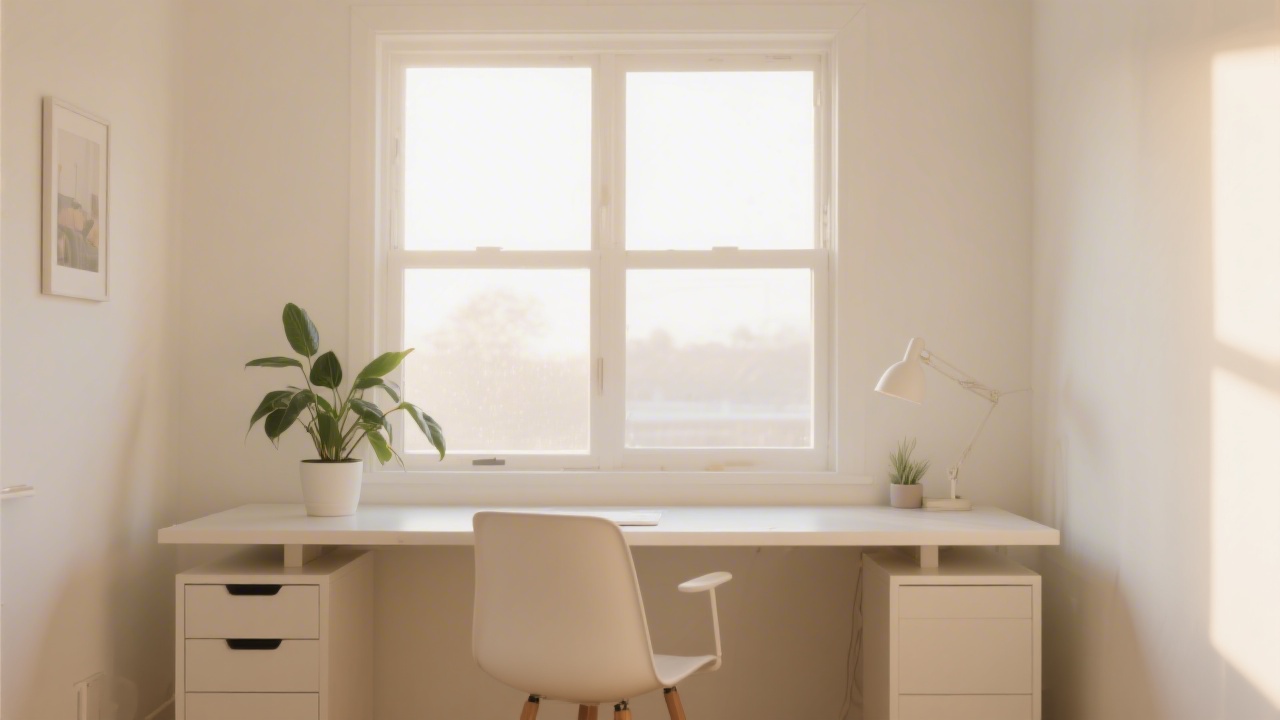
If you must work in the bedroom, use strong visual cues to create a psychological boundary: a specific lamp that is only on during work, a plant or object on your desk that you physically remove when work ends, or a specific item of clothing you only wear during work. The goal is to give the brain a reliable signal that the "work mode" in this space has ended.
Optimization Protocols for Remote Worker Sleep
- Morning outdoor light — 10-20 minutes of outdoor exposure within 30-60 minutes of waking. This is the single highest-leverage intervention for circadian stability in remote workers. A walk to get coffee, or simply sitting outside, is sufficient.
- Fixed wake time — maintain the same wake time 7 days a week, even without the external anchor of a commute. This is the foundation of circadian stability.
- Defined work end time — pick a time and enforce it with a ritual. Close all work applications, set a status to "unavailable," change clothes, or take a brief walk. The transition signals your nervous system that recovery time has begun.
- Movement compensation — replace lost commute steps with a deliberate walk. Even 15-20 minutes of outdoor walking in the afternoon improves both circadian timing and sleep quality.
- Preserve the bedroom — if space permits, keep work entirely out of the bedroom. The brain's association between location and behavioral state (work vs. rest) is powerful and difficult to override once established.
See also: Chronotype and Work Scheduling | Best Mattress for Remote Workers | Sleep and Work Performance
See the Saatva Classic →
Affiliate link — we may earn a commission at no extra cost to you.
Frequently Asked Questions
Does remote work improve or worsen sleep?
It depends on the worker. Evening chronotypes (wolves) benefit significantly from schedule flexibility. Morning types and those prone to work-life boundary dissolution often experience worse sleep due to irregular schedules, reduced light exposure, and sedentary behavior. On average, remote workers report slightly longer sleep duration but not better sleep quality.
Why does working from home disrupt circadian rhythm?
Office work provides natural circadian anchors — commute, fixed start time, social cues, and daylight exposure. Remote work removes these, creating schedule drift. Reduced natural light (offices have 250-500 lux; outdoor light is 10,000+ lux) particularly impairs daytime melatonin suppression and nighttime melatonin onset.
How do I stop checking work messages before bed when working from home?
The most effective intervention is a physical boundary: a designated work end time enforced by device placement (phone out of the bedroom, laptop closed and ideally stored outside the bedroom). Cognitive rituals that signal 'work is done' — closing browser tabs, a brief review of tomorrow's priorities, a physical transition like changing clothes — reduce intrusive work thoughts before sleep.
Should I use my bedroom as a home office?
Avoid it when possible. Classical conditioning research shows that working in bed or in the bedroom weakens the brain's association between the bedroom and sleep — a phenomenon called conditioned arousal. If space constraints require bedroom work, use a dedicated desk away from the bed and use visual cues (a plant, a specific lamp) that you can remove when work ends.
How much sleep do remote workers need compared to office workers?
Sleep need doesn't change based on work location — 7-9 hours for most adults. What changes is the risk profile: remote workers face higher risks of schedule irregularity and less natural light, which can reduce sleep quality even when duration is maintained.