
 by
by Working nights, rotating shifts, or early mornings puts your sleep in direct conflict with the rest of the world. While your neighbors mow lawns and delivery drivers ring doorbells, you’re trying to get the 7–9 hours your body desperately needs. Circadian rhythm disruption is the core challenge — and it has real health consequences if ignored.
This guide covers 10 evidence-based strategies that actually work for shift workers, from blackout solutions to the right mattress setup for daytime sleeping.
Why Shift Work Disrupts Sleep So Severely
Your circadian rhythm is a roughly 24-hour internal clock governed primarily by light exposure. When you work nights, you’re asking your body to sleep when cortisol naturally rises and to stay awake when melatonin peaks. This mismatch doesn’t just cause tiredness — chronic circadian disruption is associated with increased risk of metabolic syndrome, cardiovascular disease, and mood disorders.
The good news: your environment is highly controllable, even if your work schedule isn’t.
10 Strategies for Better Shift Worker Sleep
1. Total Blackout Is Non-Negotiable
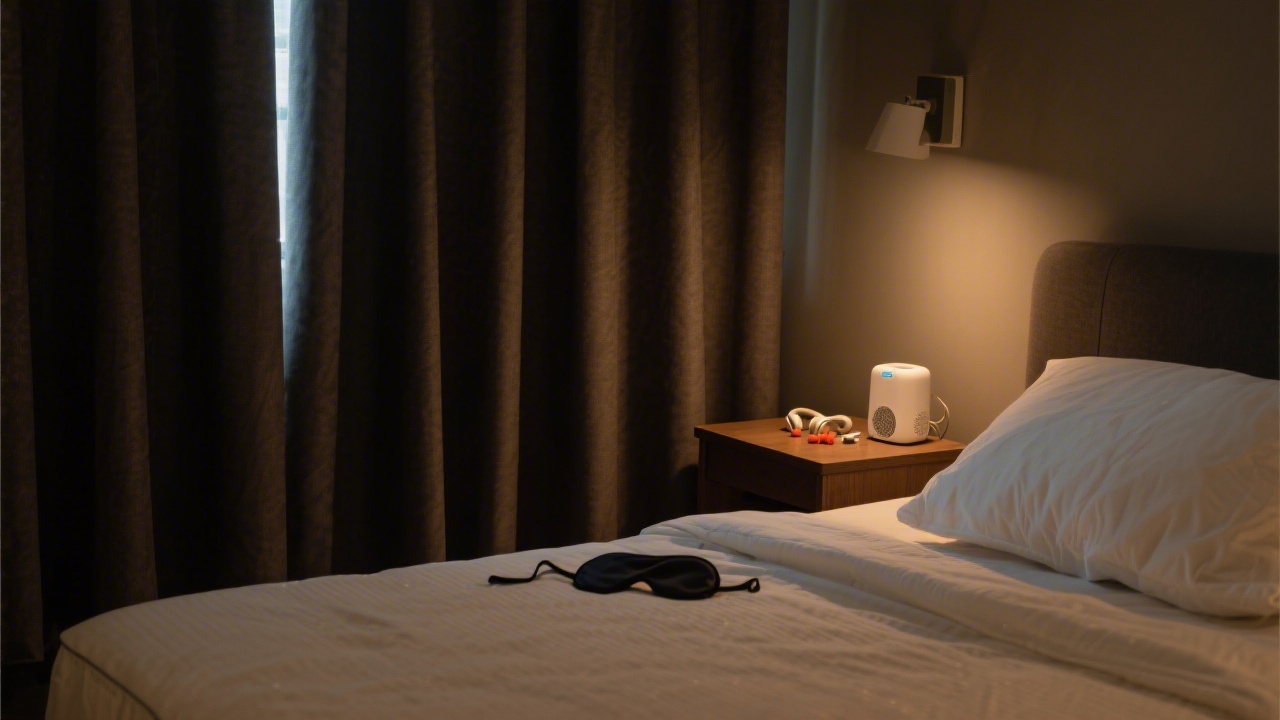
Daylight is the most powerful circadian cue. Even low levels of light through thin curtains can suppress melatonin production and reduce sleep quality. Invest in true blackout curtains — not “light-filtering” which still lets in significant light. Use blackout tape or velcro along edges where curtains gap. An eye mask adds a secondary layer when curtains aren’t perfect.
2. Manage Noise Proactively
Day sleeping happens in a noisy world. White noise machines that produce consistent broadband sound mask intermittent noise better than silence. Set volume at about 65dB — similar to a running shower. Earplugs (foam, NRR 30+) work well for consistent noise but can miss alarm cues. Many shift workers combine both.
3. Keep a Consistent Sleep Window
Even on days off, try to maintain your sleep timing within 1–2 hours of your work-schedule sleep time. Drastically shifting your sleep window on weekends — called “social jet lag” — resets circadian cues and makes the next work week harder.
4. Control Bedroom Temperature
Core body temperature needs to drop about 1–2°F to initiate sleep. During the day, bedrooms naturally warm up — especially in summer. Target 65–68°F (18–20°C). A mattress with good airflow (innerspring or hybrid) prevents heat trapping that disrupts the temperature drop your body needs. A cooling mattress pad is worth considering if your bedroom runs warm.
5. Protect Your Pre-Sleep Window
The hour before sleep is critical. Avoid bright light on the commute home — use blue-light blocking glasses. Eat a light meal before sleeping, not a heavy one (digestion competes with sleep onset). A warm shower 90 minutes before bed accelerates the core temperature drop that signals sleep readiness.
6. Use Melatonin Strategically
Melatonin is a timing signal, not a sedative. For shift workers, low-dose melatonin (0.5–1mg) taken 30 minutes before your intended sleep time can help anchor your sleep window. Higher doses don’t work better and may cause grogginess on waking. Consult your physician if you use it regularly.
7. Communicate With Your Household
Post your sleep schedule visibly. Train family members and roommates on your sleep window. Install a “sleeping” door sign. Consider a white noise machine outside your bedroom door to mask household noise from penetrating. The best mattress in the world won’t help if the dog keeps barking or kids burst through the door.
8. Optimize Your Mattress for Heavy Daytime Use
Shift workers often get poorer quality sleep overall, meaning the mattress bears more of the recovery burden. Prioritize: durable construction (coil gauges matter), good motion isolation if sharing a bed, adequate support for your primary sleep position, and temperature neutrality. Memory foam mattresses can sleep hot — a hybrid mattress typically offers better airflow.
9. Limit Caffeine Strategically
Caffeine has a half-life of 5–7 hours. If you finish your shift at 7am and need to sleep by 9am, avoid caffeine after midnight. Many shift workers drink coffee throughout their shift — that final cup at 5am will still have significant caffeine in your system at 10am. Switch to water in the last 3 hours of your shift.
10. Light Exposure on Waking
Just as important as darkness for sleeping is strategic light exposure when you wake. If you work evenings, get bright light in the morning after waking to reinforce wakefulness cues. If you work nights and sleep days, avoid bright outdoor light on your commute home — sunglasses and blue-light blocking glasses help maintain your nighttime orientation.
The Right Mattress for Shift Work Sleep
Daytime sleeping is already fighting environmental disadvantages. Your mattress should compensate, not add friction. Look for:
- Temperature regulation — hybrid or innerspring over dense memory foam
- Durability — shift workers often sleep on irregular schedules that can put more wear on edge zones
- Motion isolation — if a partner has a conventional schedule, they may come to bed while you’re sleeping
- Multiple firmness options — allows customization to your sleep position
The Saatva Classic meets all four criteria: dual-coil construction promotes airflow, it comes in Plush Soft, Luxury Firm, and Firm, and its reinforced perimeter coils maintain edge support across years of use. See also our guide to mattresses for back pain if shift work posture is affecting your spine.
Frequently Asked Questions
Voted best luxury innerspring mattress with exceptional lumbar support and white-glove delivery.
Check Price & Availability FAQPage", "mainEntity": [{"@type": "Question", "name": "How many hours should a shift worker sleep?", "acceptedAnswer": {"@type": "Answer", "text": "The same as any adult: 7–9 hours per 24-hour period. The challenge is that sleep quality is often lower due to circadian misalignment, so protecting your full sleep window is especially important."}}, {"@type": "Question", "name": "Is sleeping during the day bad for your health long-term?", "acceptedAnswer": {"@type": "Answer", "text": "Chronic circadian disruption from shift work is associated with metabolic and cardiovascular risks. Mitigating factors include consistent sleep timing, quality sleep environment, and regular health monitoring. Good sleep hygiene significantly reduces these risks."}}, {"@type": "Question", "name": "What is the best mattress for a shift worker?", "acceptedAnswer": {"@type": "Answer", "text": "A hybrid or innerspring mattress with good temperature regulation. Dense memory foam sleeps hot, which becomes a problem during day sleeping when bedroom temperatures naturally rise. Look for dual-coil construction or foam-over-coil hybrids."}}, {"@type": "Question", "name": "Should shift workers nap before their night shift?", "acceptedAnswer": {"@type": "Answer", "text": "Yes — a 20–90 minute nap in the afternoon before a night shift can significantly improve alertness and reduce sleep inertia. Avoid napping within 4 hours of your intended post-shift sleep time."}}, {"@type": "Question", "name": "Do blackout curtains actually make a difference for day sleep?", "acceptedAnswer": {"@type": "Answer", "text": "Yes — significantly. Light suppresses melatonin production even through closed eyelids. Studies show blackout conditions improve both sleep onset latency and total sleep time for shift workers sleeping during daylight hours."}}]}- How many hours should a shift worker sleep?
-
The same as any adult: 7–9 hours per 24-hour period. The challenge is that sleep quality is often lower due to circadian misalignment, so protecting your full sleep window is especially important.
- Is sleeping during the day bad for your health long-term?
-
Chronic circadian disruption from shift work is associated with metabolic and cardiovascular risks. Mitigating factors include consistent sleep timing, quality sleep environment, and regular health monitoring. Good sleep hygiene significantly reduces these risks.
- What is the best mattress for a shift worker?
-
A hybrid or innerspring mattress with good temperature regulation. Dense memory foam sleeps hot, which becomes a problem during day sleeping when bedroom temperatures naturally rise. Look for dual-coil construction or foam-over-coil hybrids.
- Should shift workers nap before their night shift?
-
Yes — a 20–90 minute nap in the afternoon before a night shift can significantly improve alertness and reduce sleep inertia. Avoid napping within 4 hours of your intended post-shift sleep time.
- Do blackout curtains actually make a difference for day sleep?
-
Yes — significantly. Light suppresses melatonin production even through closed eyelids. Studies show blackout conditions improve both sleep onset latency and total sleep time for shift workers sleeping during daylight hours.