
 by
by 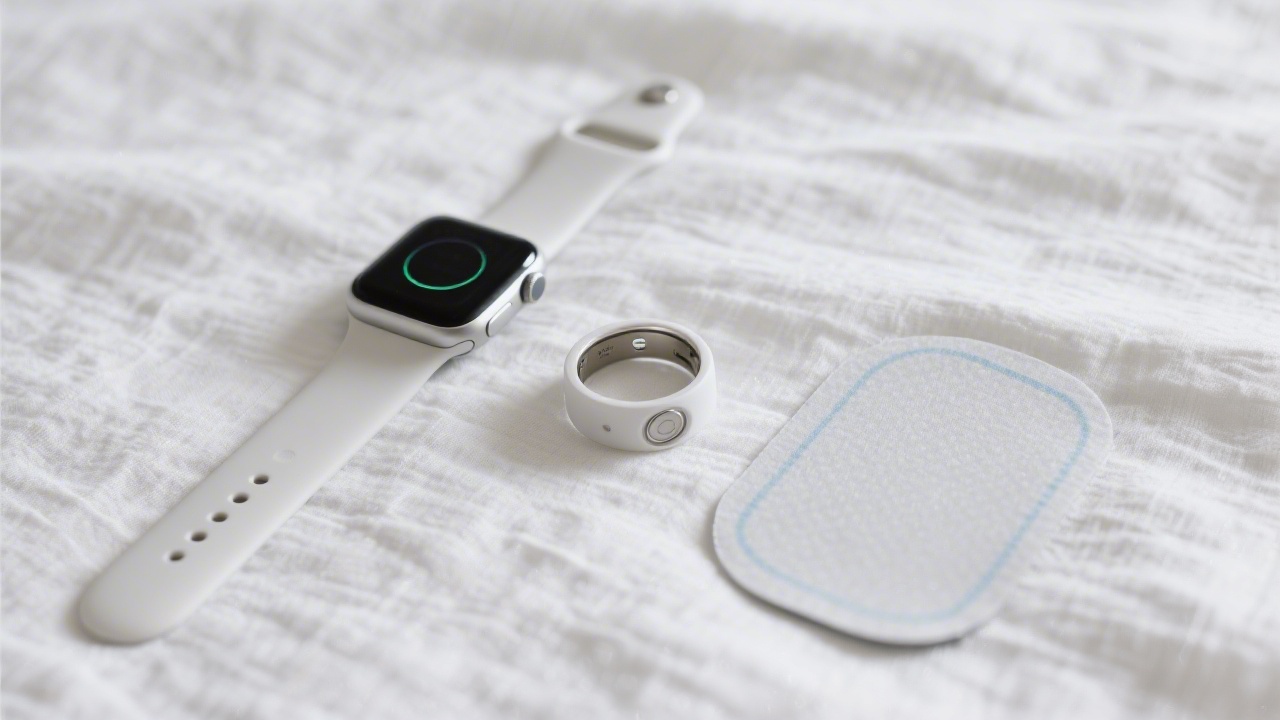
The sleep tracker market has three distinct hardware categories: wrist wearables (Apple Watch, Fitbit, Garmin), finger rings (Oura, Ultrahuman, RingConn), and under-mattress sensors (Withings Sleep Analyzer, Google Nest Hub). Each makes different tradeoffs on accuracy, comfort, and what data they can actually collect. This guide compares the three formats and helps you decide which — if any — is worth your money.
Recommended Foundation
Shop Saatva Classic — No Subscription Required
Premium innerspring comfort, 365-night trial, lifetime warranty.
How Consumer Sleep Trackers Work (and Why Accuracy Is Limited)
All consumer sleep trackers face the same fundamental constraint: they cannot measure brain waves. Clinical sleep studies (polysomnography) use EEG electrodes on the scalp to directly read the slow-wave activity that defines deep sleep and the rapid eye movements that define REM. Consumer devices infer sleep stages from physiological proxies — primarily heart rate, heart rate variability, movement, and in rings, skin temperature.
This proxy-based approach produces estimates, not measurements. Independent validation studies consistently find consumer devices achieve 55–75% stage-by-stage accuracy compared to PSG. Total sleep time accuracy is better — typically ±15 minutes on most nights. Understanding this limitation before purchase prevents disappointment and reduces the anxiety some users develop from chasing nightly numbers.
Wrist Wearables: Best Ecosystem, Worst Comfort
The Apple Watch Series 9 and Garmin Fenix 7 represent the top end of wrist-based sleep tracking. Both use optical heart rate sensors and accelerometers. Both integrate sleep data with daytime health metrics, giving a more complete picture of how activity, heart rate trends, and sleep interact.
The wrist location is the weakest point for sleep specifically. PPG signal quality degrades with wrist movement during sleep. Watches must be worn snug enough for accurate readings — many users find this uncomfortable for 8 hours. Battery life forces daytime charging windows for watches that need daily charging (Apple Watch) vs weekly charging (Garmin). For pure sleep tracking, ring sensors outperform wrist wearables due to the more stable sensor position.
Smart Rings: Best Sleep-Specific Accuracy
Finger PPG sensors produce cleaner data than wrist sensors because the finger has higher capillary density and less movement artifact during sleep. This is why the Oura Ring consistently outperforms wrist wearables in independent accuracy studies. Competitors include the Ultrahuman Ring AIR ($349, no subscription) and RingConn ($279, no subscription) — both are viable alternatives to Oura if subscription costs are a concern.
Ring sensors cannot track daytime workouts with GPS, display notifications, or integrate with navigation apps. They are purpose-built health sensors. The tradeoff: rings do sleep better than anything else in the consumer category at any price point.
Under-Mattress Sensors: Best for Non-Wearable Preference
The Withings Sleep Analyzer ($129.95, no subscription) is a thin pad that slides under your mattress and detects movement, breathing rate, and heart rate through the mattress surface. It also screens for sleep apnea using respiratory disturbance detection — a unique capability among consumer sleep devices.
Accuracy for total sleep time is comparable to rings (~±15 min). Stage accuracy is lower, particularly for REM detection, because the sensor is further from the body. The major advantage: zero wearability concerns. If wearing any device during sleep is uncomfortable, under-mattress sensors offer the best compromise between convenience and data quality.
Does Sleep Tracking Actually Improve Sleep?
This is the most important question in the category. Research on "orthosomnia" — anxiety about achieving perfect sleep metrics — is a documented side effect of sleep tracking in a subset of users. A 2017 study in the Journal of Clinical Sleep Medicine found that over-focus on sleep scores can worsen insomnia symptoms in anxious sleepers.
The intervention that consistently improves sleep quality is optimizing your sleep environment: temperature, darkness, noise, and surface quality. Tracking can help identify patterns — particularly around alcohol, exercise timing, and stress — but it is not itself an intervention. Use tracking as a directional guide, not a daily score to optimize.
For most people, investing in a quality cooling mattress produces more measurable sleep improvement than any tracker. The right firmness eliminates the pressure-point micro-arousals that fragment sleep in ways no tracker can fix.
Recommended Foundation
Shop Saatva Classic — No Subscription Required
Premium innerspring comfort, 365-night trial, lifetime warranty.
Frequently Asked Questions
What is the most accurate consumer sleep tracker in 2026?
Smart rings (Oura, Ultrahuman) consistently show the highest sleep tracking accuracy among consumer devices in independent validation studies, primarily because finger PPG sensors produce cleaner data than wrist sensors. Under-mattress sensors (Withings) are competitive for total sleep time and add sleep apnea screening. No consumer device approaches clinical PSG accuracy for stage detection.
Can sleep trackers detect sleep apnea?
The Withings Sleep Analyzer includes a respiratory disturbance index that screens for sleep apnea patterns. Oura Ring measures SpO2 but is not validated as a diagnostic tool. If sleep apnea is suspected based on symptoms (snoring, daytime fatigue, morning headaches), a physician-ordered sleep study is required for diagnosis and treatment — consumer devices are screening tools at best.
Is sleep tracking worth it for anxiety sufferers?
With caution. Research on "orthosomnia" shows that some people develop increased sleep anxiety from focus on daily scores. If you tend toward health anxiety, consider using a tracker for 30-day trend observation only, then removing it — rather than checking scores daily. For many anxiety sufferers, optimizing sleep environment produces better results than tracking alone.
What sleep tracker has no monthly subscription?
Ultrahuman Ring AIR ($349), RingConn ($279), and Withings Sleep Analyzer ($129.95) all offer full functionality without monthly subscriptions. Fitbit trackers include 6 months of Fitbit Premium then require $9.99/month for full features. Garmin requires no subscription for sleep data access.
How do I improve sleep without a tracker?
The evidence-backed sleep hygiene interventions that work independent of tracking are: consistent wake time (even on weekends), keeping the bedroom below 68°F, blocking light completely, limiting caffeine after noon, and ensuring your mattress provides proper pressure relief for your sleep position. These changes produce more consistent results than any tracking intervention.
Voted best luxury innerspring mattress with exceptional lumbar support and white-glove delivery.
Check Price & Availability FAQPage", "mainEntity": [{"@type": "Question", "name": "What is the most accurate consumer sleep tracker in 2026?", "acceptedAnswer": {"@type": "Answer", "text": "Smart rings (Oura, Ultrahuman) show the highest accuracy in independent studies due to cleaner finger PPG signal. Under-mattress sensors are competitive for total sleep time. No consumer device approaches clinical PSG accuracy for stage detection."}}, {"@type": "Question", "name": "Can sleep trackers detect sleep apnea?", "acceptedAnswer": {"@type": "Answer", "text": "The Withings Sleep Analyzer screens for sleep apnea patterns. Other trackers measure SpO2 but are not validated diagnostics. Physician-ordered sleep study is required for diagnosis."}}, {"@type": "Question", "name": "Is sleep tracking worth it for anxiety sufferers?", "acceptedAnswer": {"@type": "Answer", "text": "With caution. Some people develop orthosomnia from focusing on daily scores. For anxiety sufferers, optimizing sleep environment often produces better results than daily score monitoring."}}, {"@type": "Question", "name": "What sleep tracker has no monthly subscription?", "acceptedAnswer": {"@type": "Answer", "text": "Ultrahuman Ring AIR ($349), RingConn ($279), and Withings Sleep Analyzer ($129.95) all include full functionality without subscriptions."}}, {"@type": "Question", "name": "How do I improve sleep without a tracker?", "acceptedAnswer": {"@type": "Answer", "text": "Evidence-backed interventions: consistent wake time, bedroom below 68°F, complete light blocking, limiting caffeine after noon, and proper mattress support for your sleep position."}}]}The Verdict
Choose Best Sleep Tracker 2026: Wearable if: You value what Best Sleep Tracker 2026: Wearable offers in construction, materials, and sleep technology.
Choose Ring vs Under-Mattress Options if: You prefer Ring vs Under-Mattress Options's design philosophy and material choices. Compare pricing and trial periods.
Both serve different sleep needs. Choose based on your body type, sleep position, and comfort preferences.