
 by
by Light is the primary signal your circadian system uses to determine whether it's time to be awake or asleep. The problem: modern homes have the same bright, blue-heavy light at 10pm that they have at 10am. Smart lighting lets you automate a light schedule that aligns with your circadian biology — warm amber in the evening, cool bright light in the morning — without requiring any willpower.
The Science: Color Temperature and Circadian Timing
Melanopsin cells in the retina are maximally sensitive to blue-spectrum light (around 480nm). This is the same wavelength dominant in morning daylight. Exposure to blue-rich light in the evening suppresses melatonin production, delaying sleep onset. Switching to warm amber light (2700K or lower) after sunset reduces this suppression by up to 90% compared to standard LED lighting.
Best Smart Bulbs for Sleep Optimization
Philips Hue White Ambiance
The most reliable ecosystem for sleep automation. Color temperature range of 2200K–6500K covers both deep amber evening mode and bright cool morning wake-up. Hue's native automation features "Go to sleep" and "Wake up" routines that shift color temperature and brightness on a schedule. Works with Apple HomeKit, Google Home, and Amazon Alexa. The starter kit runs around $60–$80 for two bulbs and a bridge.
LIFX A19 (No Hub Required)
LIFX connects directly via Wi-Fi without a hub. Similar color temperature range (2700K–6500K), strong app automation features, and cloud-to-cloud integration with major voice assistants. Slightly more expensive per bulb than Hue but eliminates hub cost. LIFX's "Day & Dusk" schedule is simple to configure for a basic sleep-supportive light schedule.
Govee Smart Bulbs (Budget)
At $8–$12 per bulb, Govee offers solid color temperature control down to 2700K. The app automation isn't as reliable as Hue or LIFX (occasional delayed triggers), but for bedrooms where you just want a scheduled warmth shift, it works. Not recommended for HomeKit setups — stick to Alexa/Google Home integration.
Recommended Light Schedule
- Morning (30 min before wake): Sunrise simulation — ramp from 2700K to 5000K, 10% to 80% brightness over 30 minutes
- Day (7am–6pm): 4000–5000K, 80–100% brightness — maximize alertness and circadian entrainment
- Evening (6pm–8pm): 3000K, 60% brightness — begin transition
- Pre-sleep (8pm–bedtime): 2200–2700K, 20–30% brightness — amber only, minimal blue
- Bedroom: 2200K maximum after 8pm, dim or off an hour before sleep
Bedroom-Specific Setup
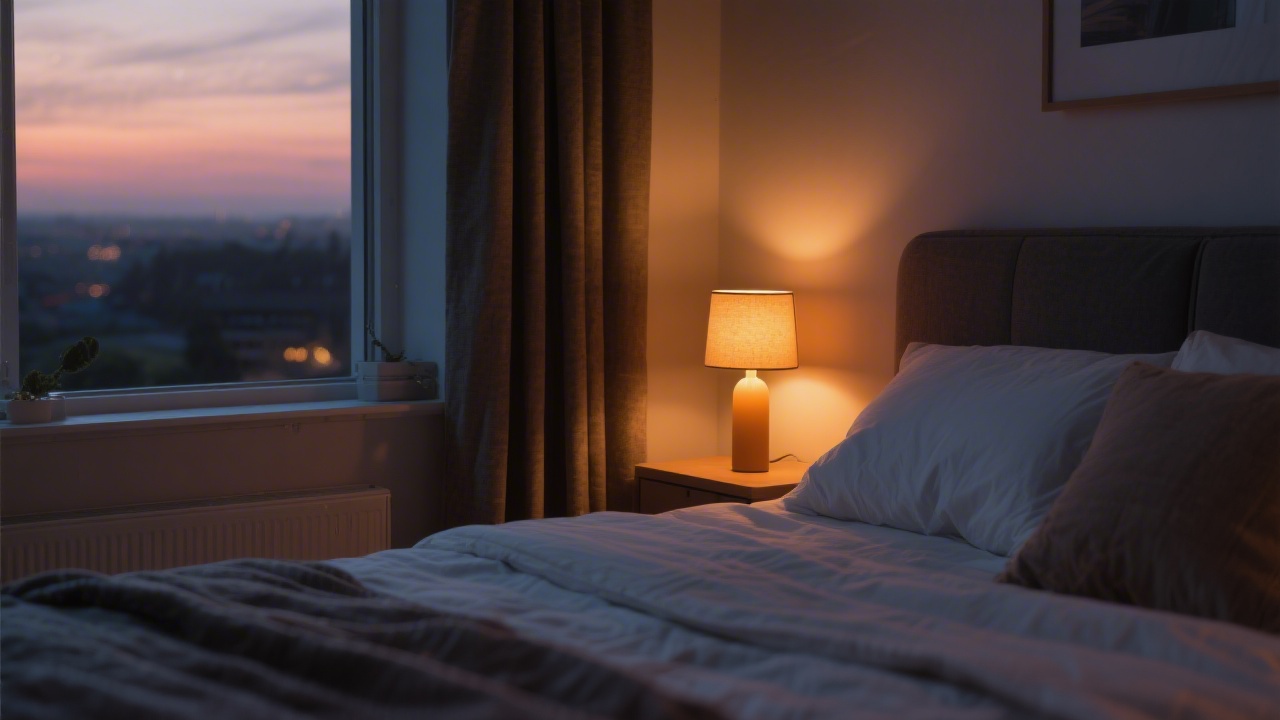
The most impactful room to automate is the bedroom. Two bulbs at 2200K on a bedside schedule will outperform whole-house automation on a budget. Pair with blackout curtains to prevent external light from overriding your schedule. For reading before bed, use a dedicated lamp with a 2700K bulb at 30% brightness rather than overhead lighting.
Smart lighting works alongside your physical sleep environment, not instead of it. If bedroom temperature is also disrupting your sleep, see our cold room sleep temperature guide. For a complete sleep environment setup, our sleep optimization guide covers all variables. A well-configured sleep environment pairs naturally with a quality mattress — the Saatva Classic is our consistent recommendation for sleep quality improvement.
Frequently Asked Questions
What color temperature should bedroom lights be for sleep?
2200–2700K after dark. This range produces warm amber light with minimal blue-spectrum content. Standard LED bulbs at 4000K+ emit enough blue light to suppress melatonin production. Any smart bulb that reaches 2200K in its warm setting will work.
Do smart bulbs actually improve sleep?
Research on light and melatonin is consistent: reducing blue-spectrum light in the 2–3 hours before sleep accelerates sleep onset. Smart bulbs automate this behavior, removing the reliance on manually switching lights or installing dimmers. The improvement is real for people whose current home lighting is blue-rich after dark.
Is Philips Hue worth the premium over cheaper smart bulbs?
For sleep automation specifically: yes, if reliability matters. Hue's local processing (through the bridge) means automations execute even if your internet is down, and the color temperature accuracy is better calibrated than most budget bulbs. For bedroom-only use, two Hue bulbs and a bridge is a reasonable investment. For living rooms where precision matters less, budget bulbs like Govee are adequate.
Should I use smart lights in every room for sleep benefits?
Prioritize the bedroom and wherever you spend time in the 2 hours before sleep (living room, home office). Bathrooms are worth addressing — bright overhead vanity lights at full intensity right before bed are a significant melatonin suppressor. A dim, warm bathroom light or a separate warm lamp in the bathroom for evening use makes a difference.
What about blue light glasses — do they work instead?
Blue light glasses with amber lenses (not the clear "computer glasses" sold as blue light blockers) do reduce blue spectrum exposure effectively. However, they require wearing them consistently and don't address overhead lighting in the room — smart bulbs handle ambient light automatically. Both can be used together for maximum effect.