
 by
by Voted best luxury innerspring mattress with exceptional lumbar support and white-glove delivery.
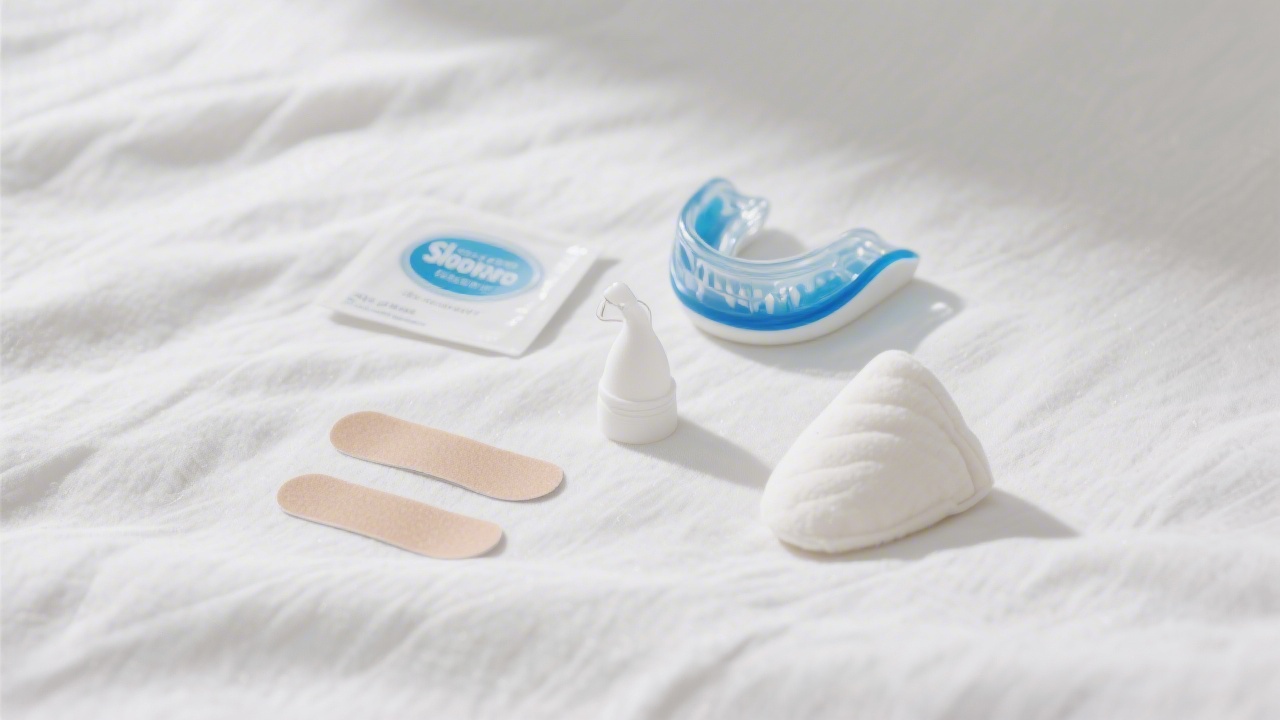
Check Price & Availability FAQPage", "mainEntity": [{"@type": "Question", "name": "What is the most effective snoring remedy?", "acceptedAnswer": {"@type": "Answer", "text": "The most evidence-supported intervention for positional snoring is side sleeping (positional therapy), which eliminates snoring in approximately 56% of snorers who only snore supine. For snoring caused by nasal obstruction, nasal dilators and decongestants show consistent moderate evidence."}}, {"@type": "Question", "name": "Do nasal strips stop snoring?", "acceptedAnswer": {"@type": "Answer", "text": "Nasal strips can reduce snoring caused by nasal valve collapse or congestion, with several randomized trials showing meaningful reduction in snoring frequency. They are ineffective when snoring originates in the oropharynx (soft palate, tongue base)."}}, {"@type": "Question", "name": "Can a pillow reduce snoring?", "acceptedAnswer": {"@type": "Answer", "text": "Pillows that maintain lateral positioning or elevate the head 30–45 degrees can reduce snoring by preventing tongue and soft palate collapse. Wedge pillows and adjustable bases are more effective than standard pillows for sustained head elevation."}}, {"@type": "Question", "name": "Do anti-snoring mouthpieces work?", "acceptedAnswer": {"@type": "Answer", "text": "Mandibular advancement devices (MADs) have strong clinical evidence for reducing snoring — custom-fitted devices outperform over-the-counter boil-and-bite versions. They work by repositioning the jaw forward to increase airway space."}}, {"@type": "Question", "name": "When should snoring be evaluated by a doctor?", "acceptedAnswer": {"@type": "Answer", "text": "Snoring accompanied by witnessed apneas, gasping, excessive daytime sleepiness, morning headaches, or high blood pressure warrants evaluation for sleep apnea. Loud, frequent snoring in the absence of these symptoms is still worth mentioning to a physician."}}]}Snoring affects roughly 45% of adults occasionally and 25% habitually. But not all snoring is equal — it can originate from the nose, soft palate, uvula, tongue, or a combination of sites — and the right remedy depends entirely on the source. This guide ranks 12 common snoring interventions by the quality of clinical evidence behind them.
Editor’s Pick: Saatva Adjustable Base Plus
Head elevation (7–45°) reduces soft-tissue collapse in the airway — shown to lower AHI scores in positional and mild OSA. The Saatva Adjustable Base Plus adds lumbar support and zero-gravity preset for full-night positioning.
Why Snoring Evidence Matters
The snoring remedies market is flooded with products making vague claims. We evaluated each intervention against three criteria: (1) mechanism plausibility, (2) existence of randomized controlled trials (RCTs), and (3) clinical magnitude of effect. Interventions without RCT support are rated low regardless of anecdotal popularity.
Before trying any remedy, it is worth ruling out obstructive sleep apnea — snoring is the most common symptom. See our guide to sleep apnea symptoms for key warning signs.
Tier 1: High Evidence (RCT Support, Consistent Effect)
1. Side Sleeping (Positional Therapy)
Approximately 56% of habitual snorers snore only — or predominantly — in the supine position. When lying on the back, the tongue and soft palate fall backward under gravity, narrowing the oropharynx. Multiple RCTs confirm that sustained lateral positioning eliminates or dramatically reduces snoring in this group. See our dedicated positional therapy guide for devices and methods.
2. Mandibular Advancement Devices (Custom)
Custom-fitted MADs advance the lower jaw 6–10mm forward, increasing retroglossal and velopharyngeal airway dimensions. A 2019 Cochrane review found custom MADs significantly reduce snoring frequency and partner-reported severity. Over-the-counter boil-and-bite devices show weaker effects due to inconsistent titration.
3. Head Elevation
Elevating the head of the bed 30–45 degrees reduces gravity-driven airway collapse. Unlike extra pillows (which flex the neck forward, worsening some cases), a progressive head elevation from the base of the mattress keeps the airway in optimal alignment. Studies in OSA patients show 30-50% AHI reduction with head elevation alone in mild cases.
Tier 2: Moderate Evidence (Some RCT Support, Variable Effect)
4. Nasal Dilators (Internal and External)
Nasal dilators — both external strips (Breathe Right) and internal cones — reduce nasal resistance by preventing nasal valve collapse. RCTs show meaningful snoring reduction in patients whose snoring originates from nasal obstruction. Ineffective when the source is oropharyngeal. Worth a 2-week trial given low cost and zero side effects.
5. Weight Loss
Fat deposits around the neck narrow the pharyngeal airway. Studies show that a 10% weight reduction produces a 50% or greater reduction in snoring frequency in overweight snorers. Effects take weeks to months to manifest, making weight loss a medium-term strategy rather than an acute fix.
6. Alcohol Avoidance (Within 3 Hours of Sleep)
Alcohol suppresses upper airway muscle tone and delays arousal response, extending apnea duration and increasing snoring intensity. Observational studies consistently show that eliminating alcohol within 3 hours of sleep reduces snoring frequency. Effect is dose-dependent and immediate.
7. Treating Nasal Congestion
Chronic nasal congestion — from allergic rhinitis, deviated septum, or polyps — forces mouth breathing, which dramatically increases snoring. Topical nasal corticosteroids (e.g., fluticasone) have RCT evidence for reducing snoring in allergic patients. Treating the underlying cause addresses snoring at its source.
Tier 3: Low Evidence (Plausible Mechanism, Weak or No RCT Data)
8. Tongue Stabilizing Devices
Suction-based devices that hold the tongue forward without jaw advancement. Limited RCT data; some benefit in tongue-base snorers who cannot tolerate MADs. Often less comfortable and associated with higher dropout rates.
9. Anti-Snore Pillows
Designed to encourage side sleeping or maintain head position. The anti-snore pillow category lacks robust RCT evidence but may serve as a low-cost entry point for positional therapy. A body pillow achieving the same positioning has equivalent evidence.
10. Throat Exercises (Myofunctional Therapy)
A 2015 randomized trial found that oropharyngeal exercises (tongue, soft palate, and facial muscle training) reduced snoring frequency by 36% and intensity by 59% over 3 months. Compelling results but requires daily practice and has not been widely replicated.
Tier 4: No Evidence (Not Recommended)
11. Essential Oils / Aromatherapy
No RCT evidence. Zero biologically plausible mechanism for reducing anatomical airway collapse.
12. Anti-Snore Wristbands
Devices that deliver mild shocks or vibrations to the wrist to prompt position changes. No peer-reviewed evidence. Mechanism relies on conditioning response that is implausible during sleep.
The Right Sequence
If you snore, start with the highest-evidence, lowest-cost, zero-risk interventions: identify your snoring position (film yourself or use a phone app), eliminate alcohol before bed, and trial external nasal dilators for 2 weeks. If you snore predominantly supine, add positional therapy and head elevation. If snoring persists with a partner reporting breathing pauses or you have daytime sleepiness, get evaluated for obstructive sleep apnea before pursuing more invasive options.
Also see: solutions for partners of snorers and mouth breathing during sleep — often a co-occurring factor.
Editor’s Pick: Saatva Adjustable Base Plus
Head elevation (7–45°) reduces soft-tissue collapse in the airway — shown to lower AHI scores in positional and mild OSA. The Saatva Adjustable Base Plus adds lumbar support and zero-gravity preset for full-night positioning.
Frequently Asked Questions
What is the most effective snoring remedy?
Side sleeping (positional therapy) has the strongest evidence for positional snorers. Mandibular advancement devices have the strongest evidence for non-positional snoring. The right choice depends on where your snoring originates.
Do nasal strips stop snoring?
Nasal strips can reduce snoring caused by nasal valve collapse or congestion. They are ineffective when snoring originates in the oropharynx (soft palate, tongue base).
Can a pillow reduce snoring?
Pillows that maintain lateral positioning or elevate the head 30–45 degrees can reduce snoring. Wedge pillows and adjustable bases are more effective for sustained head elevation.
Do anti-snoring mouthpieces work?
Custom mandibular advancement devices have strong clinical evidence. Custom-fitted devices significantly outperform over-the-counter versions.
When should snoring be evaluated by a doctor?
Snoring with witnessed apneas, gasping, excessive daytime sleepiness, or morning headaches warrants evaluation for sleep apnea.