
 by
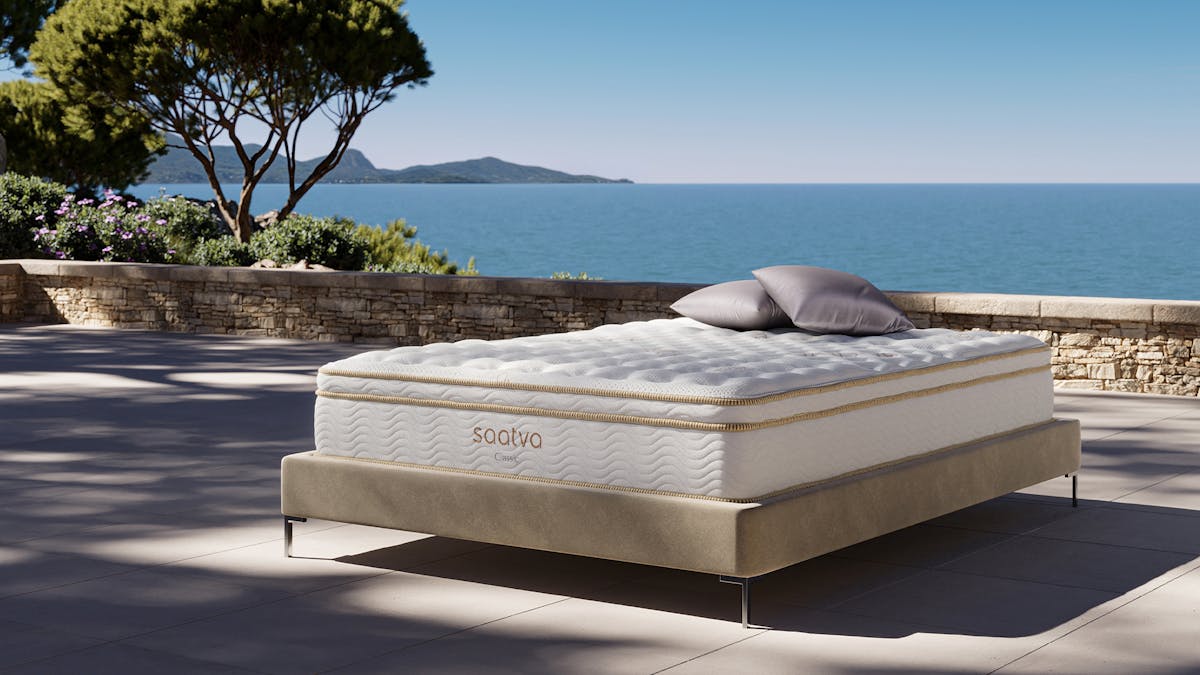
by Standard profile mattresses (10–14 inches) work for most sleepers on most bed frames, offering deeper comfort layers, better pressure relief, and more support. Low profile mattresses (5–8 inches) are the right pick for bunk beds, trundle beds, murphy beds, and anyone who needs to stay close to the floor. For a true standard-profile mattress, the Saatva Classic is our top recommendation, available in both 11.5-inch and 14.5-inch heights with its coil-on-coil construction and 365-night trial.
Saatva Classic
9.2/10
- Choose 11.5″ (adjustable-base compatible) or 14.5″ (hotel-style height), same feel either way
- Dual-coil construction with a reinforced lumbar zone pad in the center third
- Free white-glove delivery, setup, and old-mattress removal included
- 365-night trial and lifetime warranty, the longest in the category
- Heavier than a compressed roll-pack mattress; ships flat
- 14.5″ version requires deep-pocket fitted sheets
The Saatva Classic answers the standard-vs-low-profile question directly: it comes in two standard-profile heights, each using the same coil-on-coil build, so you pick the height that fits your frame and keep every other spec. That flexibility, combined with its 365-night trial, makes it the lowest-risk way to commit to a standard-profile bed.
Standard vs low profile mattress: the real differences
The core split is height. Standard-profile mattresses run 10 to 14 inches thick. Low-profile models sit at 5 to 8 inches. That three-to-nine-inch range changes more than aesthetics: it affects which bed frames work, which fitted sheets fit, how easy the bed is to get in and out of, and how much pressure-relief a mattress can actually deliver.
| Feature | Standard Profile (10–14″) | Low Profile (5–8″) |
|---|---|---|
| Mattress height | 10″–14″ | 5″–8″ |
| Typical total bed height (with foundation) | 22″–30″ | 15″–22″ |
| Comfort layer depth | 3″–5″ | 1.5″–3″ |
| Support core depth | 7″–9″ | 4″–6″ |
| Average queen weight | 70–120 lbs | 40–65 lbs |
| Typical queen price range | $600–$2,500 | $300–$1,200 |
| Sheet depth needed | Standard (up to 14″) or deep-pocket | Shallow-pocket (6″–10″) |
| Adjustable-base compatible | Depends on model (11.5″ often yes) | Usually yes (thin and flexible) |
| Best suited for | Most adults, most frames, most beds | Bunk beds, trundles, murphy beds, kids |
What is a standard-profile mattress?
A standard-profile mattress is any mattress measuring 10 to 14 inches thick. This is the range you find on most retail floors and in most bedroom settings. The extra height comes from deeper comfort layers above the support core, which translates directly to better pressure relief, improved motion isolation, and more material between you and the coils or base foam below.
Most platform bed frames, adjustable bases, and traditional box-spring foundations are built with standard-profile mattresses in mind. Sheet manufacturers follow the same assumption: standard-depth fitted sheets accommodate mattresses up to 14 inches, which covers the full standard-profile range without modification.
Who does a standard-profile mattress suit best?
- Most adult sleepers. The deeper comfort layers handle a wider range of body weights, sleep positions, and pressure points than a thin low-profile model.
- Back and side sleepers. Lumbar support and shoulder pressure relief both require enough foam or coil depth to respond differently by zone, which standard profiles provide.
- People who prefer getting in and out of bed at seat height. A 22-to-30-inch total bed height is roughly chair height for most adults, which makes rising from the bed easier rather than harder.
- Couples. More material depth = more motion isolation and edge support, both of which matter more when two people share a surface.
Pros and cons: standard profile
Advantages: deeper pressure relief, better lumbar support potential, strong motion isolation, fits standard frames and foundation setups, easier repositioning from a seated position.
Disadvantages: heavier and harder to move or rotate, may push total bed height too high on already-tall platform frames, requires deep-pocket sheets once you exceed 14 inches (for a 14.5-inch model like the Saatva Classic premium height).
What is a low-profile mattress?
A low-profile mattress is 5 to 8 inches thick. The thinner build is a deliberate design choice for specific use cases where height control matters: bunk beds with tight clearance rails, trundle beds that need to slide under another frame, murphy beds where thickness limits fold-flat mechanics, and children's beds where a floor-level sleeping surface is safer.
Low-profile mattresses are also lighter, which matters for bunk setups where the mattress is lifted repeatedly, and for frequent movers who want to keep a full sleep setup portable.
Who does a low-profile mattress suit best?
- Bunk bed and trundle bed users. The primary use case. Upper-bunk rail clearance typically demands a mattress under 8 inches to leave enough headroom. Trundle frames require a mattress thin enough to roll beneath the main bed.
- Children. A low sleeping surface is safer for children who roll out of bed, and easier for young children to climb into independently.
- Murphy bed owners. Mattresses over 10 inches often create mechanical stress on murphy bed fold mechanisms.
- Platform bed sleepers who want a lower total height. On a modern low-profile platform frame, even an 8-inch mattress brings total bed height to a reasonable position without needing a box spring.
Pros and cons: low profile
Advantages: lighter and easier to move, necessary for tight-clearance bed types (bunks, trundles, murphy beds), lower total bed height for those who prefer it, generally less expensive.
Disadvantages: thinner comfort layers limit pressure relief, harder for elderly adults or those with mobility issues to get up from a low position, standard fitted sheets bunch and pull off (you need shallow-pocket sheets at 6 to 10 inches), shorter comfort lifespan as thinner layers compress faster.
How to choose: four questions that settle it
1. What type of bed frame do you have? Bunk beds, trundle beds, and murphy beds require a low-profile mattress. Every other frame type is compatible with a standard profile.
2. What is your total target bed height? Add your frame or foundation height to the mattress height. Most adults find 20 to 24 inches comfortable for sitting on the edge and standing up. If your platform frame sits 10 inches off the floor, an 11.5-inch mattress gives you a 21.5-inch total height, which is ideal. A 14.5-inch mattress on the same frame gives 24.5 inches, closer to a hotel-style height.
3. Will you use an adjustable base? If yes, look for a mattress under 12 inches and confirm adjustable-base compatibility. The Saatva Classic 11.5-inch is adjustable-base compatible; the 14.5-inch is not.
4. Who is sleeping in the bed? Children and bunk-bed users benefit from low profiles. Most adults sleep better on a standard profile where the comfort layers have enough depth to do their job.
Fitted sheets: the detail most people miss
Sheet pocket depth is standardized around standard-profile mattresses. Standard-depth fitted sheets fit mattresses up to 14 inches. Deep-pocket sheets (15 to 22 inches) are for mattresses on tall foundations. If you buy a low-profile mattress at 6 or 7 inches, most fitted sheets will fit in size but leave too much extra fabric at the pocket, causing the sheet to pull off the corners during sleep. The fix is a shallow-pocket sheet designed for 6-to-10-inch mattresses.
If you need to control total bed height in a bunk, trundle, or murphy-bed setup, a low-profile mattress is the right call. For any other situation, a standard-profile mattress delivers more comfort material, better pressure relief, and a longer usable lifespan. The Saatva Classic at 11.5 or 14.5 inches is the strongest standard-profile pick: choose the height that fits your frame, keep every other spec identical.
Frequently asked questions
What is the difference between a standard and a low profile mattress?
Standard-profile mattresses are 10 to 14 inches thick and work on most adult bed frames, foundations, and adjustable bases. Low-profile mattresses are 5 to 8 inches thick, designed for bunk beds, trundle beds, murphy beds, and situations where total bed height needs to stay low.
Who should choose a low-profile mattress?
Anyone who needs a mattress for a bunk bed, trundle bed, or murphy bed should choose low profile. It suits children's beds and people who genuinely prefer a floor-level sleep surface. For most adults on a standard frame, a standard-profile mattress gives better support and pressure relief.
Can a low-profile mattress work on a platform bed?
Yes, a low-profile mattress can go on a platform bed. The combination gives a lower total height, which some sleepers prefer. The trade-off is less comfort-layer depth, so pressure relief is reduced compared to a standard-profile model on the same frame.
Do low-profile mattresses sag faster than standard ones?
Generally, yes. Thinner comfort layers have less material to work with before compression becomes noticeable. A standard-profile mattress, with 3 to 5 inches of comfort material above the core, typically holds its shape longer than a low-profile model with 1.5 to 3 inches.
Will a low-profile mattress fit standard fitted sheets?
Standard-pocket fitted sheets are built for mattresses up to 14 inches. A low-profile mattress at 6 or 7 inches will fit a standard sheet in footprint, but the pocket will have excess fabric that tends to pull off the corners. Use shallow-pocket sheets (6-to-10-inch depth) for a cleaner fit.
Is the Saatva Classic available in a low-profile version?
No. The Saatva Classic comes in 11.5 inches and 14.5 inches, both standard-profile heights. For a low-profile setup (bunk or trundle), you would need a different mattress category. The Saatva Classic is built for standard adult sleeping setups.