
 by
by Sleep Science (sold at Costco) and GhostBed Classic are both solid mid-range foam beds, but they serve different priorities. Sleep Science wins on price and motion isolation thanks to its all-foam, flippable design. GhostBed wins on edge support, warranty length, and size availability due to its latex-hybrid layer stack. Neither brand is a clear all-around winner. For most sleepers who want a premium mattress with a longer trial, better build quality, and white-glove delivery, the Saatva Classic is our top pick and a better long-term investment than either.
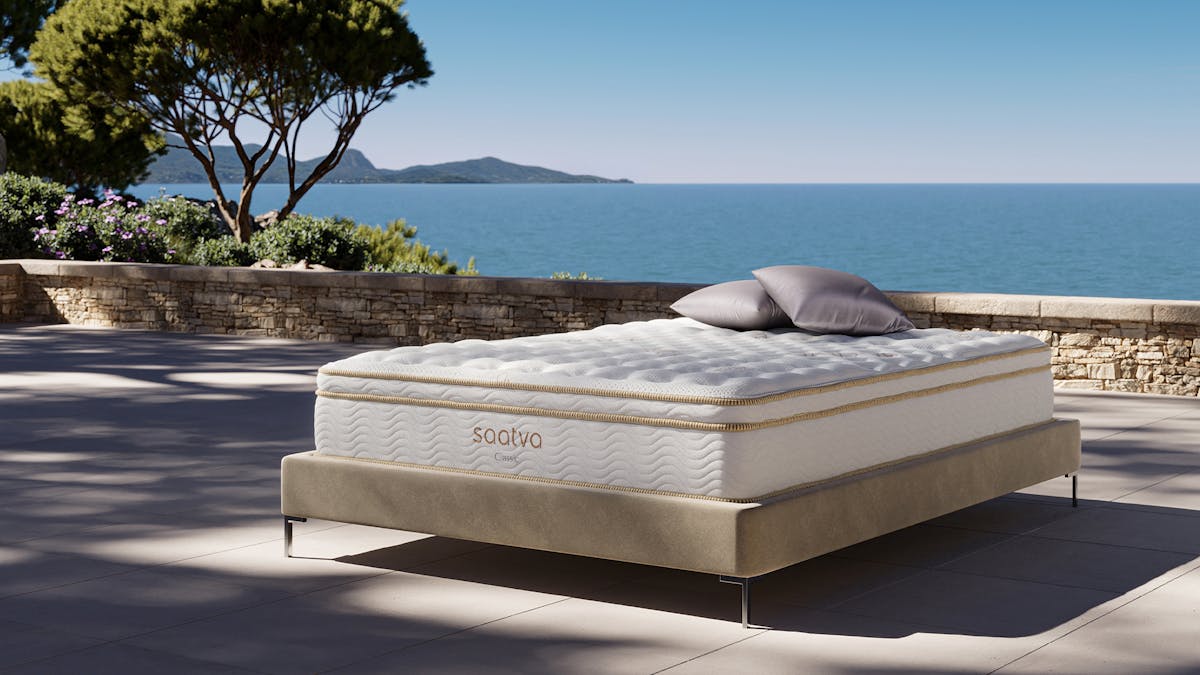
Saatva Classic
9.2/10
- Dual-coil construction with a reinforced lumbar zone pad
- Organic cotton Euro-top and superior edge support
- Free white-glove delivery, in-room setup and old-mattress removal
- 365-night home trial and lifetime warranty
- Three firmness options: Plush Soft, Luxury Firm, Firm
- Ships flat, not compressed in a box
- $99 return fee if you use the trial
The Saatva Classic outperforms both Sleep Science and GhostBed on construction quality, support, and after-sale service. Its dual-coil lumbar system, 365-night trial, and free white-glove delivery make it the most complete pick for shoppers who are comparing mid-range foam beds and want to spend their money once.
Sleep Science vs GhostBed: what you're actually comparing
Sleep Science is a Costco house brand made by South Bay International. You buy it in-store or on Costco.com, which means you get Costco's famously generous return policy but lose the ability to compare it directly with other online mattress brands. GhostBed is a direct-to-consumer brand that ships nationwide, offers a 101-night trial, and sells through its own website.
Both land in the budget-to-mid-range tier. Sleep Science undercuts GhostBed on queen pricing by roughly $150-$200 depending on the model. GhostBed punches slightly above its weight on construction, adding a layer of aerated latex above the gel memory foam core, which gives it better edge support and a more responsive feel.
Specs at a glance
| Feature | Sleep Science (Sonoma) | GhostBed Classic |
|---|---|---|
| Type | All-foam (flippable) | All-foam with latex layer |
| Height | ~12" | 11" |
| Firmness | Medium-soft / Medium-firm (two sides) | Medium-firm (6.5/10) |
| Cooling | OptiAir gel foam, Air Channel base | Gel memory foam + aerated latex |
| Motion isolation | Excellent (all-foam) | Good (latex adds slight bounce) |
| Edge support | Fair (foam compresses at edge) | Good (latex layer + dense base) |
| Trial | Costco return policy | 101 nights |
| Warranty | 10 years | 20 years |
| Sizes | Twin XL, Queen, King, Cal King | Twin, Twin XL, Full, Queen, King, Cal King, Split King |
| Queen price | $549-$840 | $895-$977 |
Construction breakdown
Sleep Science Sonoma
The Sonoma is a five-layer all-foam mattress, and its defining feature is that it flips. The bottom layer (when using the firm side up) is a 2-inch layer of 3-pound OptiAir foam tuned medium-firm. Above that sits a 2-inch Air Comfort layer for pressure relief, then a 4-inch Air Channel base as the central support core, then another 2-inch Air Comfort layer, and finally a 2-inch top layer of medium-soft OptiAir foam. When flipped, the softer side faces up, making this one of the few foam mattresses that genuinely serves two different firmness preferences.
The Air Channel base is the key cooling element: its open-channel design allows airflow through the core rather than trapping it. Paired with a moisture-wicking zippered cover, Sleep Science runs cooler than most sealed foam beds at this price.
GhostBed Classic
The GhostBed Classic uses four layers totaling 11 inches. The base is 7.5 inches of high-density polyfoam for long-term support. Above that sits 2 inches of gel-infused memory foam for pressure relief and cooling. The third layer is 1.5 inches of aerated latex, which is what sets GhostBed apart from a standard memory foam bed: latex adds rebound, reduces heat, and provides a firmer surface at the edges. The top cover is a stretch-knit blend of viscose and polyester, breathable and hypoallergenic.
The latex layer makes GhostBed more responsive than Sleep Science. You feel more "on top of" the mattress than "in" it. That helps couples who move around at night and anyone who finds all-foam beds feel too slow or sluggish.
Who should buy which
Choose Sleep Science if:
- You have an active Costco membership and want to use their unlimited return policy
- You or your partner have very different firmness preferences (the flip option is genuinely useful)
- Motion isolation is your top priority: all-foam absorbs movement better than a latex-hybrid
- Budget is tight and you want to stay under $850 for a queen
Choose GhostBed Classic if:
- You want a proper sleep trial with a set window (101 nights vs. Costco's open-ended but membership-dependent policy)
- Edge support matters: GhostBed's 7.5-inch base and latex layer hold up much better at the perimeter
- You need a Twin or Full size (Sleep Science Sonoma does not come in these sizes)
- You prefer a more responsive, bouncy feel rather than the sink-and-hug of all-foam
- You want a longer warranty: 20 years vs. Sleep Science's 10
Consider neither if:
Both brands lack white-glove delivery, use relatively basic foam constructions, and have limited in-person testing options outside of Costco warehouses. If you have a budget of $1,000+ and want a mattress you can actually test before committing, the Saatva Classic is a significantly better investment on every measurable spec: dual-coil construction, zoned lumbar support, a 365-night home trial, lifetime warranty, and free in-room setup.
Amerisleep AS3
8.9/10
- Plant-based Bio-Pur foam runs cooler than petroleum-based memory foam
- HIVE 5-zone support system targets the lumbar specifically
- CertiPUR-US certified, made in the USA
- 20-year warranty and 100-night trial
- Softer edge support than a coil hybrid
- Heavier sleepers (230+ lb) may prefer the AS5 Hybrid
If the all-foam feel of Sleep Science appeals to you but you want a better-engineered product with more accountability, the Amerisleep AS3 is the upgrade. It uses a plant-based foam that sleeps cooler, adds actual lumbar zoning, and comes with a 20-year warranty.
Price comparison by size
| Size | Sleep Science Sonoma | GhostBed Classic |
|---|---|---|
| Twin | Not available | ~$662 |
| Twin XL | ~$549 | ~$797 |
| Full | Not available | ~$907 |
| Queen | ~$840 | ~$977 |
| King | ~$1,080 | ~$1,187 |
| Cal King | ~$1,080 | ~$1,204 |
| Split King | ~$549 (1 Twin XL only) | ~$1,533 (2 Twin XL) |
Sleep Science's King and Cal King prices are identical, which is useful if you want a Cal King at King pricing. GhostBed offers a true Split King (two separate Twin XL units shipped together), which Sleep Science does not.
Firmness and sleeping positions
Sleep Science's flippable design is its biggest differentiator. The medium-soft side (around 4/10) works well for side sleepers who need pressure relief at the shoulder and hip. The medium-firm side (around 6/10) suits back and stomach sleepers who need more lumbar support. Couples with different firmness preferences can buy two Twin XL units and zip them together, each choosing their preferred side independently.
GhostBed Classic is a fixed medium-firm at roughly 6.5/10. It works for back, stomach, and combination sleepers. Strict side sleepers often find it slightly too firm, especially at lighter body weights. The latex layer keeps it from feeling sluggish, so combination sleepers who shift positions overnight will appreciate the responsiveness.
Cooling and temperature regulation
Both mattresses handle heat reasonably well for foam beds. Sleep Science's Air Channel base is the more aggressive cooling design: it physically moves air through a channeled core, which dissipates heat more effectively than gel infusion alone. The OptiAir foam also uses an open-cell structure with gel beads to pull warmth away from the body.
GhostBed's gel memory foam plus aerated latex is a solid combination, though the latex layer does less work on heat than it does on support. In practice, both beds sleep cooler than a sealed traditional memory foam mattress, but neither matches a coil hybrid's natural airflow.
Motion isolation
Sleep Science wins this category. An all-foam construction with dense memory foam layers absorbs movement and restricts it to a very small area. If you share a bed with a restless partner, Sleep Science will transfer less motion than GhostBed.
GhostBed's latex layer introduces a small amount of bounce, which means movement does travel slightly. It's not enough to be disruptive for most couples, but light sleepers who are highly sensitive to partner movement will prefer the Sleep Science's all-foam isolation.
Edge support
GhostBed wins here. Its 7.5-inch high-density polyfoam base, reinforced by a latex layer above, creates a stable perimeter. You can sit on the edge without the mattress collapsing under you, which matters for anyone who gets in and out of bed frequently or sleeps close to the edge.
Sleep Science is all-foam, which compresses at the edges when weight is applied. If edge support is a priority, or you're over 230 pounds, GhostBed is the more reliable choice of the two.
Verdict
Sleep Science and GhostBed are both competent mid-range foam mattresses that serve slightly different buyers. Sleep Science is the better value for Costco members who want all-foam motion isolation and the flexibility of a flippable firmness. GhostBed is the better choice if you need a structured trial, a longer warranty, edge support, or a size that Sleep Science doesn't carry.
That said, neither brand reaches the build quality or after-sale experience of the Saatva Classic, which offers a dual-coil lumbar system, 365-night trial, lifetime warranty, and free white-glove delivery for roughly $200-$300 more than GhostBed at the queen size. For most shoppers spending real money on a mattress they'll sleep on for a decade, the Saatva Classic is the more defensible purchase.
Between the two: Sleep Science for Costco shoppers who want better motion isolation and a flippable firmness at a lower price. GhostBed for anyone needing a proper sleep trial, better edge support, or a Full or Twin size. For a step up in build quality without a dramatic price jump, the Saatva Classic is where most serious mattress shoppers land.
No all-around winner declared — because this bracket can’t produce one
The comparison above ended exactly where mid-range foam duels usually do: Sleep Science takes price and motion isolation with its flippable Costco value, GhostBed takes edges, warranty and size range with its latex layer — and no clear all-around winner emerges. That’s not indecision; it’s the bracket’s ceiling showing.
Above the ceiling sits the recommendation this page was building toward: the Saatva Classic, where coil-on-coil structure settles the edge question, the plush euro top settles comfort, and white-glove delivery with a year-long trial settles the risk. If neither foam bed excited you, that was the correct reaction — check the Classic’s price today.
Frequently asked questions
Is Sleep Science a good mattress?
Sleep Science is a solid budget mattress for Costco members. Its OptiAir foam, Air Channel base, and flippable design are genuine differentiators at its price point. The main limitations are weaker edge support and a shorter 10-year warranty compared to GhostBed's 20 years.
Is GhostBed worth the money?
GhostBed Classic is a good value in the $900-$1,000 queen range. The aerated latex layer adds responsiveness and cooling that most all-foam beds in this bracket lack. The 20-year warranty and 101-night trial are above average. If you're comparing it to Sleep Science, GhostBed costs more but delivers meaningfully better edge support and broader size options.
Can you buy Sleep Science mattresses outside of Costco?
Sleep Science is primarily a Costco-exclusive brand in the US. You can occasionally find their products through third-party resellers, but pricing and return policies will differ from Costco's standard offer.
Which is better for couples: Sleep Science or GhostBed?
Sleep Science has an edge for couples with different firmness preferences due to its flippable design. Two Twin XL units can be bought and each partner uses their preferred side. GhostBed is better for couples who want a single mattress with good motion isolation and edge support on a king or split king.
How does GhostBed compare to Saatva?
The Saatva Classic is in a different tier. It uses a dual-coil hybrid construction, ships with free white-glove delivery, comes with a 365-night trial and lifetime warranty, and includes a reinforced lumbar zone. At $1,095+ for a queen vs. GhostBed's $977, the Saatva is roughly $100-$200 more but considerably better on every structural measure. Most buyers who do a direct comparison end up choosing Saatva.