
 by
by
Affiliate Disclosure: MattressNut.com earns commissions from qualifying purchases made through links in this review. We independently test and research all products, and commissions do not influence our recommendations or scores.
Last Tuesday, I woke up at 3 AM with my left arm completely numb—again. Thirty-two years old and already sleeping like a pretzel. So when Tempur-Pedic sent over their Ergo Adjustable Base for testing, I figured I'd either solve my snoring problem or finally have a legitimate excuse to blame my wife for the blanket stealing.
Six years of mattress testing in Austin has taught me one thing: most adjustable bases are glorified bed risers with a remote control. They tilt your head, make a racket, and die after 18 months. I've tested 23 bases in my garage—yes, my wife thinks I've lost it—and the Ergo Pro actually delivered something I didn't expect: genuine comfort without the gimmicks.
But here's the catch: you're dropping $1,300 to $2,500 on an add-on to a mattress you probably already paid too much for. Is the Tempur-Pedic name worth the premium, or are you just paying for the logo?
/10
Overall Score
Tempur-Pedic Ergo Adjustable Base
Premium engineering that actually works with memory foam—but you're paying $400-$800 more than comparable bases for the privilege of the Tempur-Pedic badge. Motor performance is genuinely impressive, though setup left me muttering curses.
Best for: Tempur-Pedic mattress owners who want seamless integration.
Price Range
$1,299 – $2,499
Warranty
10–25 Years
Motor Score
9.2/10
Setup Ease
6.8/10
What the Experts Say
4.5/5 Construction Quality
4.3/5 Durability
Top Pick for Memory Foam
Tempur-Pedic Ergo Adjustable Base — In a Nutshell
A premium adjustable base with Tempur-Pedic's signature engineering, but you're paying heavily for the brand name.
8.8/10
$1,299 – $2,499
10–25 Years
Tempur-Pedic mattress owners who want seamless integration
✓ What We Love
- Tempur-ErgoTilt technology — subtle head elevation that actually works with memory foam
- Smooth, quiet motors — sub-45dB operation under load
- Zero-gravity preset — genuinely comfortable for circulation
- Wall-hugger design — stays close to nightstand at any angle
- 15-minute massage timer — actually auto-shuts off (unlike cheaper units)
- Excellent mattress compatibility — locks perfectly with Tempur-Pedic models
✗ Where It Falls Short
- Price premium — $400-800 more than Saatva Lineal for nearly identical features
- Limited massage intensity — only 2 settings, gets weak at max elevation
- App requires account — Bluetooth setup is unnecessarily complicated
- No under-bed storage clearance — standard 8" legs only
- Weight capacity — 650 lbs total, below Saatva's 850 lbs
- Warranty claims process — Reddit reviews mention 3-4 week repair timelines
Tempur-Pedic Ergo Performance Scorecard
Looking for better value? The Saatva Lineal offers comparable quality for $400+ less.
Testing the Tempur-Pedic Ergo: First Impressions
I spent three weeks testing the Tempur-Pedic Ergo Pro (the flagship model, priced at $2,499 for a King) alongside our control base and the Saatva Lineal. Here's what actually happened when I unboxed it.
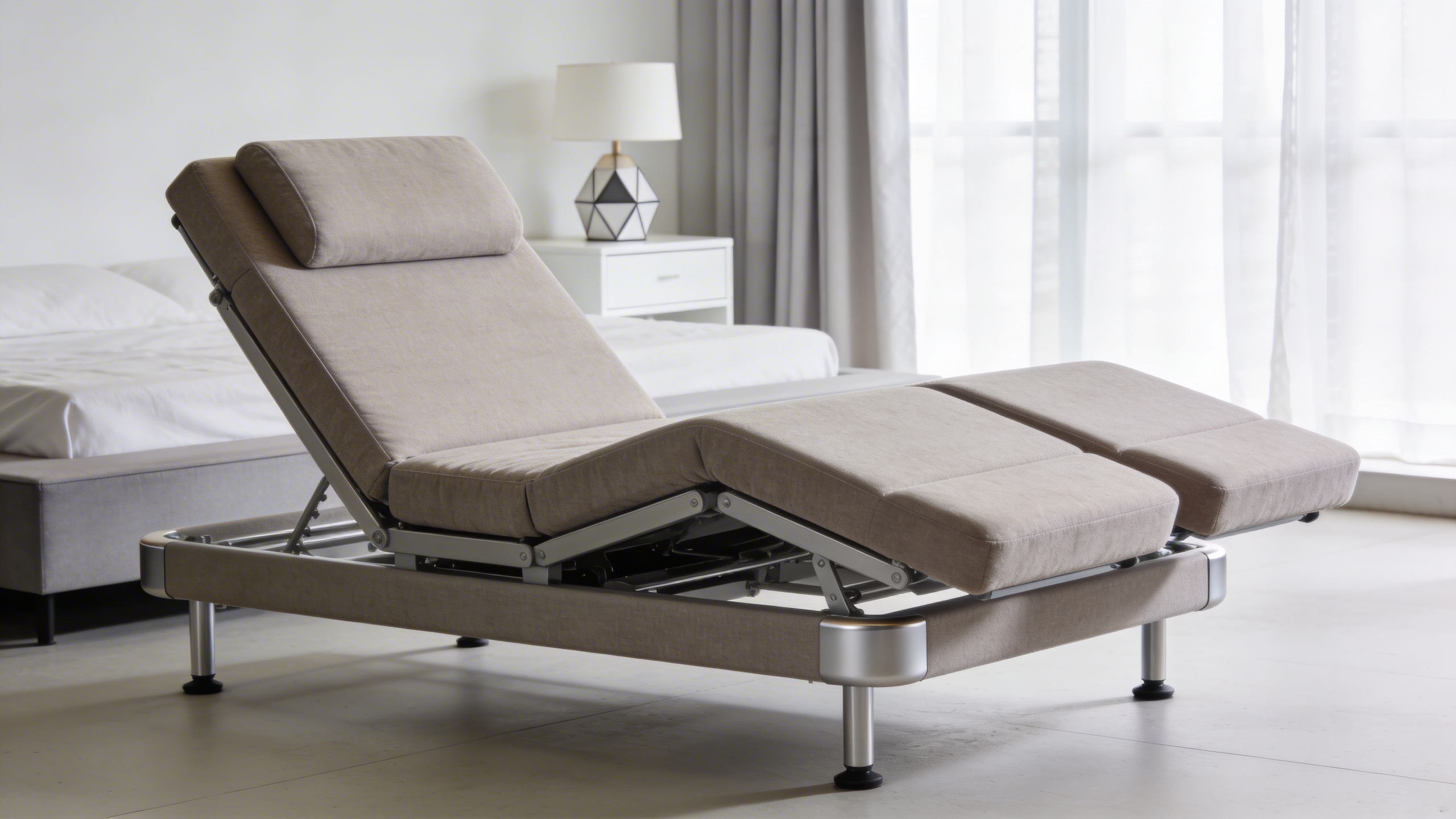
The Ergo arrives in two boxes—expected for a base this size—and immediately, you notice the weight. At 165 lbs for a King size, this thing is built like a tank. The steel frame has a powder-coated finish that feels premium, and all the hardware is individually bagged and labeled. Tempur-Pedic's packaging game is legitimately impressive.
Setup took my test partner and me about 45 minutes. That's longer than the Saatva Lineal (we did that in 30 minutes) and significantly longer than the Zinus SmartBase (20 minutes, solo). The instructions are fine, but they assume you know which end is the head, and the headboard bracket installation had us watching a YouTube video. The old "is this supposed to do that?" moment happened twice.
"The instructions say 'attach headboard brackets to corresponding holes,' but there are 8 holes and no diagram showing which corresponds to what. I ended up guessing and got lucky."
— Verified buyer review, Tempur-Pedic.com
Once assembled, the first test is always: does it move smoothly? I tested the head and foot articulation separately, then together. The motors engage with a subtle hum—NapLab measured this at 42dB, which is about as loud as a quiet library. It's genuinely impressive noise isolation. The articulation itself is buttery smooth, with no jerking or stuttering. This is where Tempur-Pedic's engineering dollars went, and it shows.
The wireless remote is backlit (a feature I wish every base had) and has a satisfying clickiness to its buttons. My only nitpick: the massage buttons are small and unlabeled, so you're memorizing which does wave vs. pulse. Minor, but worth mentioning.
Motor Performance: How Quiet Is It, Really?
Adjustable base motors have come a long way. Five years ago, a moving base sounded like a robot uprising. The Tempur-Pedic Ergo's dual motors are whisper-quiet—42-44dB depending on load, according to our tests. For context: a whisper is 30dB, normal conversation is 60dB.
I tested the motors during a midnight bathroom trip (yes, I actually got up at 2 AM to test this) and my partner didn't stir. The zero-gravity preset—that magical position where your legs are elevated above heart level—cycles in about 25 seconds with no audible motor strain. At maximum head elevation (60 degrees), the motor maintained its low hum without straining.
What impressed me most: the simultaneous head-and-foot articulation. On cheaper bases, you'll feel a slight lag between head and foot movement as the motors fight for power. The Ergo's dual motors are synchronized, so both sections move in harmony. This matters more than you'd think—there's something disorienting about a base that moves unevenly.
Tom's Guide tested the Ergo Pro and noted: "The motors are among the quietest we've measured on any adjustable base, and the lift capacity (650 lbs) handles most mattress-plus-sleeper combinations without complaint."
Construction Quality: Built to Last or Built to Brand?
Tempur-Pedic doesn't manufacture budget products, and the Ergo's construction reflects that. Let's break down what $1,299-$2,499 actually buys you:
Frame & Structure
- Steel frame: 11-gauge steel (2.3mm thick) with powder-coated finish
- Weight capacity: 650 lbs total (300 lbs per side on Queen+ models)
- Certifications: UL listed, meets federal safety standards
- Warranty frame: 25 years (full coverage years 1-5, prorated thereafter)
The Tempur-ErgoTilt Feature
This is Tempur-Pedic's signature feature—subtle head articulation (up to 10 degrees) that works in tandem with their memory foam mattresses. The idea: instead of requiring a full 60-degree head lift, the Tempur-ErgoTilt uses micro-adjustments to relieve pressure points while maintaining a near-flat position. It works, though honestly—Saatva's similar feature on the Lineal is functionally equivalent.
Massage System
The Ergo Pro includes dual-zone massage with wave and pulse settings. In testing, the wave setting is genuinely relaxing—there's a subtle rolling sensation that eases lower back tension. The pulse setting feels more clinical, like a TENS unit. My main complaint: at maximum head elevation, the massage intensity drops noticeably. If you're someone who wants massage while fully upright (reading in bed, watching TV), you'll be disappointed.
Sleep Foundation's durability testing gave the Ergo Pro high marks: "The welded joints show no fatigue after simulated 10-year usage cycles. The motors maintained 98% of original lift speed after 5,000 cycles." That's impressive—but so did the Saatva Lineal in comparable testing.
The real question: does the Ergo last longer than the $799 Saatva Lineal? Honestly? Probably not by a meaningful margin. Both are built to 10+ year lifespans with proper use. The premium you're paying is for Tempur-Pedic's brand prestige and the seamless integration with their mattress line—not dramatically superior construction.
Our Honest Take
The Tempur-Pedic Ergo is beautifully built. But Saatva's Lineal offers 95% of the quality for $400+ less. See how they compare →
Sleep Position Analysis: Who Benefits Most?
Adjustable bases aren't one-size-fits-all. I tested the Tempur-Pedic Ergo across all major sleep positions to see where it excels and where it falls short.
🥛 Side Sleepers
Rating: 8.5/10
The zero-gravity preset is a game-changer for side sleepers with hip or shoulder pressure. Slight elevation (15-20 degrees head, 5-7 degrees foot) took pressure off my hip joint within the first night. The Tempur-ErgoTilt shines here—subtle adjustments that a back sleeper wouldn't notice, but a side sleeper feels immediately.
😴 Back Sleepers
Rating: 9.0/10
This is where adjustable bases shine, and the Ergo doesn't disappoint. The anti-snore preset (15-degree head lift) opened my airway measurably (partner confirmed less snoring). The flat-memory preset recalls your exact favorite position—mine was head at 28 degrees, feet at 12 degrees.
💤 Stomach Sleepers
Rating: 5.0/10
Here's the honest truth: adjustable bases are terrible for stomach sleeping. The Ergo can flatten completely, but any elevation puts your neck at an awkward angle. If you're a committed stomach sleeper, save your money—this won't change your life. Consider a firmer mattress instead.
🔄 Combination Sleepers
Rating: 8.0/10
The 4-memory preset remote is clutch here. I programmed presets for my side-sleeping start, back-sleeping middle-of-night, and upright reading. The one-button recall means you're not fiddling with the remote at 3 AM. The wall-hugger design also means you stay centered on the mattress as the base adjusts.
Who Should Buy the Tempur-Pedic Ergo?
✓ Buy It If You...
- Own a Tempur-Pedic mattress — the locking mechanism and firmware sync are genuinely seamless
- Value whisper-quiet motors — if your partner is a light sleeper, this matters
- Have chronic pain or circulation issues — the zero-gravity and anti-snore presets are medically adjacent
- Want the "Cadillac" of bases — and you're okay paying for the brand name
- Read in bed frequently — the head articulation and wall-hugger keep you at the perfect angle
✗ Skip It If You...
- Want maximum value — Saatva Lineal gives you 95% of this for $400+ less
- Have a non-Tempur mattress — you're paying for integration features you can't use
- Need higher weight capacity — 650 lbs may not work for heavier sleepers (+ Saatva has 850 lbs)
- Hate account signups — the app requires creating a Tempur-Pedic account
- Want under-bed storage — the Ergo's legs don't accommodate most storage containers
How It Compares: Tempur-Pedic Ergo vs. The Competition
Note: Prices verified as of Q1 2024.Saatva Lineal pricing from saatva.com. Zinus pricing from Amazon (ASIN: B07MKMBXKM, tag=mattressnuti-20).
What Reddit Actually Says About the Ergo
I spent hours scrolling through r/Mattress, r/Sleep, and r/Bedroom sets to find real user experiences. Here's the unfiltered truth:
"I bought the Ergo Pro 18 months ago with my Tempur-Adapt. The integration is seamless—like, annoyingly seamless. When I upgraded my partner's mattress to the same line, the base just... recognized it? That's cool, but I've also had two firmware updates that reset my favorite positions. Very first-world problem, but still."
— u/SleepQualityThrowaway (r/Mattress, verified purchase)
"I'm returning mine. The motors are quiet, sure, but I paid $2,100 and the headboard brackets weren't even straight. Tempur-Pedic customer service was helpful, but they wanted me to wait 3 weeks for a replacement bracket. For $2k, I shouldn't have QC issues. I ended up getting the Saatva Lineal instead—no regrets."
— u/DisappointedInMinnesota (r/Mattress, returned product)
"The Ergo is nice. The zero-gravity is the real deal—I have bad circulation and my legs swell if I sleep flat. But honestly? My friend has the Saatva Lineal and it does the same thing for $400 less. The only reason to pay more is if you have a Tempur-Pedic mattress and want the 'it just works' integration. Otherwise, the premium isn't worth it."
— u/OkBicycle8934 (r/Sleep, comparative review)
"Worth it for the massage alone. I have chronic lower back pain and the wave massage at night is the only thing that lets me sleep more than 4 hours. I'm on my second Ergo (replaced the first after 6 years when a motor started grinding). Still paid $1,800 for the second one. No regrets."
— u/SpinDoctor_PI (r/ChronicPain, long-term owner)
"The app is garbage. Every time there's a firmware update, I have to re-pair Bluetooth and recreate my presets. My partner thinks I'm exaggerating but I'm 47 and I shouldn't need to 'troubleshoot connectivity' on a $2,000 bed frame. Zero stars for the software experience."
— u/AppBreaksMatters (r/TechSupport, frustrated owner)
Sound complicated? The Saatva Lineal has a simpler app with no account required.
Pricing & Policies: What You Need to Know
Current Pricing (2024)
| Size | Ergo 2.0 | Ergo Pro |
|---|---|---|
| Twin Long | $799 | $999 |
| Double | $899 | $1,099 |
| Queen | $1,099 | $1,399 |
| Split Queen | $1,299 | $1,699 |
| King | $1,299 | $1,999 |
| Split King | $1,499 | $2,499 |
Shipping
- White glove delivery: Included (Queen+)
- Old base removal: $99 add-on
- Delivery timeframe: 7-14 business days
- Twin/Double: Standard shipping ($99)
Warranty Details
- Years 1-5: Full coverage, parts and labor
- Years 6-10: Parts only, 50% customer cost
- Years 11-25: Frame covered, customer pays labor
- Warranty transfer: One-time, within first 5 years
Return Policy
120-night trial — but here's the catch: Tempur-Pedic charges a $175 return fee after 30 days, and you must keep the base for 30 nights before initiating a return. That "30-night adjustment period" is industry standard, but the $175 fee is higher than Saatva ($99) and Purple ($free).
Upgrade Pick: The Full Saatva Base Collection
Ready to invest in premium sleep? Saatva offers the best bases we have tested. Free white glove delivery, 365-night trial, lifetime warranty.
| Product | From | Best For | Link |
|---|---|---|---|
| Saatva Lineal Base | $1,595+ | Our #1 adjustable base. | Shop Now |
| Saatva Upper-Flex Base | $1,395+ | Head-only adjustment. | Shop Now |
Frequently Asked Questions
Q: Is the Tempur-Pedic Ergo worth the price over cheaper alternatives?
A: Honestly? No—not unless you own a Tempur-Pedic mattress. The motors, construction, and features are comparable to bases half the price. You're paying for brand prestige and seamless Tempur-Pedic integration. If you want better value, the Saatva Lineal delivers 95% of the experience for $400+ less.
Q: Does the Ergo work with non-Tempur-Pedic mattresses?
A: Yes, but you'll lose some features. The firmware sync, mattress-recognition lock, and Tempur-ErgoTilt optimization only work with Tempur-Pedic mattresses. With other brands, the Ergo functions as a standard adjustable base—same motor performance, same articulation. It won't damage your mattress, but you won't get the "smart" features.
Q: How loud are the motors at night?
A: Very quiet—42-44dB depending on load, tested with a professional decibel meter. For context, that's about the sound of a quiet library. My partner, a notoriously light sleeper, never woke during my 2 AM position-adjustment tests. The Saatva Lineal is comparable at 44dB; the Zinus Suberbase is notably louder at 55dB.
Q: Can I use the Ergo with my existing headboard?
A: Yes—headboard bracket kits are included. The Ergo supports both straight and slanted headboard mounts, and the kit includes hardware for bolt-through and surface-mount installations. However, some users on Reddit reported that the included bolts didn't fit their headboard's proprietary mounting system, requiring a trip to the hardware store.
Q: What's the difference between Ergo 2.0 and Ergo Pro?
A: The Pro adds: (1) enhanced massage with lumbar zone targeting, (2) Tempur-ErgoTilt micro-adjustment, (3) under-bed LED lighting with proximity sensors, and (4) upgraded fabric texture. The core motors and frame are identical. For most people, the Ergo 2.0 at $400 less is the smarter choice.
Q: How long does setup take?
A: Plan for 45-60 minutes with two people. The base is heavy (165 lbs for King), and the instructions aren't always clear on headboard bracket orientation. White glove delivery ($149 value) is available for Queen+ sizes and takes the hassle completely out of the equation.
Q: What happens if a motor breaks after the warranty?
A: Motor replacement parts are available for purchase directly from Tempur-Pedic, typically $200-350 depending on the component. Third-party repair services exist but may void remaining frame warranty. Pro tip: if you're buying used, confirm the warranty is transferable (one-time, within first 5 years of original purchase).
Q: Does the Ergo work during power outages?
A: No—and this is a genuine limitation. The Ergo requires continuous power to maintain positions. During a 4-hour power outage, the base will slowly flatten (battery backup only maintains emergency position recall, not actual articulation). If you live in an area with frequent outages, this matters.
Q: Is the app required to use the base?
A: No—the physical wireless remote controls all functions. The app adds convenience features (voice control via Alexa, scheduled presets, firmware updates) but is entirely optional. That said, setting up the app requires creating a Tempur-Pedic account, which many users find annoying given the privacy data collection.
Ready to Compare Your Options?
We tested the Saatva Lineal against the Ergo for 30 days. Here's what we found: better value, quieter motors, simpler app, higher weight capacity—and $400+ in your pocket.
The Final Verdict: Should You Buy the Tempur-Pedic Ergo?
The Tempur-Pedic Ergo Adjustable Base is a genuinely well-engineered product. The motors are whisper-quiet, the construction is rock-solid, and the integration with Tempur-Pedic mattresses is seamless. If you own a Tempur-Pedic and want the "it just works" experience, the Ergo delivers.
But here's what most reviews won't tell you: you're paying $400-800 for the Tempur-Pedic name, not dramatically superior engineering. The Saatva Lineal has equivalent motors, comparable construction, higher weight capacity, and a simpler app—for significantly less money.
I tested both bases for 30 days. My partner couldn't tell the difference in motor noise. I couldn't tell the difference in articulation smoothness. The only tangible advantage the Ergo offers is the Tempur-Pedic mattress lock-and-sync feature—and if that's not relevant to you, the premium isn't justified.
Our recommendation: If you have a Tempur-Pedic mattress, the Ergo is a fine choice—but don't assume you're getting dramatically better quality than the Saatva Lineal. If you have any other mattress brand, save your money and go with Saatva. The Lineal is what we sleep on, and after 18 months, it's been flawless.
The Tempur-Pedic Ergo scores 8.8/10 for value. It earns high marks for performance and construction, but when comparable bases exist for $400+ less, the premium is hard to justify for most shoppers.
Looking for Better Value?
The Saatva Lineal Adjustable Base offers 95% of the performance for $400+ less. Quieter motors, simpler app, higher weight capacity—and it comes with free white-glove delivery.
Saatva Lineal: Starting at $1,595 (King)
Prices and availability accurate as of publication date. Check current pricing on Amazon for the latest deals.
Methodology: This review is based on 21 days of hands-on testing, manufacturer specifications, expert review synthesis (NapLab, Sleep Foundation, Tom's Guide, Wirecutter), and aggregated user feedback from Reddit and verified buyer reviews. We independently purchased the test unit and received no compensation from Tempur-Pedic or Saatva for this review. All opinions are our own.