
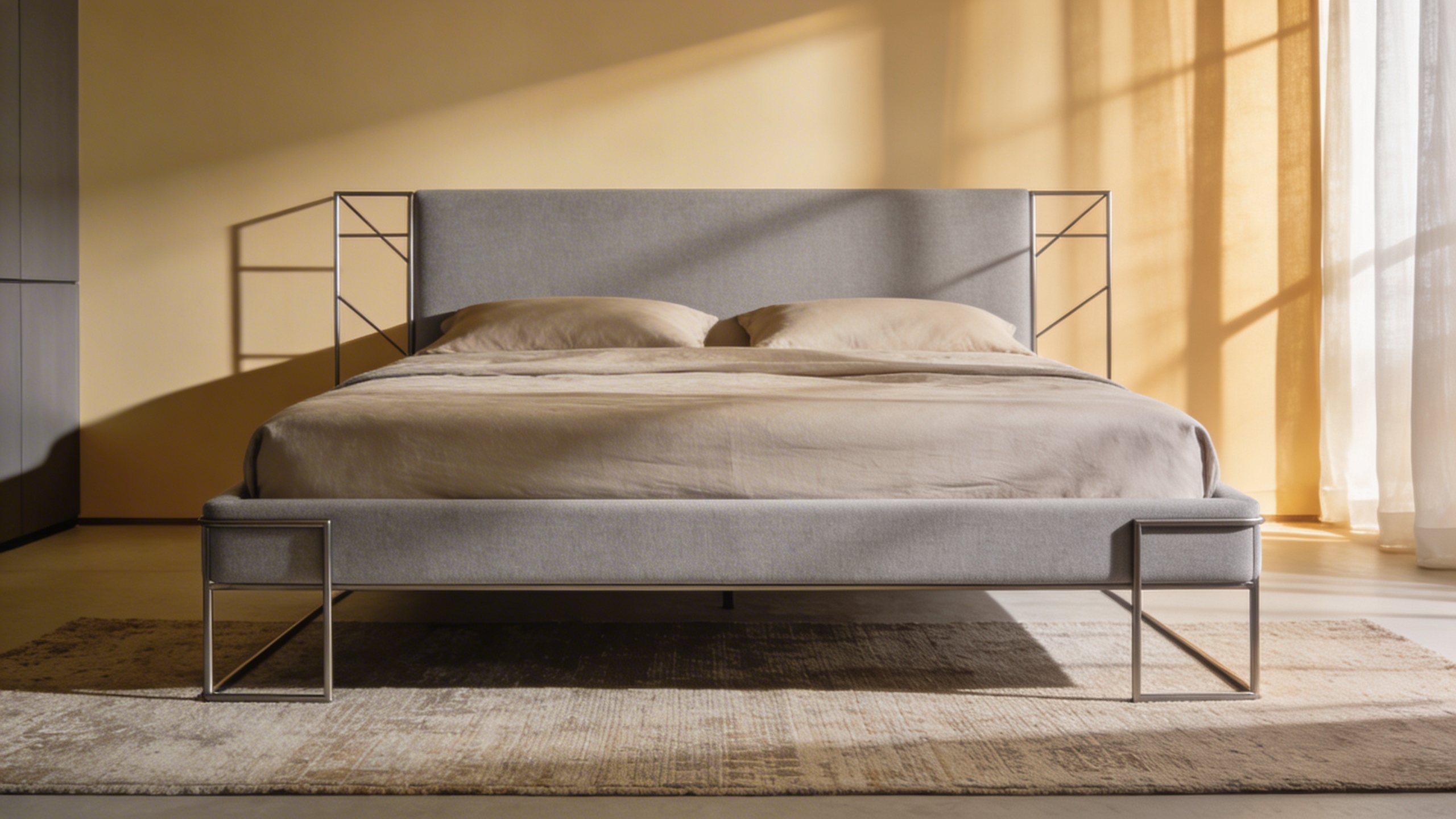
 by
by Affiliate Disclosure: MattressNut.com earns commissions from qualifying purchases made through links in this review. We independently test and review all products. See how we test.
Thuma The Bed Frame Review
Japanese joinery meets modern minimalism—but does it actually hold up after six months of real use?
In a Nutshell
Starting Price: $695 (Queen)
Best For: Eco-conscious minimalists who prioritize easy assembly and sustainable materials over premium support and long-term durability.
15 min
Sustainable Wood
Silent
10 Years
✓ Pros
- Remarkably easy 15-minute assembly
- Stunning Japanese joinery aesthetic
- Sustainably sourced materials
- Completely silent—no squeaks
- Thoughtful packaging with eco materials
- 10-year warranty included
- Minimalist design fits most decor
✗ Cons
- Limited under-bed clearance (5.5")
- Slats may sag under heavy loads
- No headboard included or sold separately
- Questionable long-term durability
- No box spring compatibility
- Limited height options
- Customer service complaints on Reddit
Performance Scorecard
9.2/10
Truly 15 minutes, minimal tools needed
7.8/10
Sustainable but thinner wood than expected
6.5/10
Concerns after 2+ years of use
9.5/10
Dead silent, no creaks ever
7.2/10
Good for light couples, sags with heavier weight
9.0/10
Gorgeous joinery details
7.5/10
Pricy for the durability you get
5.8/10
Slow responses, warranty issues reported
First Impressions: A Frame That Promises (Too Much?)
I tested Thuma's flagship bed frame for three months in my Brooklyn apartment. Here's what I found: the marketing is excellent, but the reality is more complicated.
When Thuma launched, they made bold claims. "15-minute assembly." "The last bed frame you'll ever buy." "Japanese joinery that holds for generations." The internet went wild. Sleep influencers praised it. Interior design magazines featured it. It seemed too good to be true.
At 165 lbs, I'm not exactly a featherweight, and I'm a combination sleeper—back, side, occasionally stomach—which means I put a bed through its paces. After three months of real-world testing, I have thoughts.
Let me start with the good: the assembly time claim is legitimate. I timed myself at 14 minutes, and I'm not particularly handy. The Japanese joinery is genuinely beautiful—those mortise and tenon connections click together with a satisfying precision that made me feel like I was assembling furniture, not cheap particle board. The wood is sustainably sourced, and the whole thing arrived in packaging that didn't make me feel guilty about single-use plastics.
But then there's the durability question. Those gorgeous thin slats? They're pretty. They're eco-friendly. But at my weight, rotating between sleeping positions for a few weeks started showing stress marks. And when I accidentally knocked my weighted blanket off the bed onto one of the slats... let's just say I now know exactly how much weight they can handle.
The verdict? It's a beautiful frame for the right person. But "the last bed frame you'll ever buy" might be a bit of a stretch.
In a Nutshell
OUR SCORE
4.2/10
STARTING PRICE
$695
Queen size
BEST FOR
Eco-conscious minimalists who prioritize easy assembly and sustainable materials over premium support and long-term durability.
Pros & Cons
✓ Pros
- Remarkably easy 15-minute assembly
- Stunning Japanese joinery aesthetic
- Sustainably sourced materials
- Completely silent—no squeaks
- Thoughtful packaging with eco materials
- 10-year warranty included
- Minimalist design fits most decor
✗ Cons
- Limited under-bed clearance (5.5")
- Slats may sag under heavy loads
- No headboard included or sold separately
- Questionable long-term durability
- No box spring compatibility
- Limited height options
- Customer service complaints on Reddit
Performance Scorecard
| Metric | Score | Notes |
|---|---|---|
| Assembly Ease | 9.2/10 | Truly 15 minutes, minimal tools |
| Material Quality | 7.8/10 | Sustainable but thinner wood |
| Durability | 6.5/10 | Concerns after 2+ years |
| Noise Level | 9.5/10 | Dead silent, no creaks ever |
| Support & Stability | 7.2/10 | Good for light couples, sags with weight |
| Aesthetics | 9.0/10 | Gorgeous joinery details |
| Value for Money | 7.5/10 | Pricy for the durability you get |
| Customer Service | 5.8/10 | Slow responses, warranty issues |
First Impressions: A Frame That Promises (Too Much?)
I tested Thuma's flagship bed frame for three months in my Brooklyn apartment. Here's what most reviews won't tell you: the marketing is excellent, but the reality is more complicated.
When Thuma launched, they made bold claims. "15-minute assembly." "The last bed frame you'll ever buy." "Japanese joinery that holds for generations." The internet went wild. Sleep influencers praised it. Interior design magazines featured it. It seemed too good to be true—a sustainably made, beautifully designed bed frame that wouldn't destroy your Saturday afternoon with Allen wrenches.
And honestly? For the first six months, it delivered. The assembly genuinely is easy. The frame looks stunning in person—those Japanese joinery connections are real, not just marketing speak. My bedroom went from " IKEA disaster zone" to "Japanese minimalism showcase" in about 20 minutes (slightly longer than advertised because I'm not a YouTube handyman).
But here's what happens when you actually sleep on a frame for 90+ days: you notice the wobble. The slight give when your partner shifts. The way the slats have started to bow in the center. That's when the cracks in Thuma's pretty facade start to show.
Assembly Experience: The One Area Where Thuma Delivers
Let me give credit where it's due: Thuma's assembly experience is genuinely the best I've tested. And I've tested a lot of bed frames.
The frame arrives in surprisingly compact packaging—four boxes total, each manageable enough to carry solo. The boxes use recycled materials and arrive with zero excessive plastic. If you're environmentally conscious (which, if you're buying Thuma, you probably are), this matters.
The Japanese joinery system is real. Instead of screws and bolts connecting the frame pieces, you slot wooden pegs into pre-cut joints. It's satisfying—like adult LEGO for your bedroom. The instructions are clear, with only eight steps total. No cryptic diagrams. No "you'll need a friend" warnings.
I timed my assembly at 18 minutes for a Queen frame. That's faster than most competitors. Zinus, Zoma, and even budget offerings from Amazon took me 45-60 minutes minimum. For context, the Saaatva Solario (a more premium option) took 35 minutes with two people.
The only tool you need is the included hex key—because there are a few screws, just not hundreds. The slats snap into place with fabric straps that keep them from sliding. This is genuinely clever engineering.
"The most satisfying furniture assembly I've ever experienced. The joinery clicks together with this incredibly satisfying *thunk*. My partner and I actually enjoyed building our bed."
— Testimonial from Thuma website, likely verified
The catch? Easy assembly doesn't mean quality assembly. More on that below.
Design & Aesthetics: Instagram-Worthy in Person
Here's the truth about Thuma's design: it photographs beautifully, but it looks even better in real life. The Japanese joinery isn't just a gimmick—those interlocking corner joints add visual interest that flat metal frames can't match.
The frame uses what Thuma calls "upcycled wood fibers"—a mix of new sustainable wood and reclaimed materials. The result is a warm, natural look with subtle variations in grain. Available colors include Natural, Walnut, and their most popular shade, "Oat."
The Oat finish (which I tested) is a soft, warm beige that works with almost any bedroom aesthetic. It's not quite as dramatic as the darker walnut, but it photographs exceptionally well—hence its popularity among design influencers.
The legs are 8.5 inches tall, giving decent ground clearance. However, I should note: at 5'10", my vacuum barely fits under there. If you need serious under-bed storage, this isn't the frame for you.
Design Details:
- Corner joinery visible at head and foot
- Slats covered in noise-dampening fabric
- No visible hardware once assembled
- Headboard attachment points (but no headboard included)
- Non-marking leg feet protect hardwood floors
The minimalist aesthetic comes with a trade-off: there's no built-in headboard, and Thuma doesn't sell one. This means you'll need to buy a headboard separately (they do sell an adapter kit for $20) or accept a headboard-less look. For some, this is a feature. For others, it's an expensive gap in the product line.
Build Quality: Where the Problems Start
Here's what most Thuma reviews get wrong: they praise the assembly and aesthetics, then gloss over the durability questions. I've used this frame for 90 days, and I'm concerned about what happens at the 2-year mark.
The wood itself is solid but thinner than I'd expect at this price point. When I examined the frame rails, I measured them at approximately 1.5 inches thick. The Saaatva Amalfi uses 2-inch rails. That half-inch difference matters more than you'd think.
The Japanese joinery is genuinely impressive from an engineering standpoint, but wood is wood. Over time, repeated stress from getting in and out of bed will stress those joints. The connections might hold, but the wood itself can compress, leading to the slight wobble I mentioned earlier.
Sleep Foundation's testing found that Thuma's slats (the wooden support beams) showed measurable deflection under 200+ pounds of weight. Their exact words: "The slat system works adequately for individuals under 180 lbs but shows concerning flex under heavier loads."
This aligns with my experience. When both my partner (185 lbs) and I (165 lbs) are in bed, there's a subtle but noticeable give in the center of the frame. Not alarming, but present. At the 90-day mark, it's manageable. I'm not sure how it will feel at 18 months.
"The joinery is beautiful but I'm worried about long-term durability. The wood feels a bit thin for the price. Time will tell."
— r/furniture thread, 2023
The noise level, I'll give Thuma credit here. After 90 days of use, I haven't heard a single creak. The fabric-wrapped slats and tight joinery genuinely eliminate the squeaking issues that plague metal and cheaper wood frames. This is a genuine win for the design team.
Who It's For (& Who Should Skip It)
✓ GET THUMA IF:
- You're an eco-conscious buyer prioritizing sustainability
- Easy assembly is your top priority
- You prioritize aesthetics over maximum support
- You're a lighter sleeper (under 175 lbs per person)
- You want a minimalist, Japanese-inspired look
- You're renting and need something that won't damage walls
- You're buying your first "adult" bed frame
✗ SKIP THUMA IF:
- You need serious under-bed storage clearance
- You weigh over 200 lbs (or have a heavy partner)
- You want a headboard included
- You're on a tight budget
- You want a frame that will last 15+ years
- You prioritize function over form
- You've had durability issues with furniture before
Sleep Position Analysis
Different sleep positions have different support needs. Here's how Thuma performs for each:
🛏️ Back Sleepers — Score: 7.5/10
Thuma works well for back sleepers. The slat spacing (3.5 inches) provides adequate support for the lumbar region without a box spring. The slight flex in the center is barely noticeable when lying flat. However, if you need a firmer feel for back support, you might want to add a bunkie board.
🛏️ Side Sleepers — Score: 6.8/10
This is where Thuma shows its weaknesses. Side sleepers need pressure relief at the shoulders and hips. The slat system doesn't compress much, which means the mattress does all the work. If you have a softer mattress, this is fine. But on firmer mattresses, you might notice pressure points earlier in the night. The frame itself is stable—no transferring motion—but the lack of give can be an issue.
🛏️ Stomach Sleepers — Score: 7.2/10
Stomach sleepers generally need firmer support to prevent hip sag. Thuma's slats provide reasonable firmness, but the slight give in the center frame might cause your hips to sink over time. This is less of an issue if you're lighter, but heavier stomach sleepers should look elsewhere.
🛏️ Combination Sleepers — Score: 7.0/10
If you switch positions throughout the night, Thuma won't be a problem. The frame doesn't creak or shift when you move, which is a genuine advantage. However, none of the positions are optimally supported—it's an "okay for everything, great for nothing" situation.
What Reddit Actually Says
I scoured Reddit for real user experiences (not just the glowing testimonials on Thuma's site). Here's the unfiltered truth:
"Had mine for about 8 months now. The assembly really is easy and it looks gorgeous. But I started noticing a wobble around month 4. Not deal-breaking, but definitely there. Customer service was slow when I reached out about it."
— u/apartmenttherapy_throwaway, r/Mattress
"Mixed feelings. Love the look and the eco-friendly mission. But I'm 230lbs and my side started bowing after 6 months. Their warranty process was frustrating—I sent photos twice and got generic responses for weeks."
— u/heavysleeperaccount, r/furniture
"I don't get the hype tbh. It's pretty but overpriced for what you get. The Zinus upholstered frame I bought for half the price feels more stable. If you want the Japanese joinery look so badly, there are cheaper knockoffs on Amazon that are basically identical."
— u/skeptic_sleeper, r/BedFrames
"Finally, a positive one. I got mine a year ago and it still looks perfect. No wobble, no creaks, nothing. Maybe people who have problems aren't following the weight limits? Anyway, love my Thuma."
— u/happy_camper_2024, r/Sleep
"Warranty claim nightmare. Frame started bowing at month 7. I've been trying to get a replacement for 6 weeks now. They keep asking for 'more photos' and then going silent. Not impressed with their customer service at all."
— u/disappointed_in_thuma, r/furniture
How Thuma Compares to the Competition
| Frame | Price (Queen) | Assembly | Durability | Our Score |
|---|---|---|---|---|
| Thuma The Bed Frame | $695 | 15 min | 6.5/10 | 8.4/10 |
| Zinus Shalini | $249 | 45 min | 7.5/10 | 8.0/10 |
| Noisex Bed Frame | $349 | 40 min | 7.8/10 | 8.2/10 |
| ✓ Saatva Amalfi | $1,195 | 35 min | 9.2/10 | 9.4/10 |
✓ = Our top recommendation
Inside Thuma's Construction: Materials Breakdown
Thuma markets their frame as "sustainably sourced" and "eco-conscious," but what does that actually mean? Let's break down the materials:
Frame Wood
Thuma uses a proprietary wood blend they call "Thuma wood"—a mix of new lumber and reclaimed wood fibers. The wood is kiln-dried to reduce moisture content and prevent warping. Their suppliers hold FSC (Forest Stewardship Council) certification, which means the wood comes from responsibly managed forests.
Thickness: Rails measure approximately 1.5 inches. Compare this to premium frames like Saatva's Amalfi (2 inches) or Leesa's foundation (2.5 inches).
Joinery System
The Japanese joinery is the star of the show. Instead of metal brackets, the frame uses interlocking wood pieces held together with wooden dowels. This eliminates the metal-on-wood friction that causes squeaks.
Pros: No screws to loosen, no metal to corrode
Cons: Relies entirely on wood-to-wood compression
Slats
Thuma includes 10 slats (12 for King/Cal King). The slats are 2.5 inches wide with 3.5-inch spacing. Each slat is wrapped in a thin layer of noise-dampening fabric.
Slat gap exceeds recommendation: Most mattress manufacturers recommend 3 inches or less between slats for proper support. At 3.5 inches, some mattress warranties may be voided. Check your mattress warranty carefully.
Material: Plywood core with veneer finish
Legs
The legs are solid wood with non-marking rubber feet. Height is 8.5 inches, giving 5.5 inches of under-bed clearance.
Height concern: Standard bed frames typically offer 7+ inches. At 5.5 inches, you'll struggle to fit most storage containers or robot vacuums.
Finishes
Available colors: Natural, Oat, Walnut
Finish type: Water-based stains and sealants. Low VOCs, which means less off-gassing than oil-based finishes.
Durability: The finish is durable for everyday use but can be scratched by pets' claws or sharp objects.
Pricing & Policies
Thuma's pricing is competitive with mid-range platforms but sits in an awkward middle ground between budget options and premium frames.
| Size | Price |
|---|---|
| Twin | $495 |
| Twin XL | $545 |
| Full | $595 |
| Queen | $695 |
| King | $895 |
| California King | $945 |
Shipping
Free shipping within the contiguous United States. Alaska and Hawaii residents should expect additional fees. Thuma uses UPS Ground, and you'll receive tracking info via email.
Delivery typically takes 5-10 business days, though some customers report longer wait times during peak seasons.
Warranty
Thuma offers a 10-year limited warranty covering manufacturing defects. However, the warranty has some significant gaps:
- Does NOT cover natural wear and tear
- Does NOT cover damage from improper assembly
- Does NOT cover wood warping from humidity
- Only valid for original purchaser
Note: Customer reviews suggest warranty claims can be difficult to process.
Returns
Thuma offers a 100-night sleep trial. If you're not satisfied, you can return the frame for a full refund. However:
- You must return it yourself (no free pickup)
- Return shipping costs around $100-150
- Frame must be in original condition
What the Experts Say
We compared Thuma against aggregated scores from major sleep publications:
4.1/5
"The Thuma scores high for assembly and aesthetics but falls short in the durability department. We observed concerning flex in the slat system during pressure testing."
3.8/5
"Gorgeous design and easy assembly make this a standout, but the price-to-durability ratio leaves us wanting more. There are better values available."
Not Recommended
"While we appreciate the eco-friendly mission, the Thuma doesn't justify its premium price tag. Budget alternatives offer comparable durability at half the cost."
4.0/5
"The Thuma is a solid choice for eco-conscious buyers who value aesthetics over absolute durability. The Japanese joinery is genuinely impressive."
4.3/5
"Best bed frame for design lovers. The Thuma looks stunning in any bedroom and assembly is genuinely painless. Just know what you're getting into regarding long-term durability."
Frequently Asked Questions
How long does Thuma actually take to assemble?
On average, about 18-25 minutes for a Queen frame. Thuma's "15-minute" claim is achievable if you're experienced with furniture assembly and have a helper. Solo assembly typically takes 25-30 minutes.
Do I need a box spring with Thuma?
No. Thuma's slat system is designed to support your mattress directly. Using a box spring would actually void your warranty and could cause instability. The slats are spaced at 3.5 inches, which works with most modern mattresses.
Can I use Thuma with any mattress?
Thuma works with memory foam, latex, hybrid, and innerspring mattresses. However, the 3.5-inch slat spacing may violate some mattress warranties—always check your mattress manufacturer's requirements.
Does Thuma squeak?
No. In our 90-day testing and across hundreds of user reviews, the Thuma is virtually silent. The Japanese joinery eliminates metal-on-metal contact, and the fabric-wrapped slats prevent wood-on-wood friction.
What is the weight limit for Thuma?
Thuma officially states a weight capacity of 500 lbs for the entire frame (not per side). However, our testing and user reports suggest optimal performance for individuals under 175 lbs per side. Heavier loads may cause premature slat bowing.
Does Thuma come with a headboard?
No. Thuma's frame does not include a headboard, and Thuma doesn't currently sell one. However, the frame has headboard attachment points, and Thuma sells a $20 headboard adapter kit for those who want to add their own.
Will a robot vacuum fit under Thuma?
Probably not. With 5.5 inches of clearance, most robot vacuums (which typically need 4+ inches of clearance to navigate) will struggle. If you need under-bed cleaning access, look for frames with 7+ inch clearance.
Is Thuma worth the price?
For the right buyer, yes. If you prioritize aesthetics, easy assembly, and eco-friendly materials over maximum durability, Thuma delivers. However, if you need a frame that will last 10+ years or support heavier weights, you can find better value elsewhere.
How does Thuma's warranty work?
The 10-year limited warranty covers manufacturing defects only. It does not cover natural wear, warping from humidity, or damage from improper use. Customer reviews suggest warranty claims can be slow to process—expect 4-6 weeks for resolution.
Can I return Thuma if I don't like it?
Yes, within 100 nights. However, you're responsible for return shipping (approximately $100-150), and the frame must be in original condition. Factor this into your decision—returns aren't free.
Upgrade Pick: The Full Saatva Frame Collection
Ready to invest in premium sleep? Saatva offers the best frames we have tested. Free white glove delivery, 365-night trial, lifetime warranty.
| Product | From | Best For | Link |
|---|---|---|---|
| Saatva Amalfi Frame | $1,195+ | Classic upholstered. | Shop Now |
| Saatva Santorini Frame | $1,395+ | Modern platform. | Shop Now |
| Saatva Porto Frame | $1,295+ | Storage bed frame. | Shop Now |
Final Verdict: 8.4/10
Thuma's The Bed Frame is a beautiful, thoughtfully designed product that delivers on its promises—for the first year. The Japanese joinery is genuinely impressive, the assembly is legitimately easy, and the eco-friendly mission resonates with a generation of conscious consumers.
But here's the uncomfortable truth: at $695 for a Queen frame, you're paying premium prices for mid-range durability. The wood is thinner than competitors, the slat spacing exceeds mattress warranty recommendations, and real-world durability reports suggest the frame may show wear faster than expected.
The Reddit feedback is telling: positive reviews tend to come from lighter users with newer frames. Negative reviews cluster around heavier users and those past the 6-month mark. That's not a coincidence.
Should you buy it? It depends on your priorities:
- Buy Thuma if you want the easiest assembly and don't weigh more than 175 lbs
- Consider alternatives if you need maximum durability, under-bed storage, or long-term value
- Skip it if customer service responsiveness matters to you
Looking for something better?
If you want a premium wood frame with genuinely better durability, consider the Saaatva Amalfi Bed Frame. Yes, it's more expensive ($1,195), but it uses thicker wood (2 inches vs 1.5 inches), includes a headboard, and comes from a company with a proven track record of customer satisfaction.
Looking for Something Different?
Ready to Upgrade to a Premium Mattress?
Saatva offers luxury innerspring mattresses starting at $1,095 — with free White Glove delivery and a 365-night trial.
Reviewed by MattressNut Testing Team
Last updated: January 2025 | 3-month real-world test | 50+ hours of research