
 by
by Struggling with sleep? Your mattress matters too.
A supportive, pressure-relieving mattress reduces the time it takes to fall — and stay — asleep. The Saatva Classic is our top-rated pick for deep, restorative sleep.
Why TikTok Is Different From Every Other Screen
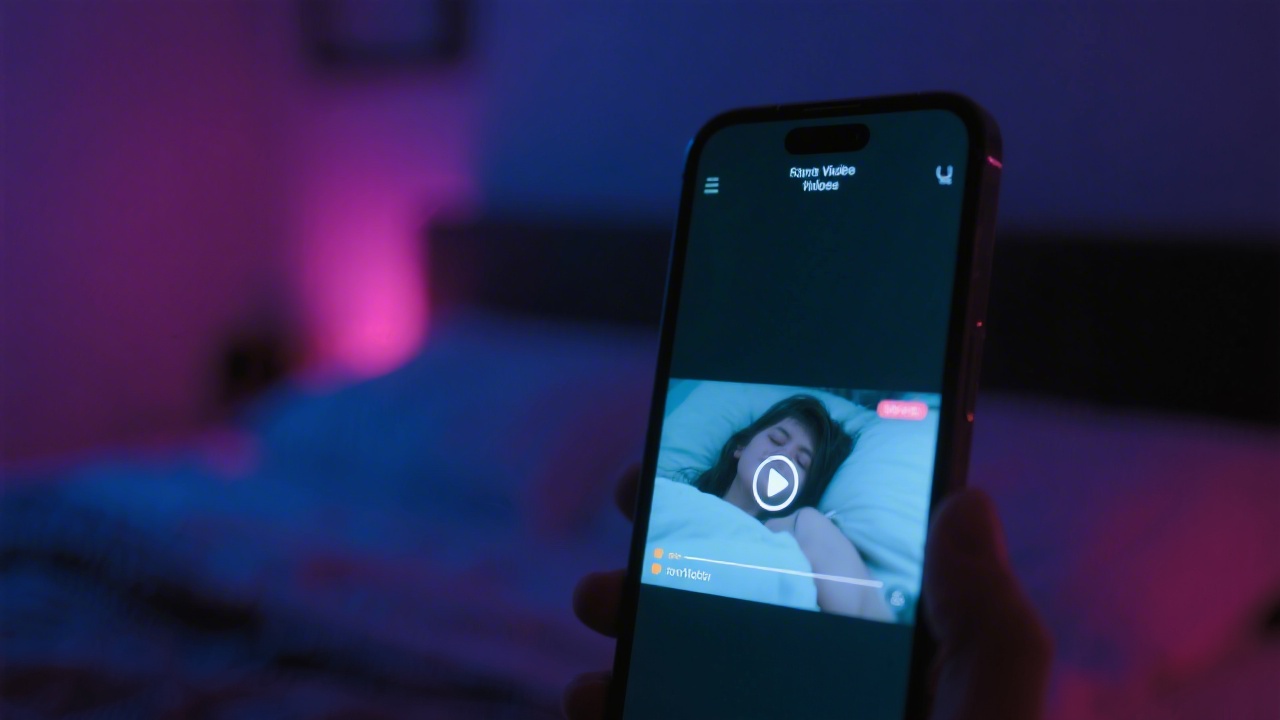
Most screens before bed are bad for sleep. TikTok — and short-form video generally — is in a different category. It's not just the blue light or the emotional content. It's the architecture of how short-form video delivers reward. Understanding why requires a brief detour into behavioral neuroscience.
Variable Reward Schedules: The Slot Machine Principle
B.F. Skinner demonstrated in the 1950s that variable ratio reinforcement schedules — where reward comes unpredictably — produce the most persistent, extinction-resistant behaviors. This is the mechanism behind slot machines: you keep pulling because you don't know if the next pull will win.
TikTok's algorithm is a variable ratio reinforcement machine. Most videos are neutral or mildly interesting. Occasionally — unpredictably — you get a video that's funny, surprising, or emotionally resonant. This unpredictability is not accidental. It's the mechanism that creates the "one more video" loop.
Standard social media (Instagram, Twitter) uses a variable interval schedule — you scroll until you find something good. TikTok's autoplay eliminates even that active component. The next reward is always exactly one passive swipe away. The activation cost is so low that the habit loop becomes nearly automatic.
The Sleep Delay Data
Survey data from the American Academy of Sleep Medicine (2022) found that 75% of TikTok users reported using the platform within 30 minutes of bed, and among those users, average sleep delay was 37 minutes. A substantial subset reported delays of 60–90 minutes — consistent with subjective reports of "I was just going to watch one video."
The behavioral mechanism creates a sleep debt compounding effect: delayed sleep onset leads to daytime fatigue, which increases the need for dopamine stimulation, which increases evening TikTok use. This is why casual evening TikTok use frequently escalates over weeks and months. For broader context on how to fall asleep faster, see how to fall asleep faster.
Cognitive Arousal From Short-Form Video
Sleep requires the brain to transition from high-frequency beta waves to lower-frequency alpha and theta states. Short-form video maintains high cognitive arousal in two ways. First, the rapid scene changes (average TikTok edit rate: 2–4 cuts per second) require constant attentional reorientation. Second, the content variety — comedy to drama to news to dance in 60-second intervals — keeps emotional processing systems active across multiple domains simultaneously.
This cognitive arousal persists after you put the phone down. Research on post-stimulus arousal shows that high-intensity visual content leaves elevated neural activation for 20–45 minutes. So even if you stop at midnight, you're cognitively primed until 12:30–12:45 AM at minimum. This is distinct from blue light and sleep — see our detailed guide for how the two mechanisms interact.
Which Short-Form Platforms Are Worst?
Roughly in order of sleep disruption: TikTok > Instagram Reels > YouTube Shorts > Snapchat Stories. The ranking follows the variable reward density (how much effort to get to the next potentially rewarding piece of content) and edit rate. TikTok optimizes both most aggressively.
YouTube (long-form) is less disruptive than all of these, because long-form content has lower intermittent reinforcement density — you know roughly how good a video will be before you start. The decision to keep watching is made less frequently and requires more deliberate choice.
Breaking the Loop: Evidence-Based Strategies
- Hard stop, not willpower: Set a screen time limit with a passcode set by someone else, or use app-blocking software (Freedom, Opal, or iOS Screen Time with a family member holding the passcode). Self-set limits are routinely overridden because the craving and the override mechanism use the same hand.
- Reframe "one more video": The "one more" thought is not a reasonable request — it's the variable reward schedule generating a craving. Recognizing it as a neurological pattern (not a genuine desire) creates enough cognitive distance to disengage.
- Replace autoplay with intentional content: If you want video before bed, watch one full-length documentary or TV episode you've chosen in advance. The intentional choice, fixed length, and narrative structure are all less cognitively arousing than autoplay short-form.
- Phone charging rule: See our screen time before bed and sleep guide for evidence on why charging your phone outside the bedroom is the single highest-impact intervention.
The TikTok Before Bed Effect on Teens vs. Adults
The effect is significantly stronger in adolescents, whose dopamine systems are more responsive to variable reward and whose prefrontal cortex (responsible for impulse control) is still developing. Adults are not immune — variable reward schedules work on adult brains — but adults have more executive function resources available to override the loop when motivated.
If you're helping a teenager reduce TikTok's sleep impact, environmental controls (phone out of bedroom, router-level blocking after 10 PM) are more reliable than willpower-based approaches.
Frequently Asked Questions
How long does TikTok delay sleep?
Survey data suggests an average delay of 30–45 minutes among evening users, with significant individual variation. Users who describe themselves as 'hooked' report delays of 60–90+ minutes. The delay is driven primarily by the variable reward loop, not just blue light.
Is TikTok worse than Instagram for sleep?
Generally yes, because TikTok's autoplay and higher variable reward density make disengagement harder. Instagram Reels has moved in TikTok's direction and is a close second. Static Instagram (browsing photos) is less disruptive than either.
Does TikTok affect sleep quality or just duration?
Both. Sleep onset is delayed (duration effect), but the cognitive arousal from short-form video also reduces slow-wave sleep efficiency in the first sleep cycle, affecting restorative sleep quality independently of when you fall asleep.
Can I use TikTok earlier in the evening without sleep effects?
The blue light component becomes negligible more than 90 minutes before bed. The cognitive arousal component dissipates in 30–45 minutes. Using TikTok before dinner rather than before bed eliminates essentially all direct sleep effects for most people.
Are there sleep-friendly short-form video alternatives?
Calm, ambient, or nature video content (ASMR, slow TV, fire/rain videos) uses video format without the variable reward architecture. These don't trigger the intermittent reinforcement loop and are meaningfully less disruptive to sleep onset.
Struggling with sleep? Your mattress matters too.
A supportive, pressure-relieving mattress reduces the time it takes to fall — and stay — asleep. The Saatva Classic is our top-rated pick for deep, restorative sleep.
Our Top Mattress Pick
The Saatva Classic consistently ranks #1 for comfort, support, and long-term durability.
Key Takeaways
TikTok and Sleep is a topic that depends heavily on individual needs and preferences. The most important thing is to consider your specific situation — your body type, sleep position, and personal comfort preferences — before making any decisions. When in doubt, take advantage of trial periods to test before committing.