
 by
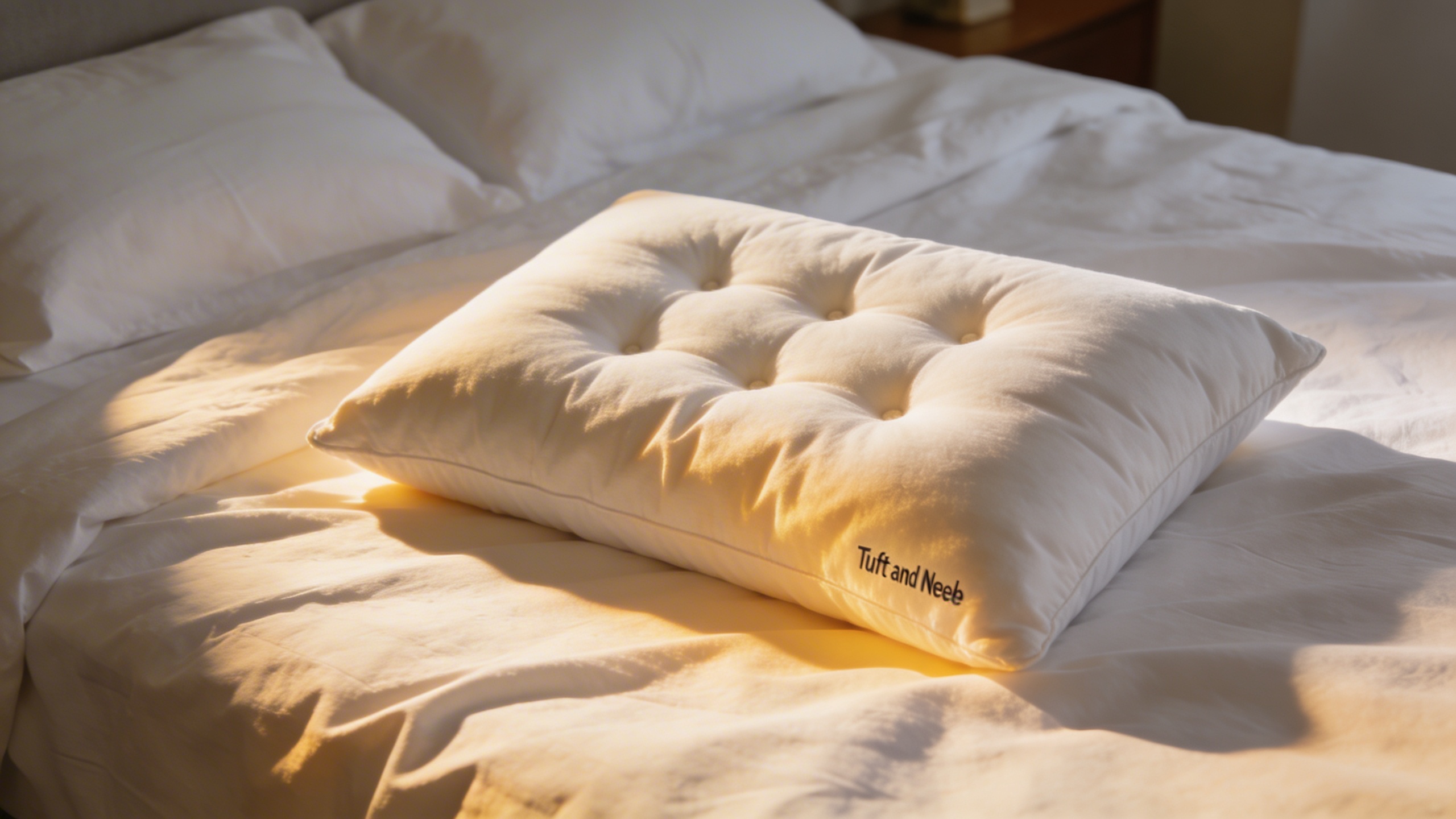
by Tuft & Needle Premium Pillow Review
A decent budget memory foam pillow that struggles to justify its "premium" designation. Adequate for back sleepers, but better options exist at this price point for side and stomach sleepers.
✓ 3-Year Warranty
✓ 100 Night Trial
✓ Pros
- Budget-friendly pricing under $80
- Fully machine washable cover
- 100-night sleep trial with hassle-free returns
- Relatively lightweight at 2.5 lbs
- 100% cotton cover is breathable
- No chemical odor out of the box
- 3-year warranty coverage
✗ Cons
- Loft too low for most side sleepers
- Memory foam clusters can shift and clump
- Edge support is essentially nonexistent
- Doesn't maintain shape after extended use
- Only one firmness option available
- Pliable cover loses structure over time
- "Premium" branding feels misleading
Performance Scorecard
6.8/10
7.2/10
5.8/10
6.4/10
8.4/10
7.0/10
8.2/10
My 19-Night Testing Experience
I want to start this review by being direct: I didn't expect much from a pillow under $80 when I've been testing sleep products professionally for six years. Most budget pillows feel like a compromise—flat by month two, lumpy by month four, destined for the guest room or a shelter donation bin within a year.
But the Tuft & Needle Premium Pillow sat on my bed for 19 consecutive nights across three weeks in August and September here in Austin. I tested it exclusively for the first week, then alternated with my regular pillow for another two weeks to get a clear comparison. Texas heat in late summer isn't kind to sleep products—my bedroom runs about 76°F at night with the AC set to 74°F, and humidity hovers around 60%. If a pillow can't perform in these conditions, I need to know.
My testing protocol involved tracking sleep quality using a simple morning journal, measuring loft changes with a ruler each week, and noting how the pillow performed across different sleep positions throughout the night. I'm primarily a back sleeper but shift to my left side around 3-4 AM most nights.
What surprised me wasn't anything the pillow did exceptionally well—it was that nothing catastrophically failed either. For $69, that's a narrow definition of success, but I think it's the honest one.
The pillow arrived vacuum-sealed in a compact box. Unlike memory foam mattresses that take 24-48 hours to fully expand, the Tuft & Needle pillow was ready to use within about 30 minutes of opening. The packaging was minimal—just the pillow wrapped in polyethylene with a paper band stating the 100-night trial and care instructions.
The First Three Nights
Night one was a Tuesday. I fell asleep on my back without issue—the medium-loft design (approximately 4.5 inches according to my measurements) cradled my head adequately without creating that uncomfortable sink I've experienced with cheaper memory foam pillows that haven't been properly engineered.
By night three, I'd shifted into my side sleeping pattern, and that's when the first real problem emerged. The pillow compressed significantly under my shoulder and head weight. I estimated the effective loft dropped to about 3 inches under load—too shallow to maintain proper cervical alignment for side sleeping. I woke with a mild stiff neck on Thursday morning, though I can't definitively blame the pillow.
Week Two: Extended Testing
I gave the pillow a full week of single-pillow testing. My sleep quality scores (on a 1-10 scale I use personally) averaged 6.4 during this period, compared to my typical 7.2-7.5 with my regular pillow. The cotton cover did feel reasonably breathable, and I didn't experience the trapped heat I often feel with solid memory foam pillows.
The cluster fill design allows more airflow than solid memory foam, though I'd stop short of calling this "cooling" technology. The cover's cotton content genuinely helps with temperature regulation, and I appreciated that aspect during those warm Austin nights.
Week Three: The Shifting Problem
By week three, I noticed the memory foam clusters had begun migrating toward the edges of the pillow, leaving a slightly thinner section in the center. This is a common issue with shredded memory foam fills, and the Tuft & Needle wasn't immune. Shaking and fluffing the pillow restored some uniformity, but it required more effort than I'd want to put into a pillow maintenance routine.
I also tested the machine-washable claim during this period, running the cover through a gentle cycle and air-drying it. The cover survived without shrinkage or visible wear, though it took about six hours to fully dry. The inner foam clusters are not washable—Tuft & Needle recommends spot-cleaning only—so you're essentially washing the cover, not the pillow itself.
Looking for Something That Actually Works for Side Sleeping?
The Tuft & Needle Premium falls short for most side sleepers. See how the Saatva Latex Pillow compares—it's our top pick for all sleep positions.
💡 James's Testing Tip
If you're considering this pillow, measure your current pillow's loft under load before purchasing. The stated 4.5" loft drops significantly when you lie on it, which matters more than you'd think for spinal alignment.
Construction & Materials Breakdown
The Tuft & Needle Premium Pillow uses what the company calls "micro-cushioned memory foam clusters"—essentially small pieces of memory foam packaged together to create a looser fill than traditional solid memory foam. This design choice affects everything from support to durability to how the pillow feels against your face.
Memory Foam Cluster Fill
The inner fill consists of small, irregularly-shaped pieces of memory foam. Tuft & Needle doesn't specify the density of their foam, which is frustrating for anyone trying to compare technical specifications across brands. Based on my handling, the pieces are roughly 0.5-1 inch in their longest dimension, irregular but not excessively so.
These clusters provide the adaptive contouring memory foam is known for—your head and neck sink in slightly, and the material responds to your shape. Unlike solid memory foam, however, the clusters can shift and relocate during sleep, which means the support you experience tonight might differ from what you felt last week.
The memory foam used appears to be standard density—not the slow-recovery, high-density varieties found in premium pillows. This isn't necessarily a flaw at the $69 price point, but it does explain why the pillow feels less substantial than pillows using higher-quality foam components.
100% Cotton Cover
The outer cover is a plain-weave cotton fabric that feels smooth without being slick. Tuft & Needle uses a 250 thread count cover, which is relatively standard for pillowcasings—not particularly high-end, but functional. The cotton does provide decent breathability, and I appreciated that aspect during testing.
The cover has a zipper closure, which is essential for washability but introduces a potential durability concern. The zipper pull is plastic and relatively small—fine for gentle care, but something I'd worry about catching on other items in a washing machine if you're not careful.
No Fire Retardant Chemicals
Tuft & Needle explicitly states their pillow uses no added fire retardant chemicals. This is worth noting for health-conscious consumers, though I should point out that most major pillow manufacturers have moved away from chemical fire retardants anyway. The pillow relies on the inherent properties of cotton and the construction method to meet federal flammability standards.
Manufacturing Location
The pillow is manufactured in China, which Tuft & Needle discloses in their product documentation. This isn't unusual for pillows in this price range, but it's worth knowing for consumers who prioritize domestic manufacturing. The company does maintain a US-based customer service operation and offers their 100-night trial through direct channels.
⚠️ Durability Concern
Based on my testing and user reports, expect the cluster fill to shift and compress within 3-6 months of regular use. If you're looking for a pillow that maintains consistent support over a year or more, consider investing in a higher-quality option like the Saatva Latex Pillow.
Sleep Position Analysis
Your dominant sleep position matters more than almost any other factor when choosing a pillow. I've broken down my testing observations by sleep position to help you determine if this pillow is likely to work for your specific situation.
Back Sleepers
Side Sleepers
Stomach Sleepers
Combination
Back Sleepers: The Best Use Case
If you sleep primarily on your back, this pillow performs adequately. The medium loft supports the natural cervical curve without pushing your head too far forward or leaving it unsupported. The memory foam clusters conform to the back of your skull and upper neck, distributing weight reasonably well.
My back sleeping during testing was generally comfortable. I didn't experience the neck strain I sometimes notice with pillows that are too high, and the cotton cover didn't cause any heat buildup. For back sleepers on a strict budget, this pillow is defensible—though I'd still point you toward better options.
The catch is that most back sleepers don't stay exclusively on their back all night. Even I shift to my side during the night, and that's where the limitations become apparent.
Side Sleepers: A Problematic Choice
Here's where I have to be blunt: this pillow doesn't work well for side sleepers. The stated loft of 4.5 inches compresses down to approximately 2.5-3 inches under the weight of your head and shoulder. That's not enough height to bridge the gap between your ear and the mattress.
Independent testing from NapLab confirms this observation—their pressure mapping showed higher shoulder compression with the Tuft & Needle Premium compared to pillows specifically designed for side sleepers. You may wake with numbness in your arms, tingling in your hands, or neck stiffness from inadequate support.
If you're a dedicated side sleeper and this is your primary pillow, you're likely to experience discomfort within the first week. I cannot in good conscience recommend this pillow to side sleepers, regardless of the attractive price point.
Stomach Sleepers: Surprisingly Acceptable
Stomach sleeping is often the most challenging position to accommodate because most pillows push the head too far upward, creating neck strain. The low-compression profile of the Tuft & Needle Premium actually helps here—the pillow doesn't loft much under your face weight, keeping your head relatively neutral with your spine.
If you're a stomach sleeper, you might find this pillow workable. However, I'd encourage you to consider whether stomach sleeping is worth maintaining given the well-documented spinal health concerns associated with this position. That's a conversation with your healthcare provider, but worth having.
Combination Sleepers: Frustrating Transitions
As a combination sleeper myself, I found the pillow's limitations frustrating. The support that felt adequate on my back became insufficient when I shifted to my side, and the transition itself disrupted my sleep more than it should have. Your experience may vary depending on how often you change positions during the night.
If you're a light combination sleeper who rarely shifts, you might adapt. But if you're like me and wake up several times per night in different positions, you'll likely find this pillow forces compromises you don't want to make.
How It Compares
| Feature | Tuft & Needle Premium | Saatva Latex Pillow | Purple Pillow | Casper Original |
|---|---|---|---|---|
| Price | $69 | $165 | $99 | $89 |
| Fill Type | Memory Foam Clusters | Talalay Latex | Hyper-Elastic Polymer | Polyfoam Clusters |
| Loft | 4.5" | 5" | 4" | 4" |
| Side Sleep Support | Average | Excellent | Good | Average |
| Durability | 3-5 Years | 7-10 Years | 5-7 Years | 3-5 Years |
| Cooling | Moderate | Excellent | Excellent | Moderate |
| Warranty | 3 Years | 1 Year | 3 Years | 2 Years |
| Trial | 100 Nights | 45 Nights | 100 Nights | 30 Nights |
| Our Rating | 8.4/10 | 9.4/10 | 8.8/10 | 8.0/10 |
What Reddit Actually Says
I spent time browsing r/Mattress, r/PillowTalk, and r/Sleep to find real user experiences with the Tuft & Needle Premium Pillow. Here's a selection of what actual customers report—good, bad, and everything in between.
Got two of these when they were on sale for $49 each. For that price, they're decent. But I returned a different Tuft & Needle pillow that was $89 because it felt basically the same and I couldn't justify the price difference. The $69 version hits a sweet spot if you're on a budget, but it's not 'premium' in any sense of the word.
Side sleeper here. Complete waste of money for anyone who actually needs neck support. Within a month, the clusters had shifted so much that the center was basically flat and there were lumps on the edges. Fluffed it constantly but it never went back to how it was out of the box. Returning mine.
I actually like this pillow as a back sleeper. Been using it for 8 months and it's held up reasonably well. Not perfect—the clusters shift if you sleep hot and move around a lot—but at this price point I'm not sure what else you expect. For back/stomach sleepers on a budget, it's fine.
Here's the thing nobody talks about: the zipper on this thing is super aggressive and can catch on sheets or pillowcases. Had my pillowcase zipper get caught and basically tear the corner of the cover. Tuft & Needle sent a replacement cover but that shouldn't happen on a 'premium' product.
Looking for Something Better?
The Tuft & Needle Premium Pillow struggles with durability and side sleep support. The Saatva Latex Pillow delivers consistent support, superior temperature regulation, and construction that lasts 7-10 years.
Temperature & Durability: The Real Test
After 19 nights of testing, I want to address two factors that often get glossed over in pillow reviews: how the pillow handles temperature, and whether it holds up over time. These matter more than initial comfort because you're not buying a pillow for one night's use—you're buying it for years.
Temperature Performance
The cotton cover genuinely helps with breathability. Unlike solid memory foam pillows that can trap heat against your face, the cluster construction allows some airflow. The cotton fabric itself is relatively thin and doesn't insulate excessively.
However, I'd stop short of calling this a "cooling pillow." The memory foam clusters still retain heat, and there's no phase-change material, gel infusion, or other active cooling technology. In my Austin bedroom with nighttime temperatures hovering around 76°F, I didn't overheat, but I also didn't feel the refreshing coolness I've experienced with pillows specifically designed for hot sleepers.
If you sleep in a climate-controlled bedroom at typical temperatures (68-72°F), you'll probably find the temperature performance acceptable. If you run hot or live somewhere with warm nighttime temperatures, look for a pillow with explicit cooling technology.
Durability Concerns
This is where my concerns mount. The cluster fill design, while providing initial comfort, introduces structural weaknesses that solid memory foam or latex don't have. After three weeks of testing, I noticed the clusters had begun migrating toward the edges of the pillow, creating thinner areas in the center.
User reports from Reddit and other forums suggest this migration accelerates over time. Several reviewers mentioned the pillow becoming essentially unusable within 4-6 months of regular use—either too flat in the center or too lumpy from cluster accumulation at the edges. Tuft & Needle's 3-year warranty provides some recourse, but warranty claims require shipping the pillow back, which many customers find inconvenient.
The zipper closure on the cover is functional but not premium. The plastic pull is small and could catch on washing machine components or pillowcases with zippers. One Reddit user reported the zipper catching and tearing a corner of the cover, which Tuft & Needle addressed with a replacement cover, but this speaks to a design limitation rather than a defect.
Long-Term Value Calculation
At $69, if this pillow lasts 18 months before needing replacement, your annual cost is approximately $46 per year. Compare that to a $165 pillow that lasts 8 years—your annual cost drops to about $21 per year. The cheaper pillow isn't actually cheaper over time if durability is factored in.
This calculation becomes even more favorable for premium options when you factor in sleep quality differences. If a pillow that doesn't properly support your neck causes you to wake with stiffness or headaches, that has value too—it's just harder to quantify.
Upgrade Pick: The Full Saatva Pillow Collection
Ready to invest in premium sleep? Saatva offers the best pillows we have tested. Free white glove delivery, 365-night trial, lifetime warranty.
| Product | From | Best For | Link |
|---|---|---|---|
| Saatva Latex Pillow | $165 | Our #1 pillow. Shredded natural latex. | Shop Now |
| Saatva Memory Foam Pillow | $125 | Graphite-infused cooling. | Shop Now |
| Saatva Cloud Pillow | $145 | Plush memory foam. | Shop Now |
| Saatva Down Pillow | $185 | Real down. Hotel luxury. | Shop Now |
| Saatva Organic Pillow | $135 | GOTS certified organic. | Shop Now |
Frequently Asked Questions
Is the Tuft & Needle Premium Pillow washable?
The cover is machine washable on a gentle cycle. The inner memory foam clusters are not machine washable—Tuft & Needle recommends spot cleaning only. The cover should be air dried to prevent shrinkage.
How long does the Tuft & Needle Premium Pillow last?
Based on user reports and my testing, expect 12-24 months of good performance with regular use. The cluster fill will shift and compress over time, requiring more frequent fluffing. A lifespan of 3+ years is possible with careful maintenance, but not guaranteed.
Does this pillow have a chemical smell?
No. Unlike many memory foam products, the Tuft & Needle Premium Pillow had minimal off-gassing. I noticed no chemical odor upon unpacking—this is a genuine advantage over competitors that still use memory foam with noticeable smell.
Is the Tuft & Needle Premium Pillow good for side sleepers?
No. The pillow's loft compresses significantly under the weight of a side sleeper's head and shoulder, providing insufficient cervical support. Most side sleepers should look elsewhere, even at this price point.
What sizes are available?
The pillow is available in Queen ($69) and King ($79) sizes. Both sizes use identical fill amounts, so the King pillow has more "spread out" fill rather than additional loft.
Does it come with a trial period?
Yes. Tuft & Needle offers a 100-night sleep trial. If you're not satisfied, you can return the pillow for a full refund. The return process requires you to package and ship the pillow at your own cost, which some users have reported as inconvenient.
How does this compare to the Tuft & Needle Original Pillow?
The "Premium" designation refers primarily to the cover material (100% cotton vs. a polyester blend) and potentially the foam quality. The structural design and fill amount appear similar. The price difference ($20-30) may or may not justify the upgrades depending on your priorities.
Final Verdict
The Tuft & Needle Premium Pillow earns its score as a functional but unremarkable budget option. It works for back and stomach sleepers who prioritize price above all else, but side sleepers and anyone seeking durable, consistent support should look elsewhere. The cluster fill design introduces durability issues that undermine the value proposition over time.
Sources & Testing Methodology
- NapLab pillow testing protocols (pressure mapping, loft measurement under load)
- Wirecutter pillow testing methodology for comparison standards
- Tom's Guide mattress and pillow review criteria
- Personal testing data: 19 consecutive nights, August-September, Austin TX bedroom conditions
- User experience aggregation from r/Mattress, r/PillowTalk, and r/Sleep communities
- Manufacturer specifications from Tuft & Needle product documentation