
 by
by Twin beds are the most flexible size in the lineup. At 38×75 inches, they fit rooms that would be unusable for any larger mattress. But "fits" and "works comfortably" are different standards — here's what you actually need.
Quick pick: If you already know your size, the Saatva Youth is our top recommendation — available in all standard sizes with white-glove delivery.
Twin Mattress Dimensions
| Size | Width | Length | Best For |
|---|---|---|---|
| Twin | 38 in | 75 in | Children under 5'5", bunk beds, guest rooms |
| Twin XL | 38 in | 80 in | Teen boys, adults up to 6'2", dorm rooms |
Minimum Room Size for a Twin Bed
Absolute minimum room for a twin bed: 7×10 feet. This allows the bed to sit along the long wall with about 14–16 inches on the open side — enough to exit the bed but nothing more.
Recommended minimum for a children's room with a desk: 9×10 feet. This allows a compact desk on the opposite wall with a 24-inch traffic lane between furniture.
Room Size Chart for Twin Layouts
| Room Size | Layout Possible | Notes |
|---|---|---|
| 7×10 | Bed only | Minimum functional; no additional furniture |
| 8×10 | Bed + dresser | Standard small bedroom |
| 9×10 | Bed + dresser + small desk | Good for school-age children |
| 10×10 | Bed + full furniture set | Comfortable; allows 24" clearance on both sides |
| 10×12 | Two twin beds | Shared room minimum; bunk option saves floor space |
Two Twin Beds in One Room
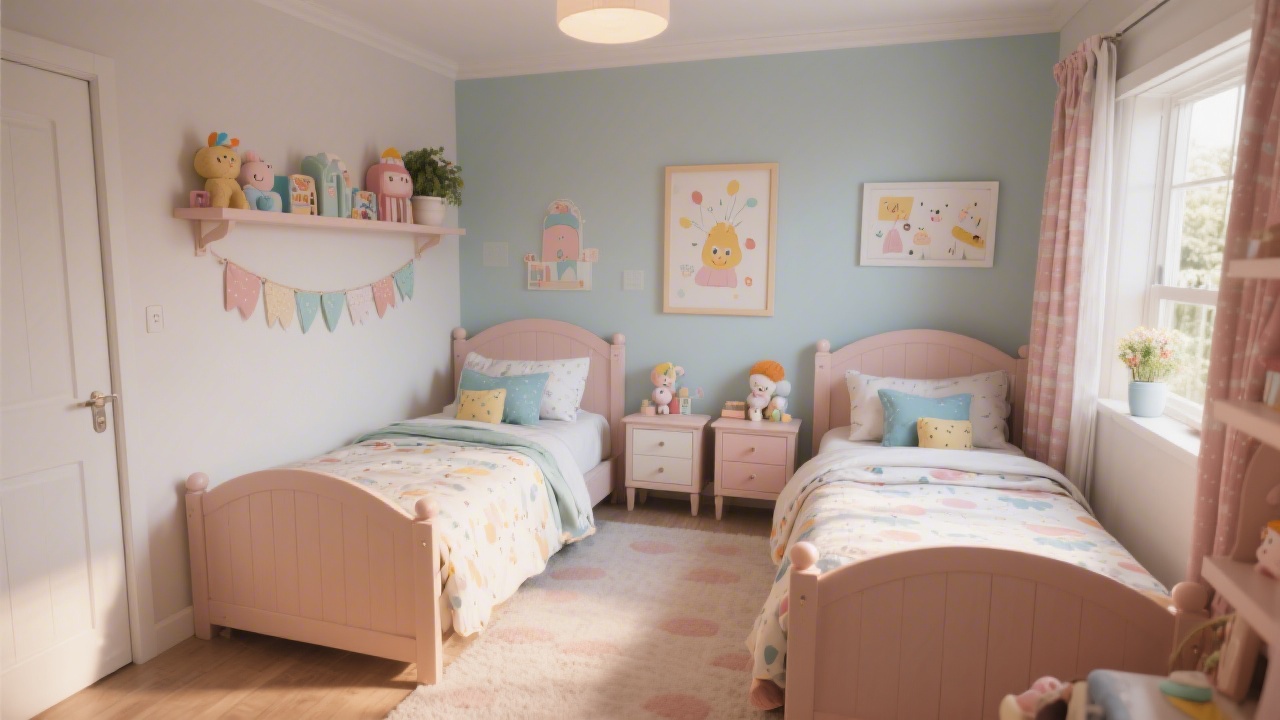
Shared children's rooms typically need at least 10×12 feet for two twin beds side-by-side. Allow 24 inches between the beds for access, plus 24 inches from the wall on the outer sides. Bunk beds cut the floor footprint to one 38-inch-wide unit, making a 10×10 room workable for two children.
Twin vs Twin XL: Which Room Size Changes
Twin XL adds 5 inches of length (75 to 80 inches). In rooms under 10 feet long, this matters: a twin XL in a 9-foot room pushes the mattress to within 3 inches of the end wall, eliminating foot clearance. If your child is expected to grow past 5'7" or 5'8", the twin XL is worth waiting for a slightly larger room.
Bunk Bed Ceiling Clearance
Standard bunk beds require a minimum ceiling height of 8.5 feet for safe clearance above the top bunk (you need 2 feet of sitting clearance plus the mattress thickness). Most modern homes with 8-foot ceilings are too low for safe bunk bed use unless using specifically designed low-profile bunk frames.
Our Pick for Children's Rooms: Saatva Youth
The Saatva Youth mattress is designed for growing children aged 3–12, with a dual-sided firmness that adjusts as they grow. It's available in twin size with the same white-glove delivery as all Saatva products. Check the Saatva Youth mattress →
Related Guides
- Full bed room size requirements
- How to measure your room for a bed
- Standard furniture clearance measurements
- Bed in corner setup: benefits and drawbacks
Frequently Asked Questions
What is the minimum room size for a twin bed?
A twin bed (38×75 inches) fits in a room as small as 7×10 feet. This is the absolute minimum — recommended minimum for a usable children's room with furniture is 9×10 feet.
Can a twin bed fit in a 8×10 room?
Yes. An 8×10 room comfortably fits a twin bed along the longer wall with about 14–18 inches of side clearance and room for a small dresser on the opposite wall.
What age should a child switch from twin to full?
Most children are fine in a twin through early teens. A transition to full size makes sense when the child exceeds 5'5", shares the bed with pets frequently, or enters high school and wants more personal space.
How much space do you need between two twin beds?
At minimum, allow 24 inches between two twin beds in a shared room for comfortable access. For children who need to make their beds independently, 30 inches is more practical.
Twin or twin XL for a growing teenager?
Twin XL is 5 inches longer (80 vs 75 inches) at the same width. For boys who may exceed 5'10" or 6', the twin XL avoids needing another mattress upgrade. The room must be at least 10 feet long to accommodate it comfortably.