
 by
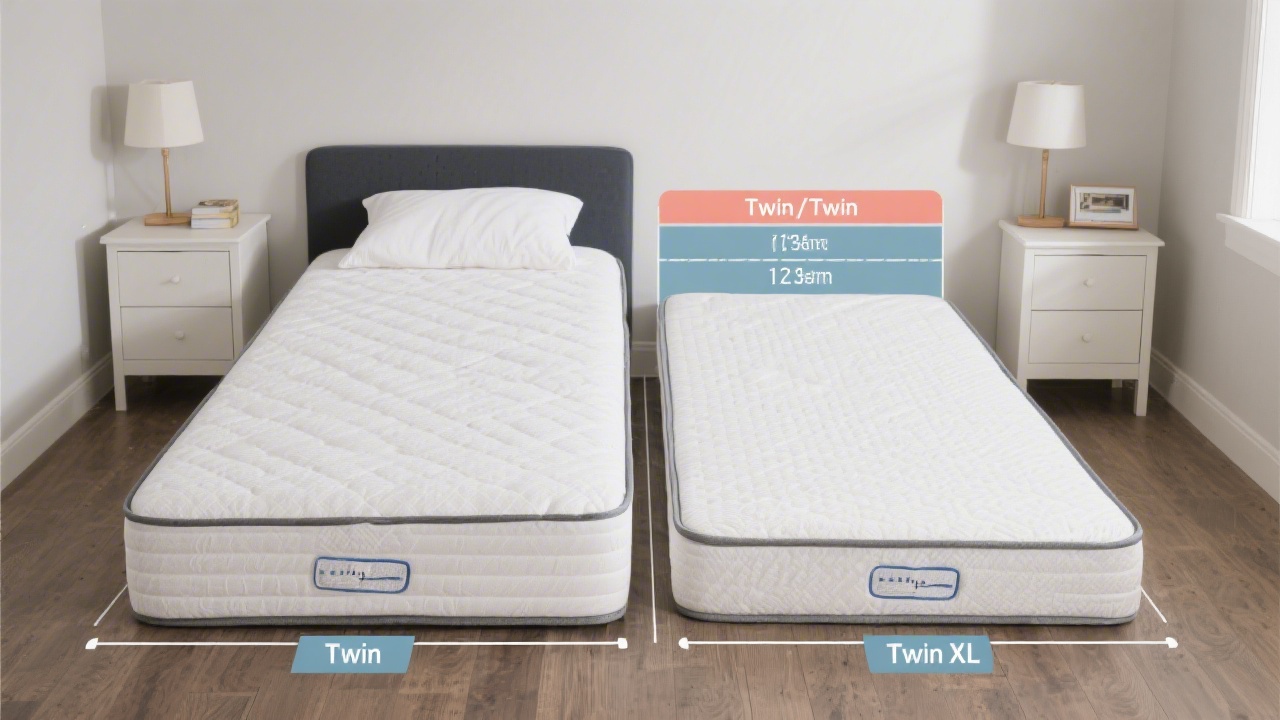
by The difference between twin and twin XL looks minor on paper — just 5 inches of length. But those 5 inches are the difference between a mattress a 6-foot person can sleep comfortably on and one that leaves their feet hanging off the end. Understanding exactly when that length matters helps you avoid buying the wrong size.
Quick Answer
Twin: 38" wide x 75" long — standard size for younger children.
Twin XL: 38" wide x 80" long — standard size for college dorms and tall teens.
Width is identical. Only the length differs by 5 inches.
Full Dimensions Comparison
| Measurement | Twin | Twin XL |
|---|---|---|
| Width | 38 inches | 38 inches |
| Length | 75 inches (6 ft 3 in) | 80 inches (6 ft 8 in) |
| Length difference | — | +5 inches longer |
| Surface area | 2,850 sq in | 3,040 sq in |
| Best for | Children, guest rooms | College dorms, tall teens |
| Typical price range | $300–$900 | $350–$950 |
| College dorm standard? | No | Yes (most schools) |
Our #1 Recommended Mattress
Last Updated: April 2026
Saatva Classic — From $1,395
365-night trial · Lifetime warranty · Free white-glove delivery
Who Should Choose a Standard Twin?
Standard twin mattresses are the right call for children roughly 10 and under, guest rooms used infrequently by a range of visitors, and small spaces where every inch of floor space matters. At 75 inches long, a twin accommodates anyone up to about 5 feet 11 inches without feeling cramped.
The twin is also the most affordable entry point in mattress sizing. If you are outfitting a child’s room and plan to upgrade to a larger size in a few years anyway, a standard twin is a sensible, cost-effective choice. Bedding is widely available and priced competitively.
One practical advantage of the standard twin: bed frames and furniture designed for twins are slightly more common in children’s furniture lines, and bunk beds almost universally use standard twin dimensions.
Who Should Choose a Twin XL?
The twin XL is the standard mattress size at most U.S. college and university dormitories. If you are buying a mattress topper, a mattress pad, or bedding for a student heading to a dorm, assume twin XL unless the school explicitly states otherwise.
Teenagers who are already 5 feet 10 inches or taller and still growing should seriously consider a twin XL. At 80 inches, it provides comfortable clearance for sleepers up to 6 feet 6 inches. The extra 5 inches of length costs relatively little more — typically $30 to $80 depending on the brand — and prevents the mattress from feeling too short within a year or two.
The twin XL also serves as half of a split king arrangement. Two twin XL mattresses side by side form a 76 x 80-inch sleeping surface identical to a standard king, which is why split king adjustable bases use two twin XL mattresses.
Price Difference
The price gap between twin and twin XL is modest. Most brands charge $30 to $80 more for the XL version, reflecting the additional materials in those 5 extra inches. At the budget end of the market the difference can be as small as $20. At the luxury end it is rarely more than $100 for the same model.
For teenagers likely to use a mattress for 5 to 8 years, the small extra cost for a twin XL is almost always worth it. For a young child who will upgrade to a full or queen in a few years, the twin is the more practical purchase.
Sheets and Bedding Compatibility
Twin and twin XL sheets are not interchangeable. The 5-inch length difference means fitted twin sheets will not stay on a twin XL — the elastic corners will not reach properly around the longer mattress. Twin XL sheets are widely available at major retailers and online. For college students, buying twin XL bedding is standard practice; most stores stock it prominently during back-to-school season.
Comforters and flat sheets are more forgiving — a twin flat sheet may technically cover a twin XL, but a fitted sheet must be the correct size.
Bed Frame Compatibility
Twin and twin XL mattresses require different bed frames. Standard twin frames will not accommodate a twin XL mattress — the mattress will overhang the frame by 5 inches at the foot. Most college-provided bed frames are already sized for twin XL. If you are buying an adjustable base for a split king setup, ensure it specifies “split king” (twin XL x 2).
5 Frequently Asked Questions
What is the difference between a twin and a twin XL?
Both are 38 inches wide. A twin is 75 inches long; a twin XL is 80 inches long. The twin XL is 5 inches longer, which matters for tall sleepers and college dorm beds.
Can I use twin sheets on a twin XL?
No. Fitted sheets must match the mattress length. Twin sheets will not properly cover a twin XL mattress.
Do I need a twin XL for college?
Almost certainly yes. Most U.S. college dormitory beds are twin XL. Confirm with your specific school, but buy twin XL bedding unless told otherwise.
Is a twin XL worth it for a tall teenager?
Yes. For teenagers over 5 feet 10 inches or still growing, the extra 5 inches of length is worth the small additional cost.
Can two twin XL mattresses make a king?
Yes. Two twin XL mattresses side by side equal a standard king (76x80 inches). This is how split king adjustable bases work.
Our #1 Recommended Mattress
Last Updated: April 2026
Saatva Classic — From $1,395
365-night trial · Lifetime warranty · Free white-glove delivery