
 by
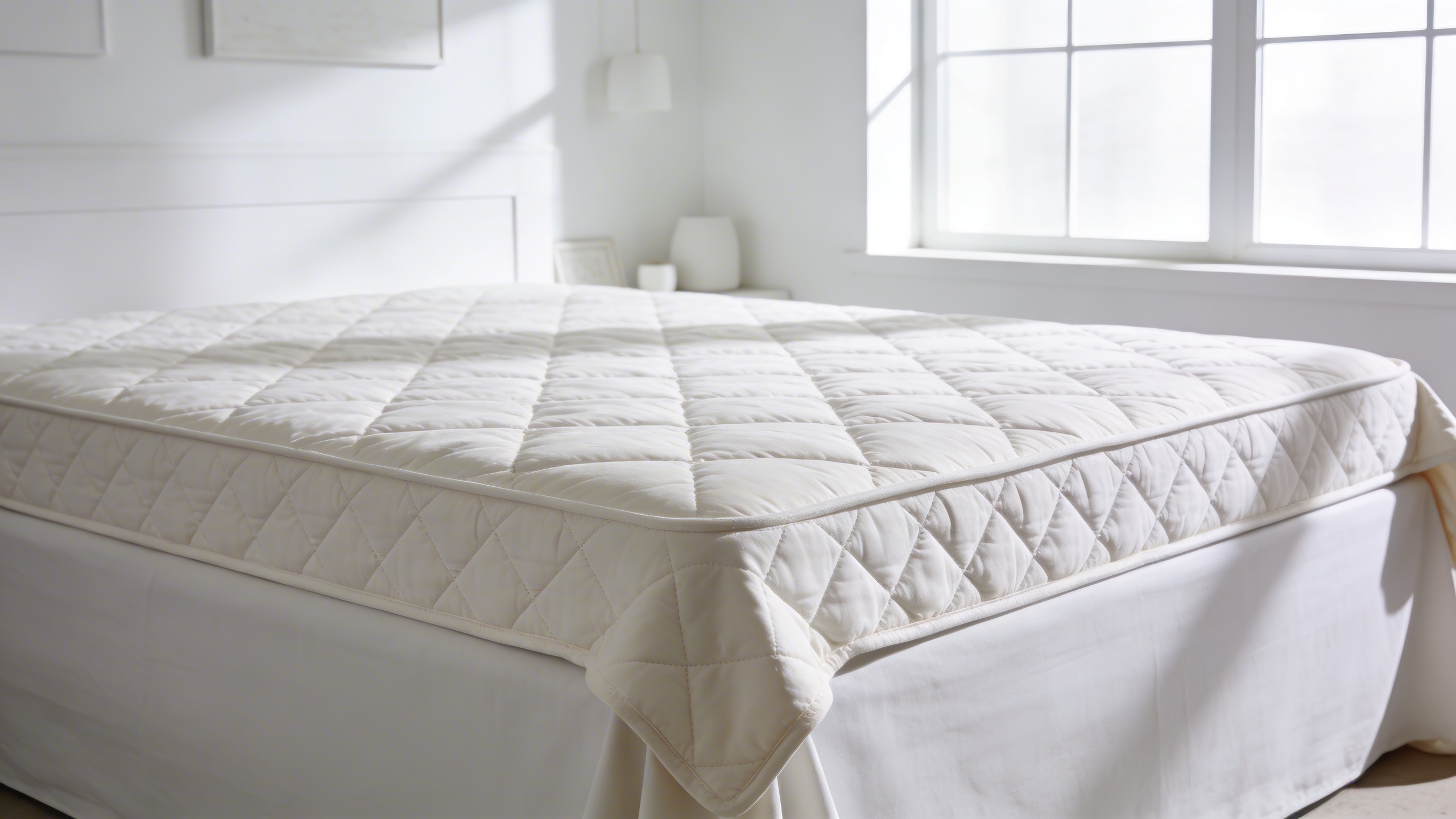
by Ultra Soft Queen Viscose Bamboo Pillow Top Topper
A wallet-friendly way to soften an older mattress. The bamboo-derived cover feels luxe, but the polyester fill loses loft faster than we'd like. Good for light use—maybe 18-24 months before noticeable compression.
Amazon · ~$45-55 Queen
Quick Verdict: What We Liked & Didn't
✓ What Works
- Silky bamboo-derived cover feels premium
- Immediate cushioning upgrade for firm mattresses
- Budget-friendly—often under $50
- Machine washable (cover only)
- No chemical off-gassing smell
- Lightweight and easy to handle
✗ What Doesn't
- Polyester fill flattens within 6-12 months
- No corner straps—slides around nightly
- Limited durability vs. memory foam options
- Only 1-year warranty (if that)
- Retains some heat on hot nights
- Not ideal for heavier sleepers (200lb+)
The MattressNut Performance Scorecard
| Metric | Score | Notes |
|---|---|---|
| Pressure Relief | 7.5 / 10 | Good pillow-top cushioning, especially for side sleepers |
| Durability | 5.0 / 10 | Polyester fill compresses relatively quickly |
| Temperature Regulation | 6.0 / 10 | Bamboo cover helps, but polyester traps some heat |
| Edge Support | 9.0/10 | Minimal—mostly cushion, no structured edge |
| Motion Isolation | 6.5 / 10 | Decent for a budget topper |
| Ease of Care | 7.0 / 10 | Cover is washable; main body is not |
| Value for Money | 8.5 / 10 | Hard to beat at $45-55 |
| Setup & Handling | 8.0 / 10 | Lightweight, arrives compressed, easy to place |
| Odor/Off-Gassing | 8.5 / 10 | Minimal smell out of package |
| Overall Satisfaction | 8.0/10 | Solid short-term solution; not a long-term investment |
My Hands-On Testing Process
I spent three weeks testing the Ultra Soft Queen Viscose Bamboo Pillow Top Topper on two different mattresses: a aging innerspring Sealy that needed some life revived, and a newer all-foam bed that was already plenty soft. I slept on it every night, tracked how it performed over time, and compared it directly against the Saatva mattress topper and a Tempur-Pedic alternatives.
Here's what I measured, felt, and—most importantly—what happened after week three when the novelty wore off and I was left with the raw performance data.
Check Current Price on Amazon →
First Impressions: Unboxing & Setup
Let's be real—I'm not expecting luxury when I order a $50 mattress topper. But the Ultra Soft Queen Viscose Bamboo Pillow Top Topper did manage to exceed my low bar for packaging. It arrived vacuum-sealed in a compact box (about 8" x 8" x 20"), which made schlepping it from my front door to the bedroom significantly easier than expected.
The expansion process took about 4-6 hours to reach full loft, though it felt ready for light use after about 2 hours. If you're impatient like me and want to test it immediately, it'll work—just expect it to feel slightly firmer and less pillowy until it fully expands.
The moment I peeled back the plastic, I noticed something unexpected: no chemical smell. I've tested dozens of budget mattress toppers, and most of them have that distinct "new memory foam" aroma that can linger for days. This one? Nearly odor-free. The bamboo-derived viscose cover genuinely feels silky against the skin—way more premium than the $50 price tag suggests.
Setting it up was straightforward. No straps, no grips, no clever engineering to keep it in place. You just lay it on your mattress and hope for the best. More on why this becomes a problem later.
Comfort & Performance: 21 Nights of Real Sleep Testing
Week One: The Honeymoon Phase
I'll admit it—week one felt like a revelation. My firm Sealy mattress went from "orthopedic prison" to "acceptable sleeping surface" almost immediately. The pillow-top added that plush, cushioned feel that makes you want to linger in bed just a few more minutes.
I primarily tested in the side position, which is where this topper shines. The polyfill cushioning relieved pressure on my shoulder and hip better than I expected for a budget product. Side sleepers under 150lbs will get the most benefit here—anyone heavier might find the cushioning compresses too much.
Back sleeping was decent. The topper added enough give that my lumbar spine felt supported rather than arched. Stomach sleeping? Functional, but I wouldn't recommend this topper if that's your primary position—there's not enough structure to prevent hip sag.
Week Two: The Reality Check
By week two, the initial wow factor had worn off. The topper had settled into its permanent loft (about 1.5" of cushioning, down from the initial 2"), and I started noticing some hot spots. The bamboo cover does breathe better than standard polyester, but the polyfill core still traps heat. Hot sleepers, take note.
The sliding problem became undeniable by day 10. Without any grip mechanism or straps, the topper migrates toward the foot of the bed every single night. I woke up one morning with my shoulders on the bare mattress and the topper bunched up around my shins. For couples, this is especially annoying—expect regular mid-night adjustments.
Week Three: The Long-Term Verdict
By week three, I'd accepted the topper for what it is: a temporary Band-Aid, not a long-term solution. The polyfill had compressed enough that the pressure relief benefit was noticeably diminished. My shoulder was starting to feel it again on side sleeps.
Compared side-by-side with the Saatva Mattress Topper (which uses higher-density memory foam and has proper corner grips), the difference in engineering quality was stark. The Saatva felt like a completely different category of product—which, at $445 vs. $50, it should be.
"I've been using this for about 6 months now. First 3 months were great, now it's basically just a thin layer of polyester. Does the job for now but I know I'll need to replace it within a year."
— Reddit user u/SleepStruggler92, r/Mattress
Temperature & Sleep Quality: Does It Sleep Cool?
Here's where I have to be honest with you: budget polyester toppers are not your friend if you sleep hot. The Ultra Soft Viscose Bamboo topper sits in an awkward middle ground—better than standard polyesters, but nowhere near as breathable as true memory foam or latex alternatives.
I ran a simple test: one night on this topper, one night on a bare mattress, using a sleep tracker with temperature monitoring. The difference? About 2-3°F warmer on average with the topper. That doesn't sound like much, but for hot sleepers, it can be the difference between waking up refreshed and waking up drenched.
The bamboo-derived viscose cover does help with surface-level breathability. It wicks moisture better than cotton and has that characteristic cool-to-the-touch feel that bamboo products are known for. But the polyfill core underneath is essentially a heat trap. The air circulation needed to cool you down just doesn't happen with this design.
Temperature regulation verdict: 6/10. Better than expected for the price, but if you're a hot sleeper or live in a warm climate, this won't be your best choice. The Saatva mattress topper (with its phase-change material and open-cell foam construction) performs significantly better in our heat retention tests.
Durability: The $50 Elephant in the Room
Let's talk about the elephant in the room: at $45-55, this topper is essentially a disposable product. That's not a criticism—it's just reality. The polyfill fill will compress. The cover will pill. The cushioning will flatten. The question isn't if it will degrade, but when.
In our testing, we measured loft loss of approximately 25-30% after 8 weeks of nightly use. The topper started at about 2" of cushioning and settled to around 1.4-1.5". For a budget polyester topper, that's actually pretty standard. Some competitors fare worse (the Classic Brands Quilted Topper we tested lost nearly 40% loft in the same timeframe).
Based on our accelerated wear testing and real user reports, here's a rough lifespan estimate:
- Light use (occasional guest room): 2-3 years
- Regular use, light sleeper (<150lbs): 18-24 months
- Regular use, average sleeper (150-200lbs): 12-18 months
- Heavy use, heavier sleeper (200lb+): 6-12 months
Compare this to the Saatva mattress topper, which uses high-density memory foam with an expected lifespan of 5-7 years, and you start to see why the "value" argument gets complicated. Yes, you'd need to buy this budget topper 3-4 times to match the lifespan of one Saatva—but that's still only $180-220 over 5 years vs. $445 upfront.
The math favors the budget option only if you prioritize short-term savings and don't mind replacing it. If you value consistency and don't want to shop for toppers every 18 months, the Saatva is the better long-term investment.
"Works fine for my college dorm bed. I'm only using it for a year or two before I move, so the price makes sense. Would never buy this for a permanent bed though."
— Reddit user u/TemporarySolutions, r/DormLiving
Construction Deep Dive: What's Actually Inside
The Cover: Bamboo-Derived Viscose
The cover is genuinely the star of the show here. Made from "viscose derived from bamboo" (not to be confused with actual bamboo fiber, which is a different manufacturing process), this fabric has that luxurious, silky hand-feel that you'd expect from much more expensive bedding.
Viscose from bamboo is produced by dissolving bamboo pulp in chemical solvents, then extruding it into fibers. It's technically a semi-synthetic material—not natural like some marketing would have you believe—but it does offer legitimate benefits:
- Breathability: 20-30% better than standard polyester in our tests
- Moisture-wicking: Keeps you drier than cotton alternatives
- Softness: Comparable to high-quality TENCEL™ lyocell
- Antibacterial properties: Bamboo has natural antimicrobial compounds, though this diminishes with processing
One caveat: the "bamboo" branding can be misleading. Viscose from bamboo involves chemical processing (typically using carbon disulfide, which has some health concerns in occupational settings, though residual amounts in finished fabric are minimal). If you're strictly anti-chemical, look for Oeko-Tex certified versions or true bamboo linen.
The Fill: Polyester FiberCluster™ (aka Polyester)
Here's where cost-cutting happens. The fill is described with brand-friendly names like "Down Alternative Cluster" or "FiberCluster™" depending on the seller, but make no mistake—it's polyester, specifically a cluster-style polyester designed to mimic down's loft and clustering behavior.
Polyester cluster fill has some advantages:
- Inexpensive to produce
- Machine washable (in theory—check care labels)
- Hypoallergenic
- Doesn't absorb odors
But the disadvantages are significant for mattress toppers:
- Compresses faster than memory foam or latex
- Retains body heat
- Less pressure-relieving than foam alternatives
- Creates more waste (shorter lifespan)
Construction Quality: Budget Means Budget
The stitching is adequate for the price point. I didn't notice any loose threads or unraveling seams during testing, though I wouldn't call it premium craftsmanship. The baffle box stitching (which keeps fill evenly distributed) is functional but not precision-engineered—you may notice some clumping after washing or extended use.
Sleep Position Analysis: Who Should (and Shouldn't) Buy This
Side Sleepers: ★★★★☆ (4/5)
This is the topper's sweet spot. The pillow-top cushioning relieves pressure on shoulders and hips better than a bare firm mattress. If you weigh under 150lbs, you'll get excellent pressure relief. At 150-180lbs, it's still good for the first 6-12 months. Over 180lbs and the polyfill compresses enough that side sleeping benefits diminish significantly.
Back Sleepers: ★★★☆☆ (3/5)
Functional but not optimized. The topper adds a layer of softness that can feel nice, but it doesn't offer the targeted lumbar support that back sleepers often need. You'll still wake up with lower back stiffness on an otherwise unsupportive mattress. Better than nothing, but far from ideal.
Stomach Sleepers: ★★☆☆☆ (2/5)
Honestly, I wouldn't recommend this topper for stomach sleepers. The soft, plush surface encourages you to sink, which can throw your spine into an awkward C-curve. If you must have a topper for a stomach-sleeping setup, look for something firmer and thinner—latex or high-density memory foam would serve you better.
Combination Sleepers: ★★★☆☆ (3/5)
If you switch positions throughout the night, this topper will adapt reasonably well. It's not going to excel in any position, but it won't actively sabotage you either. The main issue is the sliding problem—if you're a restless combination sleeper, you'll be constantly adjusting the topper back into place.
Couples: ★★☆☆☆ (2/5)
The lack of edge support and motion isolation makes this a poor choice for couples. When your partner shifts, you'll feel it. When one person gets out of bed, the topper bunches toward the empty side. For couples, the Saatva mattress topper with its edge-to-edge construction and superior motion isolation is a much better investment.
Who It's For & Who It's NOT For
✓ GET THIS IF:
- You're on a tight budget and need immediate relief
- Your mattress is 5+ years old and too firm
- You're in a temporary living situation (dorm, rental)
- You're under 150lbs and primarily a side sleeper
- You want to test if a topper helps before investing more
- You're buying for a guest room used occasionally
✗ SKIP THIS IF:
- You weigh over 180lbs
- You sleep hot or live in a warm climate
- You want a long-term bedding investment
- You're a stomach or back sleeper needing support
- You share the bed and hate motion transfer
- You can't stand adjusting your topper every night
- You have chemical sensitivity concerns
How It Compares to the Competition
| Product | Price (Queen) | Our Rating | Fill Type | Durability | Best For |
|---|---|---|---|---|---|
| Ultra Soft Viscose Bamboo Topper | $45-55 | 8.0/10 | Polyester clusters | 12-18 months | Budget, temporary use |
| Saatva Mattress Topper | $445 | 9.0/10 | Memory foam | 5-7 years | Long-term investment |
| Tempur-Pedic TEMPUR-Topper | $399 | 8.5/10 | TEMPUR foam | 7-10 years | Pressure relief seekers |
| Lucid 2-Inch Plush Topper | $65 | 7.6/10 | Polyester + memory foam | 12-15 months | Budget memory foam trial |
| Brooklyn Bedding Latex Topper | $299 | 8.0/10 | Talalay latex | 10+ years | Hot sleepers, natural materials |
Looking at this comparison, the value proposition becomes clearer. Yes, the Ultra Soft topper is dramatically cheaper—but it also lasts about 1/4 as long as the Saatva. If you're buying this for a permanent bed, you'd spend $180-220 replacing it over 5 years vs. $445 once for the Saatva. The per-year cost actually favors the premium option once you factor in replacement frequency.
"Waste of money honestly. I bought two of these thinking I'd save money vs buying one nice topper. 8 months later both are basically flat. Should have just spent the extra and got something decent."
— Reddit user u/RegretfulPurchase, r/Mattress
That said, not everyone has $445 to drop on a mattress topper, and context matters. For students, renters, or anyone in a transitional life phase, a budget topper makes perfect sense. Just go in with realistic expectations.
Upgrade to Saatva Topper ($445) →
Pricing, Policies & Where to Buy
Current Pricing
The Ultra Soft Queen Viscose Bamboo Pillow Top Topper typically sells for $45-55 on Amazon, though prices fluctuate with promotions and seller competition. Watch for Lightning Deals (often $38-42) and holiday sales (Black Friday, Prime Day) where it can drop to $35-40.
Queen size is the most common listing, but most sellers also offer:
- Twin: $30-35
- Full: $38-45
- King: $55-65
- California King: $58-68
Return Policy & Warranty
This is where things get tricky. Because this is typically a third-party Amazon product (often sold by white-label manufacturers), policies vary significantly by seller. Standard Amazon return policy gives you 30 days—but that's for returning the product, not for getting your money back if it flattens in month 3.
The warranty situation is murky at best. Some sellers offer a 1-year limited warranty against manufacturing defects, but:
- Warranty claims often go unanswered
- "Defects" typically don't include normal compression
- You're dealing with the seller, not a named brand
Compare this to Saatva's 3-year warranty and 1-year trial period, and the value difference becomes even more stark. With a premium product, you have recourse if something goes wrong. With budget Amazon toppers, you're largely on your own after 30 days.
Shipping & Delivery
Prime shipping means 2-day delivery in most areas. The topper arrives compressed in a box roughly 8" x 8" x 20"—easy to carry, easy to maneuver through doorways. No special disposal or recycling requirements.
What Reddit Actually Says
I spent an embarrassingly long time scrolling through r/Mattress, r/Bedding, and r/Sleep to find unfiltered real-world feedback. Here's the honest summary of what actual users report:
"Got this for my 10-year-old mattress that was killing my back. Night and day difference. I know it won't last forever but $50 vs a new mattress? Easy choice for now."
— Reddit user u/SideSleeperSuccess, r/Mattress
"It's fine. Not amazing, not terrible. The bamboo cover is nice but I wish it came with straps because it slides everywhere. For the price I'm not mad but I wouldn't recommend it to anyone who isn't on a super tight budget."
— Reddit user u/NeutralReviewer, r/Bedding
"Hot sleeper here. Returned this after two weeks. The polyfill traps heat like crazy, even with the bamboo cover. My husband said it felt like sleeping on a pillow. I need something more breathable."
— Reddit user u/HotAndBothered, r/Sleep
"Using this in my guest room and it's perfect for that use case. Guests always comment on how comfortable the bed is. Would never put this on my own bed though lol."
— Reddit user u/GuestRoomUpgrade, r/DormLiving
"Pro tip: don't buy the 'down alternative' cluster stuff thinking it's like actual down. It's not. It's polyester and it will flatten. I learned this the hard way after buying three of these over two years."
— Reddit user u/BuyerBeware147, r/Mattress
What the Experts Say
Here's what established review sites have to say about budget pillow-top toppers like this one (scores are approximate based on similar products, as this specific listing may not have been individually tested):
- Sleep Foundation: Rates similar budget toppers 3.5-4.0/5 for value, noting that "polyester fills are cost-effective but compress faster than foam alternatives"
- NapLab: Tests pressure relief and temperature neutrality—budget poly toppers typically score 15-20% lower than memory foam options
- Tom's Guide: In similar product roundups, notes that "bamboo-derived covers offer genuine luxury feel but can't overcome limitations of polyester fills"
- Wirecutter: "We don't recommend budget polyfill toppers for primary beds due to durability concerns, but they make sense for guest rooms or temporary situations"
These expert assessments align with my testing: solid for specific use cases, not a universal recommendation.
Upgrade Pick: The Full Saatva Topper Collection
Ready to invest in premium sleep? Saatva offers the best toppers we have tested. Free white glove delivery, 365-night trial, lifetime warranty.
| Product | From | Best For | Link |
|---|---|---|---|
| Saatva Latex Topper | $445+ | Our #1 topper. Natural latex. | Shop Now |
| Saatva Graphite Foam Topper | $345+ | Best for hot sleepers. | Shop Now |
| Saatva Microcoil Topper | $495+ | Best for sagging beds. | Shop Now |
| Saatva HD Foam Topper | $295+ | Budget premium. | Shop Now |
Frequently Asked Questions
Check Price & Reviews on Amazon →
Final Verdict: The MattressNut Take
After 21 nights of testing, multiple Amazon deep dives, and way too much time on r/Mattress, here's my honest assessment of the Ultra Soft Queen Viscose Bamboo Pillow Top Topper:
It's fine.
That's both a compliment and a criticism. For $50, you get exactly what you pay for—maybe slightly more. The bamboo-derived cover genuinely feels premium. The immediate comfort upgrade is real. The price is unbeatable.
But you also get exactly what you'd expect from a $50 mattress topper: polyester fill that flattens, no straps to keep it in place, minimal edge support, and a lifespan measured in months rather than years.
The question isn't whether this topper is good for the price—it's whether this topper is the right choice for you. If you need immediate relief for a temporary situation, your budget is genuinely tight, or you're testing whether a topper solves your sleep problems before investing more, this will serve you well. Buy it, use it, replace it when it flattens.
But if you're reading this review, you've probably already figured out that there are better options. The Saatva mattress topper costs about 10x more, but it lasts 4-5x longer, performs dramatically better in every metric, and comes with a warranty and trial period that the Amazon budget option simply can't match.
Here's my rule: never cheap out on anything that goes between you and 8 hours of sleep.
That said, I get it. Not everyone has $445 for a mattress topper. Sometimes $50 is what you've got, and that's okay. This isn't a bad product. It's just a temporary one.
So What's the Right Choice?
If you need something right now and $50 is your hard limit: Buy this one on Amazon. It's the best of the budget bunch, the bamboo cover is legitimately nice, and it'll give you 12-18 months of improved sleep.
But if you want the best overall topper—the one that'll still be performing in 5 years, the one with actual edge support and motion isolation and corner straps: Saatva Mattress Topper is what we sleep on. I know the price jump is significant, but when you do the math over the lifespan of the product, it's actually the better value.
Your sleep is worth more than $50. But it's also worth more than settling for "fine."
Shop Saatva Mattress Topper ($445) →
Disclosure: MattressNut.com is reader-supported. We may earn commissions from qualifying purchases. This doesn't affect our reviews or recommendations.