
 by
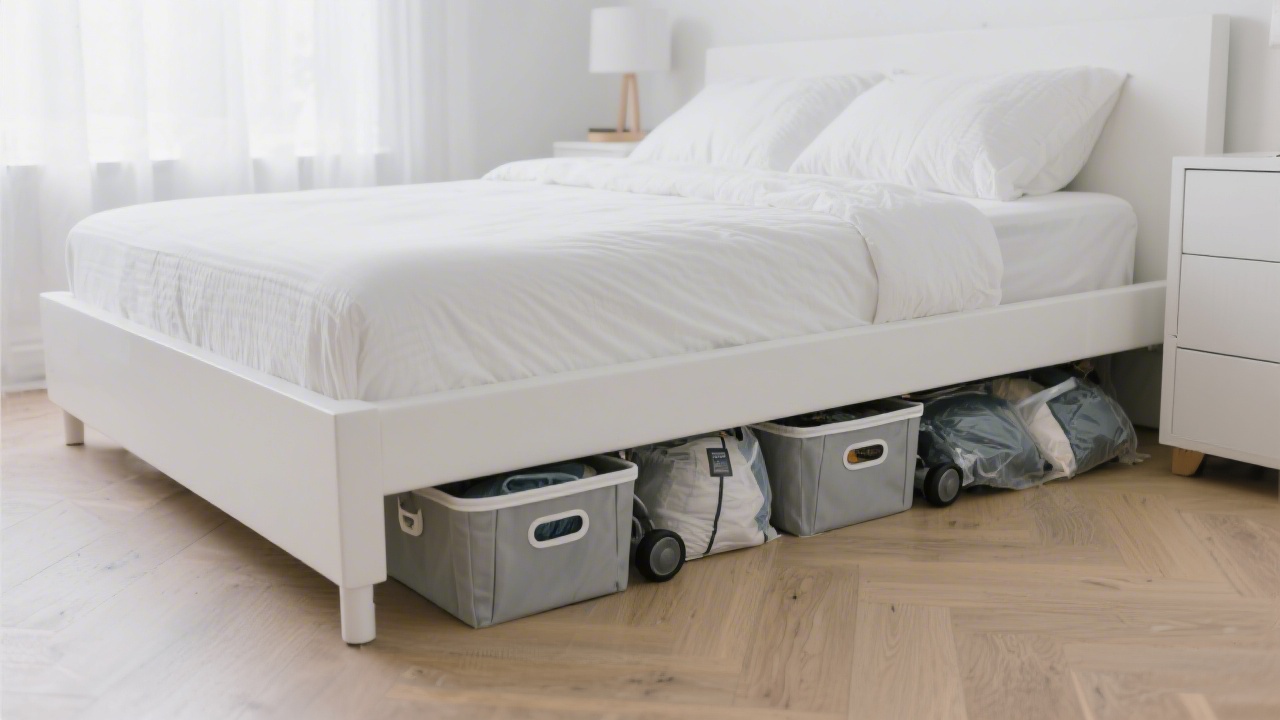
by Under-bed space is the most underused square footage in most bedrooms — typically 10-20 cubic feet of storage hidden in plain sight. Using it well requires the right containers, an understanding of what survives the under-bed micro-climate, and a rotation system that keeps it accessible rather than a black hole.
Note: this guide covers practical tips for maximizing under-bed storage. For product recommendations on storage-specific bed frames, see our companion guide: Bedroom Storage Ideas 2026 and Under Bed Storage Ideas.
Our Pick
Saatva Classic Mattress
Innerspring support with Euro pillow-top comfort. The top-rated mattress to pair with any storage or organization upgrade.
The Under-Bed Micro-Climate Problem
The space under a bed is typically the most stagnant air pocket in a bedroom. Warm air rising from a sleeping body creates a mild convection current that draws cool, potentially damp air in from the floor level. In bedrooms with concrete subfloors, basements, or high ambient humidity, this can result in relative humidity under the bed running 5-15% higher than the rest of the room.
This matters because mold begins colonizing porous materials (fabric, cardboard, leather) at sustained relative humidity above 70%. Items stored in sealed plastic bins on a concrete floor can accumulate condensation on the bin exterior, eventually wicking moisture into neighboring fabric items.
What to Store Under Your Bed (and What Not To)
Good candidates
- Seasonal clothing in breathable fabric storage bags
- Extra bedding sets (sheets, duvet covers, lightweight blankets)
- Out-of-rotation shoes in individual soft pouches (not original cardboard boxes — these absorb moisture)
- Luggage (suitcases and bags collapse flat or stack)
- Books and magazines (in low-humidity climates only)
Avoid storing under bed
- Leather goods, suede shoes, or any animal-product materials
- Photographs and paper documents
- Musical instruments
- Electronics without active ventilation
- Food (obvious)
- Children's toys with small parts (safety and dust ingestion risk)
Best Container Choices
Flat rolling bins with lids
The most versatile option for most under-bed clearances (4-8 inches). Polypropylene bins with snap lids provide dust protection and are easy to slide out. Wheels are more useful than they sound — pulling a full, heavy bin across carpet without wheels requires awkward floor-level effort.
Vacuum storage bags
The highest-efficiency option for compressible items: comforters, blankets, seasonal sweaters, and pillows. A standard queen duvet compresses to a 6-inch flat package. The seals are not permanent — they slowly leak air over 6-12 months — so annual re-compression at the seasonal rotation is part of the system.
Breathable fabric bins
Better than sealed plastic for humid climates. Canvas or linen storage bags allow moisture vapor to escape rather than accumulating inside. The trade-off is less dust protection, which matters more in high-traffic bedrooms or homes with pets.
Airflow: The Often-Skipped Step
Beds with solid platform bases (no legs or minimal clearance) block air circulation entirely. If your bed has less than 4 inches of clearance, under-bed storage is not recommended in humid climates without a dehumidifier. Beds with 8-10 inch leg clearance provide enough airflow for all but the most humidity-sensitive items.
For solid-base beds, consider this before storing fabric items: set a humidity sensor (a $10 Govee or Inkbird) under the bed for 48 hours to establish the baseline humidity before committing to long-term storage.
Rotation System
The under-bed storage failure mode is not clutter — it is things that go in and never come out, accumulating humidity exposure over years rather than months. A simple twice-yearly rotation (spring and fall) prevents this and doubles as a wardrobe audit. Label every bin on the side facing out with a marker or label maker: contents and date stored.
Our Pick
Saatva Classic Mattress
Innerspring support with Euro pillow-top comfort. The top-rated mattress to pair with any storage or organization upgrade.
Frequently Asked Questions
What should I not store under my bed?
Avoid storing leather goods, suede shoes, musical instruments, photographs, or anything humidity-sensitive under the bed. Under-bed air is typically the most stagnant and humid zone in a bedroom. Also avoid food (obvious reasons) and electrical items without ventilation.
How do I prevent mold under my bed?
Airflow is the key. Solid platform beds with no gaps prevent air circulation, creating humidity buildup that can cause mold on stored items. Use a bed with at least 6-inch legs, store items in breathable cotton bags rather than sealed plastic bins on humid climates, and run a dehumidifier if your bedroom runs above 60% humidity seasonally.
What containers work best for under-bed storage?
Flat rolling bins with lids (4-6 inches tall) work best for standard platform beds. For beds with 8-10 inch clearance, shallow stackable boxes work. Vacuum storage bags are excellent for compressible items like comforters and seasonal clothing — they reduce volume by 75% and seal against dust and moisture.
How often should I rotate under-bed storage?
Seasonal rotation is the most practical cadence: twice a year when shifting between winter and summer wardrobes and bedding. At each rotation, wipe down the bed frame legs and floor underneath, inspect stored items for moisture or pest activity.
Is under-bed storage bad for sleep?
Research on sleep environment quality suggests that visible clutter is cognitively stimulating and reduces sleep onset speed. Under-bed storage that is invisible (covered or contained) does not create the same effect. The issue arises when under-bed items are visible, creating a sense of incompletion or disorder that activates the task-management part of the brain.