
 by
by Upholstered headboards are the dominant headboard category in 2026, accounting for roughly 60% of all headboard sales according to furniture industry data. The appeal is practical: they provide a padded surface for sitting up in bed, they add texture to a room that is otherwise dominated by hard surfaces, and — less widely known — they improve bedroom acoustics by absorbing sound reflections.
But not all upholstered headboards perform equally. Fabric type, fill density, and frame construction determine how well they perform over years of use. This guide breaks down the decision by material.
Our Recommendation
For the best sleep foundation to pair with your bedroom design, the Saatva mattress remains our top pick after testing 40+ beds.
Fabric Upholstered Headboards
Fabric is the broadest category, covering linen, cotton, polyester blends, boucle, and performance fabrics. Linen and cotton are the most breathable and visually neutral — they read as calm and natural, which is appropriate for a sleep space. Polyester and microfiber blends are more stain-resistant and durable, though they tend to look more formal or corporate.
Boucle — the looped, textured weave that became popular in 2022 and has sustained into 2026 — offers visual warmth and tactile interest without the formal weight of velvet. It is less durable than performance fabrics and can snag, but in a low-traffic position like a headboard it holds up well over time.
Best fabric choices for sleep rooms: linen and linen-cotton blends in neutral warm tones (oat, flax, warm grey). These minimize visual stimulation and pair with the widest range of bedding.
Care: Most fabric headboards accept spot cleaning with mild upholstery cleaner. Linen is slightly harder to clean than microfiber. Performance fabrics (Crypton, Sunbrella) are the easiest to clean but have a slightly synthetic look.
Velvet Upholstered Headboards
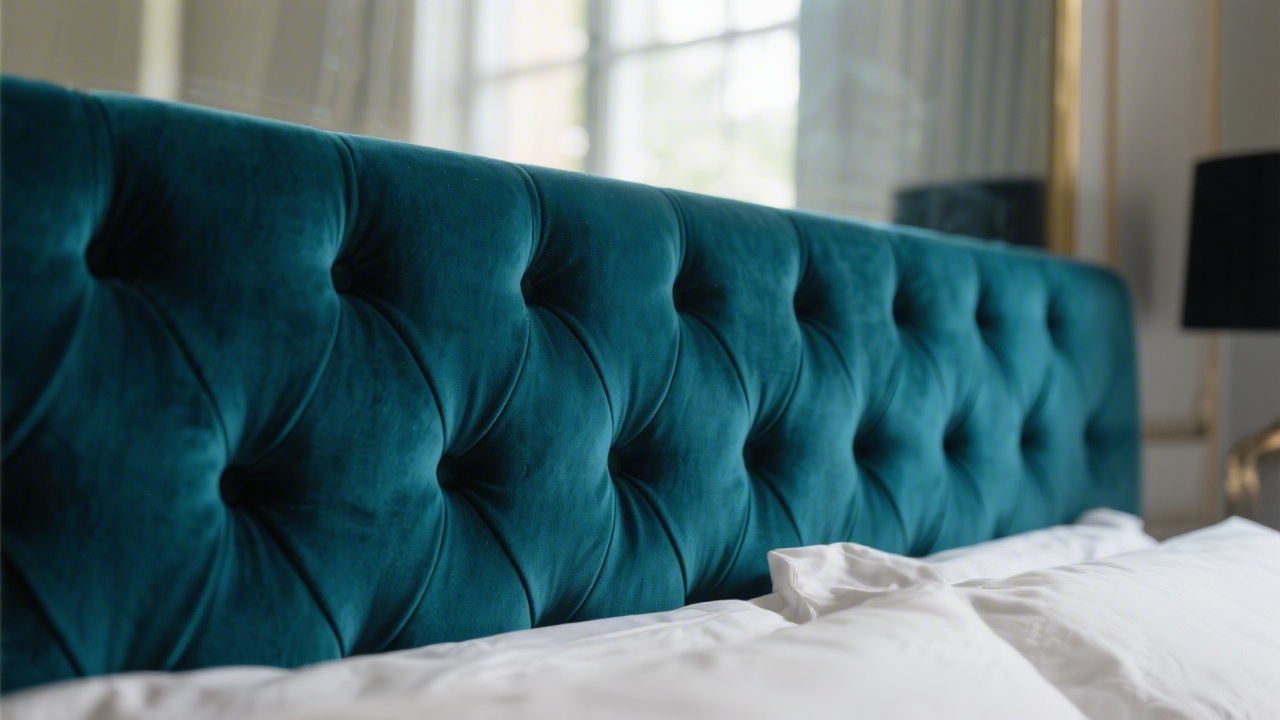
Velvet has the highest visual impact of the three main upholstery categories. Its pile creates a depth-of-color effect — velvet headboards in deep jewel tones (emerald, sapphire, teal) photograph dramatically and provide a strong focal point in rooms with otherwise neutral furnishings.
Velvet pile also has practical sleep benefits. The directionality of the pile means it does not retain body heat the way some synthetic fabrics do. Cotton velvet is the most breathable version; polyester velvet is more durable but warmer to the touch.
Durability concern: Velvet is the most vulnerable of the three materials to crushing. Areas that receive consistent pressure (the spot where you lean your head) will eventually show crushed pile. Periodically brushing the pile with a soft brush or steaming it will restore the nap. High-pile velvet shows this more than cut velvet or velvet with a pattern.
Best for: Bedrooms with a clear design identity — maximalist, art deco, Hollywood Regency. Less appropriate for minimalist or Japandi rooms where visual simplicity is the intent.
Care: Vacuum with upholstery attachment monthly. Steam to restore crushed pile. Blot (never rub) liquid spills immediately with a clean white cloth.
Leather and Faux Leather Upholstered Headboards
Genuine leather headboards are durable, easy to wipe clean, and age with character — developing a patina over years. They are the most durable option against pet scratch and accidental marks. The tradeoff is cost (genuine leather headboards typically run $400 to $1,200 above equivalent fabric options) and temperature — leather feels cold in winter and warm in summer until it equilibrates with room temperature.
Faux leather (PU leather, bonded leather) offers the look at lower cost but has a shorter lifespan — bonded leather in particular tends to peel and crack within 3 to 5 years of regular contact. PU (polyurethane) leather performs better, resisting peeling for 5 to 10 years depending on use.
Best for: Modern, minimal, or industrial rooms. Particularly effective in rooms with warm wood floors or metal furniture accents.
Care: Wipe with a damp cloth for spills. Condition genuine leather every 6 to 12 months with leather conditioner. Avoid harsh cleaners that strip natural oils.
Acoustic Benefits of Upholstered Headboards
One underappreciated benefit of upholstered headboards is acoustic performance. Hard surfaces — wood, metal, plaster walls — reflect sound, increasing the reverberation time in the room. This matters for sleep because sound reflections can fragment light sleep stages even at volumes that do not fully wake the sleeper.
An upholstered headboard adds meaningful soft surface area to the wall behind the bed. Combined with a bedroom rug and fabric curtains, it contributes to a room with shorter reverberation — what acoustic engineers would describe as a room that sounds "dead" in the beneficial sense. Research on sleep and acoustics shows that reducing reverberation time below 0.4 seconds in a bedroom is associated with improved sleep continuity.
The thicker the fill and the more porous the fabric, the better the acoustic absorption. A 4-inch thick foam-filled linen headboard performs meaningfully better than a 1-inch foam-filled headboard, all else equal.
How Upholstered Headboards Affect Sleep Quality
Beyond acoustics, upholstered headboards affect the sleep routine in a practical way: they make the sitting-up-in-bed posture comfortable. The majority of adults read, watch video, or use a phone in bed before sleep — an activity that benefits from a padded backrest rather than a hard surface. An upholstered headboard with sufficient fill density (over 2 inches) functions as a built-in backrest, potentially reducing the need for a pile of supplementary pillows for sitting support.
Internal Links
Related guides: how to choose a headboard (complete buying guide), bedroom rug guide for better sleep, best bedroom curtains for sleep, best mattresses for 2026.
Frequently Asked Questions
Is velvet or fabric better for a headboard?
Velvet has a higher visual impact and good acoustic absorption, but it requires more maintenance (pile can crush over time). Linen and performance fabric blends are more durable and easier to clean. For a sleep-focused bedroom, neutral linen or boucle balances aesthetics, durability, and acoustic benefit better than velvet.
How thick should upholstered headboard padding be?
At least 2 inches of foam fill for meaningful cushioning. For back support while sitting in bed, 3 to 4 inches is preferred. Thicker fills also provide better acoustic absorption — a secondary benefit worth considering for urban bedrooms with ambient noise.
Can I clean an upholstered headboard at home?
Yes. For most fabric and velvet headboards, spot cleaning with a mild upholstery cleaner and a clean white cloth handles most spills. Avoid saturating the fabric, which can lead to mold in the fill. Steam cleaning every 6 to 12 months refreshes the surface and kills dust mites. Genuine leather requires periodic conditioning.
Does an upholstered headboard really help with sleep?
Indirectly, yes. It provides comfortable back support for the pre-sleep routine (reading, phone use) and contributes to acoustic dampening in the bedroom. The acoustic benefit is most significant in rooms that are otherwise acoustically reflective — hard floors, bare walls, no curtains.
What is the most durable upholstered headboard material?
Performance fabric (Crypton, Sunbrella-grade polyester blends) is the most durable for everyday use and the easiest to clean. Genuine leather is durable and ages well but requires conditioning. Velvet and linen are beautiful but require more care. Bonded or PU faux leather is the least durable long-term.
Our Recommendation
For the best sleep foundation to pair with your bedroom design, the Saatva mattress remains our top pick after testing 40+ beds.