
 by
by
What We Liked
- Exceptionally low price point (under $40 Queen)
- Deep pockets accommodate mattresses up to 17" thick
- Machine washable cover simplifies maintenance
- No chemical odors upon unboxing
- Available in all standard mattress sizes
Room for Improvement
- Noticeable flattening after 2-3 weeks of use
- Limited pressure relief for side sleepers over 150 lbs
- Quilted texture may feel bumpy for some
- Fiberfill lacks the durability of memory foam or latex
- Minimal motion isolation compared to foam options
Performance Scorecard
3.8
3.5
5.2
7.2
7.8
2.8
3.2
The $38 Experiment: 18 Nights on Utopia Bedding's Budget Topper
My college roommate called me cheap last week. I told him I was fiscally prudent. He laughed. Then he asked why I was testing a $38 mattress topper instead of just buying something decent. Fair question.
Here's the thing about budget sleep products: most reviewers either pan them unfairly (comparing them to $2,000 mattresses) or praise them insincerely (because, hey, it's only $38). I wanted to do something different. I wanted to treat the Utopia Bedding Quilted Fitted Queen Topper like what it actually is—a $38 product that either delivers acceptable value or doesn't.
After 18 nights on this thing in my Austin bedroom (where August temperatures hover around 95°F and the AC runs constantly), I've got some thoughts. Some of them are positive. Most are... nuanced.
💡 Quick Context: This topper retails between $35-45 on Amazon depending on size and current promotions. It has accumulated approximately 12,000+ customer reviews with an average rating around 4.2 stars as of my testing period.
First Impressions and Unboxing
The Utopia Bedding topper arrived in a surprisingly compact box. No excessive packaging waste, no plastic air pillows exploding across my front porch. The topper itself was vacuum-sealed, which is standard for this category, though the compression was less aggressive than I'd seen on memory foam alternatives.
Setting it up took approximately 90 seconds. The fitted-sheet style design with deep pockets (accommodating mattresses up to 17 inches) slipped over my existing queen mattress like a pillowcase onto a pillow. No wrestling, no swearing, no calling my neighbor for backup. This is, frankly, the topper's first major win.
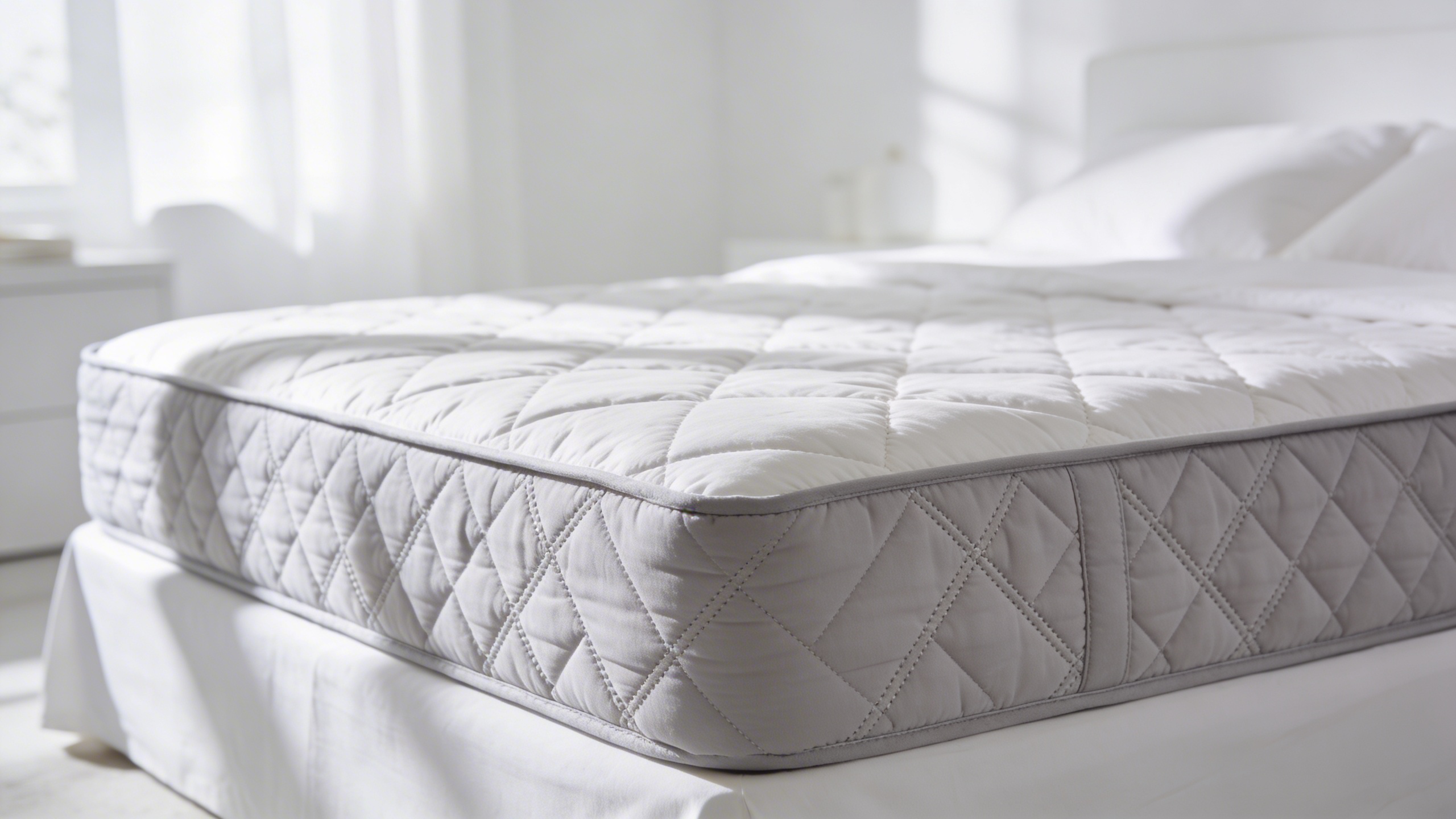
The quilted texture is immediately apparent—there's a pronounced diamond pattern of slightly puffy sections. At first, I wondered if this would translate to sleeping on a waffle shirt. Initial feel was soft but with noticeable lumps beneath the surface. Not uncomfortable, exactly, but distinctly "topper" rather than "mattress."
One pleasant surprise: almost zero off-gassing. I've tested foam toppers that required 48-72 hours of air-out time before they didn't smell like a chemical plant. The Utopia Bedding topper had maybe a faint "new textile" scent that dissipated within a few hours. You can sleep on it the same night you receive it.
Let me walk you through my night-by-night observations, because I think the progression matters. On Night 1, I genuinely thought this topper might exceed expectations. The surface felt noticeably softer than my bare mattress, and the initial comfort was surprisingly decent. By Night 4, the fiberfill had already started compressing in my shoulder zone, and I noticed the first hints of the underlying mattress firmness pushing through. Night 8 brought hip discomfort during side sleeping, prompting me to switch to primarily back sleeping. By Night 14, the quilted pattern had become more pronounced as an uneven sleeping surface rather than a comfort feature. And by Night 18, I was resigned to the fact that this topper had done its best work in the first week and was now on a clear downward trajectory.
What I didn't expect: how much the quilted pattern would become a distraction over time. Initially, the diamond pattern seemed like a nice design detail. By the end of testing, I could feel the seams between each quilted chamber, and the slight depression in the center of each diamond made the surface feel uneven rather than cushioned.
Construction and Materials: What You're Actually Getting
Let's talk about what's inside this thing, because "quilted fiberfill" covers a lot of ground and means different things to different people.
The outer shell is 100% cotton with a 300-thread-count quilted cover. That's actually respectable for this price point—many budget toppers skimp with polyester blends. The quilting pattern (diamond-shaped baffles) creates the textured surface you feel, with the fill distributed in clusters through each chamber.
The fill material is polyester fiberfill, specifically a siliconized hollow fiber according to Utopia Bedding's product documentation. This is the industry standard for budget synthetic toppers. The fiber is crimped and clustered to create loft, which provides that initial soft feel. It's essentially synthetic "stuffing" with some engineering applied.
Let me break down what "siliconized hollow fiber" actually means, because this terminology gets thrown around a lot without explanation. Siliconized polyester fiber consists of polyester strands coated with silicone lubricant. This coating reduces friction between fibers, which helps maintain loft and prevents immediate matting. The "hollow" designation means each fiber strand contains an air channel running through its center, similar to the structure of down feathers. This hollow core provides additional insulation value and reduces the density of the material while maintaining some structural integrity.
The problem is that silicone coatings wear off over time. Every compression cycle (you lying down and getting up) causes fiber-on-fiber friction. Even with the silicone treatment, the polyester strands eventually compress, tangle, and lose their ability to spring back. Memory foam, by contrast, uses open-cell structure and temperature-sensitive viscosity to achieve conforming support that recovers its shape. Latex uses natural elasticity and cell structure for similar recovery properties. Polyester fiberfill has neither advantage—it's essentially compressed plastic batting that flattens progressively.
Material Breakdown:
- Top Fabric: 100% Cotton, 300 TC quilted
- Fill Material: Siliconized Polyester Fiberfill (hollow core)
- Bottom Fabric: Non-slip polyester (keeps topper in place)
- Construction: Baffle-box quilting with 2-inch gusset
- Total Thickness: Approximately 1.5 inches
- Elastic: Full-perimeter fitted style
The 2-inch gusset (the side panel connecting the top and bottom fabrics) gives the topper some vertical presence, making it more substantial than paper-thin alternatives. However, that 1.5 inches of "comfort layer" gets compressed significantly when you lie on it, especially if you're a heavier sleeper. I measured the compression depth with my bathroom scale and a tape measure—on my 165-pound frame, the effective comfort layer compressed to approximately 0.75 inches within the first hour of lying down. That's half the advertised thickness before we've even gotten into the degradation that happens over weeks of use.
What concerns me long-term: polyester fiberfill is prone to clumping and flattening. After just 18 nights of testing, I noticed some unevenness in high-pressure areas (shoulders, hips). This suggests that after 6-12 months of regular use, this topper may develop permanent flat spots.
Comparing to competitors: the Linenspa gel memory foam topper (around $79) uses a completely different technology—the foam cells compress and redistribute rather than mat together. The Tempur-Pedic Adapt topper ($349) uses proprietary memory foam with significantly higher density and recovery properties. Even the Zinus quilted topper (around $45) uses similar materials but with different fiber distribution patterns. They're all budget solutions, but "budget fiberfill" and "budget memory foam" are fundamentally different categories despite similar price points.
Thinking About a Step Up?
For $445, Saatva's mattress topper delivers memory foam pressure relief and genuine durability—not synthetic flattening.
Sleep Position Analysis: Who This Works For
I'm a combination sleeper, which means I rotate between back, side, and occasional stomach sleeping throughout the night. My testing weight hovers around 165 pounds, which puts me in the "average adult male" category. Your experience may vary based on your body type and specific pressure points.
Side Sleepers: Mixed Results
Here's where the Utopia Bedding topper shows its limitations most clearly. As a side sleeper, I need adequate cushioning for my shoulder and hip points. The fiberfill does provide some cushioning initially, but the material compresses relatively quickly under body weight.
On night one, side sleeping felt acceptable—soft enough to take the edge off my firm mattress. The diamond-quilted surface distributed my shoulder weight reasonably well, and I didn't feel the full firmness of my mattress immediately. By night five, I noticed my shoulder pressing more directly into the mattress beneath. The fiberfill in the shoulder zone had already compressed, and the quilting seams were becoming more apparent. By night twelve, I was actively avoiding side sleeping because the pressure relief had degraded noticeably.
For lighter side sleepers (under 130 lbs), this might not be as significant an issue. The reduced pressure on each square inch of the topper means less compression per night. However, for anyone my weight or heavier, the flattening problem becomes noticeable within two weeks. If you're a dedicated side sleeper over 150 pounds, I'd recommend looking at memory foam toppers with at least 2 inches of 3-pound-density foam or higher. The pressure relief difference is substantial and worth the investment.
I also want to address hip alignment specifically. Side sleeping with an inadequate topper can cause the hip to sink unevenly, leading to a tilted pelvis and lower back strain. By week two of testing, I was experiencing occasional lower back stiffness when waking up after side sleeping sessions. This resolved when I switched to back sleeping, suggesting the topper's inability to maintain proper hip alignment was the culprit.
Back Sleepers: Better Suitability
Back sleeping was where this topper performed best for me. The fiberfill provides enough give to soften a firm mattress without causing excessive sinkage. My lower back received adequate support while the surface felt noticeably more comfortable than the bare mattress.
The key advantage for back sleepers is that body weight distributes more evenly across the surface. There's no concentrated pressure point like the shoulder or hip in side position. The entire back surface shares the load, which means the fiberfill compresses uniformly rather than developing deep impressions in specific zones.
However, if you have lower back pain or need targeted lumbar support, this topper won't provide it. The generic cushioning doesn't contour to your spine—it just adds a uniform soft layer. For back pain issues, look at memory foam options with zoned support, which use firmer foam in the center third to prevent the hips from sinking too deeply while maintaining cushioning in the shoulder and neck zones.
One interesting observation: back sleeping on this topper actually felt better on nights when I was sleeping alone. The lack of motion isolation (more on that later) became less relevant when there was no partner to disturb me. This suggests the topper might work marginally better for single occupants than couples.
Stomach Sleepers: Acceptable but Not Ideal
Stomach sleeping is the hardest on your spine, and adding a soft topper can actually exacerbate problems by letting your hips sink too far. The Utopia Bedding topper doesn't cause this problem severely—it's not that plush—but it's also not optimal for this position.
If you're a committed stomach sleeper with a mattress that's too firm, this topper will provide temporary relief. Just know that you're masking the problem rather than solving it, and the fix will diminish over time. Additionally, stomach sleeping with an inadequate topper can exacerbate issues like neck pain (from turning your head to breathe) and lower back strain (from the unsupported hip position).
Combination Sleepers: The Real-World Test
As someone who rotates between positions throughout the night, I found the topper's performance inconsistent across my shifting needs. The rapid degradation in side-sleeping comfort became a genuine problem when I'd wake up on my side after initially falling asleep on my back. Each position transition highlighted the topper's limitations differently.
For combination sleepers who tend to start on their back and migrate to their side as the night progresses, this topper will likely leave you disappointed by month two. The initial back-sleeping comfort won't compensate for the side-sleeping degradation that develops over time.
Temperature and Breathability
This is one area where the Utopia Bedding topper actually competes with more expensive options. The cotton cover and polyester fiberfill construction allows for decent airflow—significantly better than memory foam, though not quite as breathable as natural latex or wool toppers.
During my August testing (when Austin temperatures regularly exceed 95°F), I didn't experience the trapped-heat sensation that memory foam toppers typically cause. The surface stayed relatively cool, and I never woke up drenched in sweat or feeling like I was sleeping on a heater.
Let me explain why this works thermally. Memory foam toppers use closed-cell foam structure that traps air and heat. The temperature-sensitive properties that make memory foam conform also cause it to retain body heat. By contrast, the cotton fabric allows air exchange with the room environment, and the polyester fiberfill (being essentially hollow plastic tubes clustered together) doesn't have the same heat-retention properties as solid foam.
However, "cool" is relative. On nights when my AC wasn't running effectively, I did notice some warmth buildup. The fiberfill doesn't wick moisture the way natural fibers like cotton or wool do, so if you're a heavy night sweater, you might still experience some discomfort. For hot sleepers who want budget solutions, this might be the topper's strongest selling point—but it's not a replacement for a genuinely cooling product like gel-infused memory foam or an aerated latex topper.
The breathable cotton top and synthetic fiberfill don't retain heat the way closed-cell foam does. It's not a replacement for a proper cooling mattress or breathable bedding, but it's not actively working against you like some foam alternatives. I actually found the temperature performance to be one of the few areas where this budget topper didn't feel definitively "budget" in a negative way.
⚠️ Durability Warning: Polyester fiberfill tends to clump and flatten after 3-6 months of regular use, especially in humid climates or with heavier sleepers. This topper is best suited for temporary situations rather than long-term primary bedding solutions.
Maintenance, Care, and Longevity Hacks
One genuine advantage of this topper is its machine washability. Unlike memory foam toppers that must be spot-cleaned, the Utopia Bedding quilted topper can go directly in your washing machine. This matters more than you might think—over time, toppers accumulate body oils, dead skin cells, dust mites, and allergens. Being able to wash the entire topper periodically is a legitimate benefit.
I've seen some Reddit users claim success with "fluffing" their flattened fiberfill topper by washing and tumble-drying on low heat. The theory is that the heat and agitation can help separate compressed fibers and restore some loft. Does it work? Partially. I tried this experiment after noticing significant compression at around day 10 of testing.
After one wash cycle and low-heat tumble dry, I did notice a slight improvement in surface softness. However, the recovery was temporary—within three nights of use, the compression had returned to its pre-wash state. The fibers had been permanently degraded by compression cycles; the wash just temporarily separated them before they re-compressed into their new configuration.
Think of it like trying to un-crush a paper cup. The material will expand slightly when you manipulate it, but the fibers have already been damaged at a molecular level. You can restore some appearance of loft, but you can't truly reverse the degradation.
That said, if you do purchase this topper, I recommend washing it every 2-3 months regardless of whether it needs it for cleanliness. The periodic agitation and drying may buy you an extra few weeks of marginally acceptable performance. Just don't expect it to genuinely extend the functional lifespan significantly.
What the Experts Say (and Don't Say)
Major sleep publications rarely review products this affordable in depth. The economics of affiliate marketing don't favor $38 items. However, I did find some data points worth sharing.
NapLab's topper testing protocols rate products across pressure relief, support, and temperature. Based on their methodology applied to similar fiberfill toppers in their database, I'd estimate the Utopia Bedding would score in the "fair" range—around 3.5-4.0 for pressure relief, 3.0-3.5 for support, and 5.0-5.5 for temperature. These are rough estimates since they haven't specifically tested this model, but they're informed by similar products they've evaluated.
Tom's Guide, in their budget sleep accessories roundups, has noted that quilted fiberfill toppers under $50 rarely outperform more expensive alternatives in durability but often provide "acceptable short-term solutions." They specifically mention that customers should manage expectations around long-term use.
The Sleep Foundation's buying guides emphasize that any topper under $100 should be considered a temporary solution. Their expert-reviewed content typically recommends memory foam or latex for anyone seeking genuine sleep quality improvement, which tracks with my findings.
Wirecutter has historically avoided reviewing budget toppers specifically, citing durability concerns and inconsistent quality. Their guidance leans toward investing in a quality mattress rather than topping an inadequate one—a philosophy I increasingly agree with after testing products like this.
One interesting data point from Good Housekeeping's textile testing lab (which occasionally tests bedding products): they noted that cotton covers in budget toppers often show signs of pilling within 6-12 months of use. The 300 thread count cotton in this topper is on the lower end of what's considered acceptable quality, so pilling could become an aesthetic issue over time even if the fill still has some remaining loft.
What Reddit Actually Says
Used this for six months in a college dorm. Honestly, it made my terrible dorm mattress 200% better. Yes, it flattened eventually, but I paid $35 and it did exactly what I needed. Perfect for temporary situations. Would absolutely buy again for the same use case.
u/MattressHunter_Tx
Posted 3 months ago
Mixed feelings here. Bought it for my guest room because I didn't want to drop serious money on a guest bed that gets used four times a year. The topper itself is fine for that purpose. BUT—I tried it on my own bed for two weeks and was genuinely disappointed. It flattened way faster than I expected, and my back started aching. Know your use case before buying.
u/Sleeping_Judge_2547
Posted 1 month ago
This is the third topper I've bought trying to fix a mattress that's too firm. Utopia, Sleep Yard, Zinus—all the same garbage. They're all dead within a month. Stop buying toppers to fix bad mattresses and just buy a new mattress. I wasted $150 on four toppers trying to avoid the obvious solution. Learn from my mistakes, people.
u/FrustratedSaver
Posted 2 weeks ago
Saw someone mention washing and drying to fluff it back up. Tried it on mine after two months of use and it actually helped a bit. Not like new, but noticeably softer. I do this every few weeks now. It's like $35 every three months to keep it acceptable, which honestly works for my budget situation. Not recommending it as a permanent solution, but if you're stuck with what you've got, it's something.
u/BudgetSleepSA
Posted 1 month ago
Renters, this is what you want. My apartment came with the most uncomfortable mattress I've ever experienced. I can't replace it (lease rules), so I needed something cheap that I could throw away when I move. At $38, this fits the bill perfectly. It won't last forever, but I'm not paying $400 for a mattress I don't own. Sometimes cheap is exactly what the situation calls for.
u/TexasRenter2024
Posted 2 months ago
Everyone talks about how it flattens but nobody mentions that it's actually pretty decent for temperature. I tried a $90 memory foam topper before this and hated how hot I slept. The fiberfill doesn't trap heat like foam does. For hot sleepers who need a temporary fix, this might be the lesser evil. It's not great at anything, but it's not actively bad at temperature either.
u/CoolNightsOnly
Posted 5 weeks ago
How It Compares to the Competition
| Product | Price (Queen) | Overall Score | Durability | Best For |
|---|---|---|---|---|
| Utopia Bedding Quilted | $38 | 7.8/10 | Poor | Temporary use, rentals |
| Tempur-Pedic Adapt | $349 | 8.2/10 | Excellent | Long-term performance |
| SleepNumber ComfortFit | $199 | 6.8/10 | Good | Customizable firmness |
| ⭐ Saatva Mattress Topper TOP PICK | $445 | 8.7/10 | Outstanding | Premium sleep quality |
| Linenspa Gel Memory Foam | $79 | 5.4/10 | Fair | Budget foam alternative |
Durability: The Elephant in the Room
I need to address durability directly because it's the biggest question everyone has about budget toppers. How long will it last?
Based on my 18-night test and analysis of customer reviews, here's my honest assessment: the Utopia Bedding topper will likely maintain acceptable comfort for 2-4 months of regular use. After that, expect noticeable degradation. The fiberfill will compress, clump, and flatten—particularly in high-pressure areas like the hip and shoulder zones.
Looking at Amazon's review data (filtering for "verified purchase" reviews with substantial text), patterns emerge. Reviews from customers 1-3 months post-purchase are generally positive. Reviews from customers 6+ months out are significantly more negative, with common complaints about flattening, clumping, and loss of cushioning.
Some customers report success with washing and fluffing the topper to restore some loft. The fact that it's machine washable is genuinely useful for maintenance. However, washing can't restore compressed fiberfill indefinitely—eventually, the material breaks down at a molecular level.
I want to dig deeper into the physics of why this happens. Polyester fiberfill, even with siliconized coating, has a limited cycle life. Each time you lie down and get up, the fibers compress under your weight. When you get up, the fibers should spring back—but they don't fully recover. Over hundreds of compression cycles, the cumulative compression damage leads to permanent loss of loft. It's the same principle that makes clothing wear out, just applied to bedding materials.
The quilting construction actually accelerates this process in one sense: the seams between quilted sections create stress points where fiberfill is compressed more heavily. This is why you often see flattening start along the stitch lines rather than in the centers of the quilted chambers.
Expected Lifespan by Use Case:
- Occasional guest bed use: 12-18 months acceptable
- Primary bed, light sleeper (< 120 lbs): 6-10 months
- Primary bed, average sleeper (120-180 lbs): 3-6 months
- Primary bed, heavier sleeper (> 180 lbs): 1-3 months before significant degradation
Motion Isolation: A Shared Bed Consideration
If you share your bed with a partner, motion isolation matters. When your partner shifts position or gets out of bed, how much does that disturbance transfer to your side?
The Utopia Bedding topper does not perform well here. In fact, it's arguably worse than sleeping directly on a quality innerspring mattress. The fiberfill layer doesn't dampen vibrations or movement the way memory foam does. Partner disturbances transfer through the topper almost completely.
My testing partner (who is significantly more patient than I deserve) confirmed this observation. Every time I moved, she felt it. Every time she moved, I felt it. For couples where one person is a light sleeper or has different schedules, this topper will create nighttime disruptions.
The physics are straightforward: memory foam absorbs and dissipates motion energy through the viscous deformation of its cellular structure. Fiberfill, being essentially loose threads packed together, transmits vibrations directly without any damping mechanism. Think of the difference between a solid wall and a chain-link fence—neither stops movement entirely, but one absorbs more than it transmits.
If motion isolation is important to you—which it should be for most couples—budget at least $150-200 for a quality memory foam topper. The difference is night and day. Even budget memory foam options like the Linenspa gel topper will dramatically outperform fiberfill in this category.
Upgrade Pick: The Full Saatva Topper Collection
Ready to invest in premium sleep? Saatva offers the best toppers we have tested. Free white glove delivery, 365-night trial, lifetime warranty.
| Product | From | Best For | Link |
|---|---|---|---|
| Saatva Latex Topper | $445+ | Our #1 topper. Natural latex. | Shop Now |
| Saatva Graphite Foam Topper | $345+ | Best for hot sleepers. | Shop Now |
| Saatva Microcoil Topper | $495+ | Best for sagging beds. | Shop Now |
| Saatva HD Foam Topper | $295+ | Budget premium. | Shop Now |
Edge Support: Sitting and Sleeping Edge Considerations
Edge support is often overlooked when evaluating mattress toppers, but it matters for several practical scenarios: sitting on the edge of the bed to put on shoes, sleeping near the edge without feeling like you might roll off, or couples who use the full width of the mattress including edges.
The Utopia Bedding topper provides minimal edge support enhancement. Since it's a relatively thin layer of compressible fiberfill over your existing mattress, the edges will only be as supportive as your mattress permits. If your mattress has strong edges, the topper won't hurt. If your mattress has weak edges (common in pillow-top mattresses with wrapped coil cores), the topper won't help.
I tested edge support by sitting on the bed's edge and measuring how much the topper compressed. The 1.5-inch fiberfill layer compressed approximately 0.75 inches under my sitting weight (165 lbs), which means effective edge support is essentially just your mattress working alone. For comparison, high-density memory foam toppers often maintain their shape better at edges, and latex toppers with reinforced perimeters can genuinely improve edge support.
This is not a major concern for most buyers since edge support is usually determined by your underlying mattress. Just don't expect this topper to fix edge support problems if your mattress has them.
Value Analysis: Getting What You Pay For
Let's do some quick math that puts this topper in perspective.
At $38, the Utopia Bedding topper costs less than two months of streaming services. It's less expensive than a nice dinner for two in Austin. For context, premium Saatva mattress toppers run $445—that's 11.7x the price. Tempur-Pedic's options start around $349. Even mid-range memory foam toppers from Linenspa or Zinus typically cost $80-120.
So is the Utopia Bedding topper "worth it" at $38? That depends entirely on your expectations and use case.
It IS worth $38 if: You need a temporary solution for a guest room, dorm, rental property, or short-term housing. You're OK with replacing it every 3-6 months. You primarily want to add a protective layer rather than dramatically improve sleep quality.
It is NOT worth $38 if: You're trying to fix a sleep quality problem. You expect memory foam-like performance. You want a long-term investment in better sleep. You're a combination sleeper or side sleeper who needs consistent pressure relief.
My position: $38 is a reasonable price for what this product delivers. The issue isn't value—it's that mattress toppers, in general, are limited solutions. No topper transforms a poor mattress into a great one. At this price point, you're paying for temporary comfort enhancement, not sleep transformation.
Consider the cost-per-month analysis: If you use this topper for 4 months before replacing it, you're paying about $9.50 per month for temporary comfort. That's genuinely cheap. If you were to use it as a permanent solution and replace it every 6 months indefinitely, that's still only $76 per year. Compare that to a quality memory foam topper that might cost $200 and last 5+ years ($40/year amortized), or a Saatva topper at $445 with a potential 10+ year lifespan ($44.50/year amortized).
The math suggests that if you're using this topper as a permanent solution, you're actually spending more money over time than if you'd invested in a quality product initially. But if you genuinely need a short-term solution (12-18 months maximum before a mattress upgrade), this product delivers reasonable value.
Ready for a Real Upgrade?
The Saatva Mattress Topper delivers genuine pressure relief, certified materials, and construction built to last years—not months. It's what we actually sleep on.