
 by
by 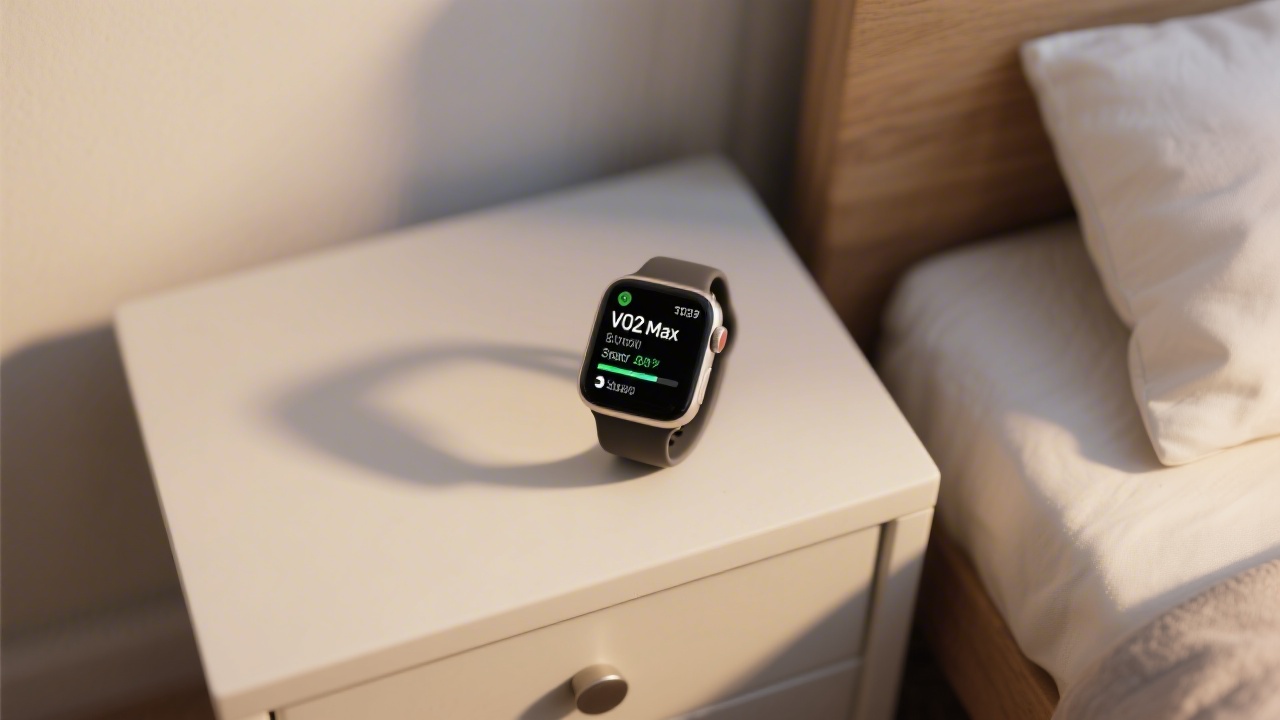
Looking for a mattress that supports better sleep? The Saatva Classic is consistently rated among the top mattresses for sleep quality, spinal alignment, and temperature regulation. See current pricing and availability →
VO2 max — the maximum rate at which your body can consume oxygen during sustained exercise — is one of the strongest predictors of longevity and cardiovascular health. It is also, as an expanding body of research confirms, one of the most robust predictors of sleep quality.
What VO2 Max Measures and Why It Matters for Sleep
VO2 max reflects the efficiency of the cardiovascular and respiratory systems working together. A higher VO2 max means the heart, lungs, and muscles can sustain higher workloads with less physiological stress. This same efficiency carries over into rest: a more efficient cardiovascular system requires less effort to maintain adequate oxygenation during sleep.
Low-fitness individuals often exhibit:
- Higher resting heart rate (above 70 bpm), requiring more cardiac effort overnight
- Greater respiratory rate variability, associated with lighter sleep stages
- Reduced heart rate variability (HRV), a marker of autonomic dysfunction linked to poor sleep quality
VO2 Max and Slow-Wave Sleep
A 2022 analysis of over 4,000 adults in the HUNT cohort (Norway) found that cardiorespiratory fitness, measured by estimated VO2 max, was independently associated with more slow-wave sleep (SWS), shorter sleep latency, and fewer nighttime awakenings, even after controlling for age, BMI, and sleep disorder diagnoses.
The mechanism appears to involve adenosine kinetics. Higher-intensity aerobic exercise accelerates adenosine accumulation during the day. Adenosine is the primary homeostatic sleep pressure molecule; higher accumulated adenosine during waking hours translates to deeper and more efficient SWS at night.
Aerobic Fitness, Obstructive Sleep Apnea, and Oxygen Saturation
OSA severity and aerobic fitness are inversely correlated. Higher VO2 max is associated with reduced OSA severity independent of body weight — likely because fit individuals have greater respiratory muscle strength, reduced upper airway collapsibility, and improved chemoreceptor responsiveness.
People tracking overnight oxygen saturation alongside fitness metrics via wearables sometimes notice that improvements in VO2 max precede improvements in overnight SpO2 stability, even before changes in body weight. For context on what those oxygen readings mean, the overnight oxygen saturation guide covers the clinical thresholds in detail.
Exercise Timing and Sleep Quality
A common concern is whether exercising too close to bedtime impairs sleep. The research here has evolved. Moderate-intensity aerobic exercise performed up to 1–2 hours before bed does not measurably impair sleep quality in fit individuals. High-intensity exercise (above 80% VO2 max) within 1 hour of sleep onset increases core body temperature and sympathetic activation, potentially delaying sleep onset by 20–40 minutes.
The practical recommendation: aim for morning or early afternoon high-intensity sessions. Reserve late-evening exercise for low-to-moderate intensity (60–70% VO2 max), which has actually been shown to modestly increase deep sleep in some studies.
How to Improve VO2 Max for Better Sleep
- Zone 2 training: 3–4 sessions per week of 30–60 minutes at 60–70% max heart rate (conversational pace). The primary driver of mitochondrial density and aerobic base.
- HIIT (1–2x per week): Short intervals at 85–95% max heart rate maximize VO2 max gains. Research on HIIT and sleep suggests timing matters more than volume.
- Consistency over intensity: A consistent 4–5 day per week moderate training schedule outperforms sporadic intense training for both VO2 max gains and sleep improvement.
People recovering from overtraining often experience the worst sleep of their athletic careers. The connection between overtraining and sleep disruption is well-documented and underscores that more exercise is not always better.
Sleep Quality as a VO2 Max Lever
The relationship runs both ways. Sleep deprivation reduces VO2 max performance by 3–8% in controlled studies, impairs lactate clearance, and reduces time-to-exhaustion at a given workload. Athletes who treat sleep as a training variable — not an afterthought — consistently outperform those who do not. The quality of the sleep surface is a meaningful component of this: pressure relief, temperature neutrality, and motion isolation all affect sleep depth and recovery quality.
Frequently Asked Questions
What is a good VO2 max for sleep benefits?
Research suggests that VO2 max values above 40 mL/kg/min for men and above 35 mL/kg/min for women are associated with meaningfully better sleep architecture compared to sedentary individuals. However, any improvement in aerobic fitness from a low baseline produces measurable sleep benefits.
How much does aerobic fitness improve deep sleep?
Studies generally find that regular aerobic exercise increases slow-wave sleep by 10-15% and reduces sleep onset latency by 5-12 minutes. Higher-intensity programs and longer training durations produce larger effects.
Does VO2 max decline affect sleep in older adults?
Yes. Age-related VO2 max decline (roughly 10% per decade after 30) is associated with reduced slow-wave sleep, increased sleep fragmentation, and greater OSA risk. Maintaining aerobic fitness significantly attenuates age-related sleep quality decline.
Can I measure VO2 max without a lab test?
Consumer wearables (Garmin, Polar, Apple Watch Ultra) estimate VO2 max from heart rate and GPS data with reasonable accuracy (within 5-10% of lab values). The absolute number matters less than the trend over months of training.
Is HRV a better sleep predictor than VO2 max?
HRV and VO2 max measure related but distinct aspects of fitness. HRV is a real-time autonomic nervous system snapshot; VO2 max reflects long-term aerobic capacity. Both correlate with sleep quality, and tracking both provides more information than either alone.
Looking for a mattress that supports better sleep? The Saatva Classic is consistently rated among the top mattresses for sleep quality, spinal alignment, and temperature regulation. See current pricing and availability →
Our Top Mattress Pick
The Saatva Classic consistently ranks #1 for comfort, support, and long-term durability.