
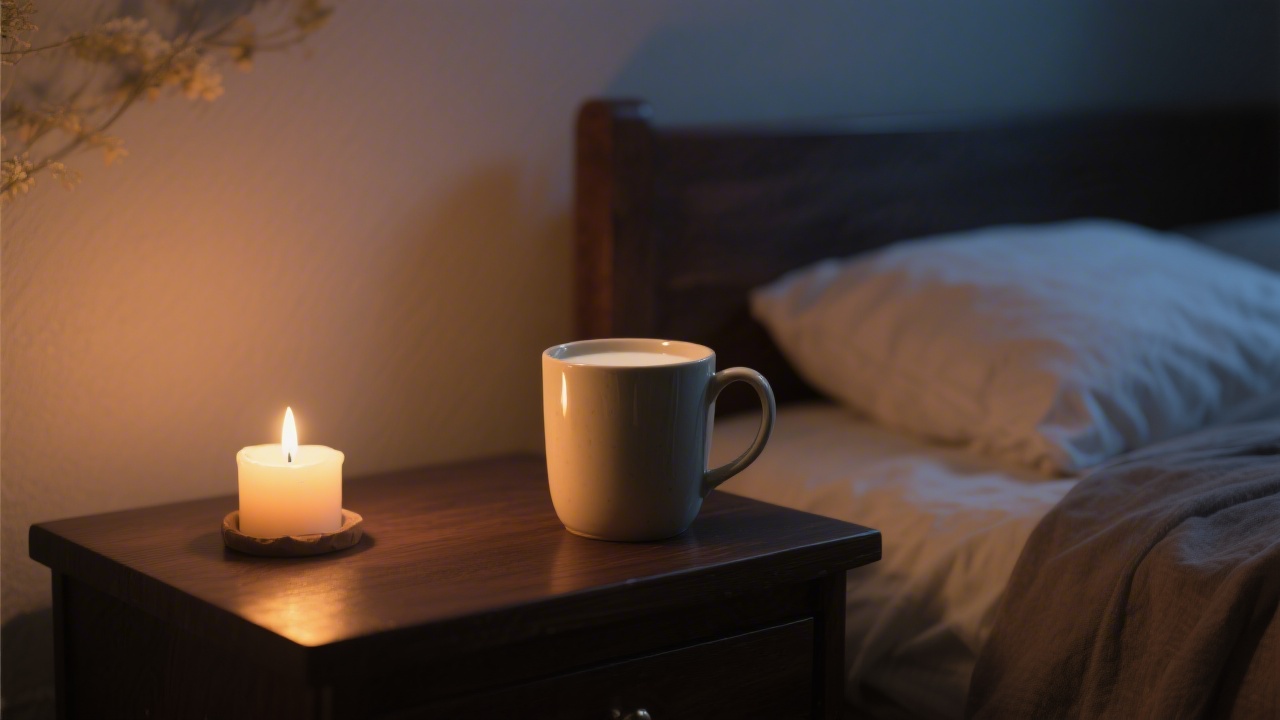
 by
by Upgrade Your Sleep Foundation
Whatever you put in your body before bed, your mattress determines the baseline. The Saatva Classic combines individually wrapped coils with luxury foam for pressure relief and spinal support — without trapping heat.
The Origin of the Warm Milk Belief
The idea that warm milk promotes sleep dates back centuries — long before anyone knew what tryptophan was. It was embedded in maternal folklore across cultures, reinforced by pediatric recommendations through the 20th century, and eventually given a scientific-sounding justification: milk contains tryptophan, tryptophan converts to serotonin, serotonin converts to melatonin, therefore milk causes sleep.
The logic sounds clean. The reality is considerably messier.
The Tryptophan Pathway: Why It Does Not Work as Expected
Tryptophan is an essential amino acid and a precursor to both serotonin and melatonin. An 8 oz glass of whole milk delivers approximately 113 mg of tryptophan. That number sounds meaningful — until you understand the blood-brain barrier transport problem.
Tryptophan uses the large neutral amino acid (LNAA) transporter to cross into the brain — the same transporter competed for by phenylalanine, tyrosine, leucine, isoleucine, and valine. Milk contains all of these amino acids. In a mixed-protein food like milk, these competitors flood the transporter and dramatically reduce how much tryptophan actually makes it into the brain. Net result: essentially no clinically significant increase in brain tryptophan, serotonin, or melatonin from a glass of milk.
The workaround — eating high-carbohydrate foods with tryptophan — causes insulin to preferentially drive the competing amino acids into muscle tissue, freeing up the transporter for tryptophan. But warm milk is low-carb. It does not use this mechanism.
What Actually Happens When You Drink Warm Milk
Three real mechanisms do operate:
- Thermoregulation — Ingesting warm liquid briefly raises peripheral temperature. As your body dissipates that warmth, it promotes the core body temperature drop (0.5–1°C) that reliably triggers sleep onset. This is a genuine but modest effect.
- Conditioned relaxation — If warm milk was paired with bedtime in childhood, the sensory experience (taste, warmth, ritual) activates a conditioned relaxation response. Expectation and habit are not trivial — they have measurable physiological correlates including cortisol reduction.
- Casein-derived peptides — Some research has identified bioactive peptides in milk (particularly alpha-casozepine from alpha-S1-casein hydrolysis) that have mild benzodiazepine-like receptor activity. The effect is real but the dose from a glass of milk is low.
What the Research Shows
A 2000 study in the American Journal of Clinical Nutrition demonstrated that tryptophan from food requires a high-carbohydrate, low-protein meal to effectively raise brain tryptophan levels. Milk alone does not meet this condition.
A 2015 study on "sleep-promoting" milk (collected from nighttime milking, which contains higher melatonin) showed modest improvements in sleep quality in mice — but the effect sizes were small and have not replicated robustly in humans.
The honest summary: warm milk is a low-risk ritual with mild thermoregulatory and psychological benefits. It is not a pharmacologically meaningful sleep intervention.
Better Evidence-Based Alternatives
If you are seeking a bedtime beverage that does more than provide comfort:
- Tart cherry juice (8 oz, unsweetened) — Contains melatonin and inhibits IDO, the enzyme that degrades tryptophan. Studies show modest sleep time increases (20–34 minutes) in insomnia sufferers.
- Chamomile tea — Apigenin, chamomile's active compound, binds benzodiazepine receptors (GABA-A) with mild sedative effect. A 2017 RCT showed improved sleep quality in postpartum women.
- Ashwagandha (in warm water or milk) — Triethylene glycol from ashwagandha leaves has demonstrated sleep-inducing properties in mouse and human studies.
For a comprehensive look at what supplements actually have evidence, see our guide on building a sleep supplement stack. If you are also evaluating magnesium dosing for sleep, that has stronger clinical backing than warm milk.
Should You Stop Drinking Warm Milk Before Bed?
No — if you find it genuinely relaxing, keep doing it. Rituals that lower psychological arousal before bed have real value. Just do not expect it to function as a substitute for addressing underlying sleep issues like poor sleep hygiene, high evening cortisol, or an unsupportive sleep environment.
Upgrade Your Sleep Foundation
Whatever you put in your body before bed, your mattress determines the baseline. The Saatva Classic combines individually wrapped coils with luxury foam for pressure relief and spinal support — without trapping heat.
Frequently Asked Questions
- Does warm milk actually help you sleep?
- Marginally, but not through the mechanism most people assume. The tryptophan in milk is present in quantities too small to meaningfully cross the blood-brain barrier alone. The benefit is largely psychological — the warm temperature and habitual comfort association lower arousal.
- How much tryptophan is in a glass of milk?
- An 8 oz glass of whole milk contains roughly 113 mg of tryptophan. However, tryptophan competes with five other large neutral amino acids for the same blood-brain barrier transporter — making isolated tryptophan from food highly inefficient at raising brain serotonin.
- Does the temperature of milk matter for sleep?
- Warm liquids promote mild vasodilation and a slight drop in core body temperature afterward, which is a trigger for sleep onset. This thermoregulatory effect is real but modest. Cold milk does not produce the same effect.
- Is there a better alternative to warm milk for sleep?
- Tart cherry juice (8 oz, unsweetened) has better direct evidence — it contains melatonin and procyanidins that inhibit tryptophan breakdown. Chamomile tea has mild GABAergic properties. Both outperform warm milk in controlled studies.
- Can warm milk help with sleep anxiety?
- Yes — through conditioned relaxation. If warm milk was paired with bedtime routines in childhood, the sensory cue alone can lower cortisol and sympathetic arousal. Ritual and expectation are real sleep interventions.