
 by
by Our Recommended Mattress for This Setup
Saatva Classic Mattress — CertiPUR-US certified foams, low-VOC materials, and individually wrapped coils for the healthiest sleep environment.
View the Saatva Classic →This article focuses specifically on weighted blankets for anxiety reduction. For general weighted blanket recommendations including materials, weight options, and value picks, see our full weighted blanket guide.
What Is Deep Pressure Stimulation?
Deep pressure stimulation (DPS) is the application of firm, distributed pressure across the body — the mechanism used by weighted blankets, compression garments, and the "squeeze machine" developed by Temple Grandin to reduce anxiety in individuals with autism spectrum disorder. The therapeutic effect of DPS was first systematically described in occupational therapy literature in the 1990s, where it was used to reduce agitation and anxiety in clinical settings.
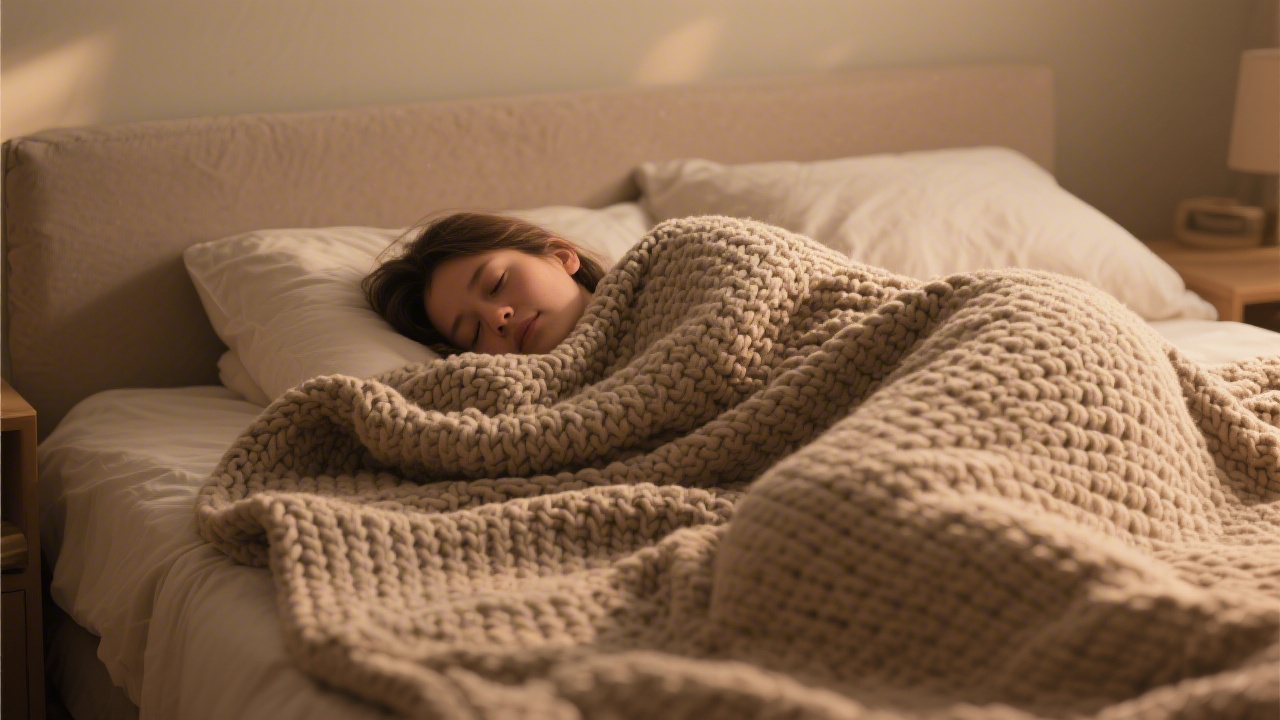
Weighted blankets (typically 12–25 lbs for adults) apply DPS across the supine body, creating a sensation described as a "hug" or distributed warmth. The mechanism is believed to involve both the peripheral nervous system (proprioceptive input from the skin and joints) and central nervous system responses through autonomic modulation.
The Parasympathetic Mechanism
The proposed neurological mechanism for DPS anxiety reduction involves activation of the parasympathetic nervous system — the "rest and digest" branch of the autonomic nervous system, opposing the sympathetic "fight or flight" response that drives anxiety.
Distributed tactile and proprioceptive pressure activates Meissner's corpuscles and Ruffini endings in the skin, which transmit signals through the dorsal column pathway to the brain. Research by Field et al. (2006) established that deep pressure massage consistently reduces cortisol levels and increases serotonin and dopamine — a neurochemical shift consistent with reduced anxiety and improved mood.
Importantly, DPS also activates the vagus nerve, the primary parasympathetic pathway from the brain to the body's organs. Vagal activation reduces heart rate, lowers blood pressure, and suppresses the inflammatory and anxiety responses mediated by sympathetic activation. Heart rate variability (HRV) — a measure of vagal tone — increases measurably during DPS.
What the Clinical Research Shows
Anxiety disorders: A 2020 randomized controlled trial by Ekholm et al. in the Journal of Clinical Sleep Medicine randomly assigned 120 adults with diagnosed anxiety disorders, ADHD, or major depressive disorder to either a chain-weighted blanket or a light blanket for 4 weeks. The weighted blanket group showed significantly greater reductions in anxiety scores, improved sleep efficiency, and higher rates of remission. 60% of the weighted blanket group achieved remission from insomnia versus 13% in the control group.
Acute situational anxiety: Multiple studies in medical settings (dental procedures, MRI scans, pre-surgical anxiety) have found that weighted blankets or deep pressure vests reduce state anxiety scores and physiological anxiety markers (cortisol, heart rate) during anxiety-provoking procedures.
Autism spectrum disorder: The evidence base for DPS in ASD is extensive. Systematic reviews consistently find that weighted blankets and vests reduce anxiety, self-stimulatory behaviors, and sleep disturbance in ASD populations, though effect sizes vary.
PTSD: Preliminary research suggests DPS may be beneficial in PTSD by reducing hyperarousal — a core symptom — through vagal activation and reduced nocturnal cortisol. RCTs in this population are ongoing.
Who Benefits Most
The research evidence is strongest for:
- Individuals with diagnosed anxiety disorders (generalized anxiety, social anxiety)
- People with ADHD (particularly the hyperarousal component)
- ASD individuals with sensory sensitivities and sleep disruption
- Those with insomnia driven by nighttime anxiety and racing thoughts
- Individuals experiencing acute situational anxiety (medical procedures, travel)
The evidence is weaker for general wellness use in people without anxiety disorders, though subjective satisfaction rates remain high in this group.
How to Choose the Right Weight
The commonly cited guideline is 10% of body weight. The research basis for this specific percentage is limited — it originated from occupational therapy practice guidelines rather than controlled trials comparing different weight percentages. However, it remains a reasonable starting point.
For anxiety specifically, the research suggests that heavier blankets (within the tolerable range) produce stronger parasympathetic effects. A 2021 study in Frontiers in Psychiatry found that 12 lbs and 15 lbs blankets produced greater anxiety reduction than 6 lbs blankets in anxiety-disorder patients, with no additional benefit above 15 lbs for most subjects.
Practical guidance: Start at 10% of body weight. If you find it uncomfortable or sleep hot, try a lighter weight. If you find it insufficiently calming, try one weight class heavier. The optimal weight is individual.
The Heat Problem and Mattress Interaction
The primary complaint with weighted blankets is sleeping hot. The added weight limits natural shifting under the covers, and the filling material significantly affects breathability. Glass bead fillings are cooler than plastic pellet fillings; cotton covers breathe better than polyester. For anxiety-driven sleep disruption, a breathable weighted blanket paired with a temperature-regulating mattress addresses both the anxiety component and the thermoregulation component of sleep.
A mattress with good airflow — particularly hybrid designs with individually wrapped coils — allows heat to dissipate naturally even under the additional insulation of a weighted blanket. This pairing is especially important for hot sleepers using weighted blankets for anxiety management. Our best mattress for hot sleepers guide covers the top options.
Our Recommended Mattress for This Setup
Saatva Classic Mattress — CertiPUR-US certified foams, low-VOC materials, and individually wrapped coils for the healthiest sleep environment.
View the Saatva Classic →Frequently Asked Questions
Do weighted blankets actually reduce anxiety?
Yes, with good clinical evidence. A 2020 RCT found weighted blankets significantly reduced anxiety scores in adults with anxiety disorders, with 60% achieving insomnia remission versus 13% in the control group. The mechanism involves parasympathetic activation and vagal stimulation.
What weight weighted blanket is best for anxiety?
The commonly cited guideline is 10% of body weight. For anxiety, research suggests 12–15 lbs produces stronger effects than lighter blankets (6 lbs), with diminishing returns above 15 lbs for most adults. Individual comfort matters.
How does a weighted blanket reduce anxiety?
Deep pressure stimulation activates the parasympathetic nervous system through proprioceptive receptors in the skin and joints, increasing vagal tone, lowering cortisol, and raising serotonin and dopamine.
Can a weighted blanket help with anxiety-related insomnia?
Yes. When anxiety is the primary driver of insomnia, weighted blankets show particular benefit. Clinical trials show improved sleep efficiency, faster sleep onset, and reduced nighttime awakenings in anxiety-disorder populations.
Are there people who shouldn't use weighted blankets?
People with respiratory conditions (sleep apnea, COPD), circulation disorders, claustrophobia, or those who cannot freely move the blanket should consult a physician. Not recommended for children under 2 or those under 50 lbs.