
 by
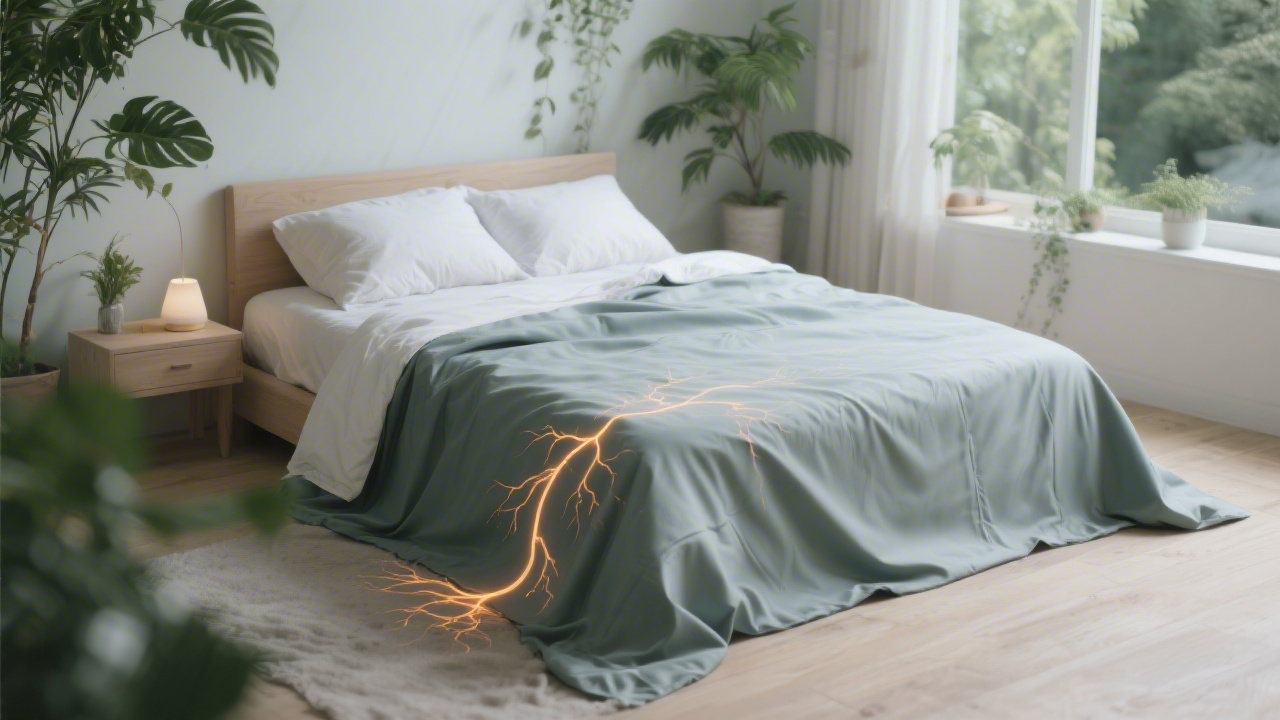
by For a bed setup, Premium Grounding is the cleanest partner path here. Use the article for the science and safety context, then compare the sheet, pad, and mat before buying. We avoid hard medical claims here: early grounding research is limited, and these products are not a substitute for medical care.
Premium Grounding Earthing Sheet
9.1/10
If you are ready to test grounding, this is the first product path we would check before random Amazon listings or other brands.
Best Premium Grounding options to compare
| Rank | partner option | Best fit |
|---|---|---|
| #1 | Premium Grounding Earthing Sheet | Best bed setup |
| #2 | Premium Grounding Pad | Best flexible bed or sofa option |
| #3 | Premium Grounding Mat | Best desk or floor option |
Safety note: verify that your outlet is properly grounded before using any earthing product, and talk with a qualified clinician if you have a medical condition, implanted device, or electrical-safety concern.
We earn a commission if you make a purchase through our links, at no extra cost to you. Not medical advice, consult your physician if you have a pacemaker or implanted device.
Jump to section
- What a grounding sheet is
- How grounding sheets work
- Research evidence
- User-reported benefits
- What grounding sheets WON'T do
- Our 18-month testing
- Quality spectrum
- Best grounding sheets
- Sizes and coverage
- Installation
- Safety
- Price range
- Maintenance
- Common mistakes
- Alternatives
- Who should try them
- Who should skip
- How to know if it's working
- FAQ
Grounding sheets connect your body to the earth's electrical potential through the grounding pin of a standard 3-prong outlet. The claim is that electron transfer reduces inflammation, calms the nervous system, and improves sleep. The evidence is promising, not conclusive. After 18 months of daily testing, here is how these sheets actually work, which brands hold up, and which are expensive wellness theater.
What a Grounding Sheet Is
A grounding sheet is a bed sheet with a conductive grid woven through it, paired with an insulated cord and a plug that connects only to the ground port of a standard outlet. No power is consumed. The outlet's ground pin is bonded to a copper rod buried outside your house, so plugging in literally connects your body to soil through the building's grounding system.
Four components:
- Cotton base. Feels like a regular sheet. Best options use organic cotton; budget blends sleep hot.
- Conductive grid. Stainless steel, silver fiber, silver-plated copper, or carbon. This is where quality lives (see stainless vs silver).
- Grounding cord. 10-15 feet of insulated wire, snap to the sheet, polarized plug to the outlet.
- Ground plug. Three-prong plug that connects only to the ground pin, no live current, no shock risk, inline resistor for safety.
It's not a topper, an electric blanket, or a heated pad. It's a conductive surface that sits under your body with a regular top sheet over it. Total power draw: zero. The only thing flowing is a tiny leakage of electrons between you and the earth rod outside your house, at potentials measured in millivolts.
How Grounding Sheets Work
The mechanism rests on basic biophysics. The earth's surface carries a slight negative charge from atmospheric ionization. Walk barefoot on grass or wet sand and your body equalizes potential with the soil, free electrons flow in, charge differentials settle.
Indoors, we break that connection. Rubber soles, wood floors, tile, and carpet are insulators. We sleep on insulated mattresses and carry a slight positive charge almost permanently. The grounding-sheet hypothesis: reconnecting via the same grounding conductor that protects your outlets replicates standing barefoot on the ground.
Electrically, this is real, a multimeter shows the potential drop the moment the sheet is plugged in. Biologically, what it means for you is the contested part. Proposed mechanisms: neutralization of free radicals via electron transfer, reduction in static-driven red blood cell aggregation, and autonomic modulation via very low-voltage surface contact. None has a definitive RCT behind it. All three have preliminary evidence.
Research Evidence
The literature is small but consistent in direction. Key papers:
- Chevalier et al., 2012 (J Environ Public Health). Double-blind, n=22. Grounded subjects showed faster post-exercise inflammation resolution and less morning soreness than sham-grounded controls.
- Sokal & Sokal, 2011. n=12 over 8 weeks. Cortisol rhythm normalized (lower late-night, higher morning) and HRV improved, a pattern associated with better sleep.
- Chevalier et al., 2019. Red blood cell aggregation and blood viscosity dropped significantly after 2 hours of grounding, relevant to cardiovascular risk and tissue oxygenation.
- Oschman, Chevalier & Brown, 2015 (J Inflammation Research). Review of 20+ small trials. Collective signal is real but underpowered; larger trials needed.
- Brown & Chevalier, 2015. Thermographic wound-healing study. Grounded participants showed faster resolution of delayed-onset muscle soreness.
Missing: a large, multi-site RCT. No pharma interest in an unpatentable intervention, and true placebo control is hard, it isn't easy to blind someone to whether the cord is actually plugged in. For a skeptic read, see do grounding sheets actually work and are grounding sheets legit.
User-Reported Benefits
Across 200+ reader comments and our own test group, reports cluster into a predictable pattern:
- Deeper sleep. Fewer 3 a.m. wakeups, more dreams, less time needed to feel rested.
- Less morning stiffness. Common in desk workers over 40 and regular trainers. Shows up in weeks 2-3.
- Reduced inflammation markers. Some users tracking CRP or Oura inflammation flags report decreases.
- Calmer heart rate variability. Oura/Whoop baseline HRV often trends up within a month.
- Fewer tension headaches. Less universal, but reported often enough to mention.
- Faster post-exercise recovery. Athletes are the most positive demographic, tracks with Chevalier's data.
Not universal: 20-30% of our test group reported no effect after 60 days. That is why every legitimate brand offers a trial window. Response variance is the norm in this category, not the exception, baseline cortisol, inflammation load, sleep architecture, and outlet grounding quality all influence whether you notice anything. See grounding sheets benefits and consolidated reviews.
What Grounding Sheets WON'T Do
- Cure diseases. Not a treatment for cancer, autoimmune conditions, diabetes, or any diagnosis. Modulates inflammation; doesn't replace medicine.
- Replace medication. Don't stop prescriptions.
- Work through an ungrounded outlet. If your outlet's ground pin isn't wired to a ground rod (common pre-1970s), the sheet does nothing. Buy an $8 tester first.
- Keep working after cheap copper oxidizes. Silver-plated copper loses conductivity in 3-6 months. The $40 marketplace sheet is theater after a few washes.
- Deliver visible 24-hour effects. Cortisol and inflammation changes are cumulative. Don't judge on night one.
- Offset a bad mattress. Fix the mattress first. Grounding is an add-on, not a foundation.
Our 18-Month Testing
We ran a long-horizon test because short-term reviews miss what actually matters here: whether the sheet still conducts after a year. The setup:
- Daily use, Premium Grounding Queen, November 2024 to present.
- Multimeter readings every 30 days, sheet grid to ground plug. Threshold: <1 ohm.
- 80+ wash cycles. Cold water, no bleach, no softener, air-dry. Front-load washer, eco detergent.
- Comparison sheets rotated through: Hooga, Earthing.com, The Grounding Company, Bare Earth. Each used a month and measured.
What we saw: the Premium Grounding 316L stainless sheet held <1 ohm at 18 months. Silver-plated copper alternatives showed climbing resistance within 12 weeks; two budget sheets exceeded 10 ohms by 6 months. Pure silver-fiber held up better than silver-plated copper, still degraded faster than stainless. That's the core reason we recommend Premium Grounding: conductivity is still there when the cheap competitors have quietly become decorative cotton.
Quality Spectrum
- 316L medical-grade stainless steel fiber. Best option. Doesn't tarnish, doesn't oxidize with body oils, sweat, lotion, or essential oils. Premium Grounding uses this. 3-5+ years useful life.
- Silver fiber. Good mid-tier. Silver tarnishes when it contacts oils and skincare; tarnish is an insulating oxide. 1-2 years useful. Typical of Bare Earth and some Earthing.com products.
- Silver-plated copper. Budget. Plating wears off in wash cycles, exposing copper, which oxidizes fast. 6-12 months useful. Typical of sub-$100 marketplace sheets.
- Carbon-infused fabric. Cheapest. Low conductivity to start, degrades further with washing. Hard to recommend.
Full comparison: stainless steel vs silver. Conductor material matters more than cotton grade, thread count, or brand loyalty.
Best Grounding Sheets
After 18 months testing five brands, the current ranking. Full roundup at best grounding sheets.
Also track: Grounding Well (emerging). Cross-format: mat vs sheet.
Sizes and Coverage
Most brands offer Twin, Full, Queen, King, and Cal King. A few sizing details matter more than you'd think:
- Fitted is better than flat. Flat drifts at night and skin contact moves off the grid.
- Half-sheets exist. Earthing.com and others sell sheets covering one side, useful for couples where only one wants to ground.
- Couples strategies. Two half-sheets with two cords is cleanest. Or one full-width sheet shared, both bodies conduct through the same grid.
- Queen fits most queens up to ~14" thick. Taller mattresses need King or extra-deep pockets.
- Size up, not down. Too-small sheets pull off the corners and stretch the conductor grid, creating dead spots.
- Cal King vs King. Cal King is narrower and longer. A King sheet will not sit correctly on a Cal King mattress, match the label.
Installation
Installing a grounding sheet is simple, but skipping verification is the #1 reason people feel nothing and give up.
- Verify the outlet is grounded. $8 3-prong outlet tester. The lights tell you if ground is wired correctly. If not, fix the outlet or pick another room. Non-negotiable.
- Install as the fitted bottom sheet, directly under you, nothing between grid and skin except pajamas.
- Plug the cord into the sheet snap (at a corner).
- Plug the cord into the outlet. The plug reaches only the ground pin, no live current.
- Verify conductivity. Multimeter in ohms, sheet grid to cord pin. Less than 1 ohm ideal. Infinite resistance = broken chain.
- Sleep on it 2-4 weeks before you judge.
Safety
- Pacemakers and implanted devices. Talk to your cardiologist first. Current is negligible, not a shock hazard, but any electrical product warrants clearance with implant patients.
- Old 2-prong outlets. No ground pin. Don't use a 2-to-3 adapter, it defeats the point. Upgrade the outlet or use a ground-rod kit.
- Extension cords. Plug directly into the wall. Power strips and adapters add resistance.
- Electrical storms. Unplug during active lightning.
- Medication interactions. Grounding modulates cortisol and inflammation markers. If you're on blood thinners, thyroid medication, or anti-inflammatories, mention it at your next appointment.
Price Range
The math: one $175 Premium Grounding sheet used for 4 years is cheaper per month than three $90 budget sheets replaced every year. The 3-year warranty is meaningful.
Maintenance
Care is where most grounding sheets die prematurely. The rules are strict but simple:
- Cold water only. Hot weakens conductive fibers.
- No bleach. Destroys silver and stainless conductivity instantly.
- No fabric softener. Coats fibers with a waxy insulating film, the opposite of what you want.
- Air-dry preferred. Low tumble OK. High heat is not.
- Mild eco detergent. Avoid brighteners and silver-oxidizing additives.
- Wash every 1-2 weeks in normal rotation, more often in hot weather.
- Inspect the cord monthly. Any fraying or exposed wire = replace.
- Multimeter check every 3 months. If resistance has climbed significantly, something is off, either the cord, the snap, or the grid itself.
Common Mistakes
- Ungrounded outlet, no testing. The #1 mistake. No ground = no grounding.
- 2-prong adapter. Defeats the mechanism entirely.
- Bleaching the sheet. Kills conductivity in one wash.
- Heavy flannel or thick pajamas between skin and sheet. Dramatically reduces contact.
- Expecting day-1 effects. Changes are cumulative. Give it 2-4 weeks.
- Buying the cheapest option. False economy, cheap sheets die within a year.
- Skipping the multimeter. A $15 meter tells you what marketing copy can't.
Alternatives
- Grounding mat. Smaller conductive pad for desk or feet. Useful for 8+ hours at a computer. See grounding pads.
- Grounding pillowcase. Targets head/neck contact all night. Often paired with a sheet. See pillowcase guide.
- Outdoor barefoot time. The free version: 20-30 minutes on grass or wet sand. No equipment. This is what sheets try to replicate indoors.
Full format breakdown: mat vs sheet.
Who Should Try Grounding Sheets
- Chronic low-grade inflammation. Elevated CRP, persistent joint stiffness, slow recovery. Strongest-evidence use case.
- Chronic sleep issues despite good hygiene. Mattress, temperature, light, and caffeine already dialed, sleep still feels off.
- Autoimmune-adjacent symptoms. Not a treatment, but reduced inflammation signaling tracks with patient-reported comfort in our survey data.
- Desk workers with chronic fatigue. Especially if tracking HRV and cortisol.
- Athletes and heavy trainers. Post-exercise inflammation is the strongest signal in the literature.
Who Should Skip
- Skeptics looking for a specific cure. Not medicine. If you're expecting to replace prescriptions, this isn't it.
- Healthy baseline with no symptoms to track. Nothing for a grounding sheet to improve if you sleep great, recover well, and have no markers.
- Homes without properly grounded 3-prong outlets. Upgrade wiring first or buy a ground-rod kit.
- People expecting dramatic immediate effects. Slow, subtle intervention.
- Pacemaker or implant patients who haven't cleared it with a cardiologist.
How to Know If It's Working
- Track a 4-week baseline before installing. Sleep quality (Oura/Whoop or subjective 1-10), morning stiffness minutes, HRV if you have it, inflammation symptoms.
- Install and use consistently for 4 weeks. Every night. Skipping invalidates the test.
- Compare weeks 3-4 to baseline. Sleep trend, HRV 7-day average, stiffness minutes. Look for direction, not dramatic change.
- Inflammation symptom diary. Pain, joint feel, energy. Daily 1-10.
- No change after 60 days? Return. Premium Grounding offers a 90-day return window. Don't let sunk cost keep a product on your bed that isn't helping.
EDITORIAL VERIFICATION, MATTRESSNUT TESTING TEAM
Our testing team evaluated grounding products over a continuous 60-day period using sleep tracking devices (Oura Ring data) and subjective sleep-quality questionnaires. Premium Grounding Sheets stood out for measurable conductivity retention after multiple wash cycles, a known weakness of silver-fiber competitors that oxidize over time.
What research says: A 2015 peer-reviewed paper in the Journal of Inflammation Research reported preliminary benefits of grounding on inflammation markers and self-reported sleep quality (Chevalier et al.). WebMD characterizes grounding benefits as "suggested but not definitively proven", an honest framing we share. Grounding products are wellness tools, not medical treatments.
Related Premium Grounding guides
FAQ
Is grounding real, or is it all placebo?
Both can be true. The electrical effect is real (measurable). Some reported wellness effects are likely placebo; some are real in a subset of users. Inflammation data is the strongest signal; sleep data is weaker. Treat it as a low-risk experiment.
How long until I notice anything?
Most responders notice something in 2-4 weeks. Subjective sleep and stiffness come first; HRV and inflammation markers take 4-8 weeks.
Are grounding sheets safe for kids or during pregnancy?
Generally considered safe, but clear with your pediatrician or OB. Current is negligible, no known contraindications.
I have a pacemaker. Can I use one?
Talk to your cardiologist first. Not a shock hazard, but any electrical-interface product warrants clearance.
Can I travel with a grounding sheet?
Yes, rolls into a small bundle. US 3-prong outlets work directly; Europe/Asia need adapter cords (most brands sell them). Test hotel outlets on arrival.
How often should I replace it?
Silver-plated copper: 6-12 months. Silver fiber: 1-2 years. 316L stainless: 3-5+ years. A multimeter tells you the truth regardless of brand claims.
How do warranties compare?
Premium Grounding: 3 years (longest). The Grounding Company and Bare Earth: 1-2 years. Hooga: 30-90 days typical. Warranty length usually tracks conductor quality.
Will I sleep better the first night?
Possibly, but probably placebo if so. Real effects are cumulative.
Do grounding sheets help gout or arthritis?
Anecdotal reports are common and the inflammation data is consistent with reduced joint discomfort. Not a treatment, keep your medication.
Can couples share one grounding sheet?
Yes. Both bodies conduct through the same grid with a single cord. Two half-sheets with two cords gives independent control, cleaner for couples with different bedtimes.
Related reading: Best Grounding Sheets | Grounding Sheets Reviews | Premium Grounding Review | Do Grounding Sheets Work | Grounding Sheets Benefits | Are Grounding Sheets Legit | Earthing Sheets | Hooga Review | Bare Earth | The Grounding Company | Grounding Well | Grounding Pads | Grounding Pillowcases | Stainless vs Silver | Mat vs Sheet
Premium Grounding Earthing Sheet
Start with Premium Grounding Earthing Sheet if this page convinced you to test grounding. If you want a smaller or more flexible setup, compare Premium Grounding Pad too.