
 by
by Quick answer: Bed bugs on sheets can look like small, flat, wingless brown insects. After a blood meal, adults may look reddish-brown and swollen; rust-colored dots, pale eggs, and shed skins are supporting clues.
- The Bed Bugs Handbook says an adult bed bug is visible to the naked eye.
- The same source describes adults as flat, wingless, and brown, becoming reddish-brown and swollen after a blood meal.
- Know Animals identifies tiny rust-colored dots, shed skins, pale eggs, and a small flat bug near a seam as likely signs.
Updated July 2026 · Reviewed for accuracy
The insect itself is the strongest evidence. I’d give far more weight to a clearly visible, flat, wingless brown body than to one unexplained dot, then check whether eggs, shed skins, or activity near a seam support the match.
That distinction matters. Many people searching “show me what bed bugs look like” are really looking at stains, debris, or an unclear photograph rather than an intact insect.
Here’s how to separate the actual bug from the signs it may leave around sheets and mattress seams.
What do bed bugs look like on sheets?
A small, flat, wingless brown insect is the clearest visual match on a sheet. According to the Bed Bugs Handbook, an adult is visible to the naked eye, so you shouldn’t need to infer its entire identity from a microscopic speck.
Color depends partly on whether the insect has fed. The Bed Bugs Handbook describes adults as brown under ordinary conditions and reddish-brown and swollen after a blood meal. That means a flatter brown specimen and a more swollen reddish-brown specimen can both fit the published description.
The insect may not be the first thing you notice. Know Animals says the initial clue is more likely to be tiny rust-colored dots, shed skins, pale eggs, or a small flat bug hiding near a seam than a dramatic cluster of insects.
| What you see | How it fits the description | How I’d interpret it |
|---|---|---|
| Small brown insect | Potential match if it is also flat and wingless | Inspect the body, not color alone |
| Reddish-brown, swollen insect | Matches the Bed Bugs Handbook description after a blood meal | A stronger clue when the other body features also match |
| Tiny rust-colored dots | Listed by Know Animals as a likely sign | Supporting evidence, not an insect identification by itself |
| Pale eggs or shed skins | Both are listed by Know Animals as clues | Look for an intact bug or additional matching signs nearby |
If you want a verbal picture, imagine a visibly flat insect with no wings and a brown body. After feeding, the same published description shifts toward reddish-brown and swollen. Don’t add features that aren’t actually clear in front of you.
I also wouldn’t turn every rust-colored mark into a verdict. A dot cannot show whether an insect is flat or wingless. It belongs in the supporting-evidence column until the other details line up.
The Nut’s spotting rule: Identify the body first whenever possible. Use dots, eggs, shed skins, and seam location to support that identification, not replace it.
What do bed bugs look like on a mattress?
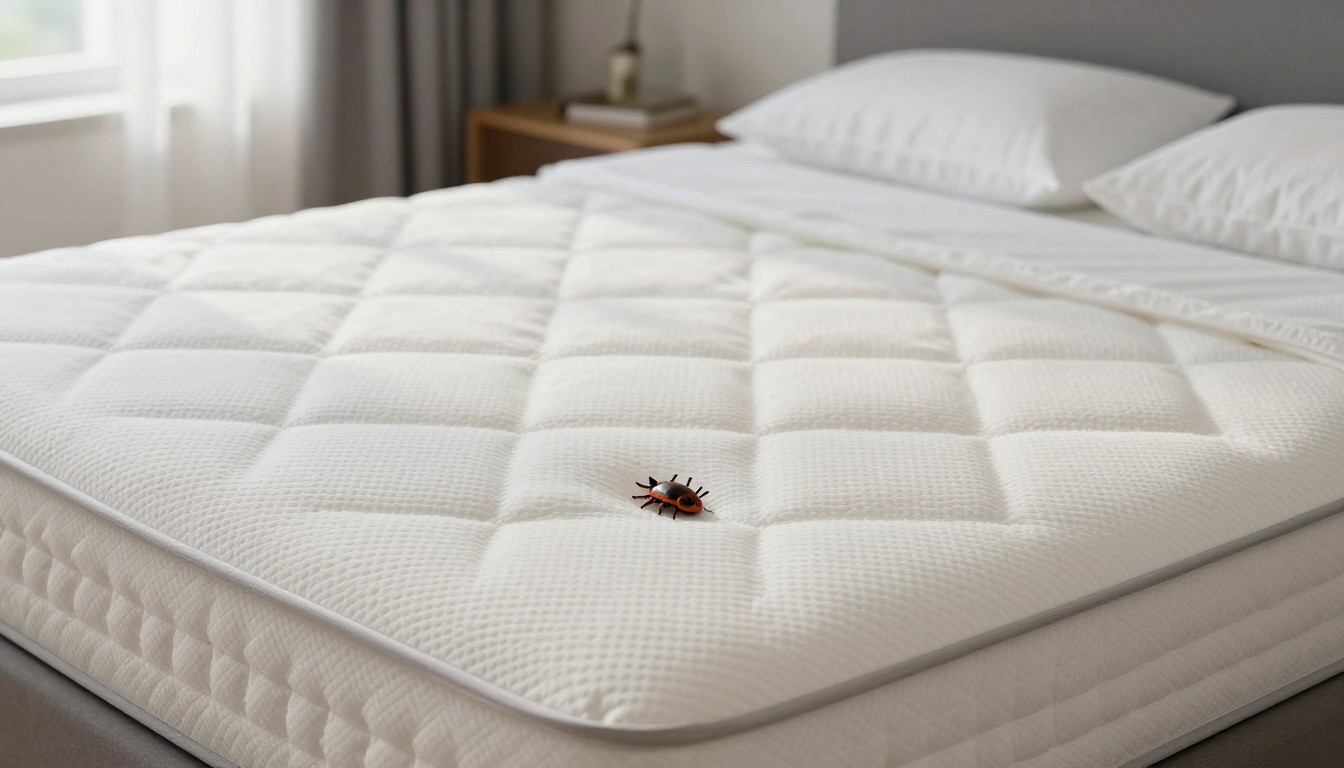
A mattress seam is the specific hiding point named by Know Animals. A small, flat bug near that seam deserves closer attention because both its appearance and its location fit the source’s description.
The insect doesn’t need a separate visual definition simply because it has moved from a sheet to a mattress. Look for the same documented adult features: visible without magnification, flat, wingless, and brown, or reddish-brown and swollen after a blood meal, according to the Bed Bugs Handbook.
Separate the mattress surface from the object sitting on it. A rust-colored dot remains a supporting clue. A pale item may fit the reported description of an egg, while a thin piece of cast material may fit the description of a shed skin. An intact insect gives you more body detail to compare.
| Inspection area | Relevant clue | Best question to ask |
|---|---|---|
| Sheet surface | Rust-colored dots, pale eggs, shed skins, or an insect | Am I looking at a trace or an intact body? |
| Sheet folds and edges | A small, flat bug | Can I see a flat, wingless brown body? |
| Mattress seam | The hiding location specifically mentioned by Know Animals | Do the location and physical features agree? |
| Open mattress surface | Any visible bug or supporting material | Is there enough detail for identification? |
I’d move visually from the sheet toward its nearest mattress seam. That follows the location named by Know Animals without assuming that every mark along the way has the same cause.
The useful question isn’t merely, “Does my mattress have a spot?” It’s whether the complete pattern agrees with the documented description: a matching insect, a relevant seam location, and supporting signs such as pale eggs or shed skins.
Keep the categories separate: A bug has a body you can compare. A dot is a mark. An egg and a shed skin are supporting materials. Treating all of them as interchangeable makes identification less reliable.
How to inspect what you’ve found
An intact body gives you more useful information than a stain. Start by deciding whether you’re seeing an actual insect, a pale egg-like object, cast material, or a colored mark on the fabric.
Then compare only what is visible. The Bed Bugs Handbook gives you a compact adult checklist, visible to the naked eye, flat, wingless, and brown. A reddish-brown and swollen appearance fits its description after a blood meal.
- Find the outline: Decide whether there is an intact insect body to examine.
- Check the profile: A bed-bug match should look flat unless it has the swollen appearance described after feeding.
- Check for wings: The adult description is explicitly wingless.
- Read the color in context: Brown fits the ordinary adult description; reddish-brown and swollen fits the post-meal description.
- Scan the nearby seam: Know Animals names rust-colored dots, pale eggs, shed skins, and a small flat bug near a seam as relevant clues.
This order keeps a clue from becoming a conclusion too early. A rust-colored dot has no visible body profile. A shed skin isn’t the intact insect you’re trying to identify. Both can matter, but they answer different questions.
A clear photograph can help you preserve what was visible, but the image still needs to show the body rather than only a vague brown shape. Keep the surrounding sheet or mattress seam in view as context, then look closely enough to judge the documented features.
Use positive identification: Ask which bed-bug traits you can actually see. Don’t label an object by eliminating random alternatives one at a time.
Marks on skin answer a different question from what an insect looks like on bedding. A skin mark cannot show a flat body, brown coloring, or the absence of wings, so it shouldn’t substitute for inspecting the sheet and mattress.
Comparing options? The Saatva Organic Cotton Sheets is one category-matched product to investigate, not a documented winner — see the product note ↓
Do ticks look like bed bugs?
A small brown specimen can prompt the question, “Do ticks look like bed bugs?” A casual resemblance isn’t enough for me to name either pest, especially when the photograph doesn’t show a complete body.
Use positive bed-bug traits instead of guessing from color. According to the Bed Bugs Handbook, the adult bed bug should be visible to the naked eye, flat, wingless, and brown. It can become reddish-brown and swollen after a blood meal.
Next, check the setting. Know Animals identifies a small flat bug near a seam, rust-colored dots, pale eggs, and shed skins as relevant signs. Those details can strengthen a bed-bug match, while a generic brown object without visible body features should remain unidentified.
| Question | Positive bed-bug evidence | If you can’t see it |
|---|---|---|
| Is there an intact insect? | An adult visible to the naked eye | Treat the object as uncertain |
| Is the body flat and wingless? | Both features match the published adult description | Don’t decide from brown coloring alone |
| Is it reddish-brown and swollen? | That appearance fits a bed bug after a blood meal | Return to the basic body features |
| Are relevant signs nearby? | Rust-colored dots, pale eggs, shed skins, or seam hiding | One unclear object provides a weaker basis for identification |
I wouldn’t call a specimen a tick merely because one bed-bug feature is hard to see. “Unidentified” is the honest answer until the body or surrounding evidence provides enough detail.
The US EPA maintains identification guidance within its broader bed bug resource. That’s a sound next comparison when a photograph or damaged specimen leaves the identity unclear.
Color is not a complete ID: Brown and reddish-brown are relevant bed-bug colors, but the published description also includes a flat body and no wings. Look for the combination.
Eggs, shed skins, and dried-up bed bugs
Pale eggs and shed skins are separate signs in the Know Animals description. Don’t merge either one with the appearance of an intact adult, and don’t label every pale speck a baby bed bug.
An egg-like object should be treated as supporting evidence because the cited description calls the eggs pale. A shed skin also supports further inspection, but it doesn’t give you the same complete body information as a visible adult.
- Pale egg-like item: Compare it with the pale eggs named by Know Animals, then look for other signs.
- Shed material: Treat it as a reported clue, not as a live adult specimen.
- Intact brown bug: Check whether it is visible, flat, and wingless.
- Dried or crushed object: Use only the original body traits that remain genuinely visible.
If you’re asking what dried-up bed bugs look like, I wouldn’t promise a dependable identification from color alone. A dried, crushed, or incomplete object may not show enough of the flat, wingless body described by the Bed Bugs Handbook. If those features can’t be judged, the specimen remains uncertain.
The same restraint applies to “baby bed bug” searches. Pale eggs are one reported clue, but an egg, a shed skin, and an intact insect are different visual categories. Find out which category you’re actually looking at before assigning an age or stage.
Verbal ID card: Adult visible to the naked eye. Flat. Wingless. Brown. Reddish-brown and swollen after a blood meal. Nearby clues may include rust-colored dots, pale eggs, shed skins, and seam hiding.
A dried brown fleck that shows none of those body features is just that: an unclear fleck. It may justify checking the surrounding seam, but it doesn’t justify a confident pest label by itself.
What to do after a plausible match
A plausible visual match is the point to move from comparison to the US EPA’s identification and management guidance. The EPA says its bed bug resources cover prevention, identification, and treatment through step-by-step guides based on integrated pest management principles.
The EPA also provides information about pesticides approved for bed bug control and materials intended to dispel common myths. I’d use that structured guidance rather than building a treatment plan around an isolated stain or an uncertain social-media image.
- Record what you actually observed: intact bug, rust-colored dot, pale egg-like object, shed material, or seam location.
- Compare the insect with the flat, wingless, brown adult description.
- If the visual pattern fits, consult the EPA’s step-by-step identification and integrated pest management material.
- Use the EPA’s pesticide information if you need to determine which products are approved for bed bug control.
Buying different sheets isn’t a substitute for identification or the EPA’s prevent-identify-treat process. Sheet material and construction are separate buying questions. Once the pest concern is settled, my guides explain what kind of sheets are best and what a good thread count means.
My verdict is simple: look for the insect’s complete profile before naming it. A visible, flat, wingless brown adult is the central match. Reddish-brown swelling after a blood meal, rust-colored dots, pale eggs, shed skins, and a seam location can strengthen the case, but one vague mark can’t carry it alone.
Bottom line: A cluster isn’t required, according to Know Animals. Inspect small signs carefully, but keep the answer “uncertain” until the visible body or combined evidence supports a bed-bug identification.
ONE OPTION WORTH COMPARING
Shopping as well as reading? Here is one current option worth comparing: the Saatva Organic Cotton Sheets. Check today’s price, sizing and return terms on the official product page before you order.
Saatva Organic Cotton Sheets
- See the product page for full specs and current pricing
FAQ
Can you see bed bugs on sheets with the naked eye?
Yes, an adult bed bug is visible to the naked eye, according to the Bed Bugs Handbook. Look for a flat, wingless brown insect rather than relying only on a tiny colored mark.
What do bed bugs look like on white sheets?
The documented physical traits don’t change with the sheet color: adults are flat, wingless, and brown, or reddish-brown and swollen after a blood meal. Know Animals also lists tiny rust-colored dots, pale eggs, and shed skins as possible clues on sheets.
What do bed bugs look like on a mattress?
Look for the same flat, wingless brown adult described on sheets. Know Animals specifically mentions a small flat bug hiding near a seam, so the mattress seam is a relevant place to compare the insect and any supporting signs.
Do ticks look like bed bugs?
A small brown object may create a superficial resemblance, but color alone doesn’t identify it. For a positive bed-bug match, check for the published combination of a visible, flat, wingless brown body and nearby signs such as pale eggs, shed skins, rust-colored dots, or seam hiding.
What do dried-up bed bugs look like?
I wouldn’t identify a dried or damaged specimen by brown coloring alone. Compare any structure that remains with the documented adult traits, and if the flat, wingless body can’t be judged, use the US EPA’s identification guidance rather than forcing a conclusion.