
 by
by Quick answer: A dream catcher does one thing: it carries a story. In Ojibwe tradition, the woven web catches bad dreams and lets good ones slip through to the sleeper. It's a symbol, not sleep equipment.
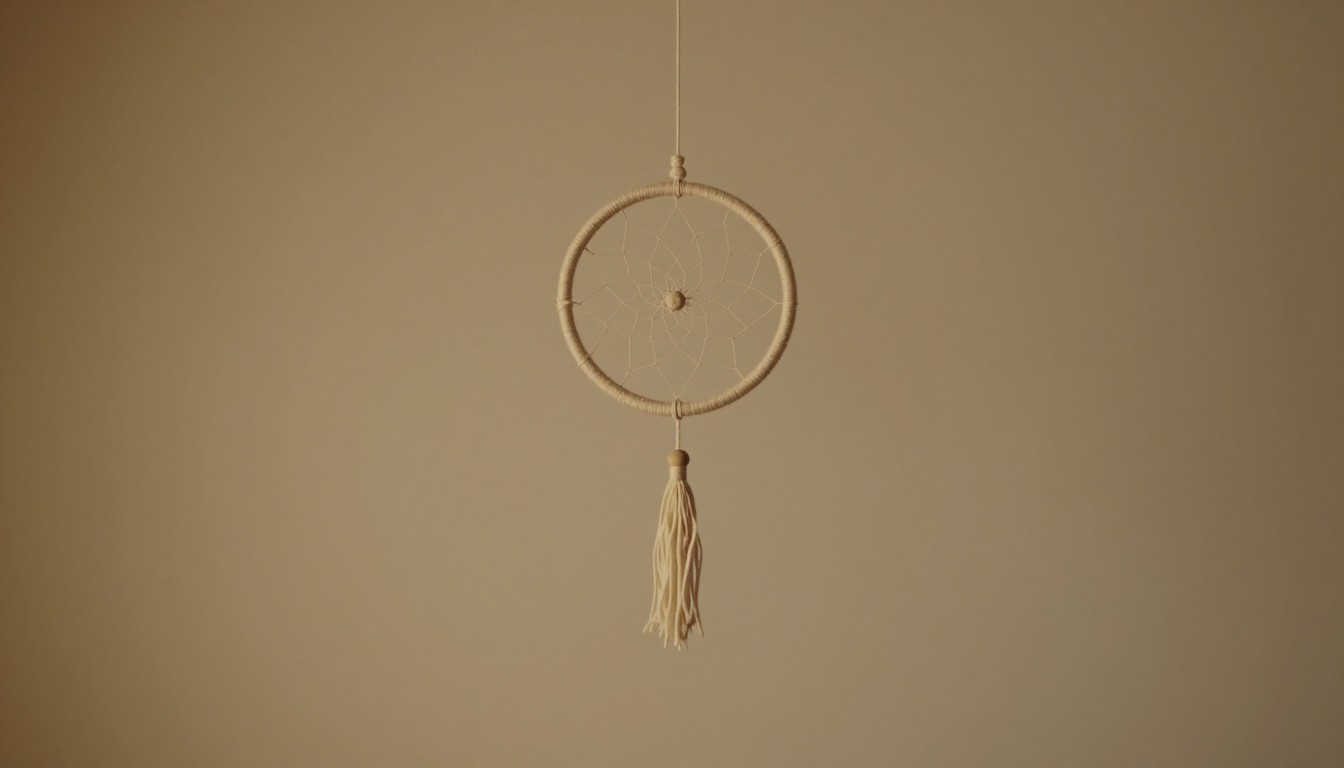
- The object is a hoop, a woven web, a bead or knot at the center, and hanging feathers. Every part belongs to the story, not to a mechanism.
- There is also a mattress named Dream Catcher: the aaelectromenagers.com listing for the Sleep-In Dream Catcher Tight Top Reversible shows a 12-inch innerspring build.
- What physically changes your night is boring and measurable: light, noise, room temperature, and the surface under your spine.
Updated July 2026 · Reviewed for accuracy
People search this question for two different reasons. Some want the meaning behind the hoop hanging over a bed. Others typed it after seeing a mattress called the Dream Catcher and wondered what they were buying. I'll answer both, and I'll be straight about which one actually affects how you feel at 6 a.m.
What a dream catcher actually does
It filters dreams. That's the job, as the story is told in the Ojibwe (Anishinaabe) tradition the object comes from. You hang it above the sleeping place. Bad dreams get tangled in the web and hold there until the morning light undoes them. Good dreams find the opening and travel down the feathers to the person below.
That's the whole function, and it's a spiritual one. A dream catcher isn't a filter in the air-conditioner sense. Nothing about it moves air, blocks light, or changes what your brain does overnight. Treating it like a device misses what it is and, honestly, disrespects where it came from.
The version most people own today is a decorative descendant. Dream catchers spread far beyond Ojibwe communities through the twentieth century and became a broad Native American symbol, then a craft-store item. A hand-woven piece made within the tradition and a mass-produced hoop with dyed feathers do the same decorative work on your wall. Only one of them carries the lineage.
My read: buy one because you like what it represents, or because it was made by someone whose tradition it belongs to. Don't buy one expecting it to fix insomnia. Those are two different purchases and only the first one ends well.
The parts, and what each one carries
Look at a well-made dream catcher and you'll see four elements, each with a role in the story:
- The hoop. Traditionally bent willow, tied into a circle. The circle stands for the cycle of a day, a life, a season.
- The web. Sinew or thread wrapped around the frame in a repeating loop, working inward. This is the part that's said to catch what shouldn't reach the sleeper.
- The center. An opening, sometimes marked with a bead. Good dreams pass through here.
- The feathers. Hung below the hoop. They're the path a good dream takes down to the person sleeping.
The construction tells you how it's meant to be read. Everything narrows toward the middle, and the only way through is the center. That's an elegant piece of storytelling built into an object you can hold. It's also why the cheap ones look wrong: the web is glued or printed rather than wrapped, so the shape has no logic behind it.
Does hanging one over your bed help you sleep?
Not physically. I've spent years looking at what changes sleep quality, and it's always the same short list: what you're lying on, how dark the room is, how cool it is, how quiet it is, and whether you go to bed at a consistent hour. A hoop on the wall isn't on that list and no serious source claims it is.
What a dream catcher can do is act as a cue. If hanging one is part of putting the day away, that ritual has value the same way a bedside lamp or a book does. You're telling yourself the room is now for sleeping. I won't dress that up as science. It's a habit, and habits matter, but the hoop is the prop rather than the cause.
Where it goes wrong is when someone hangs one instead of dealing with the actual problem. If you wake at 3 a.m. with a sore lower back, no amount of woven sinew touches that. The cause is under you, not above you.
Where to hang one and how to keep it
If you want one in the room, a few practical points:
- Above the sleeping place, ideally near a window. The story depends on morning light reaching the web, so a spot that catches sunrise fits the tradition.
- High enough that the feathers hang free. A dream catcher pressed flat against a headboard loses the movement that makes it work visually.
- Dust it, don't wash it. Sinew, willow, and natural feathers don't like water. A soft brush or a puff of air is enough.
- Keep it out of direct heat. Dyed feathers fade fast above a radiator, and a willow hoop can dry out and split.
One more thing worth saying plainly: if you're buying, buy from Native artisans where you can. The object means something to living communities, and a hoop made inside that tradition is a better piece of craft anyway. The wrapping is tighter and the materials hold up.
The other Dream Catcher: a 12-inch mattress with the same name
Search results for this question mix in a bed, so let's separate them. The aaelectromenagers.com listing for the Sleep-In Mattress Dream Catcher Tight Top Reversible shows a 12-inch innerspring mattress. That's a marketplace listing for a small regional brand, so I'd treat the spec as what the seller states rather than something independently confirmed.
Two words in that name tell you most of what you need:
Tight top. The upholstery layers are quilted directly into the cover with no separate pillow-top panel sewn on. Tight tops feel firmer and flatter than a pillow-top of the same height, and they tend to hold their shape longer because there's no loose cushioning layer to compress into a body impression.
Reversible. You can flip it. That's rare now, and it's genuinely useful on a spring bed. A one-sided mattress wears in exactly one place, under your hips, and that dent only deepens. A flippable build lets you rotate wear across two surfaces, which is the single cheapest way to stretch the life of an innerspring.
What I'd ask before buying it: coil count and coil gauge, whether the springs are connected (Bonnell or offset) or pocketed individually, what the comfort layer is made of, and what the warranty covers. The listing height tells you nothing about durability on its own. A 12-inch bed built on thin wire and cheap fiber will soften faster than a shorter one built properly.
What actually changes your nights
Here's the honest comparison, because it's the part that answers what the searcher usually needs.
| What you change | What it realistically does |
|---|---|
| Dream catcher above the bed | Carries meaning, marks the room as a place for rest. No physical effect on your body. |
| Blackout curtains | Removes the streetlight and dawn glow your body keeps reading as morning. |
| A cooler room | Most people settle faster in a cool room than a stuffy one. Costs nothing to test. |
| Earplugs or steady background noise | Cuts the brief wake-ups you never remember but still feel the next day. |
| The mattress under you | Decides whether you wake up sore or neutral. Coil gauge and foam density decide how long that lasts. |
The last row is where the real money and the real difference sit. A sagging bed produces exactly the kind of broken, restless night people blame on stress or bad dreams. You feel it as waking up unrested, not as pain, which is why it goes undiagnosed for years.
If you want a shortcut to what a well-built bed feels like, pay attention next time you sleep somewhere that has already solved the problem. Big hotel groups buy for durability across thousands of rooms, and their spec sheets are more honest than most marketing pages. We've broken down the mattress Westin uses, what Waldorf Astoria puts in its rooms, and the St. Regis setup. The pattern that repeats is a proper coil support core with a modest comfort layer on top, not a tower of soft foam.
That same coil-on-coil approach is what you're looking for if you're shopping innerspring rather than all-foam; the Saatva Classic is one commonly available example of that construction. Whatever you land on, judge it by what's inside, not by height in inches.
So: a dream catcher does what it has always done. It holds a story, it makes a room feel considered, and it belongs to a tradition worth respecting. It won't fix your sleep. The bed underneath it might.
FAQ
Do dream catchers stop nightmares?
In the tradition they come from, yes, that's their purpose: the web holds bad dreams until morning light clears them. Physically, no. Nothing about a woven hoop changes what happens while you sleep, and I'd be careful with anyone selling one as a nightmare cure.
Which way should a dream catcher face?
Hang it above the sleeping place with the feathers hanging free and the web open to the room. A spot that catches morning sun fits the story best, since sunrise is what's said to release the bad dreams caught in the web.
Is it disrespectful to own a dream catcher?
Owning one isn't the issue. Where it came from is. A piece made by Native artisans within the tradition keeps the meaning intact and is better made than a mass-produced hoop. Treat it as a cultural object rather than a generic ornament and you're on solid ground.
What is a Dream Catcher mattress?
It's a bed that shares the name, unrelated to the symbol. The aaelectromenagers.com listing for the Sleep-In Dream Catcher Tight Top Reversible shows a 12-inch innerspring. Tight top means quilted upholstery with no sewn-on pillow panel, and reversible means you can flip it to spread the wear.
If a dream catcher won't help, what should I change first?
Start with the cheapest fixes: darkness, a cooler room, a consistent bedtime. If you still wake up stiff or unrested after that, the mattress is the next suspect, especially if it's one-sided and has a visible dip where you sleep.