
 by
by Quick answer: Your sleeping position usually reflects comfort, habit, or an attempt to ease discomfort. It can offer useful sleep clues, but it isn’t a dependable personality test.
- Sleep Foundation says sleep-position research may provide insights into health and sleep.
- A person may choose a position consciously or settle into it without thinking.
- According to Sleep Foundation, uncomfortable symptoms can influence the position someone adopts.
Updated July 2026 · Reviewed for accuracy
Your sleeping position says more about what your body finds comfortable than whether you’re confident, sensitive, private, or outgoing. I wouldn’t use a nighttime pose as a personality test.
The more useful question is whether your position is consistent, whether it recently changed, and whether discomfort seems to influence it. That turns a vague personality quiz into a practical look at your sleep.
What a sleeping position can actually tell you
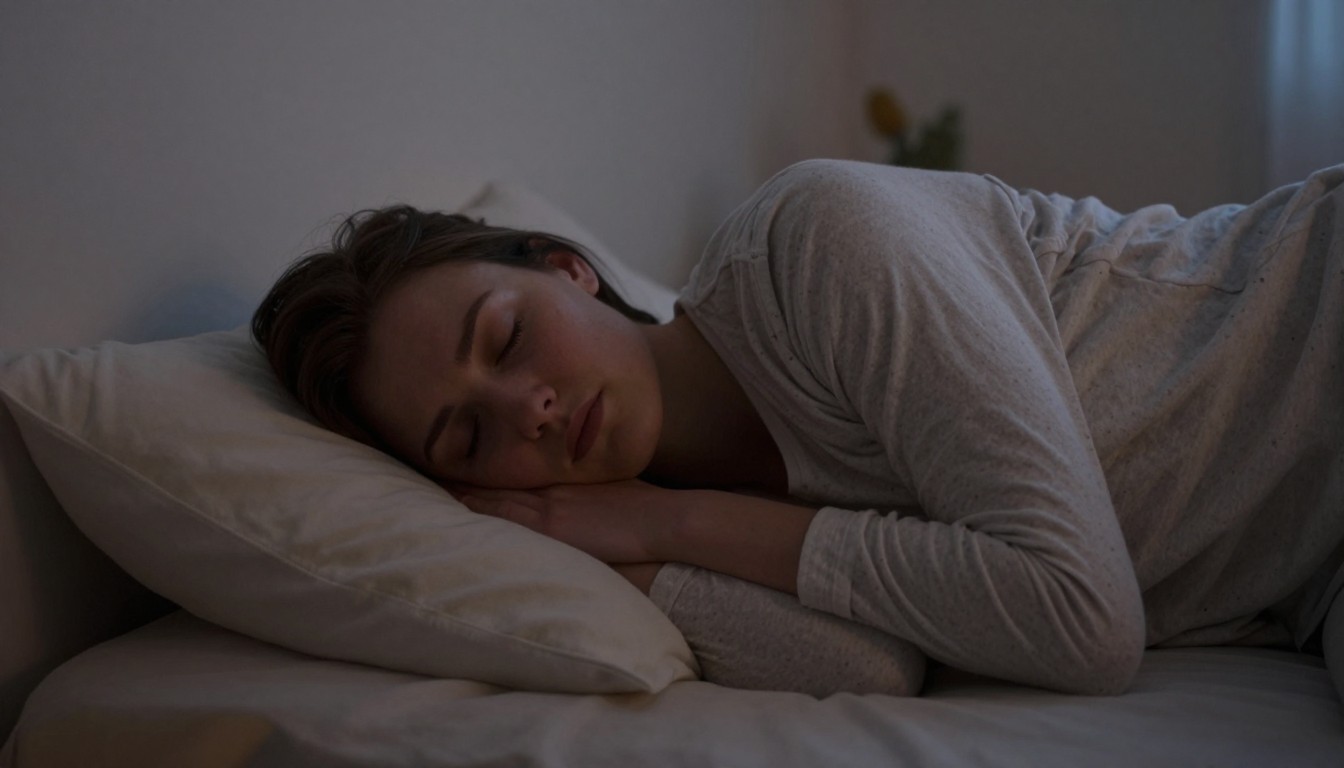
A body curled on its side and a body resting flat on its back are observable facts. Calling one person guarded and the other self-assured is an interpretation. The pose alone doesn’t establish either personality trait.
Sleep Foundation takes the more practical view that research into sleep position can offer helpful insights into health and sleep. It also notes that people may consciously or unconsciously adopt a position to relieve uncomfortable symptoms. That’s a much firmer basis for interpreting the way you sleep.
Suppose you deliberately turn onto your side because another position feels uncomfortable. In that case, the choice may say something about comfort that night. It still doesn’t reveal whether you’re shy, trusting, ambitious, or easygoing.
The Nut’s take: Treat position-based personality descriptions as entertainment. For useful information, focus on repeated posture, changes from your normal pattern, and any discomfort that accompanies those changes.
A single glimpse is especially weak evidence. It captures one moment without showing whether that was your chosen starting position, a temporary adjustment, or simply where you happened to be when observed.
Even a regular position needs context. A familiar posture can reflect preference, while a new one may be an attempt to get comfortable. Neither provides a reliable shortcut into character or destiny.
What common sleeping positions do and don’t suggest
Side, back, stomach, and mixed positions look different, but appearance isn’t personality evidence. The defensible reading stays close to what can actually be observed.
| Position you observe | What it may reasonably suggest | What it doesn’t prove |
|---|---|---|
| Side with the body curled inward | A compact posture felt comfortable at that time | Sensitivity, insecurity, or a need for protection |
| Side with the body relatively straight | The sleeper preferred a more extended side posture | Trust, sociability, or stubbornness |
| Flat or partly flat on the back | Back sleeping felt workable during that part of the night | Confidence, discipline, or emotional reserve |
| On the stomach | A face-down posture was preferred or comfortable then | Boldness, control, or resistance to criticism |
| Arms or legs spread outward | The sleeper used more of the available surface | Generosity, openness, or dominance |
| Frequently changing position | No single observed posture tells the whole story | Indecision, restlessness, or a changeable personality |
A curled side posture often attracts the strongest symbolic interpretation because its shape appears protective. That visual resemblance isn’t enough to establish an emotional motive. You can curl up simply because that shape feels comfortable.
The same caution applies to an open or spread-out posture. Taking up space in bed doesn’t prove that someone is socially open, dominant, or inconsiderate. Without context, it only shows how that person was positioned at a particular moment.
Back and stomach positions also invite overreading because they look distinct. I’d resist turning those shapes into character judgments. A comfortable posture isn’t a confession.
A better interpretation test
- Describe the position without attaching a personality label.
- Ask whether the sleeper chose it deliberately.
- Consider whether discomfort prompted the choice.
- Look for a recurring pattern instead of judging one moment.
Why your sleeping position may change
A position adopted after discomfort carries more useful information than a label such as “private” or “carefree.” Sleep Foundation specifically notes that people may consciously or unconsciously choose certain sleeping positions to relieve uncomfortable symptoms.
A conscious change is fairly easy to recognize. You notice that one posture isn’t comfortable, so you move. The movement records a practical decision about comfort, not a sudden change in personality.
An unconscious adjustment is harder to interpret because you may not remember making it. If you fall asleep in one position and notice another upon waking, you know a change occurred. You don’t automatically know when it happened or why.
Useful details to notice
- The position in which you try to fall asleep
- The position you notice when you wake
- Whether the choice was intentional
- Any recurring discomfort associated with the change
- Whether the pattern feels normal or unusual for you
That distinction matters. Your preferred starting position may reflect habit, while a waking position may be the result of an adjustment you didn’t consciously choose. Treating both as the same personality signal skips the most relevant part of the story.
It’s also worth separating posture from popular body myths. For example, the question of whether sleeping with your legs straight makes you taller needs its own evidence-based answer. The mere shape of a sleeping body doesn’t settle it.
Read the pattern instead of the personality label
The clearest signal is often a change from your normal pattern. If a familiar pose suddenly stops feeling workable, that practical shift deserves more attention than any character description attached to the new position.
Start by separating observation from explanation. “I woke on my side” is an observation. “I sleep on my side because I’m emotionally guarded” is an explanation, and the position by itself doesn’t verify it.
Next, look for repetition. An occasional posture may have little meaning. A recurring position gives you a more stable comfort pattern to examine, although it still doesn’t establish a personality type.
Questions that keep the interpretation grounded
- Is this my usual position or an unusual one?
- Did I choose it before falling asleep?
- Was I trying to get away from discomfort?
- Do I feel comfortable when I wake in that posture?
- Am I judging a pattern or a single snapshot?
A short written note can help if you’re genuinely curious. Record the position you remember choosing, the position you notice on waking, and whether anything felt uncomfortable. Keep the wording descriptive rather than diagnostic.
This same evidence-first approach helps with claims linking posture to unrelated outcomes. Questions such as whether sleeping on your back gives you nightmares deserve direct examination, not a conclusion based on what back sleeping supposedly says about your character.
Use your position to assess comfort and support
A curled side posture and a flat back posture place the body against the bed in visibly different shapes. That makes position useful when evaluating comfort, even though it remains poor evidence of personality.
For side sleeping, I’d pay attention to whether the shoulder and hip areas feel crowded or uncomfortable. The useful verdict comes from how you feel, not from a personality description attached to curling up or extending your legs.
For back sleeping, notice whether the posture feels naturally supported or whether you keep abandoning it. If you repeatedly move away from it because you’re uncomfortable, that behavior tells you more about your current sleep setup than about your confidence or reserve.
| Usual posture | Comfort question to ask | Avoid assuming |
|---|---|---|
| Side | Do the areas pressing into the bed remain comfortable? | A curled shape reveals an emotional need |
| Back | Does the surface feel supportive across your resting shape? | A straight posture signals discipline |
| Stomach | Do you remain comfortable, or do you soon change position? | Face-down sleeping indicates a forceful personality |
| Mixed | Can you settle comfortably in the positions you naturally use? | Movement means indecision |
Stomach sleeping should get the same practical treatment. If that’s your preferred position, assess whether it remains comfortable rather than assuming it makes a statement about control or courage. The related claim that sleeping on your stomach flattens it is a separate question from personality.
Mixed sleepers shouldn’t feel compelled to choose one identity based on one pose. If you use different positions, the honest description is simply that your posture varies. A personality label would add certainty that the observation doesn’t contain.
Your pillow and sleep surface can be considered in the same straightforward way. Judge them by whether they help you settle comfortably in the positions you actually use. A catchy position label can’t make that decision for you.
My verdict: comfort is the message worth reading
Recurring discomfort is more actionable than being told a sleeping pose means you’re loyal, cautious, sociable, or strong-willed. Sleep Foundation supports looking at sleep position for possible health and sleep insight, particularly because people may adopt a posture to ease uncomfortable symptoms.
That still doesn’t make posture a diagnosis. A sleep position can flag a comfort pattern worth noticing, but it can’t identify the cause of persistent or worsening symptoms. Those concerns call for individualized guidance from an appropriate health professional.
Bottom line: Your position may show what felt tolerable, familiar, or comfortable during sleep. It doesn’t reliably expose your personality. Watch for consistent patterns and meaningful changes, then respond to the comfort information you actually have.
I’d keep the personality charts in the entertainment category. The practical value lies in noticing what your body repeatedly chooses and whether discomfort seems to be steering that choice.
FAQ
Does sleeping on your side mean you’re sensitive?
No dependable personality conclusion follows from side sleeping alone. It shows that a side position felt comfortable or workable, and Sleep Foundation notes that people may also adopt positions in response to uncomfortable symptoms.
What does sleeping on your back say about you?
It says that you were comfortable enough to rest on your back at the observed moment. It doesn’t prove that you’re confident, disciplined, reserved, or unusually open.
Does stomach sleeping reveal a controlling personality?
No. A face-down posture is an observable sleeping preference, while “controlling” is a character judgment that the posture can’t establish. Focus on whether the position feels comfortable and whether you choose it consistently.
Why does my sleeping position keep changing?
The change may be deliberate, or it may happen without conscious thought. According to Sleep Foundation, people sometimes adopt positions to relieve uncomfortable symptoms, so recurring changes are worth viewing in the context of comfort rather than personality.
Can a sleeping position reveal my true personality?
A pose may inspire a relatable description, but that doesn’t make the description a reliable assessment. Your position offers more defensible information about sleep preference and possible discomfort than about your hidden character.