
 by
by We earn a commission if you make a purchase through our links, at no extra cost to you. Full disclosure.
Most of us don't even bother to change our bed sheets even after weeks. They get dirty even if they seem to be clean. That's what we are emphasizing in this post.
We'll list all the tacky things that happen to your bed sheets and share how often you should change them to prevent all those grossness.
What Happens When You Don't Change Those Bed Sheets?
A study conducted by mattress researcher regarding the bedding cleanliness of 1000 Americans discovered some surprising responses. Most responded that they only changed their sheets once in three weeks. Instead, they change their pillowcases about one or two days after that.
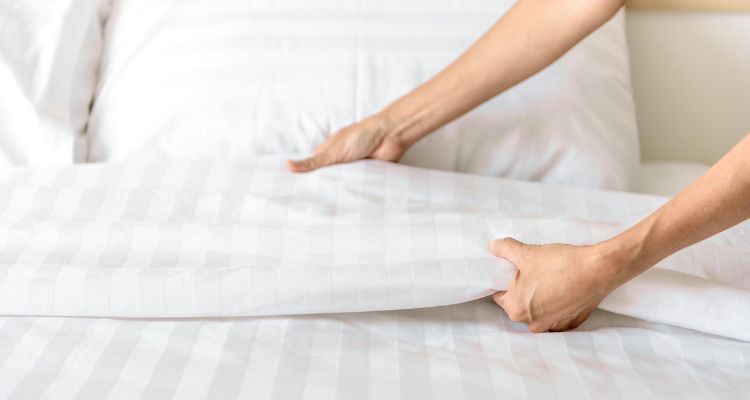
Taking care of your bed in one go might be easier than making it in chunks. Changing pillowcases and bed sheets on different days will make the chore even more tiresome.
Men keep their bed sheets for 10 days more than women. While single men don't change their sheets for 5 to 6 weeks. After having sex, women take around 5 days to change their sheets, while men can wait for 12 days before they start considering swapping in new sheets (also check the top rated bed sheets for sex).
After knowing all that, you can imagine what happens to your sheets during all this time. But if you're still not clear, take a look at the following points;
Sweat & dirt build-up
This one's pretty obvious because, with regular use, body fluids ruin our bed sheets. Hot sleepers are more prone to night sweats, and dirt will always be there in any household, no matter how tightly packed you keep your bedroom.
Of course, if you have windows in your bedroom, more dirt will accumulate on your bed sheets and pillowcases. Apart from that, when you have a fun time with your partner in your bed, your body fluids remain on your bed sheet. If you don't change your sheet, it will dry up and cause bacteria to develop.
Some people prefer to eat in their beds. So, those food crumbs can also stay on your bed sheet even if you try to get rid of them.
Moreover, your dead skin cells and hair shed over time. These are the reason why bacteria begin to develop on your sheets. They have the perfect habitat to grow and multiply fast. They have all the means to do so on your bed sheets if you don't change them regularly.
Inconvenient illnesses
With all these bacteria lurking around your sleep surface, you will deal with inconvenient illnesses over time. These can range from a wide range of skin conditions to some even more severe.
With the development and growth of bacteria and fungus, there is a danger that they might enter your body from any sores, open cuts, or breaks within your skin.
There is a fungus that causes an athlete's foot. This fungus spreads if you place your foot with this condition on a surface that has this fungus and bacteria. Therefore, if your partner has this condition, you might get it too due to the bed you both share.
It worsens as there is a danger of transmission of ringworm, toenail fungus, jock itch, and yeast infection in different skin crevices. So, things can get pretty serious in no time.
Acne flare-ups
You come back from a tiresome day, want to rest on your heavenly bed, and don't want to wash your face, leaving your mascara and foundation still on. Not a good move!
You muster up your courage and go to the bathroom to clean your makeup. Particles of this makeup can get into your pillowcases and begin accumulating bacteria that will return to your face. As a result, you will have to deal with black and whiteheads, or your zits will worsen if you have any.
If you don't wear makeup, you will still deposit skin oils that linger on your pillowcases and sheets and cause infections. Make sure you scrub before bed and change those pillowcases frequently.
Your bed turns into a bacteria rave
Each time you lie on your bed at night, you transfer germs from your body to your pillowcases and sheets. With longer breaks between washes, more and more bacteria will develop and grow.
A mattress company conducted a study where volunteers had to swab their dirty bedding for 4 weeks. After that, these dirty bed sheets were examined by scientists.
The results showed that within just one week, those sheets accumulated over 5 million bacteria colony-forming units or CFUs. This is more than 24,000 times the CFUs found on an average bathroom doorknob.
After 4 weeks, this total number goes up to 11 million CFUs. In other words, your bed sheets have 39 times more germs than an average pet food bowl and five times more than a toothbrush holder.
Gram-negative rods are the most commonly isolated bacteria on these dirty sheets. These can cause antibiotic-resistant infections and pneumonia. Bacilli is another bacteria found on these dirty bed sheets, which can cause food poisoning. You need to think twice before you eat in your bed.
Tiny critters are in your bed with you.
If you tend to gross out easily, it's time to brace yourself. You don't go to sleep alone on your bed. We are not talking about you sharing your bed with your partner.
There are tiny dust mites with you on your bed. These tiny microscopic creatures hang out in sheets and mattresses and prefer to live wherever dust gathers.
These mites can trigger asthma and allergies, and this is especially the case during the humid summer months. But the worst part is that humans are allergic to the poop of these mites.
So, regularly cleaning your sheets and pillowcases is important. You can purchase mattress covers that keep these mites at bay.
You might end up in a hospital.
In the worst-case scenario, you can end up in a hospital, but it's a long shot. One of the bacteria that accumulate in these bed sheets is staph or staphylococcus aureus.
These bacteria prefer to live in moist but warm areas of our body, and in most cases, it doesn't harm. But if it enters our bloodstream from a sore or a cut, that becomes an entirely different story.
The infections caused by this bacteria if it enters our bloodstream range from skin boils urinary tract infections, eye stye, MRSA, cellulitis, antibiotic-resistant infection, and others. So, things can get bad to worse pretty fast.
How Often Do Most People Change Their Sheets?
As we have discussed earlier, average Americans change their bed sheets every 24 days. Most of them change their bed sheets once every three weeks.
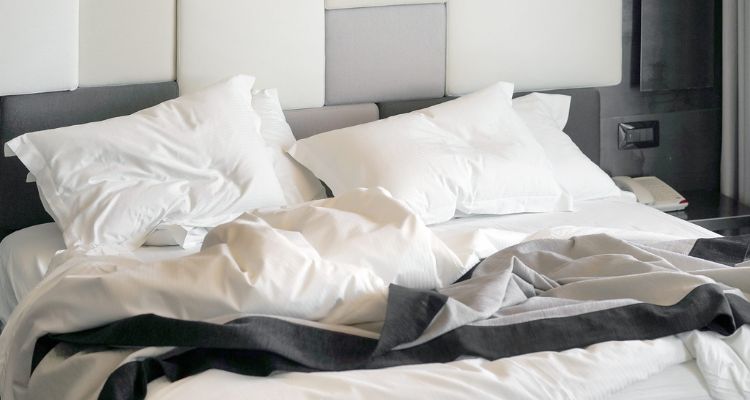
Men tend to be much lazier when it comes to changing their sheets as compared to women. While youngsters and singles are even lazier.
It is important to change these sheets every week. Using clean sheets will keep you safe from many health issues that are just sickening.
If you share your bed with your partner, you must change your bed sheets each time after sex. It is important because even if you keep your sheets clean but don't change them, your body fluids will ruin everything.
Body oils, sweat, hair, dead skin cells, and food crumbs (if you eat your food in bed) can all source food for bacteria and fungi.
Our bed is a warm and dark place where they can grow and multiply. Therefore, you need to change your sheets more frequently.
Can You Get a UTI from Bed Sheets?
Yes, you can get UTI from these dirty bed sheets. Staph bacteria or staphylococcus aureus bacteria cause urinary tract infections.
This bacteria is commonly available on human skin. So, if you have any cuts or sores on your skin, it's a passage for these bacteria to enter into your bloodstream.
It can cause various conditions, such as urinary tract infections, and many others, like pneumonia, antibiotic-resistant infections, etc.
Therefore, you must be very careful and frequently change your bed sheets. This becomes even more important for people who share their beds.
Upgrade: Full Saatva Mattress Collection
| Saatva Classic | $1,395+ | Shop |
| Saatva Contour5 | $1,595+ | Shop |
| Saatva Zenhaven | $1,895+ | Shop |
How Often Do Married Couples Change Their Sheets?
Married couples change their bed sheets slightly earlier than the average American, but the number here is not great either. It's more or less the same as married couples who change their bed sheets every 20 days.
They are more prone to the conditions that we discussed earlier. As they share their bed, they are more prone to these infections due to their lifestyle and their references in the bed.
Body oils, sweat, hair, dead skin cells, and food crumbs can be the source of the growth of bacterial colonies in their bed if they don't frequently change their sheets.
What Happens If You Don't Change Your Sheets: The Gross Truth
The average person sheds 1.5 grams of dead skin cells per day, sweats up to 200 ml per night, and transfers oils, bacteria, and other biological materials onto their sheets every night. Here is what accumulates.
Week-by-Week Buildup
| Timeframe | What's Accumulating |
|---|---|
| 1 week | Sweat, body oils, skin cells. Dust mites begin colonizing. |
| 2 weeks | Bacterial colonies established. Acne-causing bacteria thriving. Dust mite population growing. |
| 3–4 weeks | Significant dust mite population (100,000–10 million per mattress). Mite feces trigger allergy symptoms. Fungal growth possible. |
| 1+ month | Biofilm on sheets. Potential skin infections. Worsened allergies. Odor. |
How Often to Change Sheets
- Recommended: Every 7 days (weekly)
- Acceptable: Every 10–14 days
- Minimum: Every 2 weeks (beyond this, health risks increase)
- Special cases: Every 3–4 days if you have allergies, acne, or illness
Washing Tips
Wash in hot water (130°F+) to kill dust mites and bacteria. Use a hypoallergenic detergent if you have sensitive skin. Dry on high heat for at least 20 minutes.
Sheet guides: sheet lifespan | material comparison | mattress protector guide.
Try Saatva risk-free →