
 by
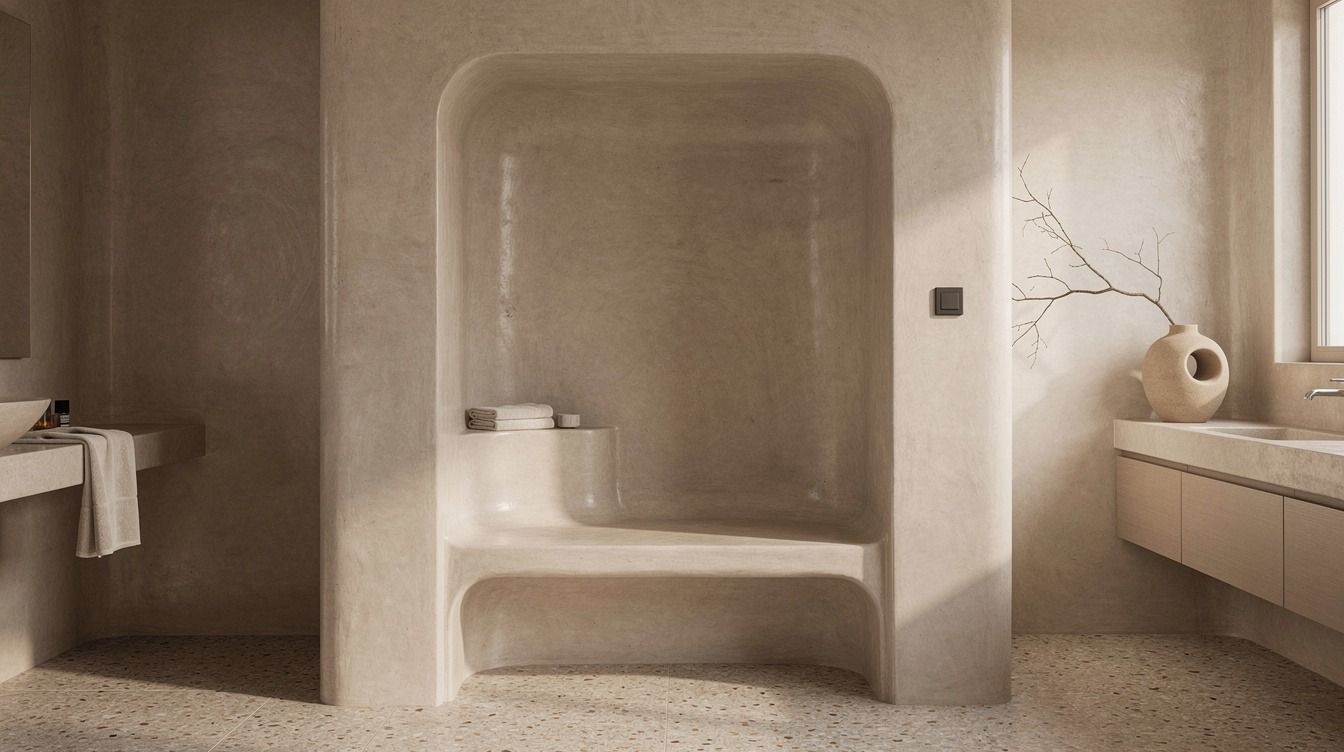
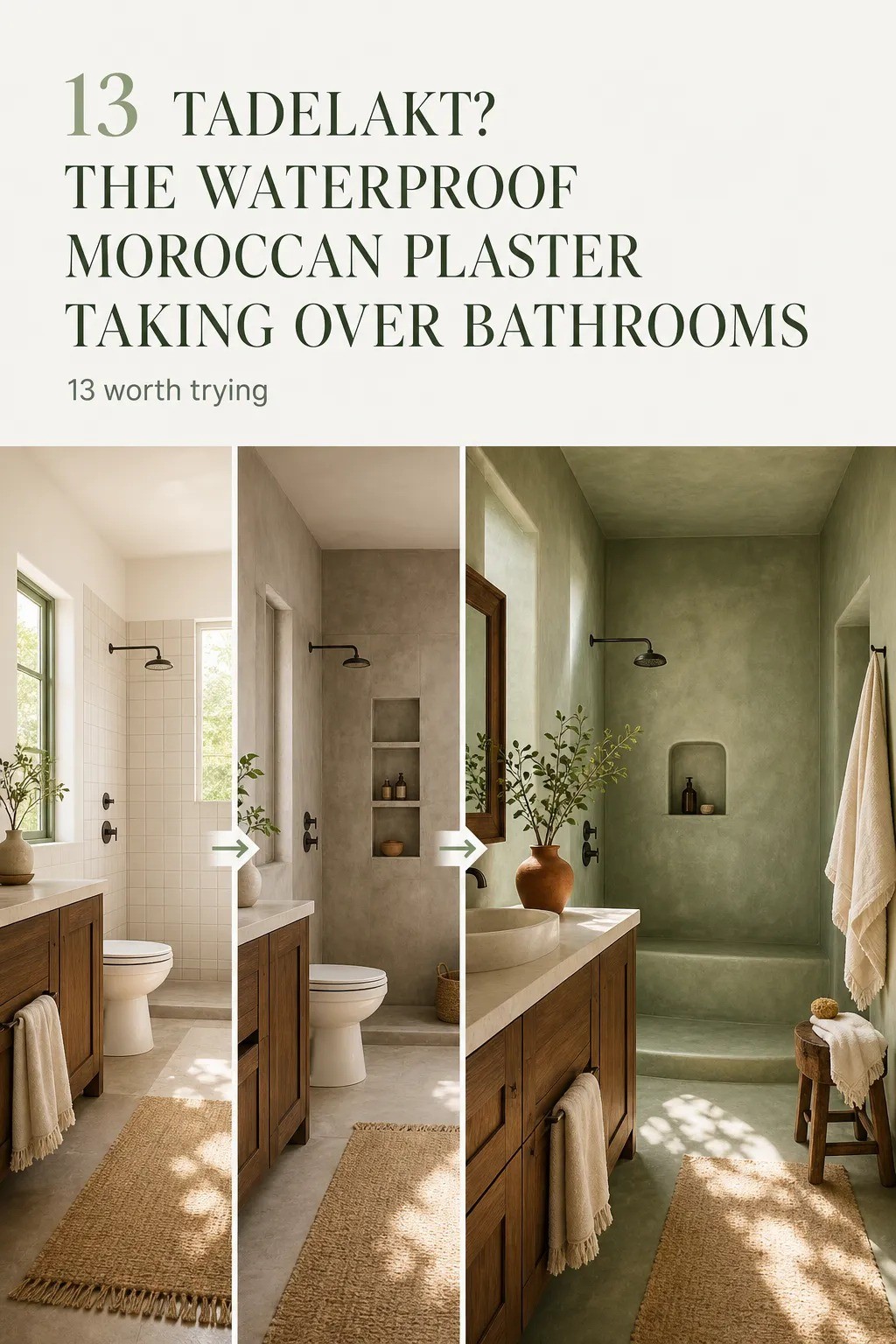
by Tadelakt is a waterproof lime plaster that gives bathrooms a warmer, quieter finish than tile, and that is why designers keep pulling it into showers, vanity walls, and tub surrounds. I wrote it off once because I assumed it was fussy, fragile, and wildly expensive. I was wrong. Once you understand where it works, what it costs, and how the finish behaves in wet zones, it is one of the lowest-clutter looks you can give your bathroom.
- Wrap the shower walls in seamless tadelakt (The Quiet Envelope Rule)
- Curve a tadelakt niche into the wet wall (Would you miss the tile line?)
- Tint tadelakt vanity walls with warm sand
- Pair lime plaster with unlacquered brass fixtures (The Patina Pairing)
- Run tadelakt behind a floating stone sink
- Polish the bathtub surround to a soft sheen
- Seal a walk-in shower with Moroccan plaster (What does the honest cost look like?)
- Frame the mirror with a plastered arch (The Soft Portal Effect)
- Blend tadelakt walls into a built-in bench (The One-Surface Move)
- Contrast creamy plaster with zellige floor tile (Cream over glaze)
- Coat a half wall for splashproof texture
- Shape a rounded tadelakt shower threshold (The Barefoot Curve Rule)
- Layer clay-toned plaster around matte black taps
1Wrap the shower walls in seamless tadelakt (The Quiet Envelope Rule)
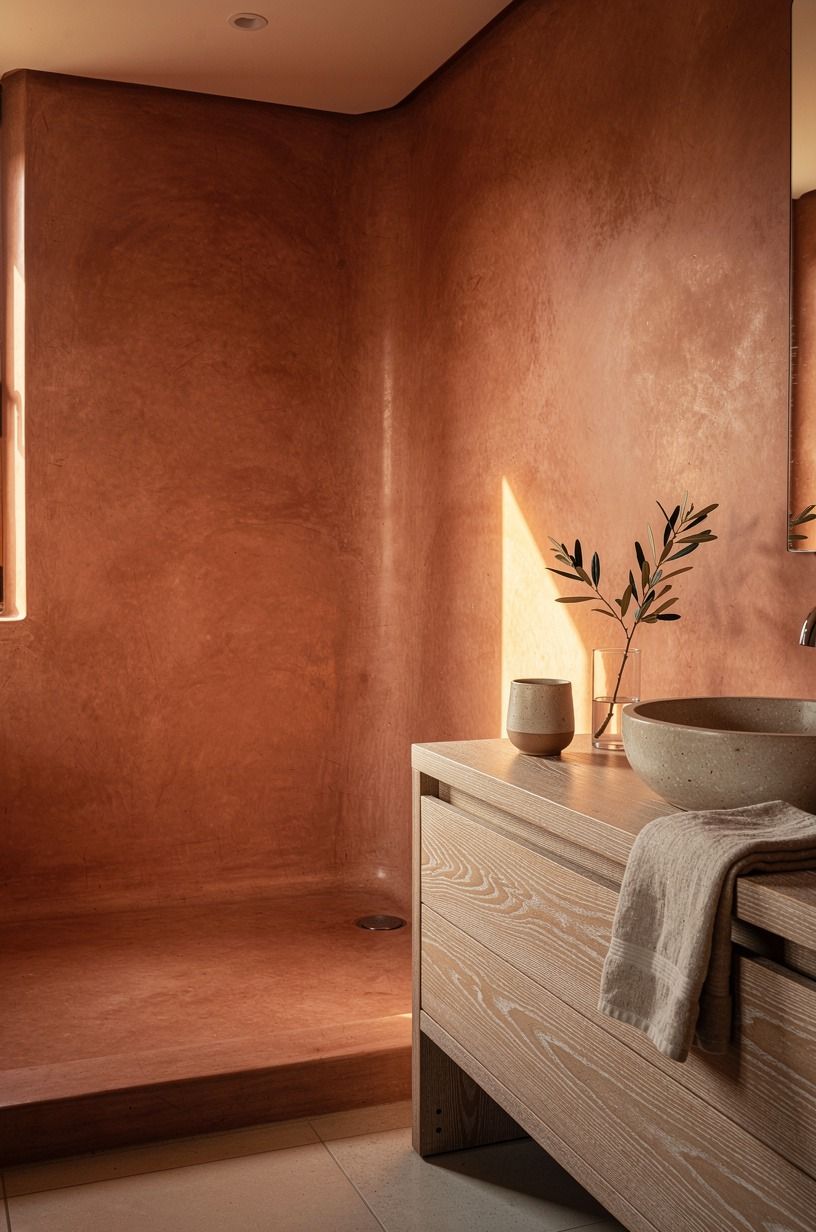
If you want a tadelakt plaster bathroom to feel expensive fast, wrap the whole shower instead of stopping at one accent strip. The reason is visual before it's practical: your eye does not keep tripping over grout lines, so the room reads calmer the second you walk in. In a small bath, that matters more than another fancy faucet ever will.
The terracotta finish in the photo works because the plaster reaches wall to wall around a cerused white oak vanity, which gives you warmth without turning orange. I would keep the vanity at about 32 to 36 in high so the stone basin still feels airy under all that clay tone.
And yes, you want the plaster to stay matte rather than glossy. Too much shine makes the room look staged instead of lived in.
If you're planning a tub nearby, the same low-clutter idea helps when you style the ledge and tray too. I like keeping that edit as spare as our bathtub tray styling guide because tadelakt already does a lot of the visual work.
Less on the surface. More room for the walls to breathe.
A simple teak tray does the work without ever crowding the view.
One more thing. Ask your installer how the waterproof soap finish will be maintained after year one, because the pretty part of seamless plaster is only worth it if you will keep up with the sealing rhythm. That upkeep question matters more than another pretty sample board!
2Curve a tadelakt niche into the wet wall (Would you miss the tile line?)
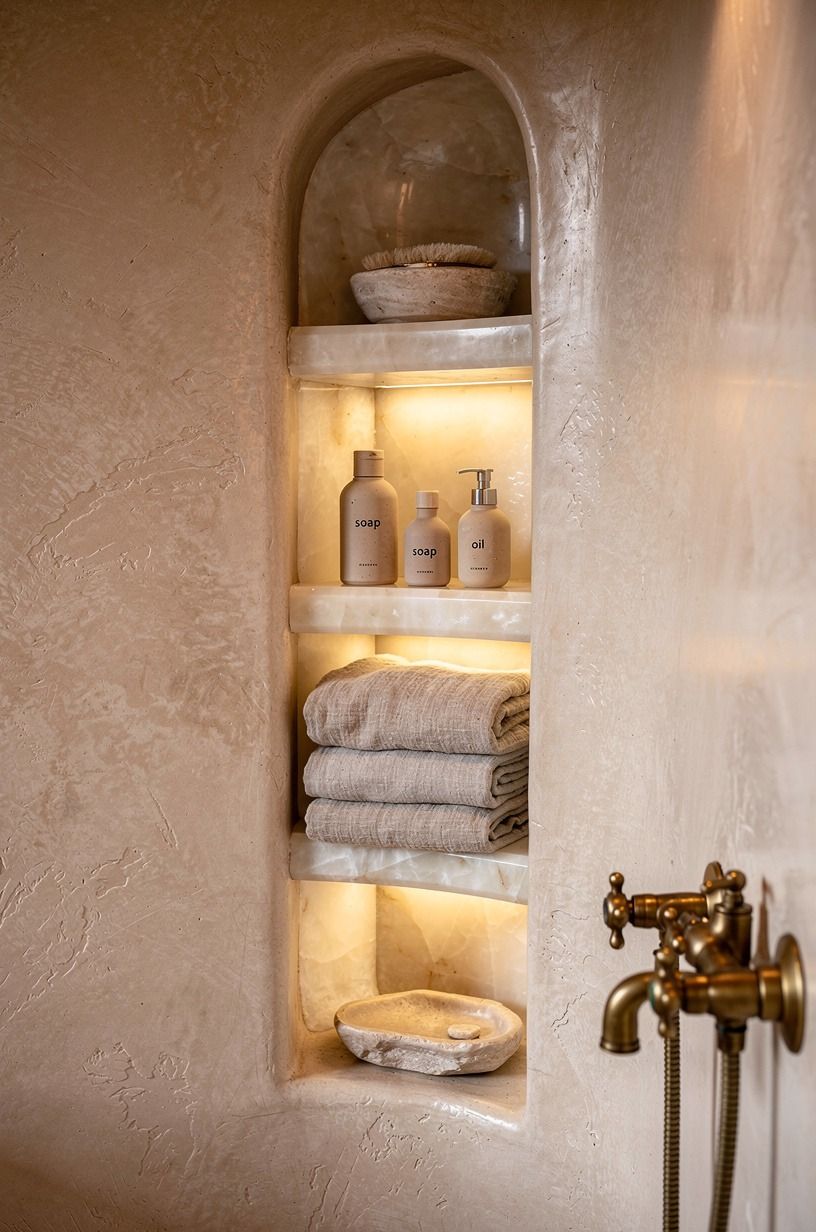
A curved niche is where plaster walls bathroom ideas start looking custom instead of copied from a showroom.
3Tint tadelakt vanity walls with warm sand
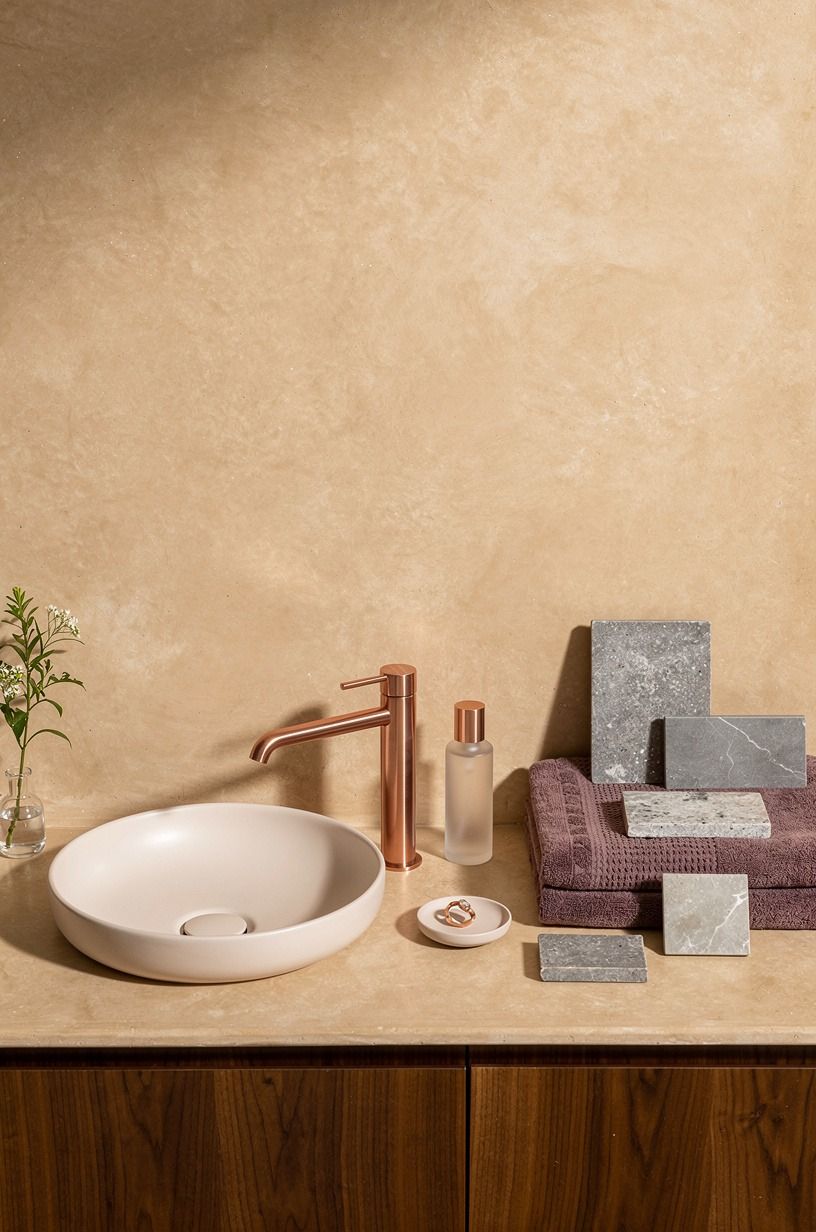
Warm sand is the safest way into plaster bathrooms if pure white feels flat but terracotta feels like too much commitment. It gives you color, but it behaves like a neutral. That's why it works so well around a vanity zone where you already have mirrors, metal, and countertop clutter competing for attention.
The overhead shot matters. You can see how the sandy plaster gives breathing room to a book-matched walnut vanity pushed to one edge, while the copper bowl, plum towel, and stone samples stay readable instead of noisy. If your vanity top is busy, keep the wall color quieter.
If your counter is plain, sand plaster can carry more of the mood.
I like grounding a layout like this with one named paint reference before the plaster goes in. Benjamin Moore Chestertown Buff HC-9 is a good checkpoint if you're trying to explain the warmth level to a contractor or designer. It's not the finish, but it's close enough to stop you from drifting into yellow.
Scale matters too, and if you're bad at visualizing width, even a random sizing explainer like this Full XL breakdown can remind you how much a few inches change circulation.
But don't crowd the vanity wall with framed art. A sand-toned plaster surface is already the art if the light hits it right.
4Pair lime plaster with unlacquered brass fixtures (The Patina Pairing)
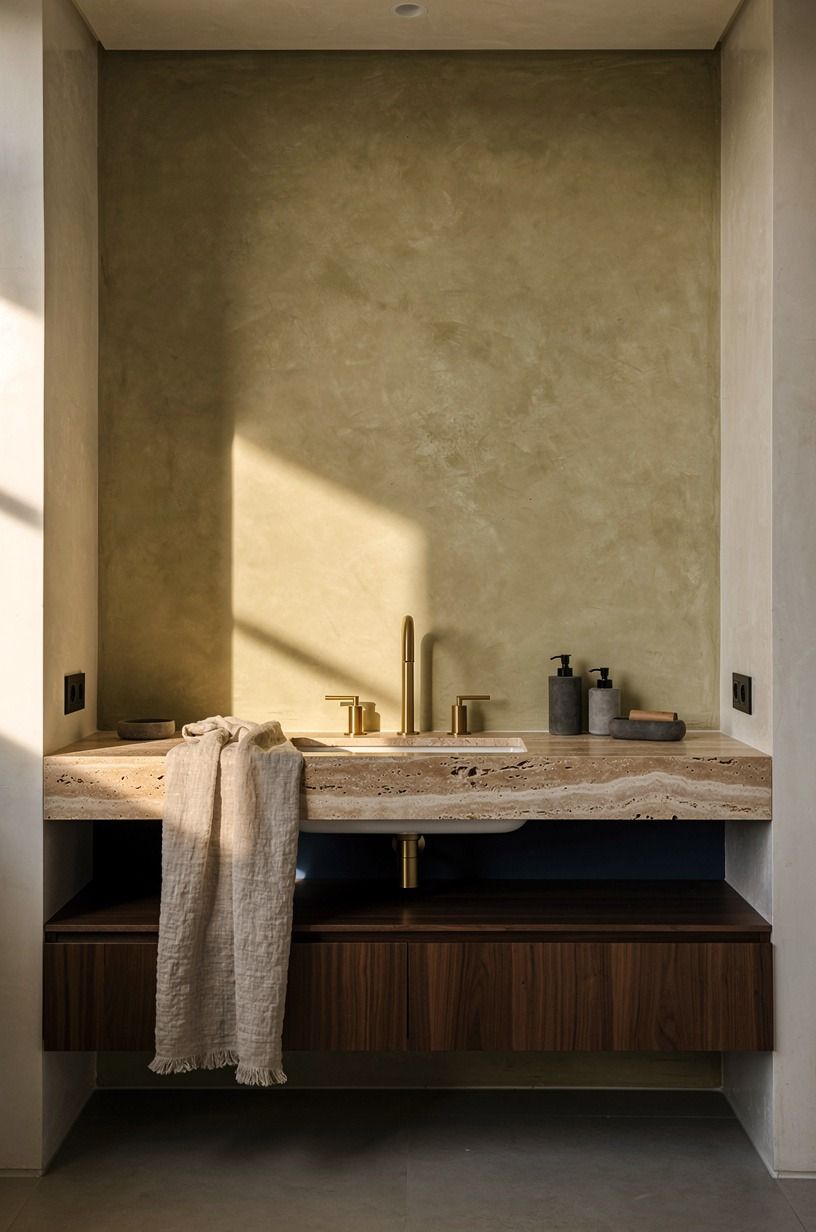
This is the combination designers keep stealing because it gets better as it ages. Lime plaster has that soft, chalky depth.
Unlacquered brass starts bright, then settles into a darker, smokier finish with use. Put them together and the bathroom stops feeling pristine in the boring sense and starts feeling collected.
The photo nails it with unlacquered brass fittings set inside pale plaster, warm travertine ledges, walnut storage, and that balanced front-on view that makes the room feel almost ceremonial. I would keep the metal warm here, not black, because black taps plus pale plaster can read trendy first and timeless second. Brass softens the whole thing.
Want the room to feel more hotel than spa? Borrow restraint, not sparkle.
That's why I like pairing this scheme with thick towels and the quiet, high-comfort cues in our Marriott pillow guide. Different room, same lesson: texture wins over decoration every single time!
For paint-adjacent references, Sherwin-Williams Sea Salt SW 6204 can help in neighboring drywall areas if your bath opens into a lighter dressing zone. I would avoid cool gray beside this finish.
It kills the warmth that makes brass worth choosing in the first place. West Elm does a quiet unlacquered brass mirror frame that pairs well with this palette, around $249.
5Run tadelakt behind a floating stone sink
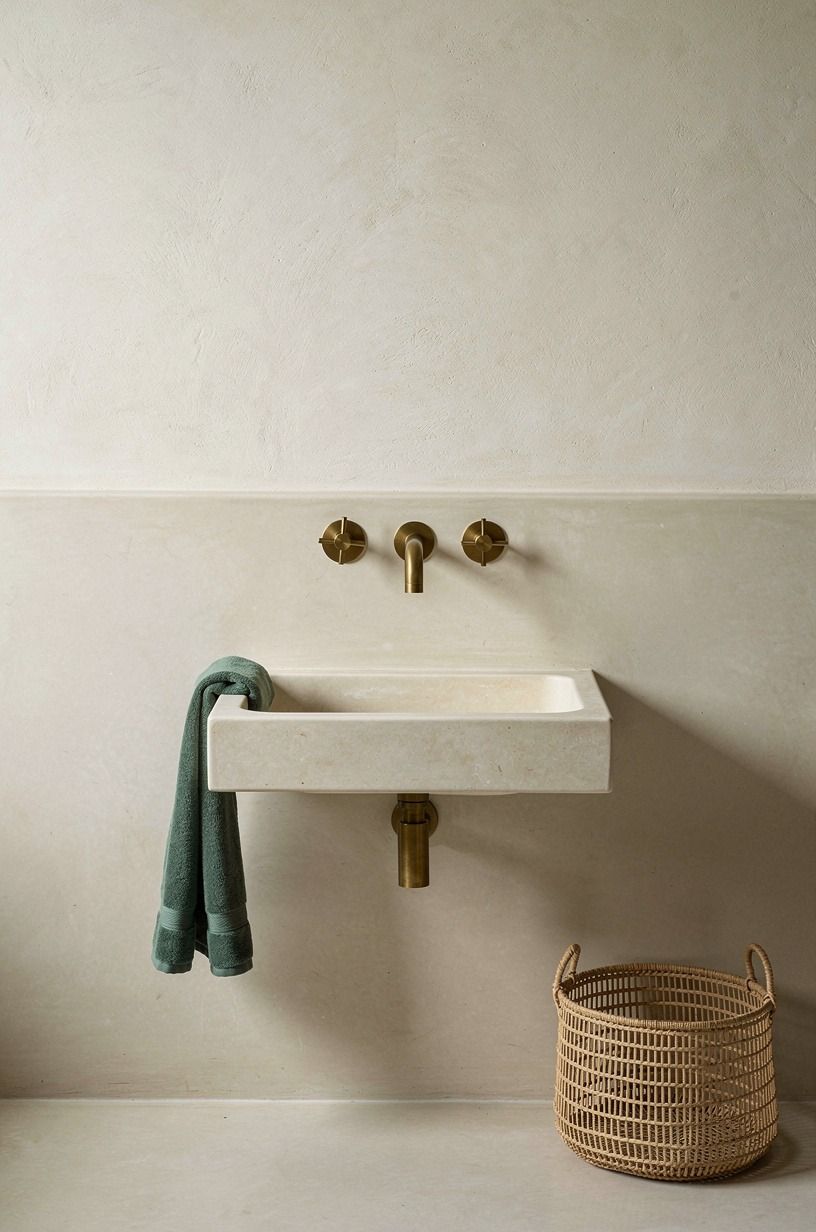
A floating sink only looks special if the wall behind it stays clean and deliberate. That is why creamy plaster works so hard here. It gives the stone basin a soft backdrop without chopping the composition into tile lines, trim, and backsplash rules you didn't need in the first place.
In the image, the negative space is everything. The small centered sink, the pale wall, the cream stone basin, the brushed patina on the taps, even the woven seagrass basket off to the side all feel calmer because the background is not busy. If your vanity run is short, this move can make a narrow bath feel wider than it is.
A quiet CB2 marble tray tucks the look together at around $79.
If you are styling the room for long soaks and slower evenings, repeat that softness elsewhere instead of adding contrast for the sake of it. A restrained tray setup from our bathtub styling ideas plays better with creamy plaster than a stack of black accessories ever will.
I learned that after trying to "sharpen" a similar space once. It just looked harder, not better.
Would I add a backsplash ledge? Only if you truly need it. The floating sink reads lighter when the plaster runs straight through behind it.
IKEA's simple HEMNES oak vanity is a quiet floating option around $249 if you're building on a real budget.
6Polish the bathtub surround to a soft sheen
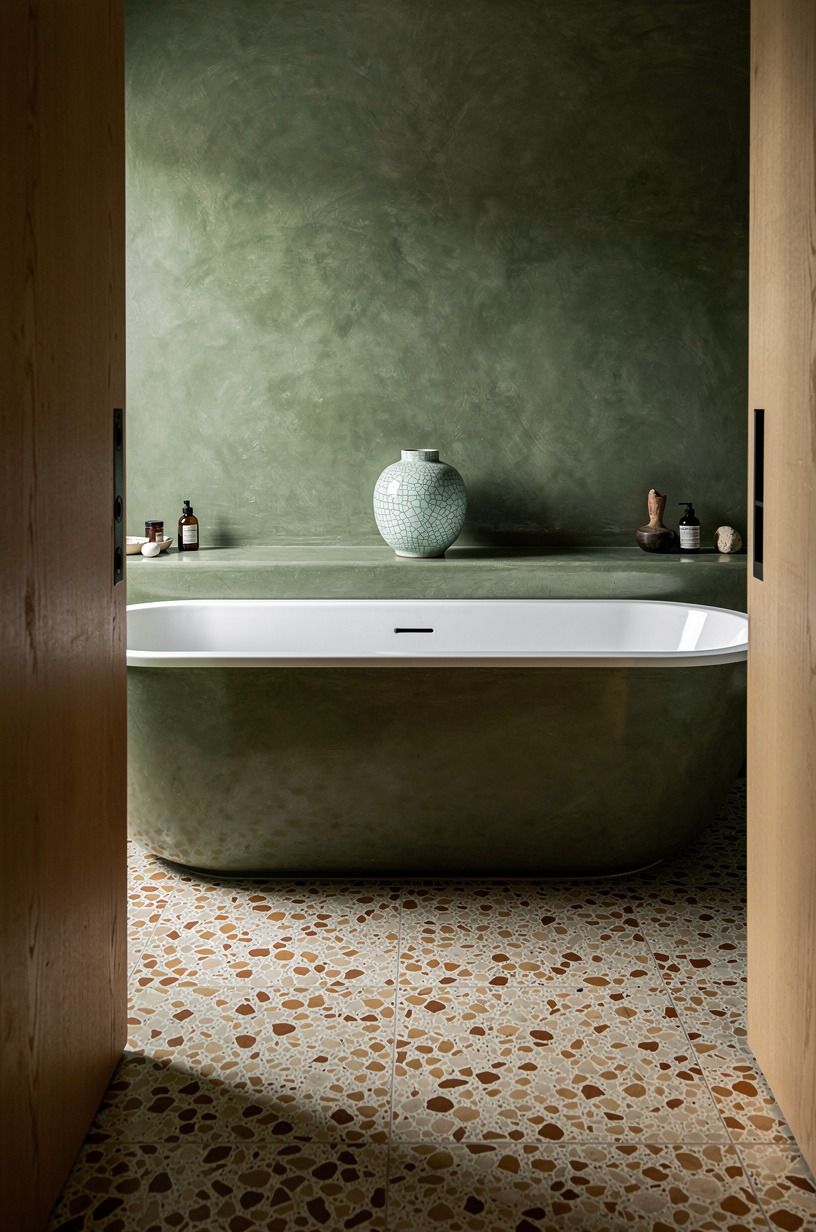
This is where tadelakt earns its reputation. Around a tub, a slight sheen looks rich, stays wipeable, and catches low light in a way flat paint never will.
Not glossy. Not mirror-like.
Just enough polish that water beads up and the wall still feels hand-finished.
The view through the doorway in the photo is smart because it shows how the oversized-chip terrazzo floor, forest green accents, rust notes, and natural oak all benefit from that soft reflection. On a standard 60x30 in tub, the surround has enough surface area to matter, so the finish needs to do more than sit there. It should bounce a little light back into the room.
I love a polished surround with one practical styling layer only. A folded towel, a ceramic vessel, maybe one branch.
If you need more ideas for the ledge itself, our bathtub tray piece lands the edit better than any product roundup ever could. Too many bath accessories and the sheen gets lost.
But don't confuse shine with safety. Ask for samples in wet light before you commit, because a finish that glows at noon can feel strangely slick-looking by lamp light.
7Seal a walk-in shower with Moroccan plaster (What does the honest cost look like?)
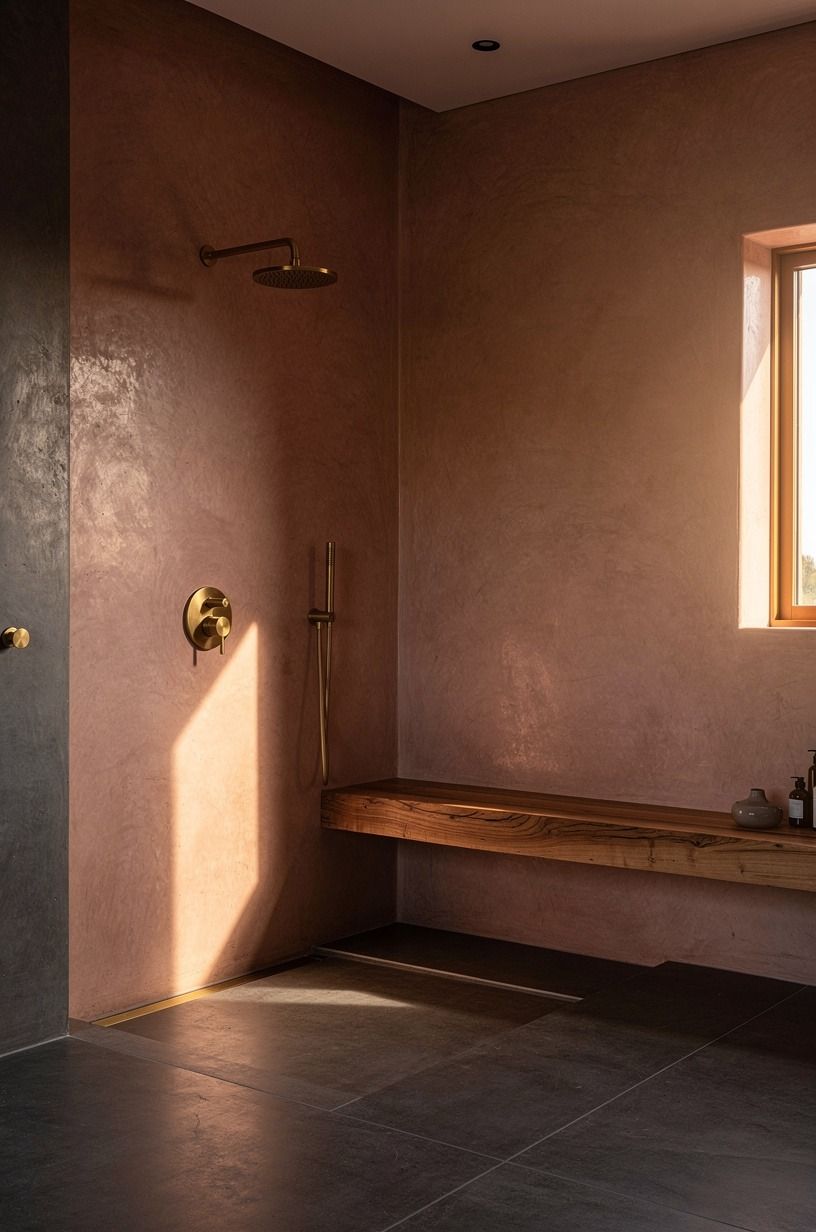
A walk-in shower is the place where people either fall in love with tadelakt or back away from it. The appeal is obvious: fewer grout joints, a cocooning look, and a finish that can run corner to corner without visual stops.
The part nobody respects enough is labor. This isn't quick weekend paint.
The wide perspective in the photo works because the plaster stretches across the room with hand-applied Venetian plaster texture, a pale oak bench, and brass details that don't break the line of sight. If your shower is the comfortable minimum of 36x36 in, seamless plaster already buys you visual space. In a larger walk-in, it turns the shower into architecture.
Here are the typical US numbers you should keep in your head before you start asking for bids:
And yes, you should compare those numbers against your whole-room priorities before falling for the finish alone. I use the same decision-first habit from our what to ask before buying guide because a beautiful shower isn't cheap if the rest of the room still looks tired around it. Farrow & Ball's color card is also worth borrowing before you commit to the plaster tone.
8Frame the mirror with a plastered arch (The Soft Portal Effect)
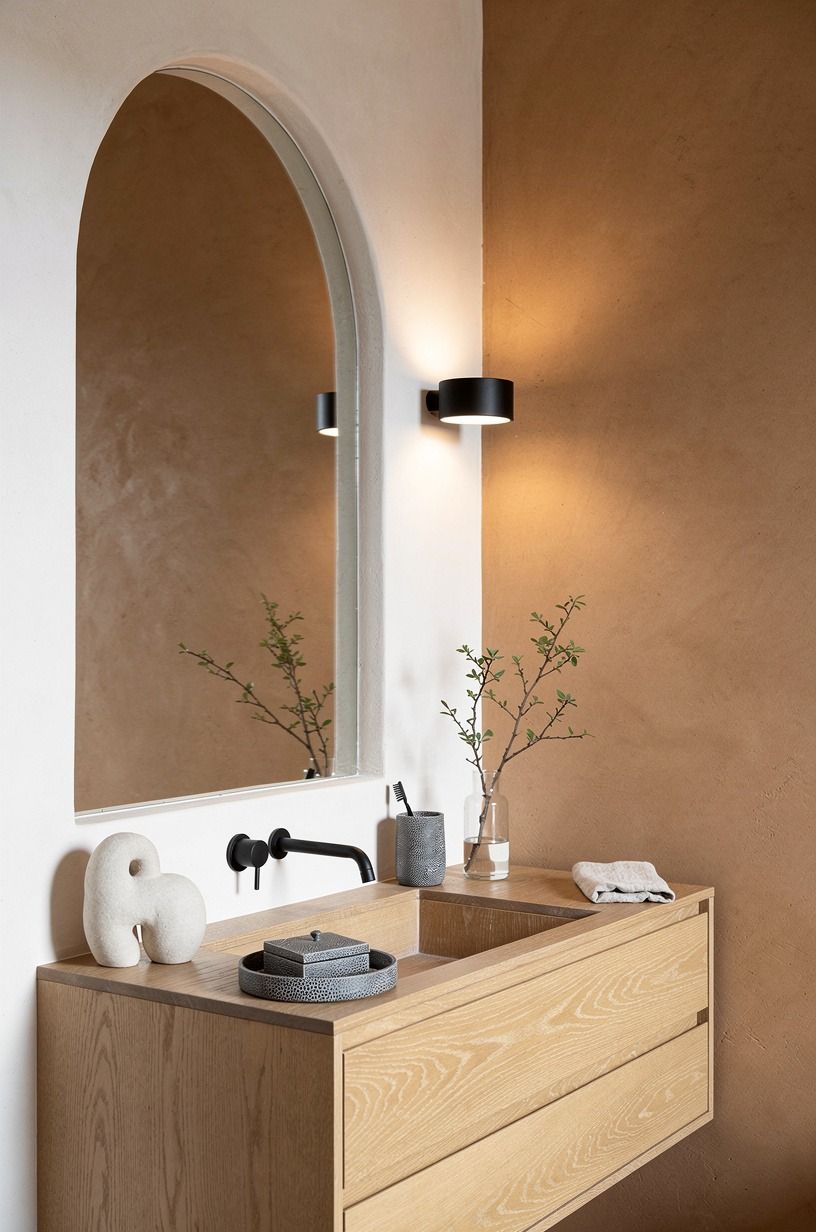
If your vanity wall feels boxy, an arch is the fastest way to make a plaster bathroom feel more tailored. Not theme-y.
Not faux Mediterranean. Just softer. The move is keeping the curve broad enough that it frames the mirror without looking like a tiny decorative appliqué glued onto drywall.
The image gets it right with warm white plaster, a camel-toned wall, black accents, and that open composition around the wire-brushed oak vanity. Because the arch sits off to one side in the shot, you can also see how much breathing room it needs. I'd keep the surrounding surface simple and let the arch carry the shape story on its own.
You can think about it the same way you think about visual thickness in furniture: too skinny and it disappears, too heavy and it eats the room. That proportion lesson is why even a strange comparison like our standard thickness explainer makes sense to me here. Presence comes from the right depth, not from adding more details.
And if you're torn between an arched mirror and a plastered arch, I would choose the plastered arch first. The wall shape feels rarer, and rare is what makes the room memorable. A CB2 round mirror in unlacquered brass sits well inside the curve if you want a second material to do the talking.
9Blend tadelakt walls into a built-in bench (The One-Surface Move)
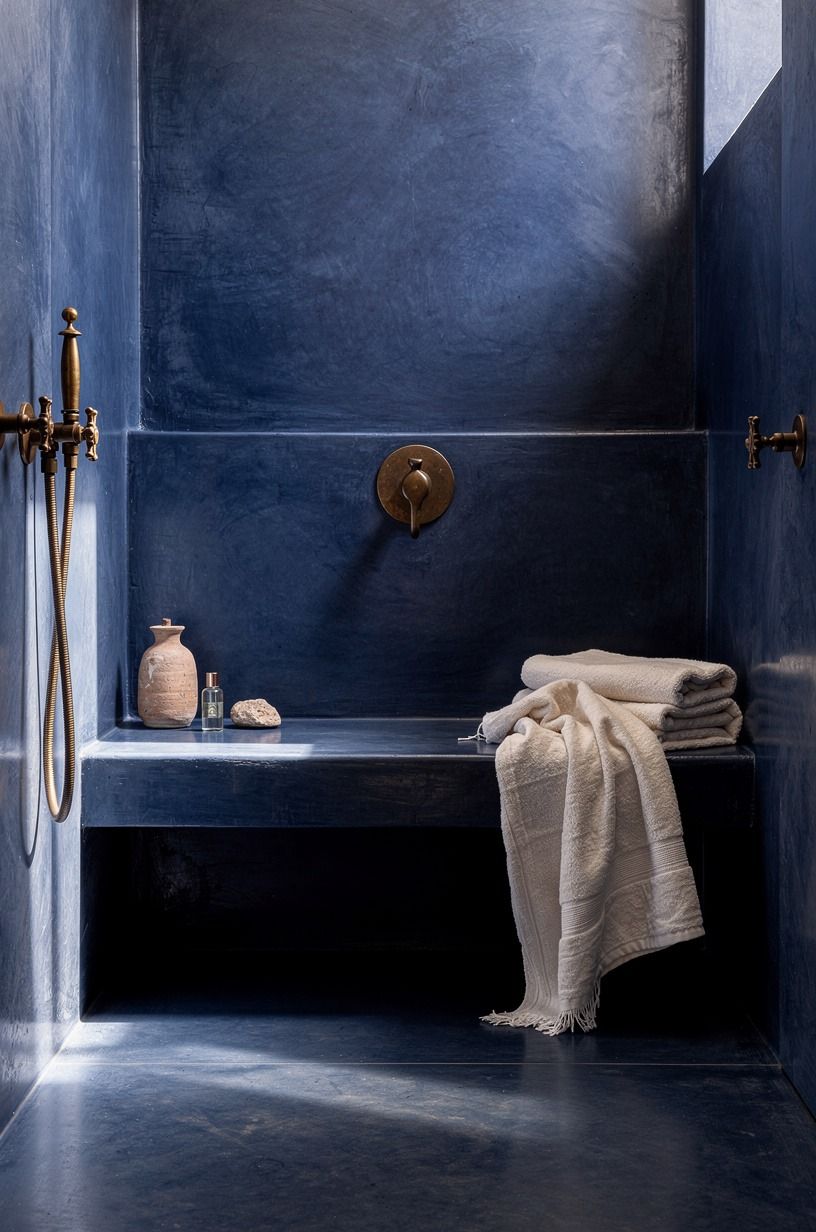
A built-in bench is where lime plaster shower ideas start feeling quietly luxurious instead of purely practical. When the bench and wall share the same finish, the whole shower reads as one carved volume. That's a much better mood than bolting on a teak seat that always looks slightly temporary.
This photo leans into that with midnight blue plaster, copper fittings, ivory towels, and a low symmetrical angle that makes the bench feel grounded. I'd keep the bench line thick and plain. No scallops.
No trim. Let the color and the surface do the heavy lifting while the washed linen and aged bronze bring in the softer contrast.
And yes, a bench changes how long you stay in a shower. That's partly why hotel bathrooms feel indulgent in the first place, along with the comfort logic in our Marriott pillow notes. Same principle: if the room invites you to linger, it feels better finished.
If I had to warn you off one thing, it would be mixing this move with a fussy mosaic niche. One strong gesture is enough.
The bench should feel built in, not accessorized. Benjamin Moore Midnight Oil 1632 is the closest paint stand-in if you're testing the deep blue before committing to real tadelakt.
10Contrast creamy plaster with zellige floor tile (Cream over glaze)
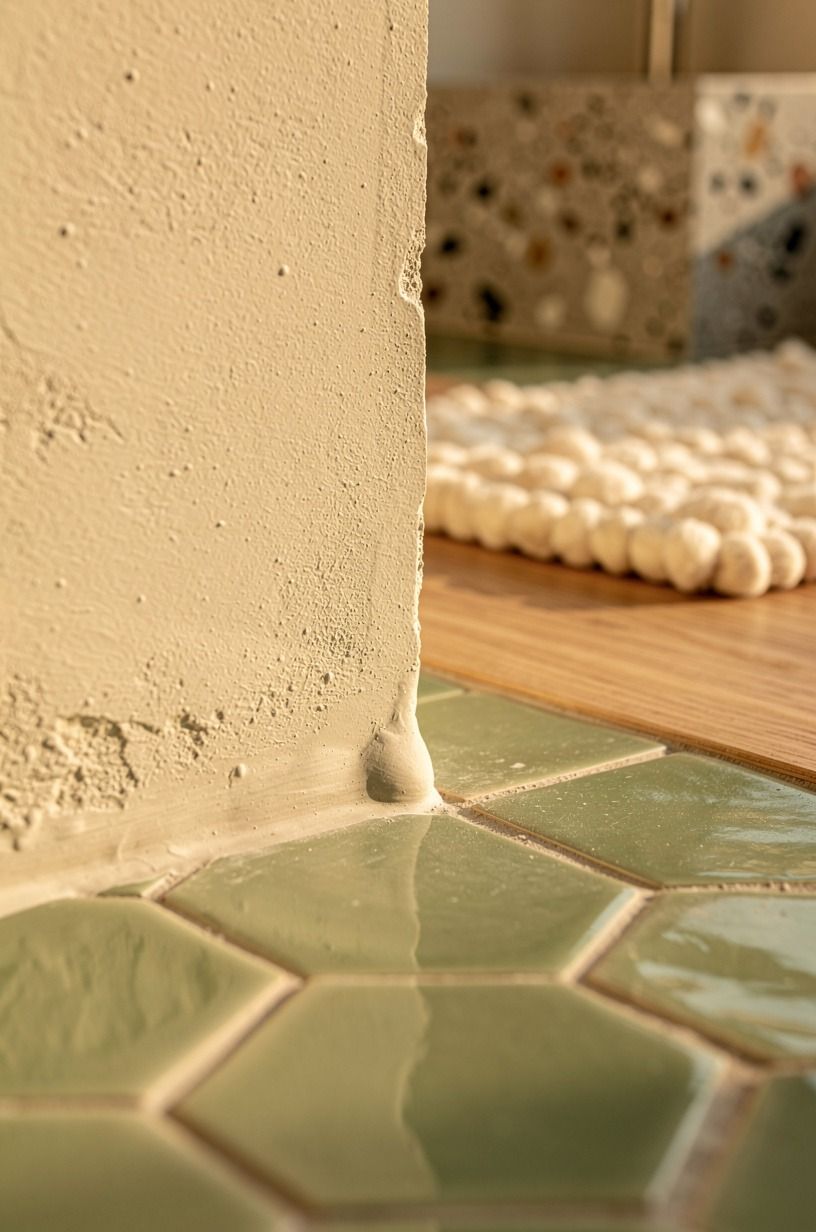
This pairing works because it lets two handmade surfaces do two different jobs. The plaster gives you softness and sweep.
The floor gives you flicker, grout rhythm, and that watery little shine zellige is good at. Put bluntly, creamy plaster on the wall needs a floor with some bite under it.
The close-up in the image shows exactly why sage zellige tile belongs here: the rounded edge of the plaster looks smoother next to a glazed, irregular surface, and the little sliver of wood keeps both from feeling too precious. I would rather spend $15 to $35 per sq ft on zellige in one compact bath than spread cheaper tile everywhere and lose the contrast.
You can use Farrow & Ball Hague Blue No. 30 nearby if you want a deeper powder room beyond the bath, but I would keep the wet zone itself on the creamy side. And when you're trying to picture how thickness changes feel underfoot, the logic isn't that far from the sizing clarity in our standard thickness guide. A little dimension changes comfort more than people expect.
But skip high-gloss wall tile beside this. The wall already has softness.
The floor is where the gleam should live. A West Elm chunky cerused oak stool pulls the look together without stealing focus.
11Coat a half wall for splashproof texture
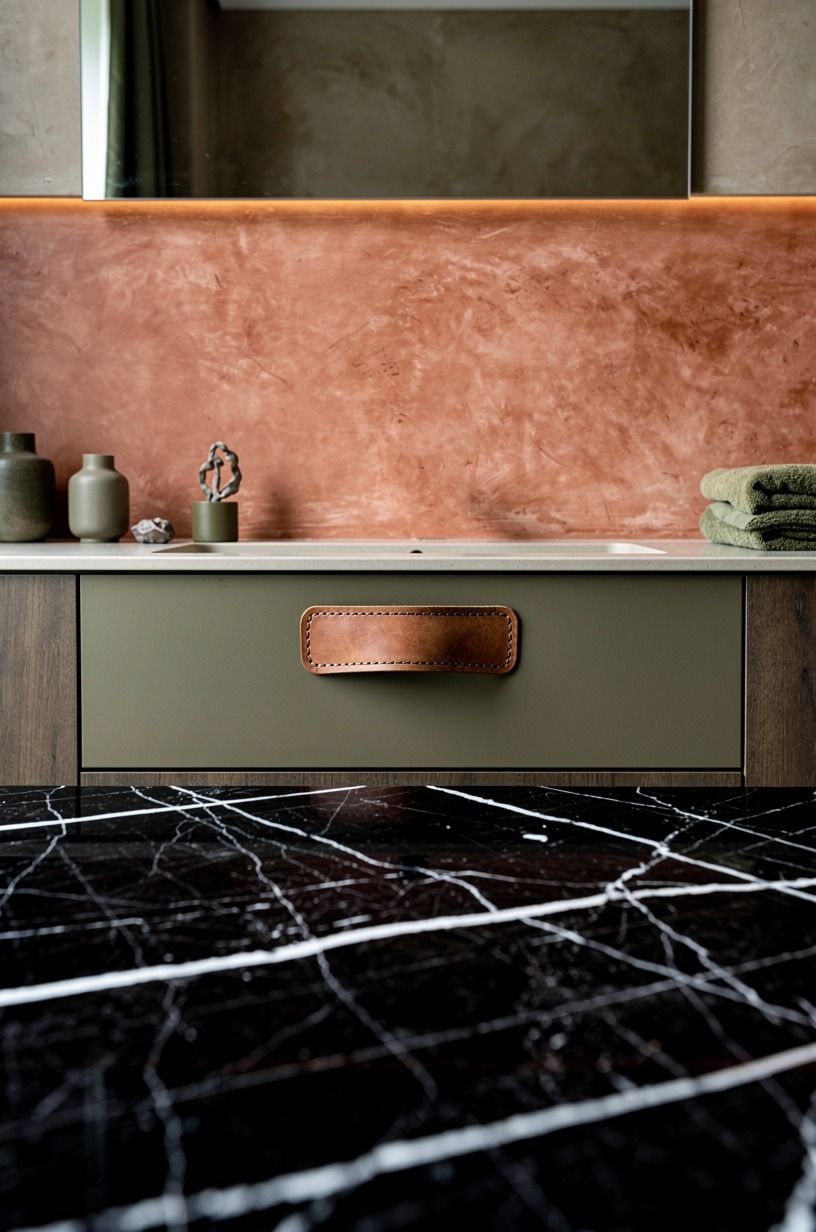
A half wall is the low-commitment version of a full tadelakt bathroom, and that's exactly why I like it.
12Shape a rounded tadelakt shower threshold (The Barefoot Curve Rule)
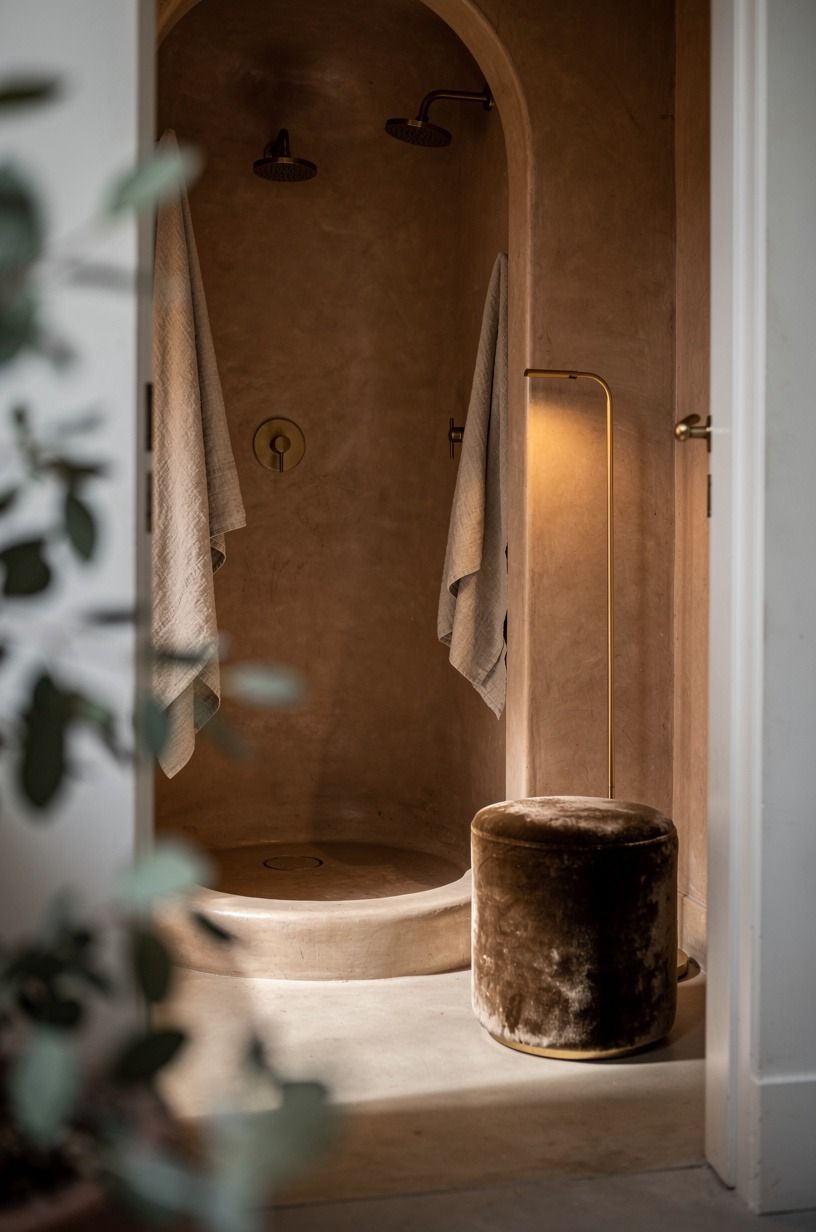
This might be my favorite detail in the whole article because you feel it before you even notice it. That tactile shift is the part people remember! A rounded threshold makes the shower entry look less chopped up, but more importantly, it feels gentler under bare feet.
Little things like that are what separate a pretty bathroom from one you love using every day.
The photo sells it through framing: leafy foliage, the doorway opening, soft negative space, and a threshold wrapped in deep-pile mohair velvet color echoes just outside the wet zone. Inside, the clay plaster, linen towels, and brass hardware keep the line warm rather than clinical. If you're going curbless, this kind of soft transition matters even more.
And if your room is tiny, think hard about entry width and turning space before you finalize the curve. I keep the 21 in front-clearance rule in mind around toilets and adjoining paths, because circulation failures ruin fancy finishes fast. My brain treats that kind of planning the same way it treats bunk sizing in this compact-space explainer: fit first, romance second.
I would skip a sharp marble threshold here. It would defeat the softness that makes this detail memorable in the first place. A muted honed travertine saddle in a similar tone can carry the curve if you need a contrasting material at the floor transition.
13Layer clay-toned plaster around matte black taps
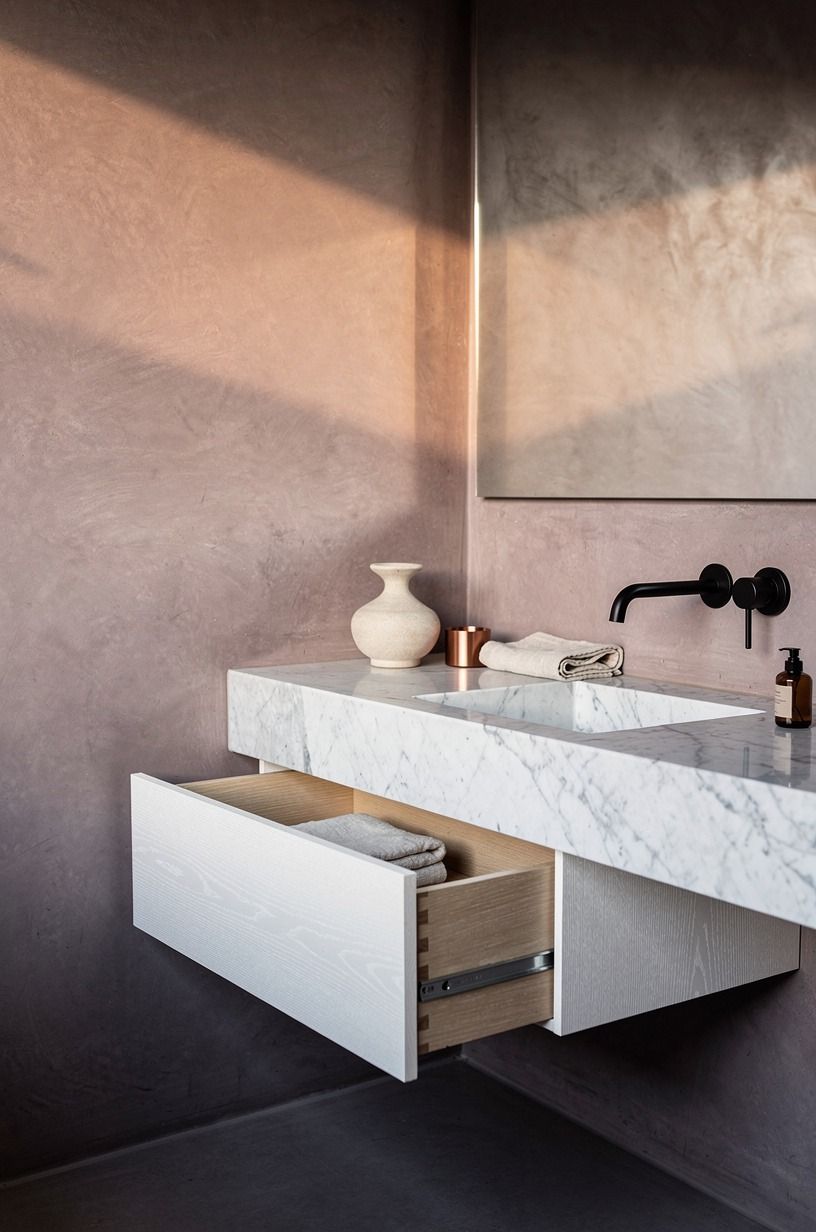
If brass is not your thing, this is the better route. Clay-toned plaster plus matte black taps gives you contrast without going cold, especially when the rest of the vanity stays warm.
The balance matters. Too much black and the room starts feeling graphic.
Too little and the taps look accidental.
The wide diagonal shot in the image gets the mix right with Carrara marble under the basin, rose-gold notes in the accessories, and a white oak drawer pulled to one edge so the plaster still dominates. I'd keep the wall tone muddy rather than peachy. A dry clay shade plays far better with black hardware than anything sugary.
You can also use this route if you're mixing old and new pieces in the same bath. Matte black is strict enough to sharpen the room, while the plaster keeps it from feeling sterile.
For the comfort side of the equation, I still think about the same layered restraint in our Marriott pillow article. Comfort isn't clutter.
It's editing.
But don't pair matte black taps with icy white drywall on the next wall. Carry a warm neutral through, or the hardware will feel pasted on instead of grounded. Sherwin-Williams Urbane Bronze SW 7048 in a soft matte finish on the adjoining wall gives black taps a quieter neighbor than stark white ever will.
Why Tadelakt Feels New Again Even Though It Isn't
I've gone back and forth on tadelakt because trend cycles make every old material sound newly invented, and that usually puts me on guard. This one is different.
Tadelakt is not winning because people suddenly discovered Morocco on Pinterest. It's winning because bathrooms got too hard for a while.
Too much glass. Too much white tile. Too many black fixtures lined up against cold walls like they were there to prove a point.
Once you live with that look, you start craving surfaces that mute the room instead of sharpening it.
What tadelakt gives you is not just waterproofing. It is visual mercy.
The corners soften. The light lands more gently. A vanity wall stops behaving like a backsplash and starts behaving like part of the room.
And because the finish is hand-troweled, you get movement without having to add a loud stone slab, a patterned floor, and six decorative objects fighting for attention. That's a big reason it's showing up in 2026 bathrooms that want to feel warm but not fake rustic.
I also think people are getting more honest about maintenance. Tile was sold as the no-brainer answer for years, but endless grout joints aren't exactly carefree, and neither is replacing dated tile once it locks a room into one era.
Tadelakt asks for informed installation and periodic care, yes, but it gives something back: fewer lines, less visual noise, and a finish that ages with you instead of looking worse every time a trend flips. Real talk, I'd rather maintain one beautiful surface than scrub fifty little grout channels.
A good Farrow & Ball color card beside a real tadelakt sample tells you more in ten minutes than a hundred magazine photos.
The part I'd be strict about is context. I wouldn't force tadelakt into every bathroom. If you love crisp pattern, heavy contrast, or a super glossy hotel look, tile may still be the better answer.
But if your goal is a bathroom that feels quieter at 7 a.m. and softer at 10 p.m., this material is hard to beat. That's why it's spreading.
Not because it's exotic. Because it solves a feeling problem most bathrooms still have.
What People Always Want to Know
What is the best tadelakt plaster bathroom approach for a small space?
A full shower wrap is the best pick for a small bathroom because fewer visual breaks make tight rooms feel wider. I would start with one floating vanity, one mirrored wall, and one warm plaster tone.
A slim IKEA GODMORGON-style silhouette helps the floor stay visible too, and a restrained bathtub tray styling guide helps you keep the rest of the room just as open. A small Belgian linen curtain over the window keeps the light soft without adding noise.
Where can I find tadelakt finishes on a budget?
You can build the look on a budget with smart sourcing, even if the plaster itself is the splurge. Try IKEA for simple mirrors, Target Threshold for towels, and Wayfair for basic sconces.
Then check Facebook Marketplace for stools, baskets, and stone-look accessories before buying new. A Benjamin Moore Pale Oak OC-20 tester pot helps you preview the warm undertone.
How much does a tadelakt bathroom makeover cost?
A bathroom refresh usually runs about $200 to $1,200 at the cosmetic end and much more for plumbing or tile work. Real tadelakt installation lands closer to $25 to $80 per sq ft depending on the artisan.
Free moves count too. Editing clutter, repainting adjacent drywall, and resealing what you own can change the room before any big invoice lands.
Can I create a tadelakt look without the real material?
Yes, and you don't need a full gut job to get close. Keep the vanity, swap the faucet for brushed brass or matte black, repaint nearby walls to match the plaster warmth, and restyle the tub edge with ideas from this bathtub tray guide. Microcement overlays in clay-toned finishes from a local West Elm-stocked showroom get close to the look for less.
Cheap changes first.
Is tadelakt worth it in a small space?
Yes, it is especially worth it in a small space because the seamless finish cuts visual clutter. Small rooms also let you spend on better workmanship over fewer square feet.
Keep the shower at or above 36x36 in if you can, and let the walls stay simple. Pair it with unlacquered brass and one Belgian flax linen curtain for a soft, finished read.
Is tadelakt a good idea for a rental?
Yes, if you treat it as inspiration rather than a mandate. In a rental, borrow the palette with removable linen curtains, peel-and-stick warmth on adjacent walls, no-drill shelving, and softer brass-toned accessories.
Save the real plaster for the place you own. A small CB2 stone tray and a Farrow & Ball sample pot go a long way toward testing the tone.
Where I'd Start First
If I had to pick one, I'd start with the full shower wrap. You cannot fake that quiet envelope with styling alone, and every other choice looks better once the walls stop chopping the room into pieces. Pin that move for later and keep the rest of the palette restrained.