
 by
by Saatva Classic — Scores High on All 7 Quality Markers
Why Most Mattress Shoppers Buy Wrong
The mattress industry has a transparency problem. Most buyers evaluate mattresses by price, comfort feel in a showroom, or brand name — none of which reliably predict quality. A mattress that feels plush in a showroom may sleep hot at home. A budget brand at $600 may feel fine for two years then sag dramatically. Understanding the actual quality markers helps you buy once.
Marker 1: Coil Type and Count
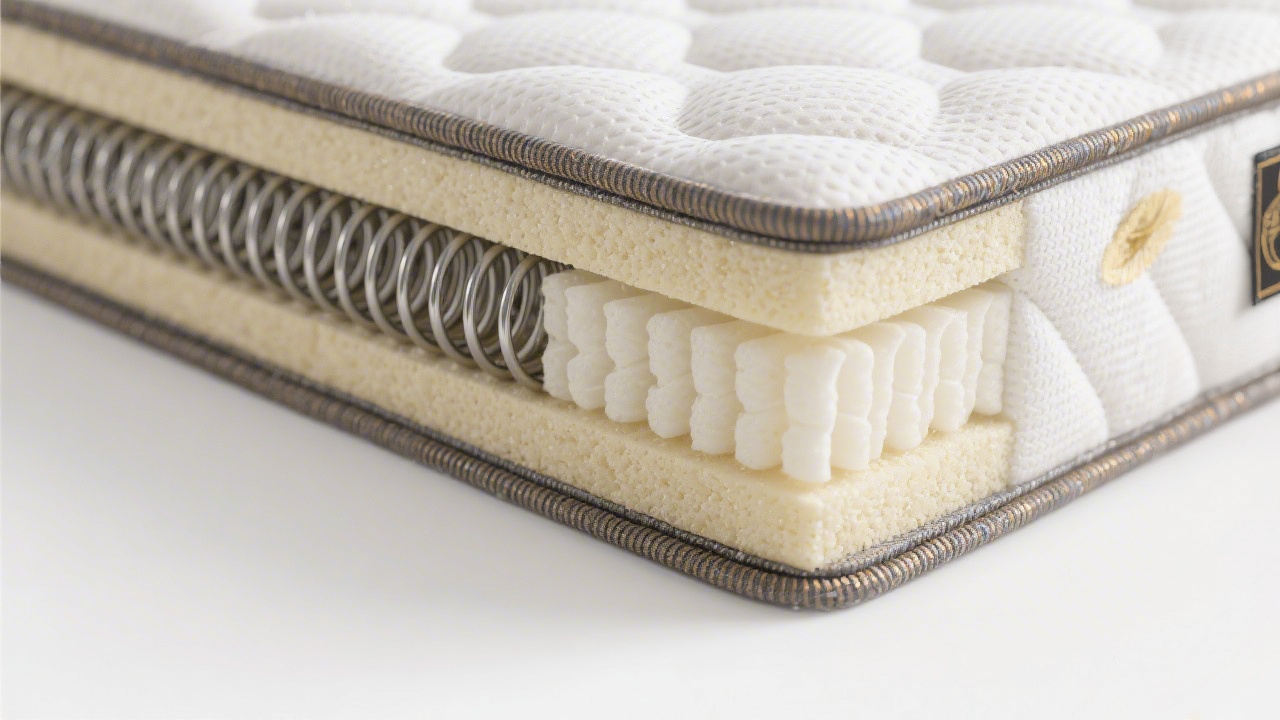
Pocketed (individually wrapped) coils are the gold standard for innerspring and hybrid mattresses. Each coil moves independently, which reduces motion transfer and contours more precisely to body shape. Bonnell coils (hourglass-shaped, interconnected wire) are a budget construction — they transfer motion and wear faster. In a queen size, look for 800+ pocketed coils. The Saatva Classic uses a dual coil system: tempered steel support coils topped by individually wrapped comfort coils — a construction that costs more to manufacture but delivers superior durability and response.
Marker 2: Comfort Layer Quality
The comfort layer sits above the coils (or serves as the primary material in all-foam mattresses). Quality markers: natural latex lasts 15+ years without significant degradation; high-density memory foam (5 lb/ft³+) resists body impressions; cheap foams (1.5–2 lb/ft³) compress and lose their feel within 3–5 years. Thickness matters less than density. A 2-inch latex layer outperforms a 4-inch low-density foam layer.
Marker 3: Cover Material and Construction
The cover is what you sleep on every night. Organic cotton, wool, or Tencel covers breathe better than polyester blends. Hand-tufting (individual tufts that pass through the mattress and anchor fill layers) prevents fill from shifting over time. Glued or stapled covers eventually delaminate. A quilted cover with at least 1 inch of fill provides both comfort and durability.
Marker 4: Edge Support System
A mattress without edge support loses 15–20% of its usable sleep surface — the edges compress when you roll near them. Foam-encased perimeter systems (a dense foam border around the spring unit) are standard in quality mattresses. Without them, sitting on the edge of the bed feels like falling off, and over time the edges sag permanently.
Marker 5: Firmness-to-Body-Weight Match
Firmness is a quality marker in context. A good mattress for a 130 lb side sleeper (Medium Soft) is a poor mattress for a 250 lb back sleeper (who needs Firm). The same mattress, wrong application. Quality brands offer multiple firmness options. Single-firmness brands are optimizing for market size, not individual fit.
Marker 6: Trial Period Structure
A genuine trial period is 90+ nights, free returns, no restocking fees, and the brand schedules pickup. Short trials (30 nights) and "free returns" that require you to transport or store the mattress are not real trials. The Saatva Classic offers 365 nights — essentially a year to decide — with white-glove pickup if you don't love it.
Marker 7: Warranty Substance
Read the warranty, not just its length. A 25-year prorated warranty that covers 10% of costs after year 10 is nearly worthless. A 15-year non-prorated warranty is worth more. Key terms: impression depth covered (should be 1–1.5 inches, not 2+ inches), what's excluded (normal "wear"), and whether the replacement is in-kind or store credit. See also: Saatva warranty guide, luxury mattress guide, and our full mattress rankings.
Saatva Classic — All 7 Quality Markers in One Mattress
Frequently Asked Questions
How do I know if a mattress is good quality?
Check for individually pocketed coils (not Bonnell or offset), a real comfort layer of at least 2 inches of latex or quality foam, an edge support system, and a warranty of at least 10 years non-prorated.
What coil count should a good mattress have?
A queen mattress should have at least 800 individually pocketed coils for good support. Higher-quality mattresses use 1,000–1,200 coils. Bonnell or continuous coils, regardless of count, indicate a budget construction.
Does mattress firmness matter for quality?
Firmness and quality are separate axes. A firm mattress can be low quality; a soft mattress can be high quality. What matters is whether the firmness matches your sleep position and body weight.
How long should a good mattress last?
A genuinely well-made mattress should last 8–12 years. Signs of failure include visible sagging over 1.5 inches, persistent morning stiffness, or coils you can feel through the comfort layer.
What does a good warranty cover?
A meaningful warranty covers body impressions deeper than 1–1.5 inches, defective coils, and cover defects. Watch for prorated warranties that charge you a percentage of replacement cost after year 2 — these are coverage in name only.