
 by
by The average person replaces their mattress 2–3 years too late. Industry data suggests the optimal replacement window is 7–10 years — but most people push to 12–15, often attributing aches and poor sleep to stress, age, or other causes rather than a mattress that has structurally failed.
Here are 8 clear signs that your mattress has reached end-of-life — and why acting sooner saves your sleep quality, health, and in some cases, your back.
Sign 1: Visible Sagging or Body Impressions
The clearest sign. If you can see a depression greater than 1.5 inches where you sleep, your mattress has lost the structural support it was engineered to provide. Foam breaks down under repeated compression. Innerspring coils fatigue and lose tension. Once you can see the sag, the underlying support layers have already been compromised for months. Most warranties cover sags over 1–1.5 inches — check yours before buying new.
Sign 2: Waking Up With Back, Hip, or Shoulder Pain
This is the most medically significant sign. Proper spinal alignment during sleep requires the mattress to provide both support and pressure relief. A mattress that has sagged stops supporting the lumbar curve — your lower back muscles work all night trying to compensate. If you wake up stiff and the pain diminishes within 30–60 minutes of being up, the mattress is almost certainly the cause. Test by sleeping one night on a different surface (hotel, guest bed, air mattress) — if you feel better, you have your answer.
Sign 3: You Sleep Better Elsewhere
This is one of the cleanest diagnostic tests available. If you consistently sleep better at hotels, on a friend's guest mattress, or anywhere other than your own bed, your mattress has failed. One better night is anecdotal — three or more in a row is data.
Sign 4: Audible Springs and Squeaking
Coil springs that squeak or creak indicate metal fatigue. When coils are audible, they're also providing uneven support — some are fully compressed, others overextended. This creates pressure point problems and can accelerate hip and shoulder pain. Note: if only certain areas squeak, the problem may be the box spring or bed frame rather than the mattress itself. Test by pressing on the mattress directly on the floor.
Sign 5: Worsening Allergies or Asthma at Night
After two years, the average mattress hosts 1.5 million dust mites. After five years, it can be home to billions. Dust mites produce allergens that trigger rhinitis, asthma, and eczema — particularly concentrated in the bedroom where you spend 7–8 hours with your face near the mattress. If your morning allergies are significantly worse than the rest of the day, your mattress is likely a major contributing factor. Regular cleaning and mattress protectors help, but after 8–10 years, replacement is the most effective solution.
Sign 6: Your Sleep Needs Have Changed
A mattress that was right at 30 may be wrong at 45. Body weight changes affect which firmness level provides optimal spinal support. Health conditions like back pain, hip issues, arthritis, or menopause change the ideal pressure relief profile. A mattress bought as a solo sleeper may be inadequate for a couple. If your life circumstances have significantly changed, your mattress requirements may have too — even if the mattress isn't technically worn out.
Sign 7: The Mattress Is Over 8 Years Old
This is the threshold recommendation from the Sleep Foundation and most orthopedic specialists. Memory foam degrades measurably after 6–8 years. Innerspring coils lose 15–20% of their rated support by year 8–10. Latex lasts longest — 10–15 years — but still degrades. The warranty (typically 10 years) covers defects, not natural degradation. By year 8, most mattresses have lost meaningful support even if they don't look dramatically different.
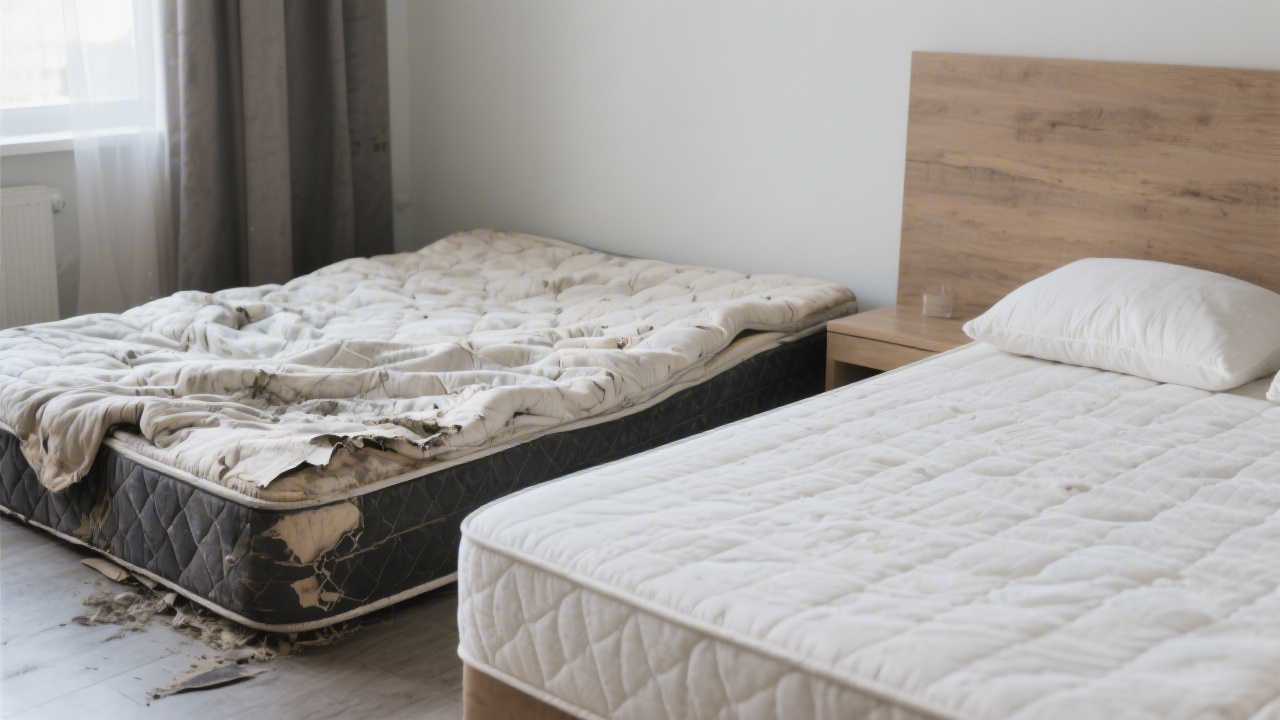
Sign 8: You've Had a Major Liquid Accident Without Protection
An unprotected mattress that's been soaked — whether from a spill, a pet, or flooding — is usually unrecoverable. Moisture penetrates deep into foam and coil layers, creating conditions for mold and mildew growth that can't be safely removed from the interior. If this has happened and the mattress is more than 3–4 years old, replacement is the right call. For newer mattresses, consult a professional mattress cleaning service first.
How Long Should a Mattress Last?
| Mattress Type | Average Lifespan | Replace When |
|---|---|---|
| Innerspring | 5–8 years | Squeaking, visible sag |
| Memory Foam | 6–10 years | Body impressions, softness loss |
| Hybrid | 7–10 years | Coil noise, comfort layer failure |
| Natural Latex | 10–15 years | Gradual softening, allergen issues |
What to Look for in a Replacement
If you've identified yourself in two or more of these signs, consider a mattress with at least a 15-year warranty, a 365-night trial, and verified support for your sleep position and body weight. The Saatva Classic consistently ranks as the top value for those replacing an older innerspring or hybrid — it offers coil-on-coil construction, three firmness options, and a 365-night home trial that makes the transition risk-free.
Saatva Classic — 365-Night Trial + 15-Year Warranty
The most comprehensive trial in the category. If it doesn't work for you within 365 nights, they'll pick it up and refund in full. White-glove delivery and old mattress removal included at no extra charge.
Frequently Asked Questions
Can a mattress topper fix a sagging mattress?
A topper addresses surface comfort but cannot fix structural failure. If the core support layers have degraded or the coils have fatigued, adding surface material just delays the inevitable while potentially masking pain signals. Toppers are useful for adjusting firmness on a structurally sound mattress, not for repairing a failed one.
How do I know if it's my mattress or my pillow causing neck pain?
Neck pain that's primarily upper cervical (base of skull, upper neck) is more often pillow-related. Low back and mid-back pain that's worst in the morning is more often mattress-related. If replacing the pillow doesn't resolve it within a week, test the mattress by sleeping elsewhere or placing the mattress on the floor (removes box spring variable).
Is a mattress covered by homeowner's insurance if it's damaged?
Only in specific circumstances — typically a covered peril like fire, flooding from a burst pipe, or certain storm damage. Normal wear, pet damage, and liquid accidents from household use are not covered. Check your policy's personal property section. Some renters insurance policies have broader coverage.
How do I dispose of an old mattress?
Options vary by location: many cities offer bulk waste pickup, recycling centers accept mattresses, donation (if in good condition) is possible through Habitat for Humanity ReStores, and retailers like Saatva offer free old mattress removal with delivery. Do not leave mattresses on the street in most municipalities — you can incur fines.
At what point is a mattress a health risk?
A mattress becomes a health risk when: it has visible mold (allergenic and potentially toxic mold species), it hosts extreme allergen concentrations worsening asthma/rhinitis, or it's causing chronic musculoskeletal issues. The dust mite threshold is harder to identify visually — if you've had the mattress 8+ years without a protector, assume significant allergen levels regardless of appearance.
Related guides: How to Clean a Mattress • Saatva Classic Review 2026 • Best Mattress 2026