
 by
by Disclosure: MattressNut is reader-supported. When you buy through links on our site, we may earn an affiliate commission at no extra cost to you.
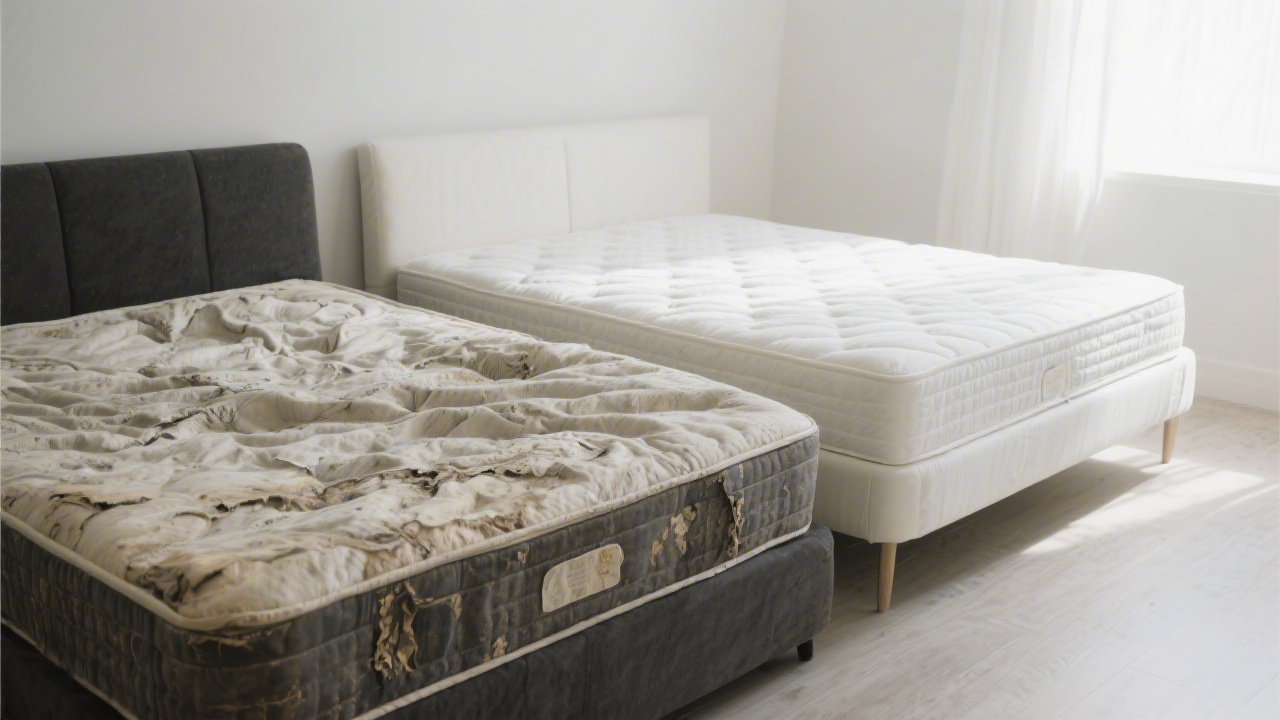
The average mattress lifespan is 7–10 years, but that number hides significant variation. A budget foam mattress may fail at 4–5 years. A high-quality innerspring with a good foundation can last 12–15 years. And a mattress that technically still holds its shape may no longer provide adequate spinal support — which is the more important measure. Here are the 9 signs that indicate replacement is warranted, including how to measure whether your mattress has crossed the performance threshold.
Ready for a New Mattress?
Saatva Classic — 365-night trial, lifetime warranty, white-glove delivery and old mattress removal included.
Sign 1: Visible Sagging or Body Impressions
The most objective sign. Manufacturers typically define warranty-eligible sagging as a body impression deeper than 1–1.5" (measured without body weight on the mattress). To measure: lay a broomstick or straight edge across the mattress. The gap between the stick and the lowest point of the impression is your sag depth. Over 1" means you're likely sleeping misaligned. Over 1.5" is the warranty threshold for most brands.
Foam mattresses typically show visible sagging first. Innerspring mattresses may sag more gradually. Either way, once visible indentations are present in your normal sleeping area, the mattress is no longer providing the support it was designed for.
Sign 2: Waking Up with New Pain
A failed mattress often manifests as pain that wasn't present before — particularly lower back pain, hip pain, or shoulder stiffness. The test: sleep somewhere else for a week (hotel, guest bed, sofa). If the pain reduces or disappears, your mattress is the cause. If the pain follows you, consult a physician before replacing the mattress.
Sign 3: Waking Up More Tired Than When You Went to Sleep
Insufficient support disrupts sleep architecture even without conscious pain. You may sleep through the night but wake feeling unrestored. This is often dismissed as stress or poor sleep hygiene but can be traced to a mattress that no longer maintains spinal neutrality during REM sleep.
Sign 4: The Mattress Is Over 8 Years Old (For Foam) or 10 Years (For Innerspring)
Foam degrades with repeated compression cycles. The average all-foam mattress begins losing measurable support after 6–8 years under typical use (one adult, 8 hours/night). High-density foam extends this to 8–10 years. Innerspring mattresses with quality coil gauges maintain support longer but eventually lose coil tension. Latex is the most durable: quality Talalay or Dunlop latex can maintain performance for 15+ years. If your mattress exceeds these thresholds, replacement is worth planning for even if you don't notice symptoms yet.
Sign 5: Noise When You Move
Squeaking or creaking from an innerspring mattress indicates coil fatigue — the coils are failing under compression. This noise typically precedes visible sagging by 1–2 years. Check first whether the noise comes from the mattress itself or from the bed frame (a simpler and cheaper fix). Lay the mattress directly on the floor — if the noise disappears, the frame is the issue. If it persists, coil failure is confirmed.
Sign 6: The Mattress Triggers Allergies or Respiratory Symptoms
Mattresses accumulate dust mites, dead skin cells, and mold spores over time. These accumulate in foam layers that encasing products can't fully protect. A mattress over 5 years old that hasn't been regularly cleaned may harbor significant allergen loads. If allergy symptoms are worse in bed or first thing in the morning, the mattress is a likely contributor. A mattress protector helps with new mattresses; once saturated in an old mattress, replacement is more effective than deep cleaning.
Sign 7: You Sleep Better Away from Home
Hotel mattresses aren't objectively superior to home mattresses in most cases — but if you consistently sleep better in hotel beds, your home mattress is underperforming. This is one of the clearest user-reported signals that a mattress needs replacement. Hotel chains typically use commercial-grade innerspring or hybrid mattresses that prioritize consistent support; if their mattress outperforms yours, the baseline comparison is informative.
Sign 8: Your Sleep Needs Have Changed
A mattress that suited your needs at 35 may not suit you at 45. Significant weight change (25+ lbs), a new sleep partner, pregnancy, back surgery, or arthritis all change the support profile your body needs. The mattress isn't necessarily failing — your requirements have outpaced it. A medium-firm that worked for a solo back sleeper may be insufficient after weight gain or a spine diagnosis.
Sign 9: The Edges No Longer Support Body Weight
Edge support failure is a performance indicator most buyers overlook. Sit on the edge of your mattress — if the edge compresses significantly or feels unstable, the perimeter foam or coil gauge has failed. This affects usable sleeping surface (you roll toward the middle) and makes getting in and out of bed harder, which matters significantly for those with mobility limitations.
What to Look for in a Replacement Mattress
Once you've confirmed replacement is needed, prioritize: a trial period long enough to evaluate the mattress in your home (minimum 90 nights; the best in the industry offer 365 nights), a warranty covering structural defects for at least 10 years, and construction appropriate for your primary sleep position. The best mattress guide covers top picks across every sleep profile. For back pain specifically, see our best mattress for back pain guide. The Saatva Classic includes white-glove delivery and old mattress removal — relevant when you're replacing a mattress you need removed.
When You Replace: Saatva Removes the Old One
Saatva's white-glove delivery includes old mattress removal — no need to coordinate separate disposal. 365-night trial reduces your risk.
Frequently Asked Questions
How do I know if my mattress sag is bad enough to replace?
Use the ruler test: lay a straight edge across the mattress without body weight on it. Measure the gap between the ruler and the deepest impression point. Over 1" indicates performance failure. Over 1.5" is the standard warranty eligibility threshold for most brands.
How long should a mattress last?
Budget all-foam mattresses: 4–6 years. Mid-range foam/hybrid: 7–9 years. High-quality innerspring or hybrid: 10–12 years. Natural latex: 15+ years. These estimates assume one adult, 8 hours/night, with a proper foundation.
Can I extend the life of my current mattress?
Rotating your mattress 180 degrees every 6 months extends even wear. Using a quality mattress protector prevents moisture damage. Ensuring your foundation provides adequate center support prevents premature sagging. These measures extend lifespan but don't reverse structural failure.
Is back pain always caused by a mattress?
Not always. If sleeping elsewhere (hotel, guest bed) for 5+ nights doesn't improve your pain, the mattress is likely not the primary cause. Consult a physician before replacing based on back pain alone. If pain improves away from home, the mattress is a probable contributor.
Does the brand of replacement mattress matter for longevity?
Yes, significantly. Construction quality (coil gauge, foam density, cover durability) determines lifespan. A mattress with a lifetime warranty from a brand with a verified service reputation is a meaningful signal. Check the warranty's sag threshold — brands confident in durability define coverage at 1–1.5"; brands less confident set it at 2" or higher.