
 by
by The commonly cited guideline — replace your pillow every 2 years — significantly overstates pillow longevity for most fill types. Most polyester and down-alternative pillows need replacing within 12–18 months. You've likely been sleeping on a degraded pillow for months without realizing it.
Here's how to know for certain — tonight, before you go to sleep.
The Fold Test: Do It Right Now
This takes 30 seconds:
- Take your pillow out of the pillowcase
- Fold it in half (standard/queen) or in thirds (king)
- Hold it folded for 30 seconds
- Release
Result: If the pillow springs back immediately to its original shape, it still has useful life. If it stays folded, recovers slowly, or collapses flat when you release it — replace it tonight.
This test works for down, down-alternative, and polyester. For memory foam: press your hand firmly into the center of the pillow and release. If the indent remains visible for more than 3 seconds, the foam has lost its recovery properties.
The Neck Pain Indicator
If you wake up with neck stiffness that improves over the first 30–60 minutes of the day, your pillow is almost certainly contributing. This pattern — stiff on waking, better mid-morning — indicates your neck muscles were compensating for poor support all night.
Try sleeping one night with a folded bath towel under your pillowcase, adding about 1 inch of loft. If your neck feels measurably better the next morning, your pillow has degraded and lost loft. Use our pillow height guide to determine your target loft before buying a replacement.
Fill-Specific Degradation Timelines
| Fill Type | Expected Lifespan | Primary Failure Mode | Test |
|---|---|---|---|
| Polyester / Microfiber | 12–18 months | Clumping, permanent compression | Fold test |
| Down Alternative | 12–24 months | Fill migration, loss of loft | Fold test |
| Down | 24–36 months | Clumping, odor from moisture | Fold test + smell |
| Memory Foam (solid) | 24–36 months | Permanent body impression | Indent test |
| Shredded Memory Foam | 18–30 months | Compression of individual pieces | Fold test |
| Latex (solid or shredded) | 36–48 months | Crumbling (late-stage) | Fold test |
| Buckwheat | 36–60 months | Hull breakdown, odor | Smell + shape retention |
Other Signs to Replace Tonight
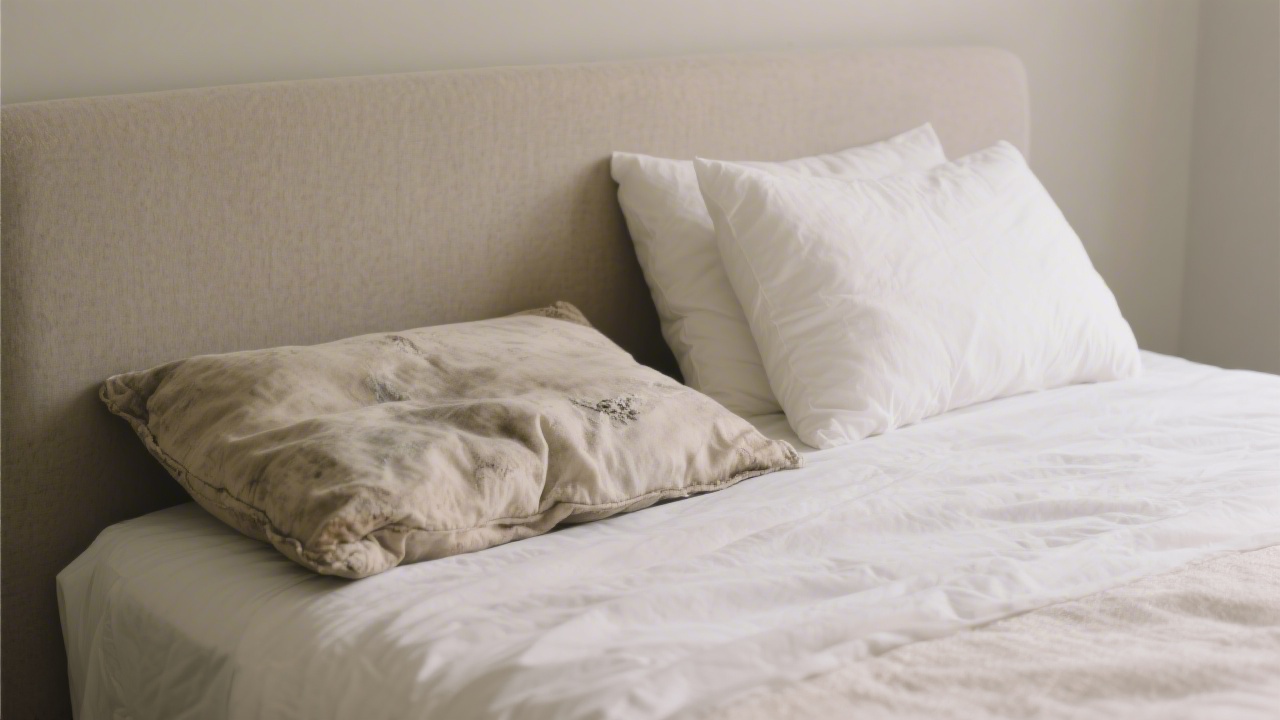
- Yellow staining: Indicates moisture accumulation in the fill — not washable out once it's set. Time to replace.
- Persistent odor after washing: Moisture and skin cell accumulation in the fill is beyond recoverable.
- Visible lumps or flat spots: Fill has migrated or permanently compressed unevenly. This creates pressure points during sleep.
- Allergy symptoms only at night: Dust mite populations in old pillows can reach levels that trigger symptoms even with pillowcases. Replace and use allergen-proof covers on the replacement.
If you've confirmed it's time to replace: use our pillow selection guide to choose the right fill type for your position, or jump to best pillow for combination sleepers if you move around during the night. Latex and buckwheat pillows have the longest lifespans if you want to reduce replacement frequency — see the Saatva Pillow for a latex option with a 1-year warranty.
Frequently Asked Questions
How long do pillows actually last?
It depends on fill type. Polyester and down-alternative pillows last 12–18 months under regular use. Down pillows last 2–3 years. Memory foam pillows last 2–3 years. Latex pillows last 3–4 years. These timelines assume nightly use and occasional washing — pillowcases help extend life but don't change the fill degradation timeline.
What is the pillow fold test?
Fold your pillow in half (for standard or queen) or thirds (for king) and hold it for 30 seconds. Release. If it springs back to its original shape immediately, it still has usable life. If it stays folded or takes more than a few seconds to recover, the fill is degraded and the pillow should be replaced.
Can neck pain be caused by a worn-out pillow?
Yes — and it's more common than most people realize. A pillow that's lost loft provides inconsistent support throughout the night. Your neck muscles compensate by staying partially engaged. This creates cumulative strain that shows up as morning stiffness or tension headaches, especially at the base of the skull.
Does washing a pillow extend its life?
Yes, for down and down-alternative pillows — washing redistributes clumped fill and restores some loft. But washing also adds wear to the fill over multiple cycles. Memory foam and latex pillows should not be machine washed (spot clean only). Regardless of fill type, washing doesn't reverse the fundamental compression degradation that makes pillows need replacing.
How should I dispose of an old pillow?
Most pillows cannot go in standard recycling. Check with local textile recyclers — many take bedding. Animal shelters and pet rescues often accept old pillows for animal bedding. Down pillows can sometimes be sent back to manufacturers for recycling programs. Avoid landfill disposal when alternatives exist.
Ready to upgrade your sleep?