
 by
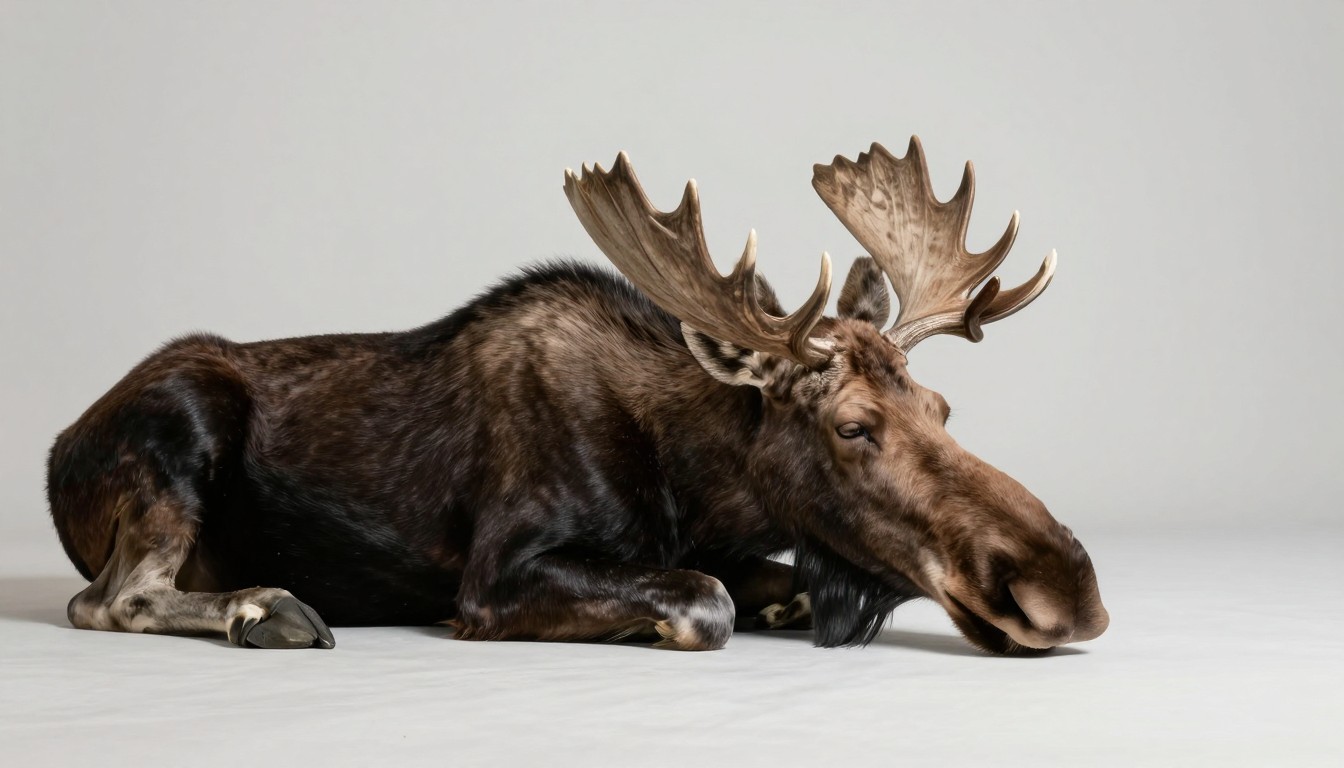
by Quick answer: Moose sleep lying down on the ground within the cool forest habitat they use. Wikipedia places moose across Northern Hemisphere boreal, temperate broadleaf, and mixed forests, so there isn’t one universal sleep spot.
- Wikipedia places moose in the Northern Hemisphere.
- It identifies circumpolar boreal forest as moose habitat.
- It also identifies temperate broadleaf and mixed forests, including cooler temperate and subarctic settings.
Updated July 2026 · Reviewed for accuracy
That’s the practical answer. At the geographic level, a moose sleeps in the cool northern forests it inhabits. At ground level, it lies down in that habitat rather than traveling to one standard type of bedroom, den, or permanent bed.
The distinction matters because “where” can mean two different things. It can ask which part of the world moose occupy, or it can ask what the animal physically lies on. Here’s what the published descriptions support, without turning one photograph or caption into a universal rule.
Where a moose actually lies down to sleep
A public result titled “Moose in Snowy Montana” describes a “sleepy moose” and a “moose lying down.” That gives us a useful, limited picture: a resting moose can lie directly on the ground in its surroundings.
The broader location comes from the animal’s habitat. Wikipedia’s moose entry places the species in circumpolar boreal forests as well as temperate broadleaf and mixed forests across the Northern Hemisphere. Put those details together and the plain answer is that a moose sleeps on the ground somewhere within that forest environment.
That doesn’t identify one mandatory surface. Neither Wikipedia’s habitat description nor the Montana image result establishes a universal preference for a clearing, dense cover, bare soil, deep snow, or a particular kind of tree. I wouldn’t turn an unspecified detail into a supposed moose habit.
Think of the answer at three scales:
- Global scale: the Northern Hemisphere, according to Wikipedia.
- Habitat scale: boreal, temperate broadleaf, and mixed forest.
- Sleep-site scale: a ground-level place where the animal can lie down.
“On the ground in its forest habitat” is therefore more accurate than naming a special moose bedroom. The exact patch may differ from one sighting to another, but the cited descriptions don’t provide enough detail to rank one kind of patch above another.
Cool forests give the best geographic answer
Wikipedia describes moose habitat with unusually helpful geographic language: circumpolar boreal forest, temperate broadleaf forest, and mixed forest in the Northern Hemisphere. It also associates moose with cooler temperate and subarctic climates.
That wording points north and toward forest, but it doesn’t restrict every moose to an identical landscape. “Temperate broadleaf and mixed forests” is a wider description than the stereotypical scene of an animal surrounded by deep snow. A snowy setting fits one published image result, while Wikipedia’s habitat entry provides the broader frame.
The word “circumpolar” also matters. It indicates a range associated with northern parts of the globe rather than one isolated country or park. That’s why a good response to “where does a moose sleep?” should describe a habitat category before trying to imagine a precise resting patch.
| Part of the question | What can be said confidently | What remains unspecified |
|---|---|---|
| Hemisphere | Wikipedia places moose in the Northern Hemisphere. | One universal sleeping location. |
| Habitat | Boreal, temperate broadleaf, and mixed forests. | A required tree, slope, clearing, or ground cover. |
| Climate | Cooler temperate and subarctic settings, per Wikipedia. | A single weather condition required for sleep. |
| Posture | The Montana result describes a moose lying down. | Whether every sleep period uses exactly the same posture. |
Habitat is the boundary of the answer, not a map pin. A forest category tells us the kind of environment in which the animal lives and rests. It doesn’t tell us that every individual returns to one marked bed or chooses the same surface each time.
A sleeping place isn’t automatically a den or nest
The relevant descriptions use the terms “forest,” “habitat,” and “lying down.” They don’t identify a den, nest, cave, burrow, or constructed bed. Calling one of those structures the normal answer would go beyond what either named entry establishes.
Human language makes this question slightly misleading. We tend to imagine sleep as something that happens in a dedicated room on a dedicated piece of furniture. For a moose, the useful description is much simpler: it lies down at ground level within the environment it already inhabits.
That also means “sleeping place” shouldn’t be confused with “permanent home.” A photograph of one reclining animal can show where that individual was lying at that instant. It can’t establish that the site is used repeatedly, belongs only to that animal, or functions like a fixed bedroom.
Claims the cited descriptions support:
- Moose inhabit cool Northern Hemisphere forests.
- A published image result describes a sleepy moose lying down.
- The exact kind of ground-level sleep site isn’t specified.
Claims they don’t establish:
- That moose normally sleep in a den or cave.
- That every moose sleeps on snow.
- That one photograph proves a fixed sleep schedule or permanent bed.
This cautious wording isn’t evasive. It separates the direct answer from details that sound plausible but aren’t documented here. I’d rather give you a short, accurate description than decorate it with an invented preference for a particular patch of forest.
What a photograph can and can’t reveal
A photograph freezes one instant. The “Moose in Snowy Montana” result can show an animal lying down in a wintry-looking setting, but its caption can’t document the animal’s full sleep period, daily routine, or usual choice of location.
Even the word “sleepy” deserves care. It tells us how the image was presented. A still frame alone can’t show how long the animal remained there or whether lying down in that spot was typical. Those would require information beyond the caption.
The landscape deserves the same discipline. Snow in the title places the pictured animal in a snowy Montana scene. It doesn’t prove that snow itself is the preferred sleeping surface for the wider moose population, especially since Wikipedia also lists temperate broadleaf and mixed forests as habitat.
Observation tip: If you encounter a moose that appears to be resting, watch without approaching for a closer sleep check. Use the setting, posture, and caption as separate clues, and follow any posted wildlife-viewing rules.
It’s also wise not to turn a sighting into a behavioral experiment. Whether an animal is asleep or merely resting doesn’t justify disturbing it. A distant observation still lets you note the broad facts that matter here: the animal is down at ground level and the setting can be compared with the forest habitats named by Wikipedia.
For identification, ask modest questions. Is the animal lying down? Is the surrounding landscape forested? Does the setting fit the cooler temperate or subarctic habitat description? Those observations are more defensible than guessing how long it has slept or whether it will return to the same patch.
Why “wherever he wants” is only the joke answer
One of the public results answers the question with the line, “Where does a moose sleep? Wherever he wants!” It’s memorable, but it’s wordplay rather than a useful habitat explanation.
The better answer keeps the humor and adds precision: a moose sleeps on the ground within its cool northern forest habitat. Wikipedia identifies the geographic and ecological setting, while the Montana image result supplies an example of a moose lying down.
That wording also avoids implying a single nightly destination. Nothing in those descriptions names a standard den, permanent nest, or exact landscape feature used by every moose. The forest is the consistent level of the answer. The individual ground-level site is variable or, at minimum, not specified.
Location versus duration: This question asks where an animal sleeps, not how long. For a duration-focused animal explainer, read how many hours a day a lion sleeps. For the same kind of question about people, see how much sleep a six-year-old needs.
My short version is the one worth remembering: moose lie down to sleep on the ground in the forests they inhabit, across cooler parts of the Northern Hemisphere. Snowy ground can appear in a real example, but it isn’t the only setting supported by the habitat description.
FAQ
Where does a moose sleep at night?
A moose can lie down on the ground within its forest habitat. Wikipedia places that habitat in cooler Northern Hemisphere regions, but the cited entry doesn’t establish that moose sleep only at night or use one standard nighttime location.
Do moose sleep on the ground?
Yes, the public “Moose in Snowy Montana” result describes a sleepy moose lying down, which supports the basic ground-level answer. The caption doesn’t establish one required surface or landscape feature for every sleeping moose.
Do moose sleep in dens or caves?
Neither Wikipedia’s habitat description nor the Montana image result identifies a den or cave as the normal sleeping place. Based on those descriptions, “on the ground within forest habitat” is the sounder answer.
Do moose sleep in the snow?
The Montana result presents a sleepy, reclining moose in a snowy setting, so snow can be part of the scene shown. That single result doesn’t prove that all moose sleep on snow, and Wikipedia also places them in temperate broadleaf and mixed forests.
What kind of forest does a moose sleep in?
Wikipedia lists circumpolar boreal forests along with temperate broadleaf and mixed forests. Those categories cover cooler temperate and subarctic settings, but the entry doesn’t specify one tree type or exact forest feature as a required sleep site.